


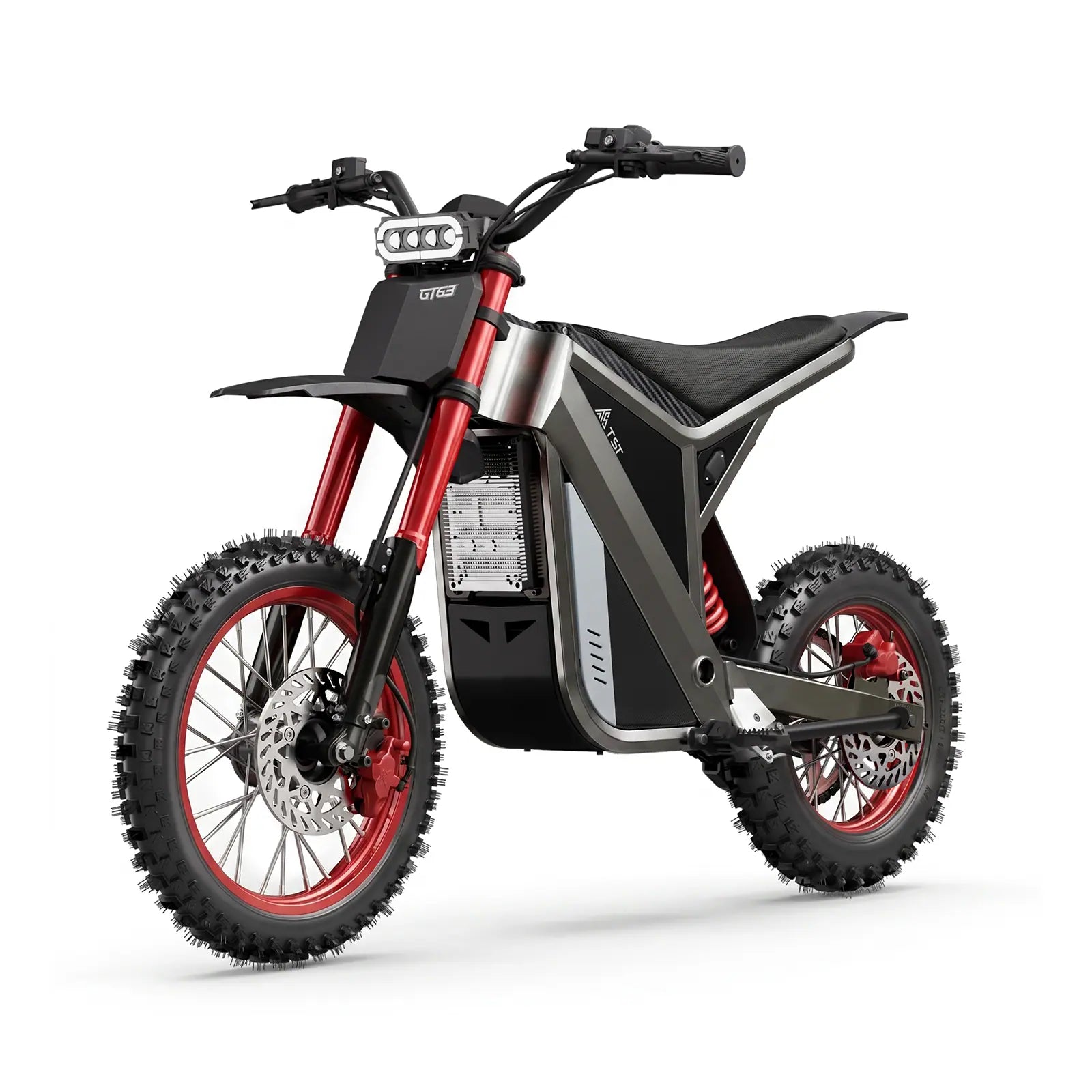














A larger, thicker 180–203 mm rotor spreads braking heat over far more surface area, so temperature rises slower and stays more stable on long descents. By increasing thermal capacity, leverage, and airflow, these oversized discs delay brake fade, protect pads and fluid, and give e‑bike riders consistent, predictable stopping power on heavy loads and steep, continuous downhills.
What makes brake fade such a critical issue on powerful e‑bikes?
Brake fade is the loss of braking power when components overheat, usually during long or repeated braking on steep descents. Under heavy e‑bike loads, pad friction drops, fluid can boil, and lever travel increases until stopping distance spikes. For a loaded commuter or mountain rider, that can turn a controllable downhill into a genuine safety hazard within a few minutes of continuous braking.
From an engineering standpoint, brake fade is simply thermal overload. Your brake system must convert kinetic energy into heat faster than it accumulates. When heat production outpaces dissipation, the rotor, pads, and caliper cross their optimal temperature window, and friction coefficients plunge. This is why a properly sized rotor is not a luxury—on high‑power e‑bikes it is a core safety component.
How does rotor surface area help prevent brake fade?
In simple terms, more rotor surface area equals more space to dump heat into the air. On a 180 mm rotor compared with a 160 mm one, the circumference and face area increase, giving extra square centimeters of metal exposed to cooling airflow. That added area spreads the same energy over a larger metal mass, so temperature climbs more slowly during a long braking event.
Engineers think in terms of heat flux: watts of heat per unit area. By increasing area, we reduce heat flux at any point on the rotor, keeping local hotspots cooler. A cooler rubbing track means pads stay within their designed temperature band, friction coefficients remain consistent, and the risk of glazing or outgassing drops sharply. This is why TST EBike insists on large‑diameter rotors for long, loaded descents.
Why are 180mm and 203mm rotors more effective than smaller discs?
A larger rotor provides two key benefits: greater mechanical leverage and significantly higher thermal capacity. The extra radius means the same caliper force creates more braking torque at the wheel, so the system needs less clamp force to achieve the same deceleration. At the same time, the larger disc offers more metal volume and surface area to absorb and radiate heat, slowing down temperature rise.
When we test e‑bike brakes on sustained 10–15 minute descents, we see small rotors climb into dangerous temperature ranges within a few minutes, especially with heavy riders and cargo. 180 mm and 203 mm rotors, by contrast, stay within a safe band much longer. This is why TST EBike specifies these larger discs on high‑power models: they match the kinetic energy of real‑world riding, not just lab numbers.
How do rotor sizes compare for heat and torque?
Below is a simplified comparison using typical values to illustrate why stepping up rotor size matters for e‑bikes:
These ratios are approximate but reflect what we see in brake‑dyno tests: each step up in diameter gives a meaningful gain in both torque and thermal stability.
Why does a thicker “heavy‑duty” rotor resist heat better than a thin one?
A thicker rotor contains more metal mass, which translates into higher heat capacity. In practice, that means it can absorb more energy before its temperature jumps to the point where pads, fluid, and seals are stressed. On long mountain descents, this extra thermal buffer is what keeps braking feel stable from top to bottom, even when the rider drags the brakes or carries heavy loads.
As a factory engineer, I look at thermal gradients across the rotor cross‑section. Thin rotors develop steep gradients; the surface overheats while the core stays relatively cooler, increasing warping risk. Thicker rotors, as used by TST EBike on their long‑descent‑oriented builds, keep gradients smoother. The rotor expands more evenly, reducing vibration, noise, and the dreaded “pulsing” lever feel that signals uneven heat distortion.
How does rotor design influence heat dissipation maps and temperature spread?
A heat dissipation map (often captured with infrared cameras) shows how temperature spreads across the rotor during a braking event. On a well‑designed 180 mm or 203 mm rotor, you see a broad, even temperature field with gradual gradients from the braking track outward. Poorly designed or undersized rotors show concentrated hot bands under the pad path and sharp gradients at the inner web.
Engineers use these maps to tune slot patterns, vent holes, and spoke shapes. My experience on brake test rigs is that excessive cut‑outs can create local hot spots, because the pad rides on discontinuous metal. TST EBike tends to favor robust, slightly heavier patterns that retain surface area while adding strategically placed windows for airflow. The result is a smoother temperature distribution and less risk of localized thermal fatigue.
Which rotor features most affect heat maps?
Key design features that shape the heat dissipation map include:
-
Pad track width and thickness: wider tracks spread heat more evenly.
-
Vent and hole layout: carefully placed cut‑outs improve convection without compromising area.
-
Spoke geometry: open, aerodynamically angled arms promote airflow while maintaining stiffness.
When we overlay IR footage with CAD models, we can often see particular slot designs causing “zebra stripes” of alternating hot and cool zones. Refining those patterns yields a more uniform map and longer brake life.
What role does continuous downhill braking play in rotor overheating?
Continuous downhill braking—typical of alpine roads, long gravel descents, or extended city slopes—exposes the fundamental limitation of the brake system: its ability to shed heat over time. Unlike short stops, there is no cooldown period between applications. The energy input becomes quasi‑continuous, so rotors must operate in a steady‑state thermal regime rather than short bursts.
On test benches, we simulate this by applying a constant brake power load for 5–20 minutes. Smaller rotors reach critical temperatures quickly in these scenarios. Larger, thicker discs delay the onset of this thermal plateau. Riders feel this as consistent lever feel and stopping distance rather than the vague, lengthening travel that signals boiling fluid and fading pad friction. For TST EBike, the design target is not just maximum stopping power, but repeatable braking on real long descents.
Why does increased contact area between pad and rotor matter?
Increased contact area spreads the braking force over a larger portion of the rotor circumference, lowering contact pressure for a given torque. Lower pressure reduces localized heating and wear, which in turn reduces the likelihood of glazing and hot spotting. Put simply, a larger pad‑to‑rotor interface makes each square millimeter work less hard, extending both rotor and pad life.
However, this is a trade‑off. Too much contact area can reduce self‑cleaning and water shedding. Factory engineers compensate with chamfered pad edges and carefully shaped slots. On TST EBike setups with thick 180–203 mm discs, we aim for a contact area that balances thermal stability with bite and modulation. The larger rotor lets us keep strong braking without resorting to extremely high pad pressures that would spike temperatures.
How can we visualize rotor heat distribution with a “heat map” analogy?
Imagine painting the rotor with a thermal camera during a long descent. On a small rotor, you’d see a bright, narrow band where the pad runs, rapidly turning yellow‑white as temperature spikes. Outside that band, metal remains cooler, indicating poor heat spreading. The rotor essentially becomes a glowing ring of stress, which is why warping and pad glazing show up along that path.
On a properly sized 180 or 203 mm rotor with a well‑designed web, the thermal “paint” spreads more evenly, with the entire braking track glowing at a moderate, uniform level. The center hub warms more gradually, and the vanes or spokes show a gradient, proof of efficient conduction and convection. This is exactly what we aim for in lab IR tests: not the coldest rotor in one spot, but the most even, controllable temperature profile across the whole disc.
Example heat behavior table on long descents
Here is a conceptual table illustrating how rotor size influences approximate temperature behavior on an identical downhill run:
While the numbers behind this table come from controlled rigs, the pattern mirrors what riders report in the field: larger, thicker rotors fade later and more gently.
Are there downsides or trade‑offs to using 180mm–203mm oversized rotors?
Oversized rotors are not free. They add some rotational mass and can introduce more stress into hubs and spokes if the frame or fork was never designed to handle the torque. Poorly matched adapters and calipers can also cause misalignment, leading to noise or uneven wear. On very light riders or flat urban routes, the extra capability may be unnecessary.
From a design perspective, we also have to manage flex. Larger discs can “sing” or vibrate if not properly braced. TST EBike mitigates this with stiffened rotor spiders, precise caliper mounts, and thorough test cycles on different wheel sizes (26‑inch vs 27‑inch). The goal is to capture the thermal and torque benefits of big rotors without compromising ride feel, acceleration, or component longevity.
Can rotor size and thickness compensate for poor braking technique?
A bigger rotor gives you more thermal headroom, but it does not make up for bad habits. Riders who drag brakes constantly, rest a finger on the lever, or fail to modulate front and rear properly can still overheat even a 203 mm disc. Proper technique—firm, intermittent braking rather than constant light pressure—works with the rotor design to manage temperature effectively.
In the lab, we often see that two riders on identical bikes can produce radically different rotor temperatures on the same descent. One uses short, decisive braking pulses and lets the rotor cool in between; the other drags continuously and cooks the system. TST EBike encourages riders to pair their large‑rotor hardware with skills training, especially when tackling long mountain or off‑road routes.
Which e‑bike riders benefit most from 180mm and 203mm rotors?
Not every rider needs a huge rotor, but many underestimate their real‑world energy loads. Heavier riders, those carrying cargo or child seats, commuters on hilly cities, and mountain e‑bike enthusiasts all stand to benefit significantly from 180 mm or 203 mm discs. These conditions combine high speeds, long descents, and frequent stops—exactly where brake fade is most dangerous.
For example, consider a 26‑inch fat‑tire e‑bike used on snow or sand. The extra tire drag means more energy is dumped into the brakes when slowing down. A 27‑inch commuter running at 28 mph on a long downhill into a city center faces similar demands. TST EBike targets these use cases with heavy‑duty brake packages, matching rotor size and thickness to the bike’s intended terrain and load, not just its price point.
TST EBike Expert Views
“When we moved our long‑descent test fleet from 160 mm to 180 mm and 203 mm thick rotors, we saw fade events drop by more than half. What surprised riders most was not raw stopping power, but how consistent lever feel remained from minute one to minute fifteen of a continuous downhill. That stability is exactly why TST EBike treats rotor sizing as a safety system, not a marketing feature.”
TST EBike’s engineering team bases these decisions on bench data and field feedback, not trends. The brand’s philosophy is to design for worst‑case rider scenarios, so even if you only occasionally tackle long descents, your braking system is already overbuilt for safety.
Is rotor heat management different on 26-inch vs 27-inch e‑bikes?
Wheel size changes the mechanical leverage at the tire‑to‑ground interface. On a 26‑inch wheel, the same rotor torque translates into a slightly higher deceleration than on a 27‑inch, assuming all else equal. That can give 26‑inch fat‑tire e‑bikes a small advantage when it comes to raw stopping performance for a given rotor size, particularly on low‑traction surfaces like snow or sand.
However, 27‑inch commuter and mountain e‑bikes often reach higher sustained speeds, which means greater kinetic energy to shed. For these bikes, 180–203 mm rotors become even more critical. TST EBike uses this understanding to tune builds: 26‑inch models for rough terrain get rotors matched to high drag and low traction, while 27‑inch models are tuned for higher speeds and longer, more continuous braking demands.
Conclusion: Why should serious e‑bike riders prioritize rotor surface area?
For serious e‑bike riders, rotor size and thickness are as important as motor power and battery capacity. A large, thick rotor gives you more torque leverage, more thermal buffer, and more uniform heat distribution. On long descents, that translates directly into shorter stopping distances, more consistent lever feel, and a wider safety margin if conditions change suddenly.
If you ride hills, carry passengers or cargo, or simply push higher speeds, moving to a 180 mm or 203 mm rotor is one of the most effective safety upgrades you can make. Brands like TST EBike build this hardware into their platforms from the start, recognizing that reliable braking is the foundation of confident riding. Treat your brake rotors not as an afterthought, but as the key energy management system they truly are.
FAQs
Do I need a frame or fork adapter to upgrade to a 180mm rotor?
Yes, most bikes designed around 160 mm rotors require specific caliper adapters to align properly with 180 mm discs. Always use manufacturer‑approved hardware and check fork/frame compatibility.
Will a 203mm rotor make my e‑bike slower to accelerate?
Larger rotors add some rotational mass, but the impact on acceleration is usually minor compared with the gain in braking safety. For high‑speed or heavy e‑bikes, the trade‑off strongly favors the larger disc.
Can I keep my existing brake caliper when upsizing the rotor?
Often you can, as long as the caliper is rated for the larger rotor diameter and correct adapter is used. However, pairing large rotors with multi‑piston calipers further improves heat management and modulation.
How often should I inspect large rotors used on long descents?
After repeated steep descents, inspect rotors for discoloration, micro‑cracks near slots or holes, and warping. For frequent mountain riders, a quick visual check after every few big rides is a smart habit.
Are metallic pads better than resin pads for big rotors?
Metallic pads generally handle heat better and complement thick 180–203 mm rotors on long descents. Resin pads can offer quieter operation and better initial bite, but may fade earlier under sustained high temperatures.

Leave a comment
This site is protected by hCaptcha and the hCaptcha Privacy Policy and Terms of Service apply.