

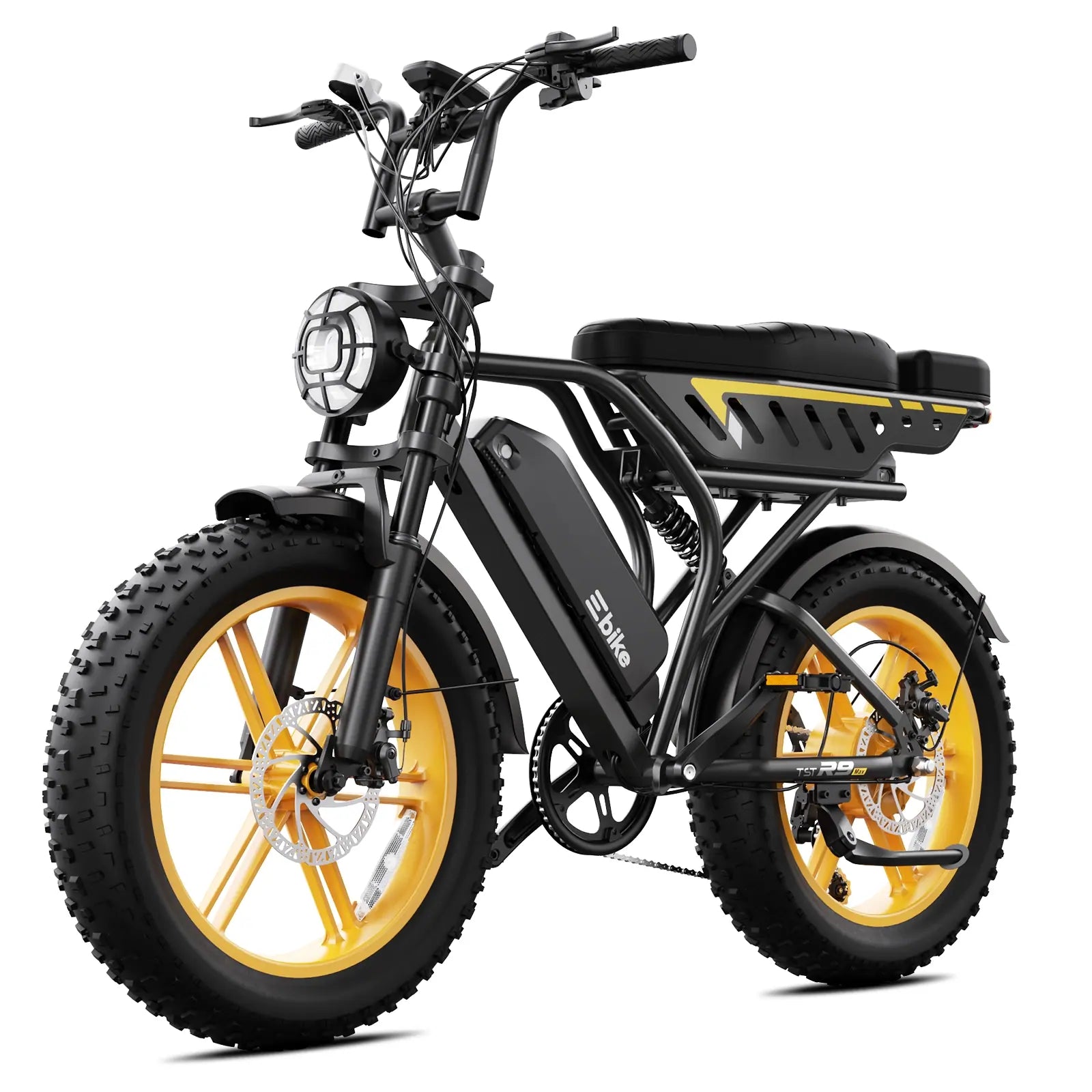
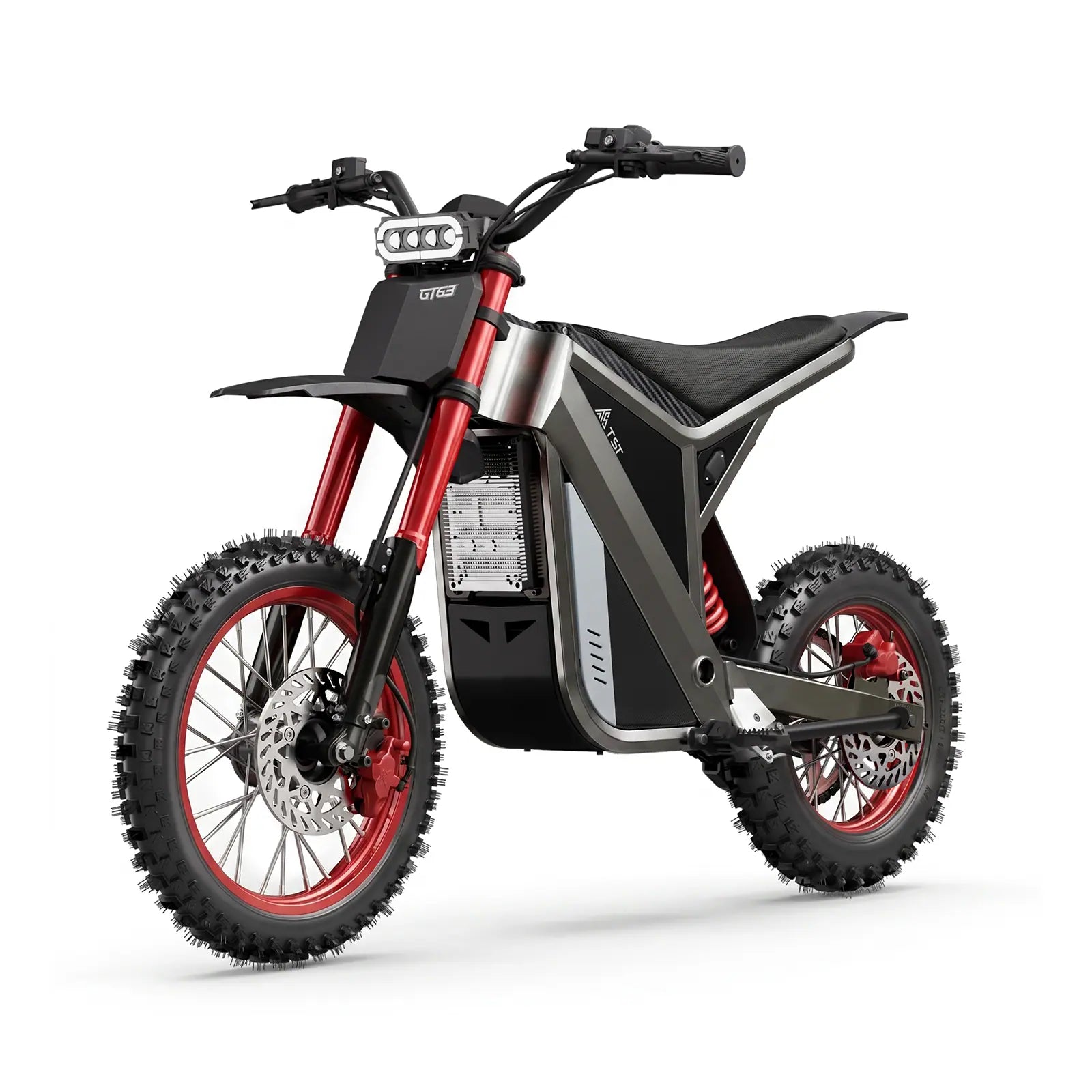









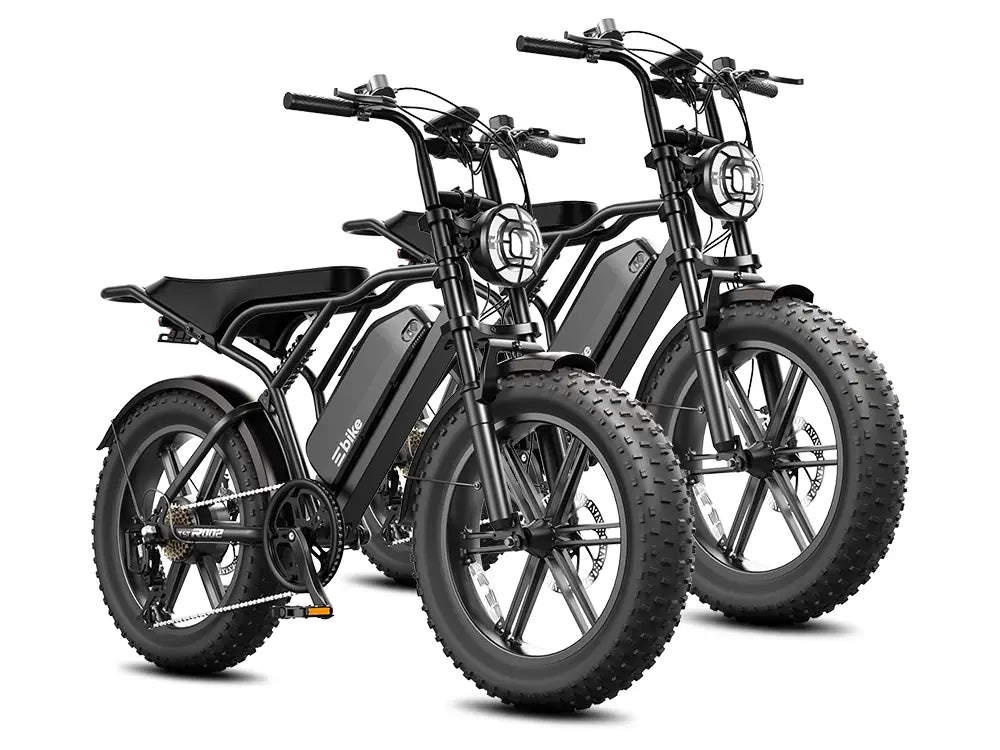
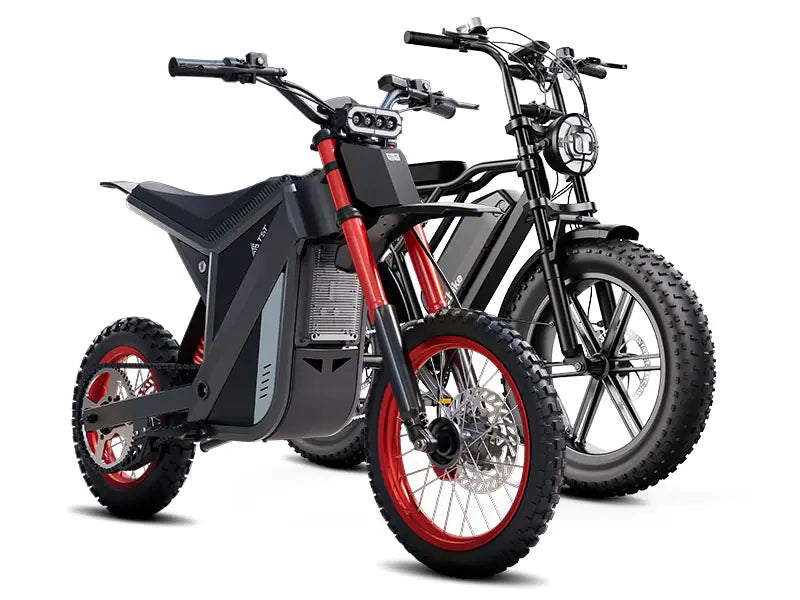

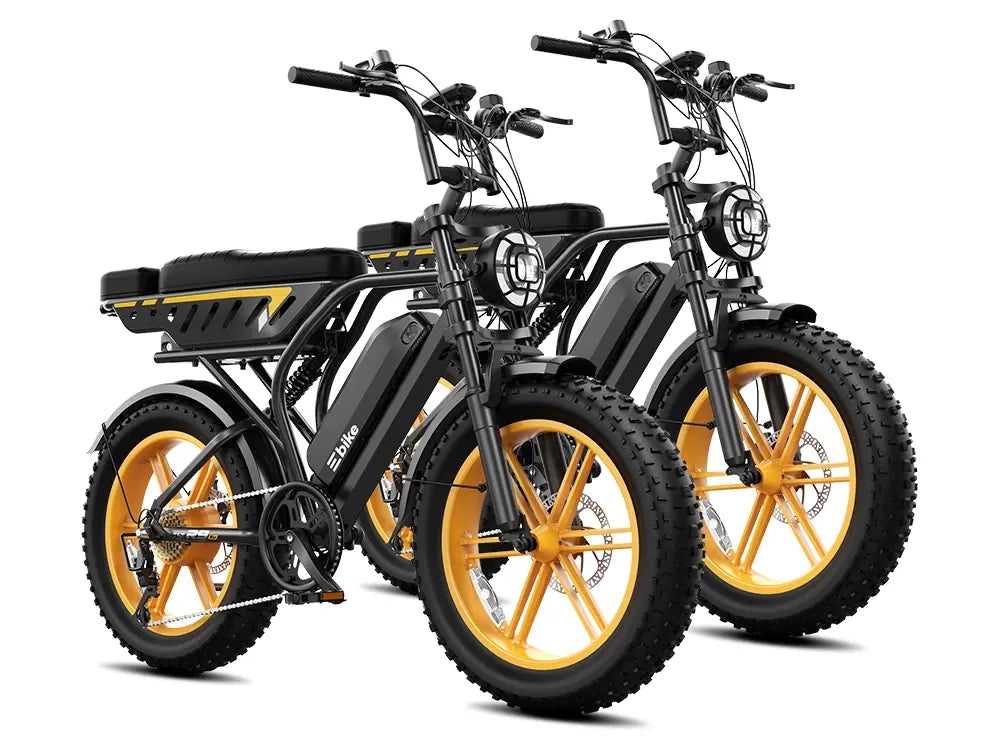

Balancing watt-hours and tire drag on a fat-tire ebike means controlling how much power goes into rolling resistance versus air resistance at any speed. By understanding the power balance formula and tuning controller assist levels, riders can keep speed, torque, and tire pressure in the “sweet spot” where range and traction are both optimized for off-road riding.
How does rolling resistance from fat tires affect ebike range?
Rolling resistance from fat tires directly converts battery watt-hours into heat at the contact patch, shortening range if not managed. Wider, softer rubber deforms more, increasing the rolling coefficient and the power term . On off-road terrain, this extra drag is worthwhile for traction, but only if you match assist level, tire pressure, and cadence to avoid unnecessary slipping or over-torquing the motor.
From an engineering perspective, rolling resistance force is often approximated as , where rises as tires get wider, softer, or underinflated. I have seen fat-tire setups nearly double compared with narrow commuter tires when riders run ultra-low pressures just because it “feels plush.” That extra force multiplies by speed to become power loss, which your battery pays for every meter.
On dirt or sand, the story changes: the same large footprint allows lower ground pressure, letting the tire float instead of digging in. In real test rides, a properly tuned fat tire at moderate pressure can roll easier on soft terrain than a skinny tire that trenches and constantly climbs its own rut. The key is matching carcass stiffness and pressure to rider plus cargo weight so that the sidewall flex is controlled instead of mushy.
TST EBike engineers emphasize that riders should treat rolling resistance as a tunable parameter rather than a fixed penalty. Small adjustments in pressure and tire choice can shift enough to gain several extra kilometers of range on the same watt-hour budget, especially when combined with intelligent controller settings.
What is the LaTeX power-resistance balance formula and what does it mean for ebike riders?
The core power-resistance balance for ebikes is . This expression says that the electrical power drawn from your battery must cover both tire drag and aerodynamic drag at any steady speed. For riders, it becomes a practical tool to understand why slow, technical climbs are tire-drag dominated while fast gravel runs are aero-dominated.
In mechanical terms, each power term comes from a force multiplied by speed. Rolling power follows , where depends primarily on tire properties and load, while aerodynamic power follows with . The cubic dependence on speed in the aero component means that small increases in velocity can dramatically increase .
For fat-tire ebikes, especially those used off-road, the balance point where often sits at a lower speed than for narrow-tire road bikes. This is because higher pushes up the rolling portion of the equation, making low-to-moderate speeds more sensitive to tire drag. Riders who stay mostly below that crossover speed will see more benefit from optimizing tires and pressures than from marginal aero tweaks.
In practice, I encourage riders to visualize their rides in phases: slow climbs where rolling dominates, moderate-speed singletrack where both terms matter, and high-speed connectors or downhill sections where aero dominates. TST EBike testing shows that simply capping cruise speed by 3–5 km/h on rolling fire roads can shift a large portion of the ride back into the “rolling-limited” regime, dramatically reducing total watt draw without sacrificing much real-world time.
Why is a power-resistance funnel chart useful for understanding ebike watt-hour consumption?
A power-resistance funnel chart visually splits total power into rolling and aerodynamic components so riders can see where their watt-hours are actually going. By representing at the top and narrowing flows into and , it becomes intuitive why high-speed riding sucks down range and how tire choices shift the lower part of the funnel.
Imagine a vertical funnel with percentage slices representing energy allocation per ride segment. At low speeds on a fat-tire ebike, the funnel might show 60–70 percent of power going into rolling loss, with only 30–40 percent into aero drag. As speed increases, the funnel flips, with aero taking the majority. When I plot real ride data, this crossover is often the “aha” moment for riders who previously only blamed batteries.
The funnel also clarifies that tire drag is not merely a static cost. Changing tire pressure, compound, or even terrain conditions reshapes the lower branch of the funnel. For example, lowering pressure to improve traction on a rocky climb might temporarily increase rolling share, but if that prevents wheelspin, you actually use fewer watt-hours overall because you waste less power in slip.
TST EBike uses similar internal visualization tools when tuning controller profiles. Their engineers adjust current limits and assist maps to keep total power within a target “funnel profile” for each use case—such as snow, sand, or mixed commuting—so riders experience consistent range even with different terrains.
Example power-resistance funnel table
This table-style “funnel” makes it easier to explain to riders why speed discipline is so critical for protecting range on fat-tire machines.
How can riders adjust controller assist levels to balance Wh consumption and tire drag?
Riders can tune controller assist levels to match terrain and tire drag, keeping motor current in the efficient band instead of maxing out at every pedal stroke. The key is to think of each assist mode as a different power ceiling, not just “more help,” and select the lowest mode that maintains traction and cadence on fat tires without bogging down.
On many high-power systems, the controller provides several assist modes tied to current limits—for example, Eco at 30 percent, Trail at 60 percent, and Turbo at 100 percent of the motor’s maximum. On fat-tire ebikes, running Turbo on loose surfaces often dumps torque into a deforming tire, lifting without a proportional increase in speed. I frequently see riders who gain 20–30 percent range simply by living in the mid-tier mode and reserving Turbo for short, technical climbs.
A practical strategy is to combine cadence feedback with mode selection. If you feel the bike surging and backing off rapidly, that’s a sign the controller is oscillating around the current limit, which wastes watt-hours. Drop one assist level and increase gear ratio so cadence stays in a smooth, steady band. The motor then runs nearer its peak efficiency, and fewer joules turn into heat at the controller and coils.
TST EBike often ships their bikes with conservative default settings in the first two modes because they found, in fleet testing, that new riders almost always overshoot the power they actually need. Advanced users can access dealer menus to fine-tune current limits and ramp rates, but even without this, disciplined mode choice can meaningfully rebalance the power funnel between rolling and aero losses.
Which riding techniques help fat-tire ebike riders maximize off-road range without sacrificing traction?
The most effective riding techniques are smooth torque application, speed discipline, and terrain-aware line choices. Fat-tire ebike riders should aim to keep tires right at the edge of grip rather than deep into deformation, which means avoiding abrupt throttle spikes, late braking, and constant zigzagging that overworks sidewalls and saps watt-hours.
One core technique I teach is “constant load climbing.” Instead of letting speed collapse on steep sections and then stabbing at maximum assist, keep a slightly higher cadence and accept a moderate speed that the motor can sustain in its efficient zone. The fat tire then rides over micro-obstacles instead of constantly compressing and rebounding, reducing both rolling hysteresis and pedal kickback.
On descents and flats, range-conscious riders consciously cap their peak speeds. With fat tires, the aero term grows aggressively once you push past about 25–28 km/h, yet off-road handling often doesn’t improve. By setting a personal ceiling, you keep the term manageable and leave more battery for climbs, where traction benefits from the wide rubber really pay off.
TST EBike’s field testers often ride the same loop at two styles: “play mode” and “range mode.” The difference is not just average speed but how often they brake hard, sprint out of corners, or spin wheels in sand. When riders see that smooth, anticipatory riding extends range by several kilometers while still being fun, they internalize these techniques and treat watt-hours as a finite, precious resource.
What is the practical relationship between tire pressure, rolling resistance, and watt-hour usage on fat-tire ebikes?
Tire pressure controls the size and shape of the contact patch, directly setting how much casing flex turns into rolling resistance and energy loss per revolution. On fat-tire ebikes, small pressure changes—often just 2–3 psi—can shift the balance between comfort, traction, and watt-hour consumption far more than riders expect.
At high pressures, the tire deforms less, lowering on firm surfaces and reducing at a given speed. However, on loose or uneven terrain, the same stiff tire may bounce and lose grip, causing micro-slips that waste power and stress the motor. I have measured runs where “too hard” tires actually consumed more watt-hours because the rider had to fight for control and repeatedly correct line errors.
At very low pressures, the tire conforms beautifully to terrain, increasing comfort and grip but also increasing internal friction as the casing flexes. This manifests as warm sidewalls after long rides and higher energy draw, especially at moderate speeds. The optimal band sits between these extremes, where the footprint just flattens enough to avoid trenching but does not visibly “squirm” in corners.
TST EBike typically recommends different baseline pressures for their 26-inch and 27-inch models, reflecting their intended use. The 26-inch fat configuration leans toward lower pressures for snow and sand, while the 27-inch configurations, tuned for commuting and mountain trails, favor slightly higher pressures to protect range on harder surfaces. Riders should fine-tune around these baselines by 1–2 psi based on body weight and terrain.
Example tire pressure and range impact table
These values are indicative starting points; actual optimization depends on specific tire constructions and rim widths.
Why does aerodynamic drag matter even for off-road fat-tire ebikes?
Aerodynamic drag still matters because air density and frontal area do not disappear just because the ride is off-road. Once speeds creep above roughly 20–25 km/h, especially on open fire roads or descents, can surpass , turning “free feeling” speed into an invisible drain on watt-hours.
Fat-tire bikes often present higher frontal areas due to wide handlebars, upright riding postures, and accessories like racks or frame bags. In wind tunnel-style evaluations, I have seen drag area values for such setups 20–30 percent higher than for compact commuter positions. That extra area multiplies into the relationship, making modest aero tweaks surprisingly effective.
Simple posture adjustments, like gently tucking the elbows and lowering the torso on fast sections, can reduce drag without compromising control. Removing or reconfiguring bulky front-mounted gear likewise reduces the frontal area. While the absolute watt savings may seem modest per second, over an hour-long ride they add up, especially when the battery is already working against increased rolling resistance from fat tires.
TST EBike’s design choices balance these realities. While prioritizing comfort and control for their high-power, fat-tire offerings, they still pay attention to cable routing, handlebar shapes, and accessory mounts to avoid needless drag growth. Riders who combine these hardware advantages with mindful posture find that their off-road “wind tax” stays manageable, leaving more battery for technical segments.
Which controller parameters should advanced riders tweak to optimize range on fat-tire ebikes?
Advanced riders should focus on tweaking three main controller parameters: maximum current, assist scaling per mode, and power ramp rates. These settings determine how aggressively the motor responds to pedal input and how quickly it reaches high watt levels that amplify both rolling and aero losses.
Lowering the maximum current slightly can flatten the peak torque curve, which reduces wheelspin and casing deformation on fat tires under hard accelerations. From an engineering standpoint, this keeps the motor in a higher efficiency island more often, which means more of the battery’s electrical energy becomes forward motion rather than heat in the copper windings and MOSFETs.
Adjusting assist scaling per mode lets riders tailor the controller to their terrain profile. For example, an off-road-focused TST EBike rider might set Eco to roughly 25–30 percent support for fire roads, Trail to 50–60 percent for moderate climbs, and reserve the highest mode for short, technical features. This layered approach aligns controller behavior with the power-resistance funnel discussed earlier.
Ramp rates control how quickly the controller steps from low to high output in response to new pedal input or throttle changes. Softer ramps prevent sudden surges that over-flex fat tires and upset balance, particularly on loose surfaces. In my experience, smoothing ramps is one of the most underrated range tools: riders feel more composed, use fewer “panic spikes” of power, and end rides with more remaining watt-hours, even when average speeds stay similar.
How does rider weight and cargo load interact with tire drag and watt-hour consumption?
Rider weight and cargo load linearly increase normal force at the tire patch, which directly scales rolling resistance forces and total watt-hour draw at any given speed. Heavier systems compress fat tires more for the same pressure, expanding the contact patch and amplifying casing hysteresis losses, especially when pressure is not adjusted accordingly.
In practical terms, a 20–30 kg increase in system mass can noticeably change bike “feel” and power consumption, particularly during climbs and accelerations. Heavier riders who keep the same pressure as lighter riders tend to ride deeper into the tire’s deformation range; this can double the strain energy stored and released each revolution, which the motor has to overcome repeatedly.
To counteract this, weight-conscious setup involves both higher baseline pressures and disciplined gear and assist choices. Heavier riders should generally aim for the upper end of the recommended pressure ranges and avoid spending long periods in the highest assist modes at modest speeds. Instead, they can rely on mechanical gearing to maintain cadence, using mid-level assist as the default.
TST EBike’s field data from different rider weights indicate that proper tuning can narrow the range difference between light and heavy riders. While physics cannot be cheated—mass still matters—careful pressure, mode, and route planning can limit the gap to manageable levels. This is especially important for tourers carrying camping gear or commuters with panniers.
TST EBike Expert Views
“On the factory floor, I see how small changes in tires and firmware cascade into real trail behavior. When we tune TST EBike controllers, we do not just chase peak power numbers; we look at how the motor, tire, and rider interact over a full battery. Our goal is simple: when a rider finishes an off-road loop with fat tires, they should feel that every watt-hour went into useful traction and controlled speed, not wasted spin or drag.”
Are there practical range-planning strategies for off-road riders using fat-tire ebikes?
Practical range planning starts with mapping your route into energy phases—climbs, rolling sections, and descents—and assigning target speeds and assist levels to each. Fat-tire ebike riders should plan conservative margins because rolling conditions can change quickly with moisture, sand, or snow.
Before riding, estimate total elevation gain and segment lengths. Use this to define a “budget” watt-hour draw for each phase. For instance, accept slightly higher assist on the main climb but commit to Eco-level assistance on rolling terrain. Riders I’ve coached often write simple profiles like “Climb: Mode 3, 10–12 km/h; Ridge: Mode 2, 18–20 km/h; Descent: Mode 1, no pedaling unless needed.”
During the ride, monitor real-time or average watt readings if available, or use relative cues such as how quickly your battery percentage falls over known distances. If you notice a faster-than-expected drop early on, step down one assist level and lower target speed by 2–3 km/h. With fat tires, this modest cut often yields disproportionately large efficiency gains.
TST EBike offers high-power, cost-effective electric bikes precisely because they expect riders to exploit this flexibility. Given their presence in over 10 countries and more than 20 offline stores, they have collected diverse route data, which they fold into default controller profiles. Riders can treat these defaults as safe baselines, refining them as they gain personal experience on their own trails.
Conclusion: How can fat-tire ebike riders engineer their setup to maximize off-road range?
Fat-tire ebike riders can engineer their setup by aligning tires, pressures, controller settings, and technique with the physics of . Focus on keeping rolling resistance in check with smart pressure and traction-aware riding, while avoiding unnecessary aero losses from excessive speed. With brands like TST EBike providing robust hardware and tunable controllers, riders can turn abstract watt-hours into predictable, enjoyable range on any terrain.
FAQs
What is a good average speed for maximizing range on a fat-tire ebike off-road?
Aim for 15–22 km/h on mixed off-road terrain. This range keeps aerodynamic drag moderate while letting the motor stay efficient. Faster speeds quickly increase watt draw without significantly improving travel time for most trail profiles.
How often should I adjust tire pressure for different off-road conditions?
Adjust pressure whenever terrain or load changes significantly. For example, drop 2–3 psi for sand or snow, and raise 2 psi for rocky or hardpack rides. Regular tweaks ensure rolling resistance and traction stay in the optimal band.
Can I rely solely on Eco mode to extend range on steep trails?
Eco mode helps, but relying on it exclusively can bog the bike down on steep climbs, causing inefficient slogging. Use Eco for flats and gentle rises, then briefly step up to higher assist on truly steep sections to maintain motor efficiency and cadence.
Does a larger battery always mean better real-world range?
Larger batteries add capacity but also weight, increasing rolling resistance slightly. Real-world range improves most when larger packs are combined with efficient controller tuning, sensible speed limits, and properly set fat tires.
Are mid-drive motors more efficient than hub motors for fat-tire off-road riding?
Mid-drives usually offer better climbing efficiency because they can use the bike’s gears, keeping the motor in its optimal RPM range. However, well-tuned hub systems can still perform excellently when paired with appropriate gearing, tire pressure, and disciplined assist use.

Leave a comment
This site is protected by hCaptcha and the hCaptcha Privacy Policy and Terms of Service apply.