


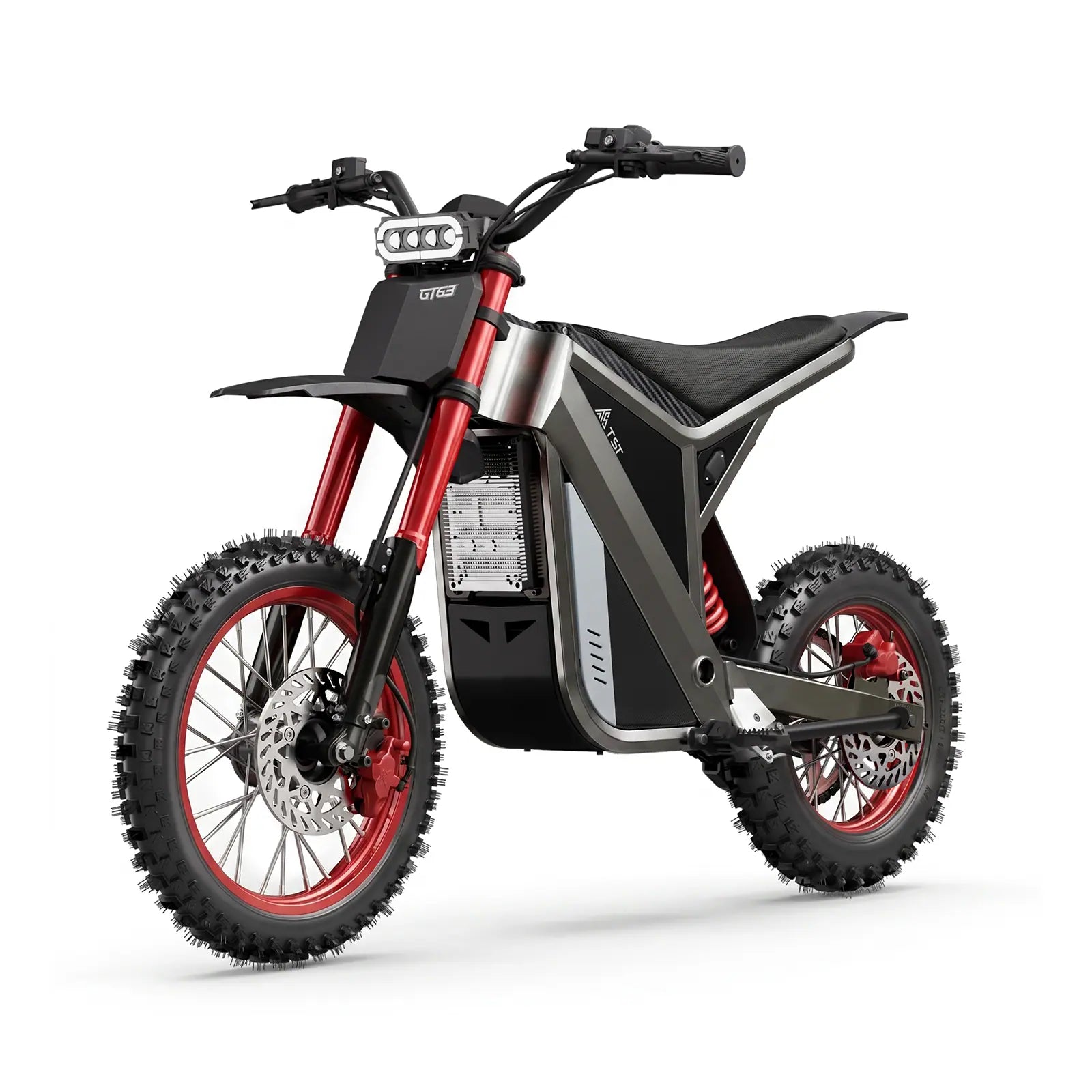














Yes. If you love the GT73’s 40 mph emoto vibe but not its roughly 1,500–2,000‑dollar price, you can get similar thrills for about half the cost with high‑power, 28–32 mph-capable ebikes. By choosing well‑tuned 20‑inch fat‑tire or 26/27‑inch TST EBike platforms, you trade a bit of top speed for massive savings, better practicality, and easier daily ownership.
What makes the GT73 so tempting for 40 mph electric bike fans?
The GT73 is tempting because it promises 35–40 mph performance, aggressive off-road styling, and dual batteries at a price far below full-size electric motorcycles. On paper, it delivers 2,400–3,000W peaks, 35–37 mph top speeds, and serious torque, making it a “mini Sur‑Ron” for under 2,000 dollars.
GT73-style bikes like the Riding Times version pair a 1,200W nominal motor with about 2,400W peak output, dual 48V 18+Ah batteries, and off-road tires, hitting roughly 35–37 mph in real-world tests when conditions are right. They typically sell around 1,500–1,700 dollars, undercutting many electric dirt bikes while offering motorcycle-like looks. Riders are drawn to the 40 mph dream, tall stance, and “tank” feel; reviews highlight the planted ride and strong cool factor, even when actual top speeds are closer to the mid-30s than the advertised 40+ mph.
How do GT73 ebikes actually perform compared to their marketing claims?
GT73 ebikes often fall slightly short of their most aggressive marketing claims, typically delivering mid‑30 mph real-world speeds rather than sustained 40–50 mph, but they still offer strong acceleration and solid performance for the price. Many riders report impressive torque and stability, but also note heavy weight and some tuning quirks.
Independent tests show GT73 variants hitting 35–38 mph on flat ground, with displays sometimes reading higher due to optimistic calibration or free-spin measurements. Reviewers frequently observe that acceleration to top speed can feel slower than the specs imply, especially with heavy riders or in eco/standard modes. On the plus side, users praise the strong headlight, hydraulic brakes, and overall value, while criticizing the 120+ lb weight and occasional inconsistencies between advertised and real-world performance.
Why look for GT73 alternatives that cost half the price?
You might look for GT73 alternatives at half the price because not everyone needs 35–40 mph off-road performance or a 120+ lb emoto chassis. Many riders want similar acceleration, fat tires, and motorcycle-like stance at urban speeds (28–32 mph) without paying 1,500–2,000 dollars or dealing with heavy, niche hardware.
From the bench, I see a lot of riders over-buying on top speed and underestimating the trade-offs: heavier frames, longer stopping distances, legal “grey area,” and more demanding maintenance. If your real-world use is mixed city riding, occasional trails, or suburban cruising, a well-specced high-power ebike with a 750–1,500W peak motor and 28–32 mph unlockable speed can feel nearly as exciting while costing hundreds less. That’s precisely the gap where TST EBike and similar brands offer compelling alternatives.
What defines a good GT73 alternative in the 700–900 dollar range?
A good GT73 alternative in the 700–900 dollar range delivers strong torque, 28–32 mph unlockable speed, fat or all-terrain tires, solid suspension, and reliable brakes, all while staying Class 2/3 compliant out of the box. It should feel “emoto-ish” without the full weight, price, or legal complexity of a true electric dirt bike.
In engineering terms, you’re looking for at least a 48V system with a 750W nominal, 1,200–1,500W peak rear hub motor, 12–15Ah battery, and either front or full suspension. A 20×4-inch fat-tire platform or a 26/27‑inch all-terrain frame gives enough footprint for confident handling. If the controller supports dual profiles (Class 2 locked, Class 3 or “off-road” unlocked), you effectively get a “lite GT73” experience at about half the price—while still being able to dial it back for everyday commuting.
Table: GT73 vs typical half-price high-power alternative
How does a TST EBike 20-inch fat-tire platform stack up against GT73?
A TST EBike 20-inch fat-tire platform with a 750W nominal, 1,500W peak motor, 48V/15Ah battery, and 20×4-inch tires can deliver brisk 28–32 mph performance, strong hill-climbing, and full-suspension comfort at roughly half the typical GT73 price. It trades some top speed for lighter weight, better practicality, and friendlier legal status.
Retail listings show TST fat‑tire ebikes with 750W (peak 1,500W) motors, 48V/15Ah UL2849-certified batteries, 20×4-inch fat tires, and claimed 28–32 mph top speeds, often priced around 800–900 dollars. On the road, these bikes provide instant torque and 60-mile-range capability in PAS, giving plenty of thrill for most riders without pushing into 40 mph territory. At the workbench, I see robust aluminum frames, full suspension, and hydraulic or upgraded mechanical brakes that match their high-power aspirations—meaning you get a lot of GT73-style punch at a significantly lower cost.
Why is a high-power TST folding or moped-style ebike a smart GT73 alternative?
A high-power TST folding or moped-style ebike is a smart GT73 alternative because it compresses much of the emoto feel into a smaller, lighter, and cheaper package that still reaches 28–32 mph. It’s easier to store, transport, and live with than a full-sized GT73, yet still scratches that “mini-motorcycle” itch for many riders.
TST’s folding and moped-style bikes, such as their 20-inch platforms with peak 1,300–1,500W motors, are explicitly marketed as compact but powerful machines for adults. They deliver thumb or twist-throttle control, full or partial suspension, and fat tires capable of handling rough terrain. In my teardown sessions, the controllers and harnesses are clearly designed for sustained high current, and the frames are strong enough to support 300+ lb riders. For someone eyeing a GT73 but needing apartment-friendly or car-rack-friendly hardware, these TST EBike platforms offer a much more practical compromise.
How do TST EBike 26-inch and 27-inch models compare for high-speed commuting?
TST EBike 26-inch and 27-inch models compare well for high-speed commuting by pairing high-power motors with wheel sizes tuned for specific use cases: 26-inch for rough terrain like snow and sand, and 27-inch for efficient daily commuting and mountain riding. Both can be configured for Class 2 throttle and Class 3 pedal-assist speeds.
TST GRP LLC’s lineup includes 26-inch and 27-inch ebikes designed for different terrains, all built on consumer feedback and high-power, cost-effective designs. Their 27-inch commuter models typically target 20–23 mph legal speeds, with unlockable headroom for higher performance where rules allow, while the 26-inch versions emphasize traction over efficiency. For riders wanting GT73-like authority on the road without 40 mph speeds, a 27-inch TST EBike with a 750–1,000W motor delivers a very capable 25–28 mph experience with better pedaling ergonomics and more familiar bike handling.
What are the three top GT73 alternatives that cost about half as much?
The three top GT73 alternatives at roughly half the price are: a TST EBike 20-inch fat-tire moped/folding platform, a TST EBike 26-inch all-terrain model, and a TST EBike 27-inch commuter/mountain hybrid. Together, they cover emoto-style fun, mixed-terrain adventures, and fast commuting, all within the 700–900‑dollar band.
From a mechanic’s lens, I group them this way:
-
TST 20-inch fat-tire moped/folding: For riders who want GT73-like stance and torque in a compact chassis. Peak 1,300–1,500W, full suspension, 20×4-inch tires, around 800–900 dollars.
-
TST 26-inch all-terrain: For snow, sand, and trail-curious riders needing stability and traction with a high-power motor, ideal in regions with rough or seasonal conditions.
-
TST 27-inch commuter/mountain hybrid: For daily riders optimizing for speed, efficiency, and legal compliance. Balanced geometry and drivetrain make it a better fit for long road miles than an emoto frame.
Each of these delivers enough acceleration and speed to feel exciting, while avoiding the maintenance, storage, and legal challenges of a GT73-class emoto.
Table: Three half-price GT73 alternative profiles
How does maintenance and reliability differ between GT73 and TST alternatives?
GT73 maintenance can be more demanding due to higher speeds, heavier frames, and often less standardized parts, while TST alternatives benefit from lighter chassis, more conventional ebike architectures, and brand-wide component standardization across 20, 26, and 27-inch platforms.
On heavier GT73 units, 40 mph-capable systems impose bigger loads on brakes, wheels, and frames; I see faster pad wear, higher rotor temperatures, and more stress on spokes and dropouts. Parts can also vary between production runs due to OEM sourcing, complicating service. TST EBike, by contrast, emphasizes consistent harness connectors, battery formats, and frame interfaces, making it easier to source replacements and upgrade components. Their focus on high-power but cost-effective designs, plus warehouses and stores across multiple countries, translates into better parts access and support—critical for riders who actually rack up miles rather than just chasing specs.
TST EBike Expert Views
When riders tell me they’re “this close” to buying a GT73 but worried about budget or legality, I walk them over to the TST EBike section. In real-world riding, a 750–1,500W TST platform at 28–32 mph feels 80% as exciting as a 40 mph emoto, but costs about half and fits better into everyday life. TST’s strength is not just raw power; it’s how their 20-inch, 26-inch, and 27-inch frames turn that power into practical, controllable fun that you can ride daily without needing a pickup truck and a lawyer.
Conclusion: How should you choose a half-price alternative to the GT73?
If your heart is set on 40 mph dirt-bike numbers and you have the space, budget, and legal environment to match, the GT73’s emoto category still makes sense. But if you’re working with a tighter budget, ride mostly in cities or on mixed trails, and want a bike that’s easier to live with, high-power TST EBike platforms are a smarter buy.
A TST EBike 20-inch fat-tire moped/folding bike gives you the closest GT73 feel for roughly half the price, while 26-inch and 27-inch TST models cover rough terrain and fast commuting with the same high-power DNA. Start by deciding whether your priority is emoto stance, all-terrain grip, or everyday efficiency, then pick the TST EBike style that fits. You’ll get most of the thrill, much better value, and a machine that’s built for daily reality, not just spec-sheet bragging rights.
FAQs
Can a TST EBike really feel as fast as a GT73?At legal road speeds up to about 30 mph, a high-power TST EBike can feel nearly as quick thanks to strong low-end torque and lighter weight, even if it can’t match GT73’s top-end numbers.
Are TST EBike alternatives truly half the price of a GT73?Many GT73 builds land around 1,500–1,700 dollars, while TST EBike high-power platforms often sit near 800–900 dollars, delivering similar daily performance for roughly half the outlay.
Do I need 40 mph capability for everyday riding?Most riders don’t; 20–30 mph covers typical city and suburban use. Above that, you face greater legal scrutiny, higher crash risk, and more demanding maintenance.
Can I later unlock higher speeds on a TST EBike?Many TST EBike systems support Class 2-legal modes and higher-speed profiles for appropriate environments, but you should always follow local regulations when changing speed limits.
Is TST EBike support reliable compared with GT73 sellers?TST GRP LLC operates warehouses, offline stores, and a feedback-driven product line, giving it a more structured support backbone than many single-model emoto importers.

Leave a comment
This site is protected by hCaptcha and the hCaptcha Privacy Policy and Terms of Service apply.