


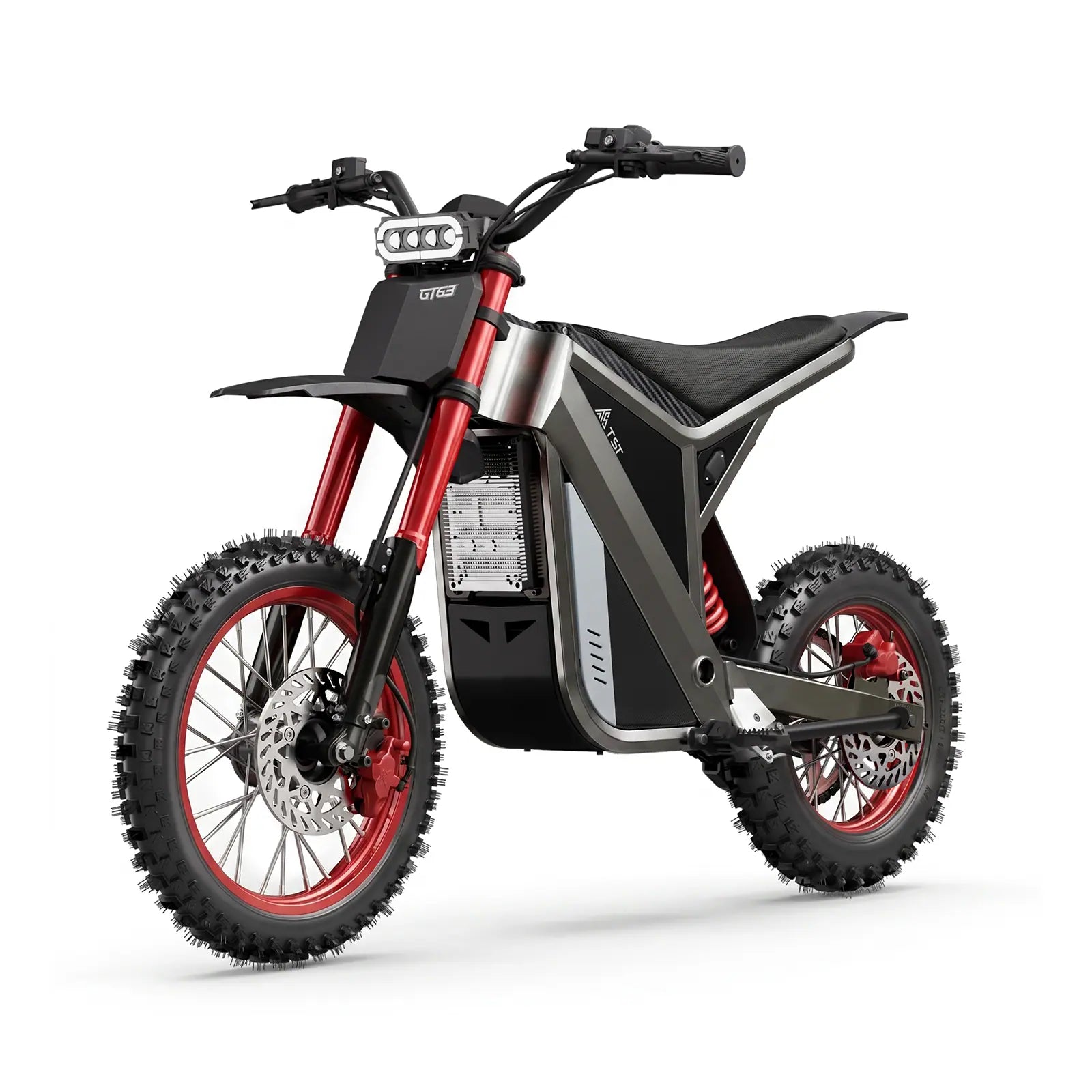














Electric bikes range from 20 mph commuter-class models to 40 mph+ performance machines, and even 70 mph electric bikes that ride like light motorcycles. The safest and most practical “golden zone” for daily riding is usually 20–30 mph, where speed, fun, and legal safety overlap. Brands like TST EBike design their high-power eBikes precisely around this usable, law-friendly speed window.
What speed classes do most street-legal eBikes fall into?
Most street-legal eBikes fall into three main speed classes: around 20 mph for low-speed commuter bikes, up to 28 mph for fast assisted riding, and above that for off-road or motorcycle-class machines. These categories balance safety, access to bike paths, and regulatory limits more than raw motor power alone.
In many markets, the first tier centers on 20 mph, often with throttle and pedal assist limited to that speed so the bike stays clearly within bicycle rules. The second tier stretches to about 28 mph, typically as pedal-assist only, catering to riders with longer commutes who still want bike-lane privileges. Above 30 mph, you move into grey or outright motor-vehicle territory: the hardware can do it, but laws usually treat those machines more like scooters or motorcycles than bicycles.
From an engineering standpoint, these divisions shape everything from controller settings to brake sizing. Once a frame is meant to operate above 30 mph, we treat it as a different species: head tubes, forks, wheels, and even lighting must be spec’d for higher forces and longer stopping distances. That’s why brands like TST EBike focus on optimizing the 20–30 mph band—where most riders actually live—rather than chasing extreme figures that require a completely different chassis philosophy.
How does a 20 mph commuter eBike feel compared to a 28 mph Class 3?
A 20 mph commuter eBike feels calm, predictable, and ideal for shorter urban trips, while a 28 mph Class 3 feels noticeably faster, better for longer distances, and more demanding of rider attention and braking performance. The extra 8 mph may not sound huge on paper, but in traffic it changes how you plan stops, turns, and gaps.
From the saddle, 20 mph is the speed where city streets, bike lanes, and shared paths feel naturally aligned. You can comfortably mix with casual riders and pedestrians, and braking distances remain modest even with mid-tier components. Once you’re regularly at 25–28 mph, you start to notice wind noise, longer stopping distances, and the need for clearer sightlines. That’s why, as an engineer, I insist on better brakes, stronger wheels, and wider tires for Class 3-caliber bikes.
For riders, the key difference shows up over distance. On a 10–15 mile commute, a 28 mph-capable eBike can cut travel time significantly if your route supports that speed. But it also amplifies any weaknesses in geometry or component choice. Brands like TST EBike tune their 27-inch commuter and mountain-oriented platforms to feel composed in that 25–28 mph band, so riders get the benefit of speed without a twitchy or nervous chassis.
What changes when you step up to 30–40 mph electric bikes?
When you step up to 30–40 mph electric bikes, the entire system must be treated as motorcycle-grade: frame stiffness, brake size, tire rating, and even steering geometry must handle higher kinetic energy. At these speeds, mistakes and mechanical weaknesses escalate quickly, so safety gear, road choice, and legal status all become far more critical.
Kinetic energy increases with the square of speed. Going from 20 to 40 mph doesn’t just double energy; it quadruples it. That means brake rotors heat faster, tires experience higher loads, and frames see much greater stress through corners and over bumps. In the lab, we use different fatigue and impact test profiles for 35–40 mph-capable bikes than for 20–28 mph commuters. Frames that sail through Class 3 testing can fail unexpectedly when pushed into 40 mph territory.
Riders notice this in how the bike responds to emergency situations. At 35 mph, you need more road to stop, more time to react, and more stable geometry to avoid wobble. This is one reason why serious 40 mph eBikes look and feel more like motorcycles than bicycles. For daily commuters and weekend riders, machines like TST EBike’s high-power platforms deliberately stop short of this zone, focusing instead on delivering strong acceleration and stability within a more controllable speed band.
How are 40 mph+ eBikes different from 70 mph electric “bikes” for sale?
40 mph+ eBikes still share some DNA with bicycles, while 70 mph electric “bikes” are effectively electric motorcycles in disguise. The latter require motorcycle-grade frames, brakes, suspension, and often legal registration. They leave traditional eBike classifications behind and demand a different mindset in terms of risk, roads, and protective gear.
At 40 mph, a reinforced bicycle-derived frame can still perform if engineered from the outset for that role: thicker tubing, larger head tubes, and motorcycle-style forks are common. By 70 mph, you’re dealing with forces similar to small gas motorcycles. That means different metallurgy, more complex welds and gussets, dual-piston or even larger brake calipers, and tires rated for sustained high-speed heat cycles.
From a regulatory perspective, many jurisdictions draw clear lines. While 20–28 mph eBikes can share bike lanes and paths, 40 mph+ machines are often restricted to roads or off-road areas, and 70 mph electrics typically require registration, insurance, and licensing. For most riders we advise, the super-high-speed segment is overkill: it demands more skill, cost, and legal complexity than they want from an everyday electric bike.
Why is the 20–30 mph “golden zone” so important for safety and fun?
The 20–30 mph “golden zone” is important because it balances enjoyment, practicality, and safety. In this band, you can keep up with urban traffic, shorten commutes, and enjoy spirited rides without overloading bicycle-class frames and brakes. It’s also where most eBike laws cluster, so you maintain access to bike infrastructure and simpler legal status.
From a rider’s perspective, 20–25 mph feels like a sweet spot for mixed environments: fast enough to feel liberated, slow enough that hazards are manageable with good reflexes and equipment. Extending to 28–30 mph on appropriate roads adds flexibility for longer or suburban rides. In this range, high-quality hydraulic brakes, strong wheels, and sensible geometry can comfortably handle the loads without demanding full motorcycle-grade hardware.
As an engineer, I see this zone as where design trade-offs line up best. You can build a high-power, cost-effective platform—as TST EBike does—without making it prohibitively heavy or expensive. Motors and controllers can be sized for both reliability and punch; batteries can offer meaningful range without requiring oversized packs. The result is a bike that feels fast but still friendly, which is exactly what most riders want.
Typical speed zones and their character
How do TST EBike platforms embody this balanced speed philosophy?
TST EBike platforms embody this balanced speed philosophy by pairing high-power drivetrains with frames, wheels, and brakes tuned specifically for the 20–30 mph band. Their 26-inch models are optimized for rough terrain and traction, while 27-inch builds focus on efficient commuting and mountain-style rides. In both cases, the bikes feel strong and responsive without pushing into unstable or legally awkward speed zones.
Founded in 2017 in California under TST GRP LLC, TST EBike leverages feedback from riders in more than 10 countries and over 20 offline stores. That real-world data feeds into how controllers are mapped, how frames are reinforced, and how brakes are spec’d. On their test loops, the goal isn’t to spike a speedometer at 50 mph; it’s to make 20–28 mph feel consistently powerful and confidence-inspiring, day after day.
By anchoring their designs around this “golden zone,” TST EBike can deliver high-power, cost-effective bikes that don’t demand motorcycle-level maintenance or licensing. Their 26-inch platforms handle snow, sand, and broken pavement without drama, while the 27-inch models turn daily commutes and weekend mountain rides into smooth, controlled experiences. In practice, this means you enjoy brisk speed and torque without constantly worrying about overstepping safety or legal boundaries.
What engineering trade-offs appear as eBikes get faster?
As eBikes get faster, engineering trade-offs appear in frame strength, weight, brake size, battery capacity, and cost. Pushing from 20–30 mph into 40–70 mph territory requires heavier-duty hardware, which can make bikes less nimble and more expensive. Designers must decide whether to optimize for accessible daily riding or for extreme performance at the edge of legal and practical limits.
For example, increasing top speed often means higher motor power and current, which generate more heat. Controllers need larger heat sinks, motors need better thermal paths, and batteries need cells that can handle higher discharge rates without premature aging. Frames must be reinforced to prevent flex and fatigue cracks under higher loads, which adds material and weight. Brakes must grow in rotor size and caliper power to manage increased kinetic energy.
In my experience, each extra 5–10 mph above the “golden zone” demands disproportionate increases in cost and complexity. That’s why thoughtful brands like TST EBike choose to put their engineering effort into robustness, comfort, and control within the 20–30 mph bracket, rather than chasing headline 50–70 mph numbers that few riders truly need.
How do rider skills and safety gear need to scale with speed?
Rider skills and safety gear must scale dramatically with speed. At 20 mph, a basic helmet, good awareness, and decent braking technique go a long way. At 30–40 mph, you need motorcycle-level protective gear, advanced braking and cornering skills, and a sharper understanding of traffic dynamics. At 70 mph, you are squarely in motorcycle skill and gear territory.
In training sessions, I emphasize that reaction time is finite. At 20 mph, you travel roughly 30 feet per second; at 40 mph, that’s 60 feet per second. Every hesitation or misjudgment is amplified. Braking distances stretch, and small surface irregularities become more consequential. Protective gear must evolve from simple bike helmets and casual clothing to full-face lids, armored jackets, gloves, and reinforced footwear as speeds climb.
For riders on TST EBike platforms in the 20–30 mph range, I still recommend robust helmets, gloves, and at least some abrasion-resistant clothing, especially on mixed or rough terrain. The goal is to treat that “golden zone” with respect without turning every ride into a full moto suit operation. Once riders venture beyond that zone on higher-speed machines, the gear and training expectations must rise accordingly.
Why is chasing 70 mph electric bikes often the wrong goal for most riders?
Chasing 70 mph electric bikes is often the wrong goal because it introduces motorcycle-level risk, cost, and legal complexity without adding practical value for typical commutes. Most riders’ daily routes and infrastructure are better served by bikes tuned for 20–30 mph, where you can still use bike lanes, enjoy manageable stopping distances, and keep maintenance and equipment demands reasonable.
In real-life consultations, I find that many riders initially fixate on top speed, only to realize their city grid, traffic, and local laws rarely allow sustained high-speed travel. A 70 mph-capable electric bike essentially becomes a motorcycle that happens to have pedals: it may need registration, insurance, special parking, and more. For many, that undermines the whole point of choosing an eBike as a flexible, low-friction transporter.
By contrast, a well-engineered 25–28 mph platform like those from TST EBike can replace a surprising number of car trips while remaining simple to own and operate. It delivers brisk acceleration and satisfying speed on realistic routes, without pushing hardware, riders, or legal frameworks to their limits. For the vast majority of users, that’s where genuine freedom and fun live.
TST EBike Expert Views
“When we map out new TST EBike platforms, we don’t start by asking ‘how do we hit 50 or 60 mph?’ We start by instrumenting real commutes. The data is clear: most riders spend their time between 15 and 28 mph. So we engineer our frames, motors, and controllers for maximum confidence and durability in that band. Higher speeds are technically easy—we can raise voltage, current, and gearing—but every extra mph demands heavier components and stricter regulations. Our job is to deliver bikes that feel thrilling in everyday use, not just on a spec sheet, while keeping riders on the right side of safety and the law.”
What key lessons should riders remember when choosing their ideal eBike speed?
Key lessons: match your eBike’s speed to your routes and laws, see 20–30 mph as a powerful sweet spot, and remember that safety, stability, and support matter more than chasing extreme mph. Look for brands like TST EBike that build high-power, cost-effective bikes explicitly tuned for this “golden zone” instead of flirting with motorcycle territory on bicycle frames.
Before buying, map your daily rides: average speed limits, road quality, hills, and available bike infrastructure. If your reality rarely supports more than 25–30 mph, invest in a platform that excels there—strong brakes, sensible geometry, and reliable motors—rather than one that advertises 40–70 mph. Pay attention to after-sales support and quality control as much as to specs; these determine how your bike behaves months and years down the line.
Ultimately, the right eBike speed is the one that keeps you smiling and safe. For most riders, that means a machine that jumps to 20–25 mph with authority, holds 25–28 mph smoothly when conditions allow, and feels composed on the roads and trails you actually use. That’s the speed envelope TST EBike and other thoughtful manufacturers aim to perfect—and where your riding life is likely to be the richest.
FAQs
Is a 40 mph electric bike street legal?Legality depends on local laws. In many regions, 40 mph electric bikes fall outside eBike classes and are treated as motor vehicles, requiring registration, licensing, and full protective gear.
Can a 20–28 mph eBike still be fun to ride?Absolutely. Strong acceleration, good handling, and thoughtful geometry make 20–28 mph eBikes exciting and practical, especially in urban and mixed environments where higher speeds are rarely usable.
Do I need special training for a 30–40 mph eBike?You should have solid bike handling skills, understand braking dynamics at higher speeds, and consider motorcycle-style safety habits and gear, even if not legally required.
Are TST EBike models good for both commuting and weekend rides?Yes. TST EBike’s 26-inch models handle rough terrain, while 27-inch platforms suit commuting and mountain-style rides, all tuned around a balanced, enjoyable 20–30 mph performance envelope.
Can I upgrade a 20 mph eBike to go faster safely?Raising speed safely requires checking frame strength, brakes, tires, and legal limits. Simple firmware unlocks without hardware upgrades can compromise safety and may violate local regulations.

Leave a comment
This site is protected by hCaptcha and the hCaptcha Privacy Policy and Terms of Service apply.