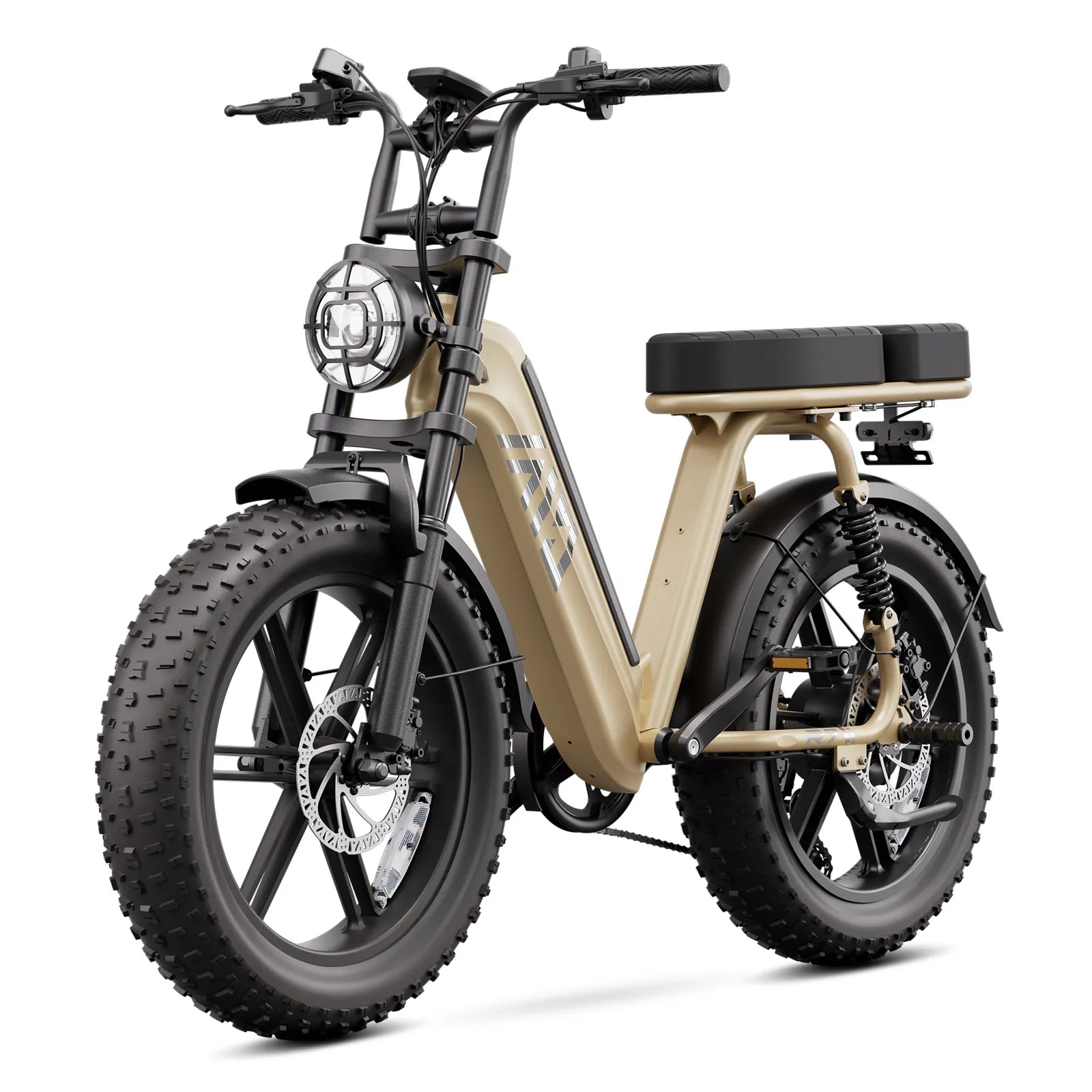
















Is a 20-inch moped ebike really safe for your teenager?

A 20-inch moped ebike can be safe for teens when speed is limited, brakes and tires are high quality, and parents set clear rules and supervision. Wide 20×4-inch tires, strong mechanical or hydraulic disc brakes, and adjustable power modes—like those used by TST EBike—give you real control over traction, stopping distance, and top speed, turning “mini-moto” excitement into manageable everyday mobility.

What makes a 20-inch moped ebike different from a kids’ electric dirt bike?

A 20-inch moped ebike differs from a kids’ electric dirt bike by blending bicycle-style pedals and road-legal features with moped-like geometry and power. Dirt bikes prioritize off-road suspension and low seat heights, while 20-inch moped ebikes balance street use, cargo options, and teen-friendly ergonomics in a compact, fat-tire format.

From the workshop bench, I see kids’ dirt bikes built around low frames, narrow tires, and simplified controls, usually capped near 10–14 mph for 8–10-year-olds. A 20-inch moped ebike, by contrast, is sized for taller kids and teens, often with 20×4-inch fat tires, full pedaling capability, and lighting for mixed on-road/off-road use. The frame geometry and wheel size make it more stable at higher speeds, but also mean it’s not appropriate for very young children.

How safe is a 20-inch moped ebike for a 10-year-old versus a teenager?

A 20-inch moped ebike is generally too powerful and tall for most 10-year-olds but can be appropriate for responsible teens, especially 13+ riders, when speed is limited and supervision is strict. For 10-year-olds, dedicated kids’ dirt bikes with 10–14 mph limits are safer; 20-inch mopeds fit better as they grow.

Guides for kids’ electric dirt bikes typically recommend lower seat heights, lightweight frames, and top speeds around 10–14 mph for 10-year-olds. In my experience, a 20-inch moped ebike is more comparable to a “small adult” bike: heavier, more powerful, and capable of higher speeds. That combination demands better balance, quicker reflexes, and more mature judgment—traits we usually see in older kids and teens. As a mechanic, I advise parents to treat 20-inch moped ebikes as teen/young adult machines, not primary bikes for elementary-age riders.

What safety features should a 20-inch moped ebike have for teen riders?

A teen-appropriate 20-inch moped ebike should feature wide 20×4-inch tires for grip, front and rear mechanical or hydraulic disc brakes, adjustable speed or assist modes, bright lights, and a sturdy frame. These components work together to control acceleration, maintain traction, and shorten stopping distances in real-world teen use.

On the bench, I won’t sign off on a high-power teen bike without at least dual disc brakes and a tire footprint that can handle quick stops on mixed surfaces. Wide tires increase the contact patch, improving both braking and cornering grip. Speed-limiting modes—often accessible via the display—let parents cap top speed to 15–20 mph while teens build skills. Combined with integrated lighting and reflective accents, these features ensure the bike behaves predictably in after-school traffic and dusk conditions.

Table: Essential safety specs for teen-focused 20-inch moped ebikes

Feature Recommended spec for teens
Tire size 20×4-inch wide, grippy tread
Brakes Dual mechanical or hydraulic discs
Speed control Adjustable modes, ~15–20 mph teen limit
Lights Front and rear, always-on option
Frame Stiff, low step-over where possible

Why do wide tires matter so much for teen safety?

Wide fat tires matter because they dramatically increase grip and stability, especially for less experienced riders. A 20×4-inch tire spreads weight over a larger contact patch, reducing the chance of front-wheel washouts, improving braking performance, and smoothing out potholes and curbs that can throw teens off balance.

Kids and teens often ride over imperfect surfaces: gravel shoulders, wet leaves, painted crosswalks, and rough paths. When I test 20-inch fat-tire setups, I notice they recover better from small slips and provide more warning before losing grip. The added air volume acts like a mini-suspension system, absorbing hits that would otherwise jolt the handlebars or bounce the rear end. For parents, wide tires mean a bigger safety buffer when their teen misjudges a turn or brakes hard in the rain.

How do mechanical and hydraulic disc brakes protect teen riders?

Mechanical and hydraulic disc brakes protect teen riders by providing strong, consistent stopping power regardless of weather, with better modulation than rim brakes. Hydraulic systems add smoother lever feel and self-adjustment, but well-tuned mechanical discs can also give teens reliable, predictable braking under high loads.

In the workshop, I see disc brakes as non-negotiable on any high-power teen bike. Mechanical discs, when correctly set up, offer plenty of force for 20–25 mph stops, though they require regular cable and pad adjustments. Hydraulics go further, keeping lever throw consistent as pads wear and offering finer control—especially important for teens who may grab a handful of brake in panic. Paired with wide tires, these systems shorten stopping distances and reduce the risk of skids, giving parents more confidence in real-world emergency scenarios.

How can parents use speed and power settings to make a 20-inch moped ebike teen-safe?

Parents can use speed and power settings by locking the bike into lower assist levels, limiting throttle-only operation, and setting maximum speed caps in the display or app. Many high-power systems allow “kid” or “eco” modes that keep acceleration gentle and top speed around 15–20 mph while teens learn.

Best-practice guides for kids’ and teen ebikes emphasize starting with conservative speed limits. In my shop, I often configure a teen’s bike with: Class 2-compliant throttle (up to 20 mph), reduced acceleration ramp in the controller, and clear instructions for parents to keep higher-speed profiles password-protected. That way, teens can grow into the bike without being overwhelmed on day one. When they demonstrate responsible use, parents can gradually relax limits—similar to progression on a small gas dirt bike.

What riding environments are appropriate for teens on 20-inch moped ebikes?

Teens should ride 20-inch moped ebikes in controlled, low-traffic environments: neighborhood streets, bike paths where allowed, school commutes with clear routes, and supervised off-road areas. Busy arterials, high-speed roads, and dense pedestrian zones are less suitable, especially during the early learning period.

Safety resources for kids’ electric dirt bikes consistently recommend separate learning areas: parks, backyard tracks, and dedicated trails. For teens on 20-inch moped ebikes, I suggest a similar progression: start in quiet cul-de-sacs or empty parking lots, then graduate to familiar school routes and local bike lanes. Parents in many communities coordinate with other families to set shared rules about where and when teens can ride, helping ensure consistent expectations and fewer surprises.

How does TST EBike address traction and braking for teen and family riders?

TST EBike addresses traction and braking by combining wide tires, robust mechanical or hydraulic disc brakes, and feedback-driven tuning across its 20-inch, 26-inch, and 27-inch platforms. Their wide tire choices maximize grip, while their braking systems and controller mapping are designed to stay predictable under real-world teen and family use.

TST EBike, part of TST GRP LLC since 2017, builds high-power, cost-effective ebikes based on customer feedback, operating warehouses in California and more than 20 offline stores across 10+ countries. This feedback loop shows up in their hardware choices: 26-inch models geared toward rough terrain like snow and sand, 27-inch versions tuned for commuting and mountain riding, and 20-inch fat-tire layouts targeting stability and traction. For teen riders, that means a bike engineered from the ground up to keep tires planted and brakes responsive, not just a generic frame with a powerful motor bolted on.

Which TST EBike features help reassure parents about safety?

TST EBike reassures parents by offering wide tires, strong disc brakes, adjustable assist levels, and quality-controlled frames and electronics tailored to different terrains. Their emphasis on UL-aligned systems, consistent harnessing, and clear customer support channels gives parents a tangible sense of safety and reliability.

In my experience, parents notice when a bike “feels solid” in the stand and on test rides: no flex in the steering column, no rattling racks, and clean cable routing. TST EBike’s 26-inch and 27-inch models give teens stable platforms for commuting and light trails, while their 20-inch fat-tire options provide low seat heights and strong traction. Combined with clear documentation and responsive support, these details help parents feel they’re buying into a system, not a one-off experiment.

Table: Teen-relevant TST EBike design choices

Design choice Parent benefit
Wide tires (20–27 inch) Better grip and stability
Disc brakes Shorter, more consistent stopping
Terrain-specific wheels Safer handling on snow, sand, or pavement
Feedback-driven tuning Real-world-tested assist and braking

Can a 20-inch moped ebike be a good “first real electric bike” for a teen?

A 20-inch moped ebike can be a good first real electric bike for a teen if parents treat it like a small motorcycle: introduce it gradually, require safety gear, enforce speed limits, and supervise early rides. Its compact size, wide tires, and strong brakes give teens a forgiving yet exciting platform to learn on.

For older teens, especially those who already ride analog bikes, a carefully chosen 20-inch moped ebike can bridge the gap between childhood bikes and adult transportation. In my shop, families who succeed with these bikes share key habits: mandatory helmets and pads, clear “no passengers” rules, regular mechanical checkups, and agreed-upon routes and curfews. When combined with an ebike like TST EBike that prioritizes traction and braking, the result can be a safe, confidence-building experience rather than an anxiety-inducing gamble.

TST EBike Expert Views

From a technician’s point of view, I judge teen bikes by two things: how easily they stop and how forgiving they are when a rider makes a mistake. TST EBike’s wide-tire platforms and strong disc-brake setups tick both boxes. The fat contact patch buys you time when a teen over-brakes in a corner, and the braking hardware itself is sized for repeated, real-world stops—not just spec-sheet bragging. For parents, that combination of grip and braking is exactly what lets you sleep at night while your teenager discovers electric riding.

Conclusion: How should parents decide if a 20-inch moped ebike is safe for their teenager?

Parents should decide by weighing their teen’s maturity, local traffic conditions, and the bike’s hardware. If your teen follows rules, rides mainly on calm routes, and you choose a 20-inch moped ebike with wide tires, strong disc brakes, and adjustable speed modes, the platform can be a safe, rewarding step into electric mobility.

TST EBike’s focus on traction, braking, and feedback-driven design gives parents a concrete safety foundation: fat tires for grip, reliable mechanical or hydraulic discs, and frames tailored to snow, sand, commuting, and trails. Start with conservative speed limits, insist on proper gear, and schedule regular mechanical checkups. Treated like a small motorcycle rather than a toy, a 20-inch moped ebike can be both a “best electric bike for teens” and a tool that teaches responsibility, not just speed.

FAQs

Is a 20-inch moped ebike too heavy for a 10-year-old?In most cases yes; the weight, height, and power are better suited to older kids and teens. Younger riders should start on lighter, speed-limited kids’ dirt bikes.

What gear should my teen wear on a 20-inch moped ebike?At minimum, a certified helmet, full-finger gloves, long sleeves, long pants, and sturdy shoes. For higher-speed or off-road riding, knee and elbow pads are strongly recommended.

Can I limit the speed on a high-power 20-inch moped ebike?Many systems allow you to cap speed and power via the display or app. Ask the seller or check the manual; some even support password-protected “parent modes.”

Are wide fat tires harder to pedal if the battery dies?They add rolling resistance compared with narrow tires, but for short distances teens can still pedal home. The safety and traction benefits usually outweigh the extra effort.

How often should I service my teen’s 20-inch moped ebike?Plan a full check after the first 100–150 miles, then every 400–600 miles: inspect brakes, tires, bolts, and drivetrain, and keep an eye on battery health and charging habits.

Reading next

Leave a comment

This site is protected by hCaptcha and the hCaptcha Privacy Policy and Terms of Service apply.