


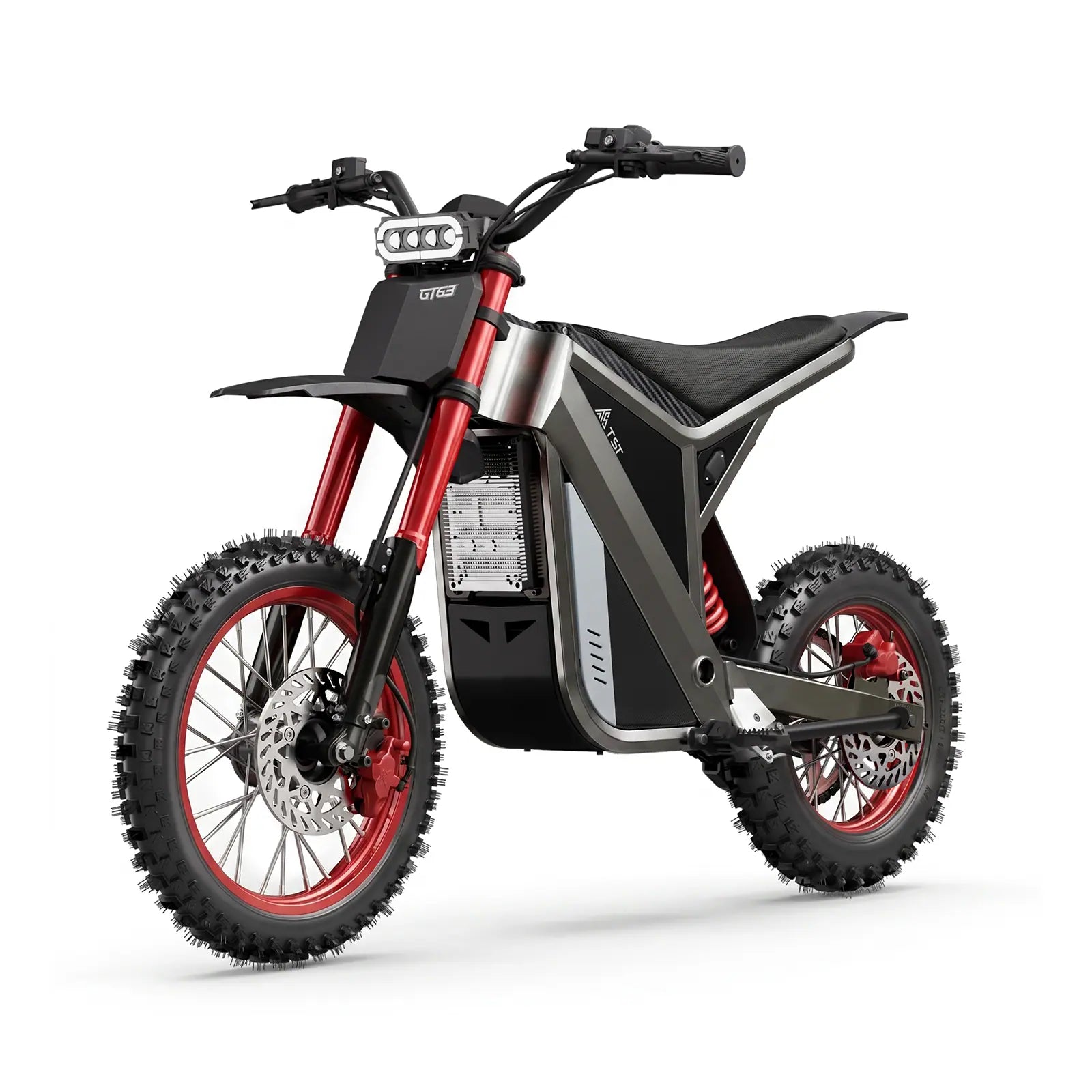














Real-world moped e-bike range is roughly 25–45 miles from a 48V 15Ah battery (720Wh) with throttle-heavy riding, and more with pedal assist. Ideal-case claims of 65–100 miles assume light assist, flat terrain, and a light rider. Range depends on watt-hours, riding mode, hills, wind, and temperature — plan around the realistic figure, not the marketing number.
The Math Behind E-Bike Range
Range is energy divided by consumption. A 48V 15Ah battery stores 720Wh; a dual-battery setup stores 1,440Wh. What you get from those watt-hours depends on how much energy each mile consumes, which varies with speed, assist level, and terrain.
The single biggest factor is speed. Aerodynamic drag rises sharply above 20 mph, so riding at 28 mph consumes far more energy per mile than cruising at 15 mph. A throttle-heavy 28 mph ride can use nearly twice the energy of a light-assist 15 mph ride.
Realistic Range by Riding Mode
| Riding style | Approx. consumption | Range from 720Wh |
|---|---|---|
| Light assist, flat, 15 mph | ~12-15 Wh/mile | 45-60 miles |
| Mixed assist, 20 mph | ~18-22 Wh/mile | 30-40 miles |
| Throttle-heavy, 25-28 mph | ~28-35 Wh/mile | 20-25 miles |
| Hills, cargo, or cold | Add 20-40% | Reduce accordingly |
Treat these as planning estimates, not promises. Rider weight, wind, and tire pressure move the numbers further.
Why Claims and Reality Differ
Manufacturers quote range under ideal conditions: light assist, flat ground, a light rider, warm weather, and a full battery. Real riding adds hills, wind, stops, cargo, and cold — each one quietly drains range. A 65-mile claim can become a 30-mile reality on a hilly, windy commute with moderate assist.
The honest approach is to plan for the worst realistic case and treat the claim as a ceiling.
Extending Range
Four habits extend every charge:
- Ride in a lower assist level and pedal more at speed.
- Keep tires at the pressure recommended for your weight.
- Avoid full-throttle starts; roll on smoothly.
- Charge to 100 percent before long rides and store at about 50 percent otherwise.
For riders who cannot change their route, a bigger battery or a dual-battery platform is the reliable answer. The TST EBike's R9 carries two 48V 15Ah packs for roughly double the realistic range of the single-battery R002.
Choosing the Right Battery for Your Route
Measure your longest regular round trip, then add a 20–30 percent reserve for wind, detours, and hills. If the number fits inside a single 720Wh pack, a single-battery model is enough. If it does not, TST EBike's dual-battery R9 removes the constraint without changing the riding experience.
Conclusion
A moped e-bike realistically covers 25–45 miles per 720Wh with throttle-heavy use and more with pedal assist. Plan around your riding mode and route, extend range with good habits, and choose a dual-battery platform when the daily route outgrows one pack. The R9 exists for exactly that case, and TST EBike publishes the spec on its product page so you can match the battery to your commute.
How far does a moped ebike go on one charge?
Realistically 25–45 miles from a 48V 15Ah battery with throttle-heavy riding; more with pedal assist.
How far can a 48V 15Ah battery go?
It stores 720Wh — roughly 30–40 miles of mixed riding or 45–60 miles in light assist on flat ground.
Does throttle use reduce range?
Yes, significantly. Throttle-heavy riding at 25–28 mph can consume nearly double the energy of light pedal assist.
Do hills affect ebike range?
Yes. Climbing demands continuous torque, and every climb cuts range compared with flat riding.
How can I increase my ebike range?
Use lower assist, keep tires properly inflated, roll on smoothly from stops, and plan charging around the 20-80 percent rule.
Is a dual-battery ebike worth it for range?
For long routes or heavy throttle use, yes — the R9's second battery roughly doubles realistic range.

Leave a comment
This site is protected by hCaptcha and the hCaptcha Privacy Policy and Terms of Service apply.