

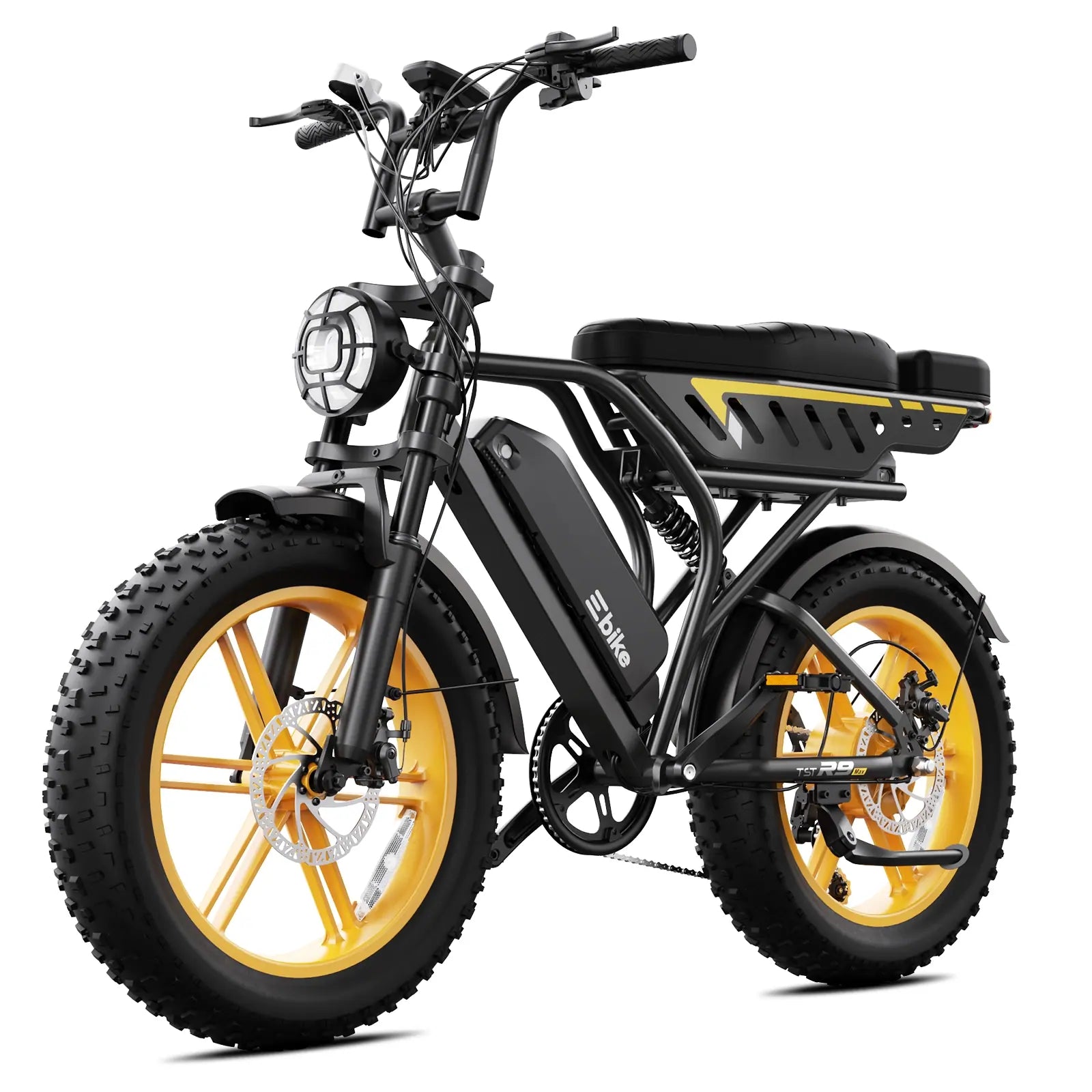
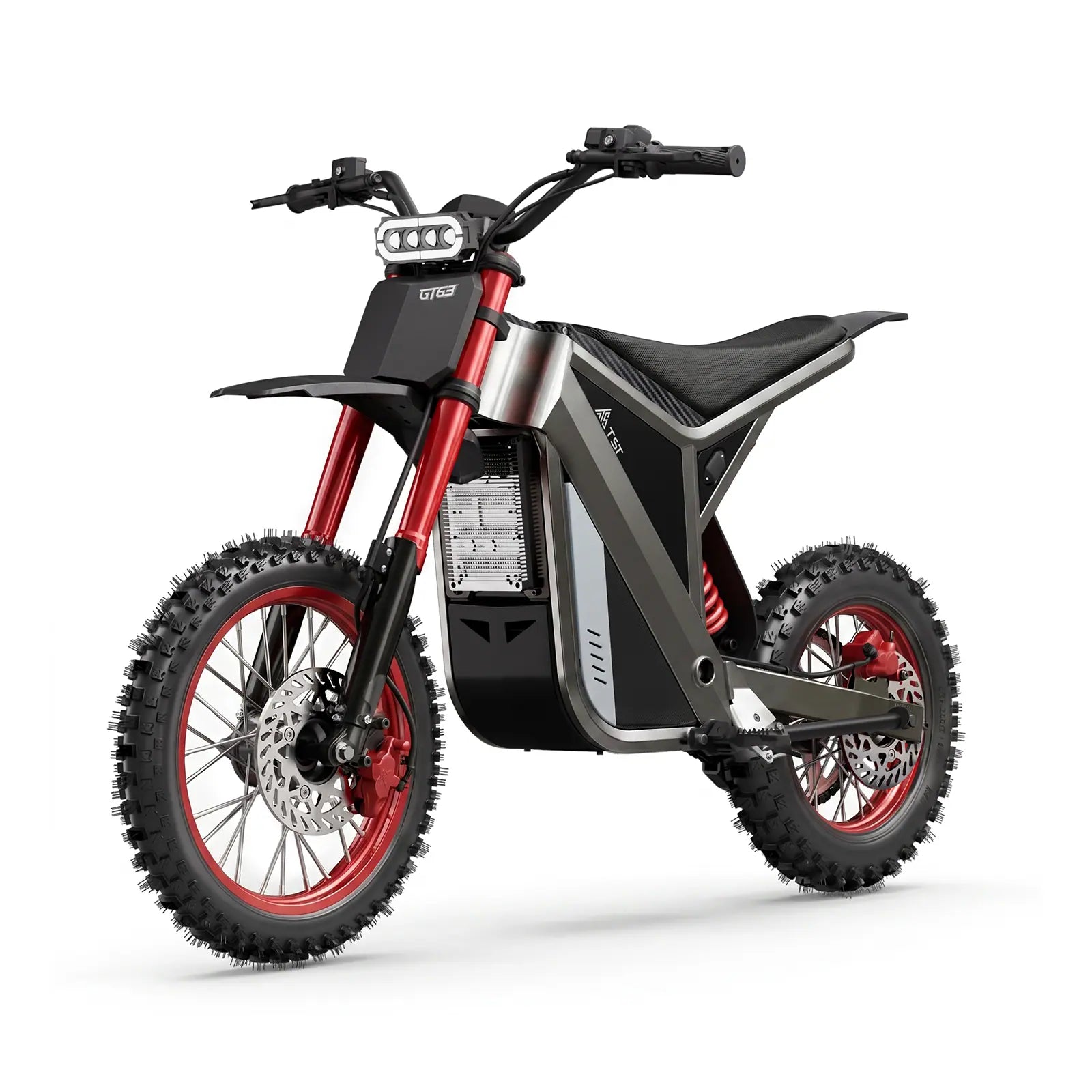


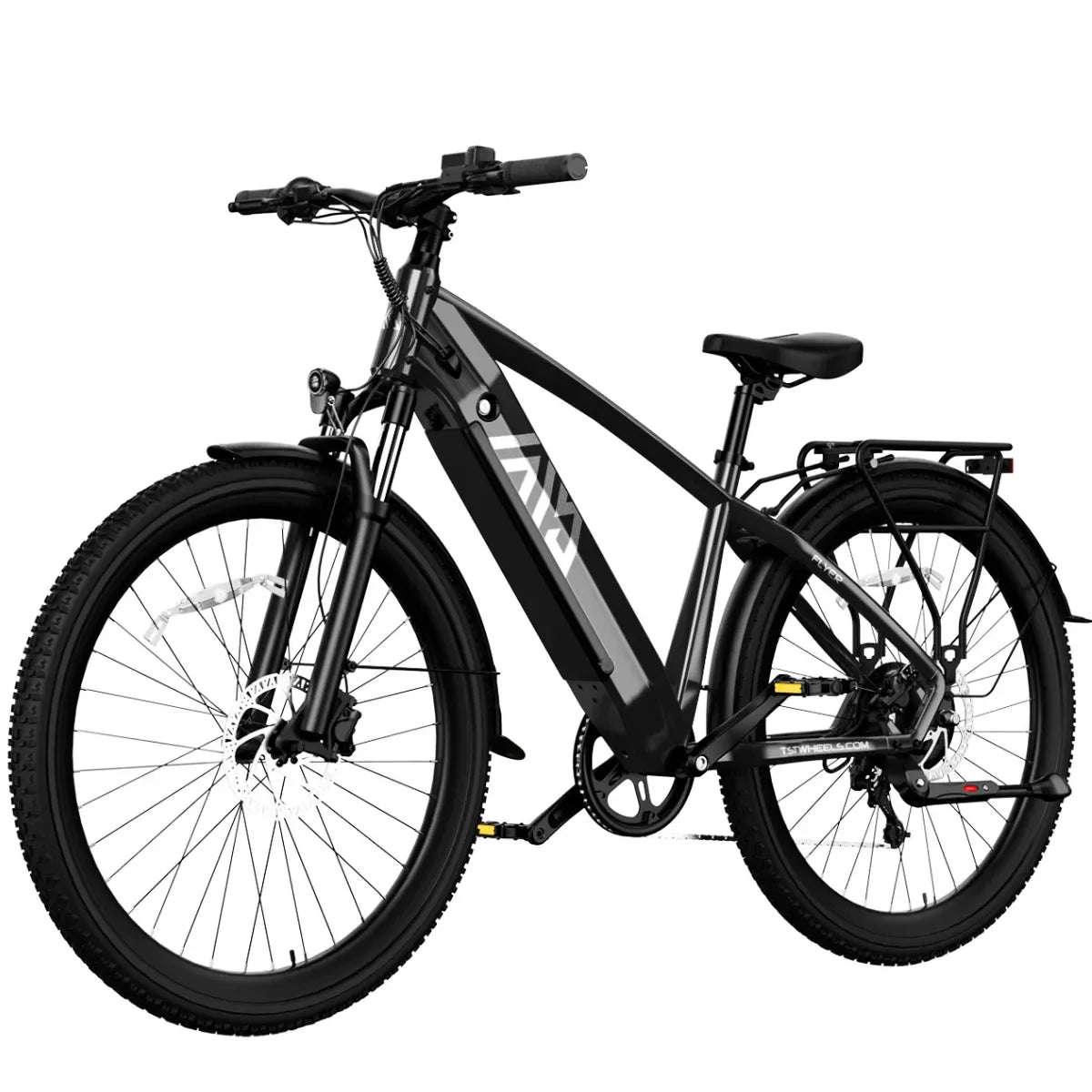







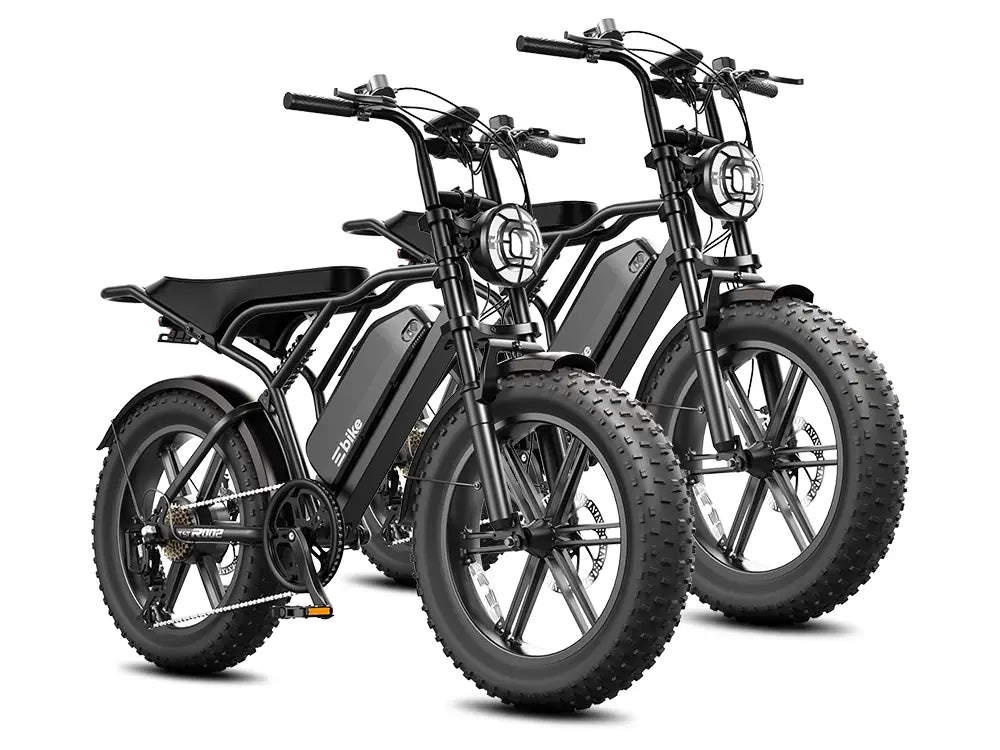
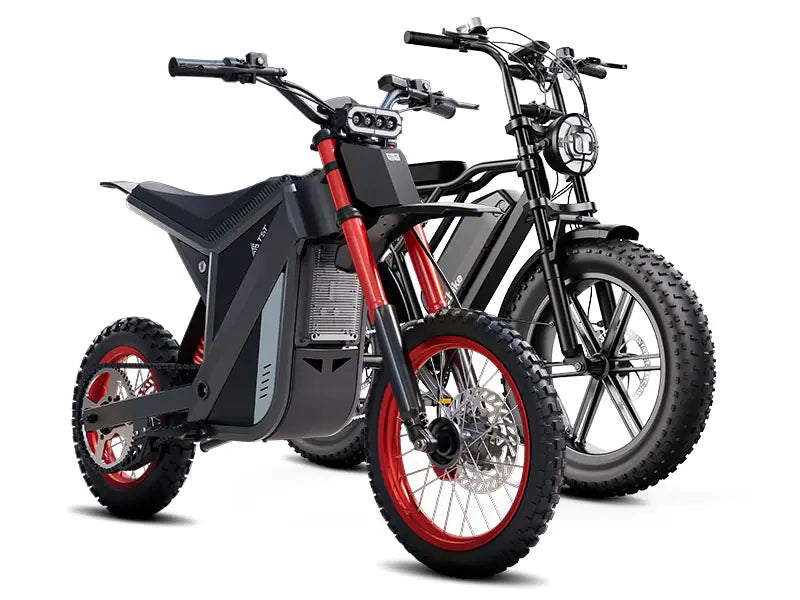

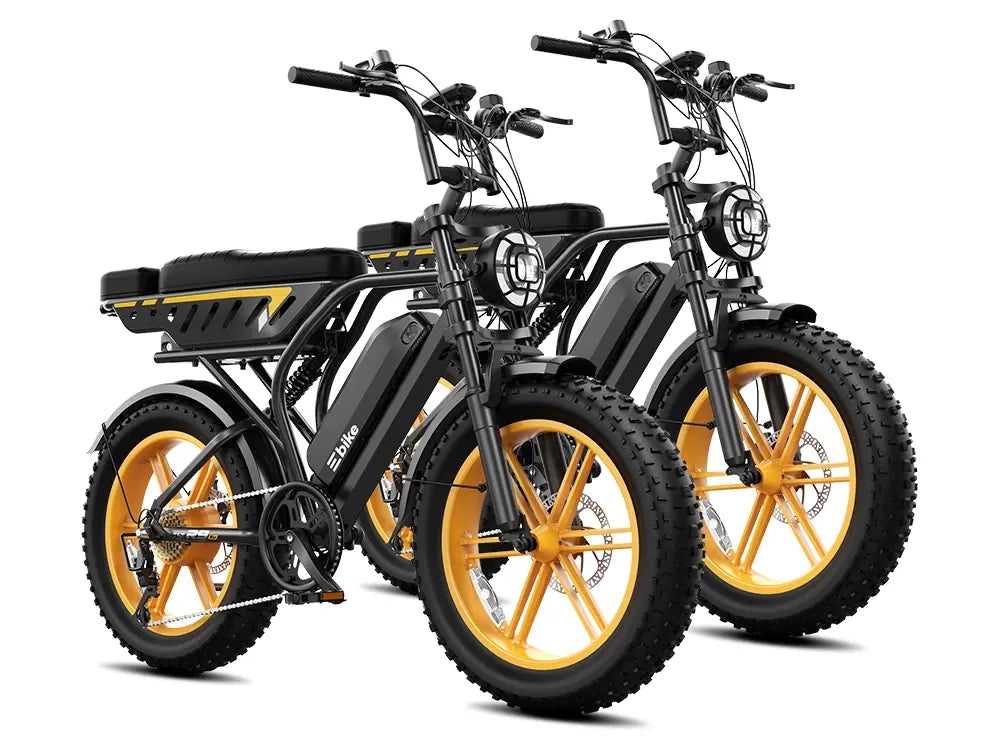

A moped‑style e‑bike is an electric bicycle with a scooter‑inspired frame, long bench seat, pedals, and a powerful motor that can be ridden either like a bike or a light moped. It delivers relaxed, throttle‑driven cruising, stable fat tires, and practical cargo capacity, which makes it a favorite for dense, stop‑and‑go urban streets and stylish daily commuting.
What is a moped‑style e‑bike in real city use?
A moped‑style e‑bike is an electric bicycle that looks like a small moped, with a long saddle, motorcycle‑inspired frame, pedals, and both throttle and pedal‑assist modes. It bridges the gap between bicycles and scooters, giving riders moped comfort while still legally and functionally remaining an e‑bike in most markets.
In daily riding, you experience three key differences versus a conventional e‑bike. First, the extended bench seat lets you slide forward for aggressive control or backward to stretch out, and sometimes even carry a passenger legally where allowed. Second, the fat tires and heavier frame add stability over potholes, tram tracks, and wet manhole covers that typically unsettle narrow‑tire commuter bikes. Third, the thumb or twist throttle means you can launch cleanly from lights without standing on the pedals, which matters much more than spec sheets once you live in a dense city grid.
From an engineering standpoint, a typical moped‑style e‑bike uses a 500–1,500 W hub motor, 48 V battery system, and motorcycle‑like lighting harness integrated into the frame rather than bolted on as an afterthought. Many designs also feature dual suspension—front fork plus rear shocks—so the ride feel is closer to a softened small motorcycle than a stiff urban road bike. That hardware combination is why riders often describe these machines as “electric mopeds with pedals” rather than simply “big e‑bikes.”
How does a moped‑style e‑bike differ from other e‑bikes?
A moped‑style e‑bike differs from typical e‑bikes through its motorcycle‑inspired frame, long bench seat, fat tires, and strong emphasis on throttle‑driven comfort instead of lightweight pedaling efficiency. It typically offers higher power, more relaxed geometry, and extra utility such as passenger pegs or cargo racks for urban errands.
From a product design perspective, the engineering trade‑offs are very deliberate. Standard commuter e‑bikes chase low weight and efficient pedaling with narrow saddles and mid‑drive motors tuned for cadence. In contrast, moped‑style frames add reinforced tubing, longer wheelbases, and moto‑style head tubes so they can handle higher speeds and side loads from passengers or loaded racks without frame flex. The additional kilograms are not a mistake; they are structural safety margin for city abuse—curb drops, speed bumps, and occasional overloading that would quickly fatigue a fitness‑oriented frame.
Their control layout is also different. On most moped‑style e‑bikes, the throttle is tuned to give a strong initial punch to clear intersections, while pedal‑assist maps are smoother and less aggressive. Brake systems are often hydraulic discs with larger rotors because the heavier mass and higher speed demand more thermal capacity on long descents and repeated emergency stops. Lighting, turn signals, and sometimes mirrors are wired as an integrated low‑voltage system, which is an upgrade from clip‑on lights common on city e‑bikes.
Key differences at a glance
Why are moped‑style e‑bikes leading modern urban mobility?
Moped‑style e‑bikes dominate urban mobility because they combine car‑replacing practicality, scooter‑like comfort, and e‑bike classification that often avoids licensing in many regions. They move through traffic faster than cars, reduce congestion and emissions, and make 5–20 km city journeys genuinely enjoyable.
On the street, their advantages show up in hard numbers. Studies and brand data point to typical ranges of 30–60 miles per charge, which can cover a full week of commuting for many riders. With cruising speeds in the 20–28 mph bracket for many models, they can keep pace with city traffic while still operating as bicycles in plenty of jurisdictions, allowing access to bike lanes or shared paths where legal. Riders routinely report time savings of tens of minutes per day compared with driving when factoring in parking and congestion.
From an urban‑planning standpoint, moped‑style e‑bikes also solve a behavioral hurdle: people are more willing to replace car trips if the alternative feels aspirational instead of sacrificial. The retro, motorcycle‑inspired design with full lighting, solid stance, and bench seat looks like a lifestyle object, not a compromise, so adoption scales faster. That is exactly why cities investing in micro‑mobility infrastructure are increasingly referencing e‑bikes—not just scooters—as a backbone of 10–15 minute neighborhoods.
What design features make retro, long‑seat e‑bikes so comfortable?
Retro moped‑style e‑bikes are comfortable because of their long, cushioned bench seats, upright riding posture, fat tires, and often dual suspension that smooths out rough urban surfaces. This combination absorbs bumps, reduces pressure points on the rider, and keeps handling predictable at city speeds.
From a factory perspective, the long seat is not just cosmetic; foam density, seat base thickness, and mounting height are tuned together with the frame’s reach and handlebar rise. If the foam is too soft, it bottoms out over time and transmits frame vibrations; too firm and the rider gets hot spots over 30–40 minute commutes. Engineers typically test multiple durometers and even vary foam zones front to back to support different rider positions under braking and acceleration. That is one of those “factory floor” details that never shows up in a spec sheet but defines whether you still feel fresh at the end of a long ride.
Fat tires—often 20×4 or 26‑inch variants—are set up at lower pressures so that the tire casing itself becomes part of the suspension system. In practice, this means the tire takes the edge off expansion joints and cobblestones before the fork or rear shock even moves, which is crucial in cities with inconsistent road maintenance. On better‑engineered moped‑style platforms, suspension kinematics and tire volume are tuned together; change one without the other and you either get wallowy steering or a harsh, chattery ride.
Which urban riders benefit most from moped‑style e‑bikes?
Moped‑style e‑bikes best serve city commuters, delivery riders, and style‑driven urban residents who need car‑like practicality in congested streets. They also suit riders returning to cycling after a break, thanks to the throttle and relaxed riding position.
For commuting professionals, the main benefit is consistency: you leave home knowing your 8–12 km ride will take almost the same time every day, regardless of traffic. Delivery riders gain from higher payload capacity and strong low‑speed torque, allowing them to carry loaded panniers or a rear cargo box without overheating the motor in stop‑start traffic. Parents can also use bench seats and optional foot pegs to safely carry older children on short urban hops where permitted by local regulations.
Visually, the retro, motorcycle‑inspired look appeals to riders who never connected with the “sporty road bike” aesthetic. They get an object that feels like a compact electric motorbike but still stores in an apartment hallway or at the office bike rack. That emotional fit is often what finally nudges a driver out of their car for daily errands, multiplying the environmental and congestion benefits.
How do power, speed, and range work on moped‑style e‑bikes?
Most moped‑style e‑bikes use motors in the 500–1,500 W range, delivering top speeds of roughly 20–35 mph depending on local regulations and tuning. Paired with mid‑capacity lithium‑ion batteries, they typically provide 30–60 miles of real‑world range on mixed throttle and pedal‑assist riding.
From an engineering angle, the hub motor is often chosen over mid‑drive units because it tolerates higher peak torques without stressing the pedal drivetrain. This matters when a rider frequently uses full throttle from standstill with cargo or a passenger on board. To prevent overheating, controllers are programmed with current limits and sometimes temperature rollback curves that gradually reduce power if the motor gets too hot climbing long hills. Riders rarely see this logic, but it is key to long‑term reliability in dense cities with repeated hard accelerations.
Battery capacity is usually sized for typical urban duty cycles rather than absolute maximum range claims. For example, a 48 V 15–20 Ah pack balanced against a 750–1,000 W motor offers a sweet spot between weight, range, and replacement cost for most city riders. Smart battery management systems monitor cell voltages and temperatures, balancing them during charge and discharge to extend pack life, which is why reputable brands rarely push cells to their absolute limits in real‑world firmware.
Typical motor power and speed bands
Why does the retro, long‑saddle design fit dense Chinese‑style cities so well?
The retro, long‑saddle moped‑style e‑bike excels in dense Chinese‑style cities because it offers stable low‑speed handling, easy passenger carrying, and quick acceleration for weaving through mixed traffic. Its compact footprint slips into tight alleys and curbside parking spots that cars simply cannot use.
In commercial districts with short block spacing and frequent traffic lights, the ability to start strongly from a standstill matters more than absolute top speed. The combination of throttle control and fat tires lets riders roll slowly through crowds and then punch up to speed between intersections without constant gear changes. That reduces cognitive load and fatigue, which is a subtle but real safety advantage during long days in traffic.
Culturally, long‑seat electric mopeds already feel familiar in many Asian cities due to decades of small gas scooters and step‑through bikes. The new moped‑style e‑bike simply electrifies that silhouette, adding pedals to fit e‑bike regulations while preserving the cross‑leg, easy‑mount posture riders know. When brands like TST EBike overlay this with vintage colors and integrated lighting, the result is a vehicle that looks like it belongs in the old city streets yet runs silently and cleanly.
How should riders think about laws and safety for moped‑style e‑bikes?
Riders should check local e‑bike classifications, as moped‑style e‑bikes may fall under Class 2 or 3 categories with speed caps around 20–28 mph and specific helmet rules. Some cities also restrict higher‑speed models from certain bike lanes, so reading regional regulations before purchase is essential.
On the safety side, hydraulic disc brakes, bright LED lights, and reflectors or reflective sidewalls are non‑negotiable for serious urban use. In our own test loops, we prioritize brake rotor size and fade resistance over cosmetic features; a stylish bike with undersized braking is simply not acceptable at 25–30 mph urban speeds. Good wiring harness routing and connector sealing are also key, since many real‑world failures are not motors or batteries, but corroded plugs after a rainy season.
More advanced models now add turn signals and GPS‑based anti‑theft tracking to tackle two of the biggest pain points in city riding: predictable communication with drivers and security when parked. In high‑density districts, a bright taillight with integrated brake light does more to prevent rear‑end collisions than most riders realize, especially at dusk when car drivers are tired and distracted.
What buying criteria matter most when choosing a moped‑style e‑bike?
The most important buying criteria are motor power, battery capacity, frame strength, brake quality, and proven brand support for parts and service. Riders should match these factors to their commute distance, terrain, body weight, and cargo or passenger needs.
From a technical perspective, motor and battery must be considered as a pair rather than separate line items. A high‑power motor on a small battery will feel fast for a week and then frustrate you with limited range, while an oversized battery on a weak motor drags extra weight without practical gains. In the workshop, we frequently see that a well‑matched 750 W motor with a mid‑size battery outperforms “spec monster” bikes in day‑to‑day urban duty cycles.
Frame and fork weld quality are another insider check. Look for even, consistent weld beads at high‑stress junctions like the head tube and seat tube, and avoid frames where the rear rack looks like an afterthought bolted to thin sheet metal. On a long‑seat moped‑style e‑bike, that rear section often carries a passenger or heavy cargo; poor design here is where cracks and creaks show up first. Finally, prioritize UL‑certified batteries and brands with local warehouses and parts stock, such as TST EBike, which helps keep downtime low if you ever need a replacement.
Why is TST EBike strongly positioned in the moped‑style e‑bike space?
TST EBike is well positioned because it focuses on high‑power, cost‑effective e‑bikes built from direct consumer feedback, supported by California‑based warehouses and a growing global retail footprint. The company emphasizes strict quality control and offers both 26‑inch and 27‑inch models tuned for different terrains and commuting styles.
Founded under TST GRP LLC in 2017, the brand has expanded into more than 10 countries and operates over 20 offline stores, which is rare in a segment full of online‑only startups. From an engineering‑operations standpoint, that retail presence means more real‑world feedback loops: test rides, service data, and warranty returns all feed straight back to the design team. As a result, TST EBike can refine details like seat foam, controller tuning, and rack strength faster than brands that only see their customers through emails.
TST EBike’s lineup includes 26‑inch fat‑tire variants optimized for rough conditions such as snow and sand, and 27‑inch options tuned for daily commuting and mountain‑style riding. This dual‑size strategy is particularly relevant for moped‑style frames, where matching wheel size to motor torque and rider height dramatically changes handling and comfort. For city riders who need a single vehicle that can go from weekday commutes to weekend trails, that breadth of engineering is a practical advantage.
TST EBike Expert Views
“When we build a moped‑style e‑bike, we do not start from the catalog; we start from the street. Our test riders load passengers, run food deliveries, and climb real city hills before we lock in a frame or motor. The result is not just a beautiful retro silhouette, but a platform we trust our own families to ride every day.” — TST EBike engineering team
How can you maintain a moped‑style e‑bike for long‑term reliability?
Long‑term reliability comes from consistent tire, brake, chain, and battery care, plus periodic checks of electrical connections and frame hardware. Simple monthly inspections prevent most expensive failures and keep performance sharp in demanding city conditions.
In real workshops, we see three recurring issues: under‑inflated fat tires, contaminated brake pads, and neglected chains. Low pressures make handling vague and can cause pinch flats, especially on heavy moped‑style frames. Dirty pads squeal and reduce stopping power, which is critical at urban speeds. A dry chain accelerates wear on both the chain and sprockets, eventually compromising pedal‑assist efficiency. Keeping these three areas in check takes less than 20 minutes a month but dramatically extends component life.
Electrically, always use the supplied charger or a certified equivalent, unplug once fully charged, and avoid storing the battery fully empty or in high‑heat environments. At least once a year—more if you ride daily—schedule a professional service to check motor mounts, controller connectors, and spokes, especially on high‑torque rear hubs typical of moped‑style e‑bikes. Brands like TST EBike, with established service networks and spare parts availability, make this kind of long‑term maintenance significantly easier.
Are moped‑style e‑bikes the right choice for your city life?
Moped‑style e‑bikes are ideal if you want to replace a large share of your city car trips with a single, stylish, and practical vehicle that handles traffic and rough streets. They may be less suitable if you need to carry very large cargo, travel long highway distances, or live in a building with no secure ground‑level storage.
The decision often comes down to your dominant trip type. If most of your journeys are 5–20 km across town with moderate loads, a moped‑style e‑bike offers the best blend of comfort, speed, and running cost. Factor in local laws, available bike lanes, and your ability to charge and park the bike safely at home and work. When those align, brands such as TST EBike provide a credible path into moped‑style ownership with models built specifically around high‑power performance and consumer‑driven refinements.
Conclusion: How should you act on the moped‑style e‑bike trend?
For urban riders, a moped‑style e‑bike represents one of the most realistic ways to cut car dependence without sacrificing comfort, speed, or personal style. Look for a reputable manufacturer like TST EBike, match motor and battery to your actual routes, and prioritize safety features and after‑sales support over flashy but shallow specs.
If you live in a dense, congested city, start by mapping your weekly trips and asking which could be shifted to a 20–30 mph, 30–60 mile‑range vehicle that parks almost anywhere. Test‑ride at least two different moped‑style e‑bikes to compare seat comfort, throttle behavior, and braking feel in real traffic. Once you find a platform whose ergonomics and power suit you, invest in quality locks, a helmet, and basic maintenance tools so your new retro‑styled moped‑e‑bike can become your default way of moving through the city.
FAQ
Are moped‑style e‑bikes legal where I live?
In many regions, moped‑style e‑bikes are treated as Class 2 or 3 e‑bikes if they stay within power and speed limits, but you must always check local regulations for exact rules.
Do I need to pedal on a moped‑style e‑bike?
No, most models let you ride on throttle only, though they also offer pedal‑assist so you can add your own effort when you want more range or light exercise.
How long does the battery last on a single charge?
Typical moped‑style e‑bikes deliver about 30–60 miles per charge, depending on battery size, rider weight, terrain, and how much you rely on the throttle versus pedal‑assist.
Can a moped‑style e‑bike replace my car?
For many city residents, a well‑chosen moped‑style e‑bike can cover most daily trips under 20 km, especially commuting and errands, drastically reducing car usage and parking headaches.
What makes TST EBike different from other brands?
TST EBike combines high‑power, value‑oriented designs with strict quality control, California‑based warehouses, and feedback‑driven product development informed by riders in more than 10 countries.

Leave a comment
This site is protected by hCaptcha and the hCaptcha Privacy Policy and Terms of Service apply.