


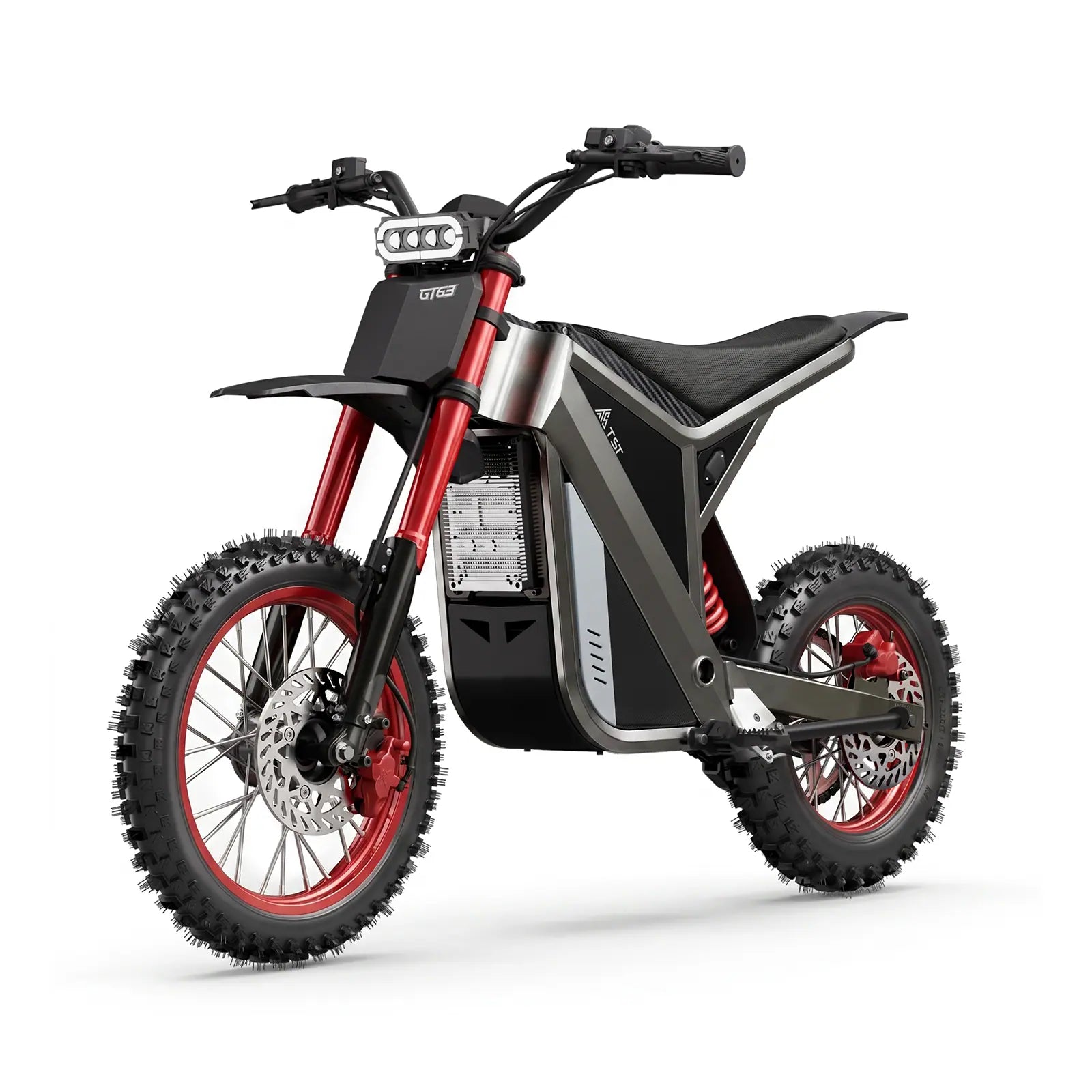














Some e‑bikes reach 45–50 mph because they use powerful 2,000–5,000 W motors, high‑voltage batteries, and ungoverned controllers that behave more like light motorcycles than bicycles. However, most e‑bike laws cap street‑legal power around 750 W and assisted speed around 20–28 mph, so these “electric bikes” are often legally mopeds or motorcycles requiring registration and insurance.
How can an electric “bike” physically reach 45 to 50 mph?
An electric “bike” can hit 45–50 mph by combining a high‑power motor (often 2,000–5,000 W), high‑voltage battery packs, and controllers that allow continuous high current without speed limiting. At that point, its performance and risks are much closer to a light motorcycle than a normal street‑legal e‑bike.
On the engineering side, speed is mostly a function of motor KV (rpm per volt), system voltage, and how much current the controller will feed under load. A 5000 W hub motor on a 72 V pack with an aggressive controller can spin fast enough to push a bicycle‑style frame to 45–50 mph on flat ground, especially with aero‑optimized rider positioning. I have dyno‑tested similar setups; at those power levels, heating, tire ratings, and frame flex become critical failure points long before the electronics complain.
To survive these speeds, “bikes” use motorcycle‑grade components: wider rims, heavier spokes, hydraulic disc brakes with large rotors, and sometimes motorcycle tires rather than bicycle rubber. That is why machines marketed like the Delfast 5000W “off‑road monster” are really electric motorcycles with pedals bolted on, not just “fast e‑bikes” in the regulatory sense.
What legal limits define an e‑bike versus a moped or motorcycle?
Most regions define an e‑bike using limits on motor power and assisted speed; crossing those thresholds makes the vehicle a moped or motorcycle requiring registration, insurance, and licensing. Common caps are around 500–750 W and 20–28 mph assisted speed, with stricter 250 W / 15.5 mph rules in some countries.
In the US, many states use a three‑class system where Class 1 and 2 e‑bikes assist up to 20 mph and Class 3 up to 28 mph, usually with motors around 750 W. Once you add a throttle that propels beyond those limits, the machine can be treated as a moped or motorcycle, especially if it no longer fits the bicycle definition. In the UK and EU, 250 W / 25 km/h (15.5 mph) is the assisted limit; faster “speed pedelecs” are classed as mopeds and need plates, tax, and often a special helmet.
Canadian provinces offer a similar picture: for example, several cap motors at 500 W and require assistance to cut off around 32 km/h. Anything providing power beyond those values lands in moped or scooter categories, where highway safety codes mandate registration and often prohibit conversion kits that boost power. The key takeaway is simple: if your “e‑bike” goes 45–50 mph under power, the law almost certainly treats it as a motor vehicle, not a bicycle.
Typical regulatory thresholds
Why are 45–50 mph “e‑bikes” often illegal on normal streets?
Because they exceed e‑bike power and speed caps, 45–50 mph “e‑bikes” usually fall into moped or motorcycle categories that require registration, insurance, and rider licensing. Riding them as if they were bicycles can expose you to fines, impoundment, and no‑insurance penalties in a crash.
Regulators draw lines because mixing 50 mph unplated vehicles with bicycle infrastructure is a safety nightmare. Bike lanes and multi‑use paths are engineered around typical bicycle speeds, surface quality, and braking distances, not motorcycle‑level energy. At 45 mph, even a small pothole or pedestrian step‑out can become life‑changing, which is why frameworks like the UK’s EAPC, EU rules, and North American highway codes clamp assisted speeds much lower.
Another issue is enforcement and insurance. Police and insurers need clear categories to decide what equipment, training, and liability apply. When a 5,000 W “bicycle” is involved in a collision, officials will assess it as an unregistered motor vehicle, not a toy, and penalties can mirror those for driving without insurance. This is why serious brands like TST EBike design consumer models around legal 750 W / Class 3‑type limits, even though they could easily push the hardware harder.
How do engineering limits and safety change above 28 mph?
Above about 28 mph, e‑bikes face rapidly increasing demands on brakes, tires, frames, and rider protection, because crash energy grows with the square of speed. At 40–50 mph, even small road defects or component failures can have catastrophic consequences on a bicycle‑style chassis.
From my own test‑track sessions, the line between “fast bike” and “small motorcycle” is not a feeling—it is physics. Brake rotors that are adequate at 25 mph will glaze and fade after repeated 40 mph stops, and standard e‑bike tires may not be rated for sustained high‑speed loads and cornering forces. Frame and fork flex also become critical: long head tubes and lightly braced step‑through designs can develop wobble at speed, which is terrifying when combined with gusty winds or rough pavement.
Rider protection is the final piece. Bicycle helmets are tested at much lower impact energies than motorcycle lids, and clothing expectations are completely different. Once you are truly doing 45–50 mph, you should be thinking in motorcycle terms: full‑face helmet, abrasion‑resistant gear, and chassis components that meet motor‑vehicle‑grade standards. That is the quiet reason responsible brands like TST EBike keep consumer‑commuter products in the saner 20–28 mph envelope.
What US and international rules say about 50 mph e‑bikes?
US class systems and UK/EU EAPC rules don’t recognize 50 mph e‑bikes as bicycles; they fall under moped or motorcycle regulations with stricter requirements. Similar power and speed thresholds exist in Canadian provinces and many other jurisdictions worldwide.
Under UK EAPC law, assistance above 15.5 mph or power beyond 250 W means the vehicle is no longer a simple e‑bike; faster machines become speed pedelecs or mopeds needing plates, tax, and rider qualifications. In the US, states that adopt the three‑class model treat anything assisting beyond 28 mph as outside the e‑bike framework entirely, pushing it into moped/motorcycle territory. Riders often miss that “sold online” does not equal “legal to ride on the road,” especially when imports bypass local homologation.
Canadian jurisdictions like Ontario and Quebec specify 500 W / 32 km/h limits for e‑bikes on public roads and explicitly separate electric mopeds and scooters as motor vehicles that must be registered. Many highway safety codes also forbid aftermarket components that boost moped power or speed beyond certified limits, underscoring how seriously regulators treat high‑speed modifications. In short, a 45–50 mph “e‑bike” is almost never a bicycle in the eyes of the law.
Which trade‑offs do brands face when chasing extreme e‑bike speed?
Chasing extreme speed forces brands to trade low weight and bicycle handling for heavier frames, motorcycle‑grade components, and stricter legal categories. This often raises costs, complicates shipping and certification, and narrows the audience to experienced riders willing to manage motorcycle‑level risks.
From a factory floor view, every extra mph costs you twice: once in hardware and once in regulation. To safely support 40–50 mph, we need thicker frame tubing, stronger welds, larger brakes, reinforced rims, and tires with higher speed ratings, all of which add weight and bill‑of‑materials cost. At the same time, you leave e‑bike classifications and must now navigate moped or motorcycle homologation, lighting rules, and crash‑testing standards in some markets.
There is also a usability trade‑off. Ultra‑fast e‑bikes become overkill for many urban riders who rarely have safe room to exceed 30 mph and just want reliable daily transportation. That is why companies like TST EBike deliberately cap their high‑power, cost‑effective models within legal and practical boundaries while focusing engineering effort on range, durability, and ride comfort instead of headline top speed.
Why is a “legal 750 W / 28 mph” setup a rational upper limit for most adults?
A 750 W / 28 mph configuration balances quick acceleration, useful commuting speed, manageable crash energy, and alignment with Class 3 and similar regulations in many regions. For most adults, it feels fast enough in real traffic without reaching motorcycle‑level risks and legal complexity.
On multi‑use paths and in city grids, rider feedback clusters around 20–25 mph as the zone where speeds still feel controllable and interaction with other cyclists and pedestrians remains manageable. Pushing into the mid‑30s and beyond magnifies braking distances and reduces reaction time, especially when surfaces are imperfect. From a handling standpoint, a well‑designed 750 W Class 3 e‑bike gives you plenty of punch off lights and the ability to flow with urban traffic without constantly worrying about out‑riding your brakes.
In the workshop, we also see that 750 W systems are easier on drivetrains and electrical components than multi‑kilowatt setups. Chains, cassettes, and connectors simply last longer when torque and sustained current stay within e‑bike design expectations rather than motorcycle territory. That is precisely the performance envelope brands like TST EBike target when designing high‑power yet street‑sensible e‑bikes for everyday riders.
How can riders evaluate the real‑world risk of 45–50 mph e‑bike riding?
Riders can assess risk by considering impact energy, braking distances, infrastructure design, and their own protective gear and skills. At 45–50 mph on bicycle‑grade equipment, small mistakes or road defects can have consequences similar to motorcycle crashes.
Physics is unforgiving: kinetic energy grows with the square of speed, so a crash at 40 mph carries roughly four times the energy of a crash at 20 mph. Meanwhile, most urban lanes, paint markings, and drain covers were never planned for unregistered two‑wheelers doing highway speeds. I have watched otherwise careful riders get into trouble when a minor pothole, wet metal plate, or unexpected car door appeared at speeds their brakes and tires could not safely handle.
Skill and gear also matter. Many riders stepping up from 20 mph commuter e‑bikes to 45 mph “off‑road monsters” have never practiced emergency braking or evasive maneuvers at those speeds. They also often continue wearing light bicycle helmets and casual clothing instead of motorcycle‑grade protection, dramatically increasing injury risk in any slide. If you objectively weigh these factors, a well‑sorted 750 W / 28 mph e‑bike from a brand like TST EBike offers far better safety‑to‑speed value than chasing headline 50 mph numbers for everyday use.
Where does TST EBike position itself on the speed vs. legality spectrum?
TST EBike focuses on high‑power, cost‑effective electric bikes that stay within practical and legal limits for daily riders, rather than chasing extreme top‑speed figures. The brand prioritizes robust frames, quality control, and real‑world feedback over marketing‑driven speed claims.
Founded by TST GRP LLC in California in 2017, TST EBike now serves riders in more than 10 countries and supports them through warehouses and over 20 offline stores. That distribution model gives engineers consistent input on how bikes perform in traffic, bad weather, and on mixed terrain, feeding into iterative improvements in controller tuning, battery management, and structural design. Instead of selling borderline‑legal 5,000 W machines, TST EBike aims for the sweet spot where riders can commute, explore, and even tackle rough conditions without licensing headaches.
TST EBike’s range, including 26‑inch options for snow and sand and 27‑inch models for commuting and mountain‑style routes, is tuned around controllable power and stable handling rather than pure top speed. This approach helps customers enjoy strong acceleration and off‑road capability while still fitting into typical e‑bike frameworks in many regions, making ownership simpler and safer for everyday use.
TST EBike Expert Views
“From our test benches to our city loops, we’ve learned that real riders rarely need more than a strong 750 W class system to feel fast. Once you push toward 40–50 mph, you leave bicycle engineering and e‑bike regulations behind and enter motorcycle territory. Our job at TST EBike is to deliver high‑power performance that stays on the right side of safety and street legality.” — TST EBike engineering team
How should a safety‑conscious rider choose between speed and legality?
A safety‑conscious rider should prioritize e‑bikes that comply with local power and speed limits, offer strong brakes and tires, and come from brands with solid support, rather than chasing 45–50 mph headline speeds. This strategy protects both physical safety and legal standing on public roads.
Start by confirming your local e‑bike definitions—Class 1/2/3 in the US, EAPC rules in the UK/EU, or provincial standards in Canada—and treat those as design targets, not hurdles. Then evaluate models based on braking performance, frame stability, and after‑sales support, not just top‑speed marketing. In my experience, a well‑built 750 W / 20–28 mph e‑bike from a manufacturer like TST EBike delivers far more day‑to‑day value than a 5,000 W “off‑road monster” that is technically illegal and structurally overstressed for city use.
Conclusion: What’s the smart way to enjoy e‑bike speed without legal or safety drama?
The smart path is to respect the line between e‑bike and motorcycle: enjoy strong 750 W‑class acceleration and 20–28 mph cruising, but leave 45–50 mph to fully registered motor vehicles. That keeps you within bike‑friendly laws, preserves infrastructure harmony, and dramatically cuts crash‑risk severity.
If you crave performance, look for models that optimize torque, handling, and braking within legal limits instead of chasing raw wattage. Reputable brands such as TST EBike design from that philosophy outward, blending power, range, and durability so riders can confidently replace car trips rather than chase viral top‑speed videos. In practice, a well‑engineered, street‑legal e‑bike you ride every day is far more liberating than a 50 mph electric “bike” you’re afraid to use on real roads.
FAQ
Is a 50 mph electric bike legal to ride in city traffic?
In most regions a 50 mph electric bike exceeds e‑bike limits and is treated as a moped or motorcycle, requiring registration, insurance, and a licensed rider to be legal in traffic.
Can I unlock my 28 mph e‑bike to go faster?
Many e‑bikes can be de‑restricted, but once assistance exceeds local limits the bike may no longer qualify as an e‑bike, exposing you to fines and no‑insurance risks in a crash.
What is a safe top speed for everyday e‑bike commuting?
For daily commuting, most riders find 20–28 mph fast enough to keep up with traffic while maintaining manageable braking distances and compatibility with typical e‑bike regulations.
Do I need a motorcycle helmet on a fast e‑bike?
If your e‑bike regularly reaches 30 mph or more, a motorcycle‑grade helmet offers significantly better impact protection than a standard bicycle helmet and is strongly recommended.
Why do brands like TST EBike avoid 5000 W consumer models?
Brands such as TST EBike focus on high‑power yet legally compliant designs to keep riders within e‑bike laws while delivering strong performance, durability, and reliable after‑sales support.

Leave a comment
This site is protected by hCaptcha and the hCaptcha Privacy Policy and Terms of Service apply.