


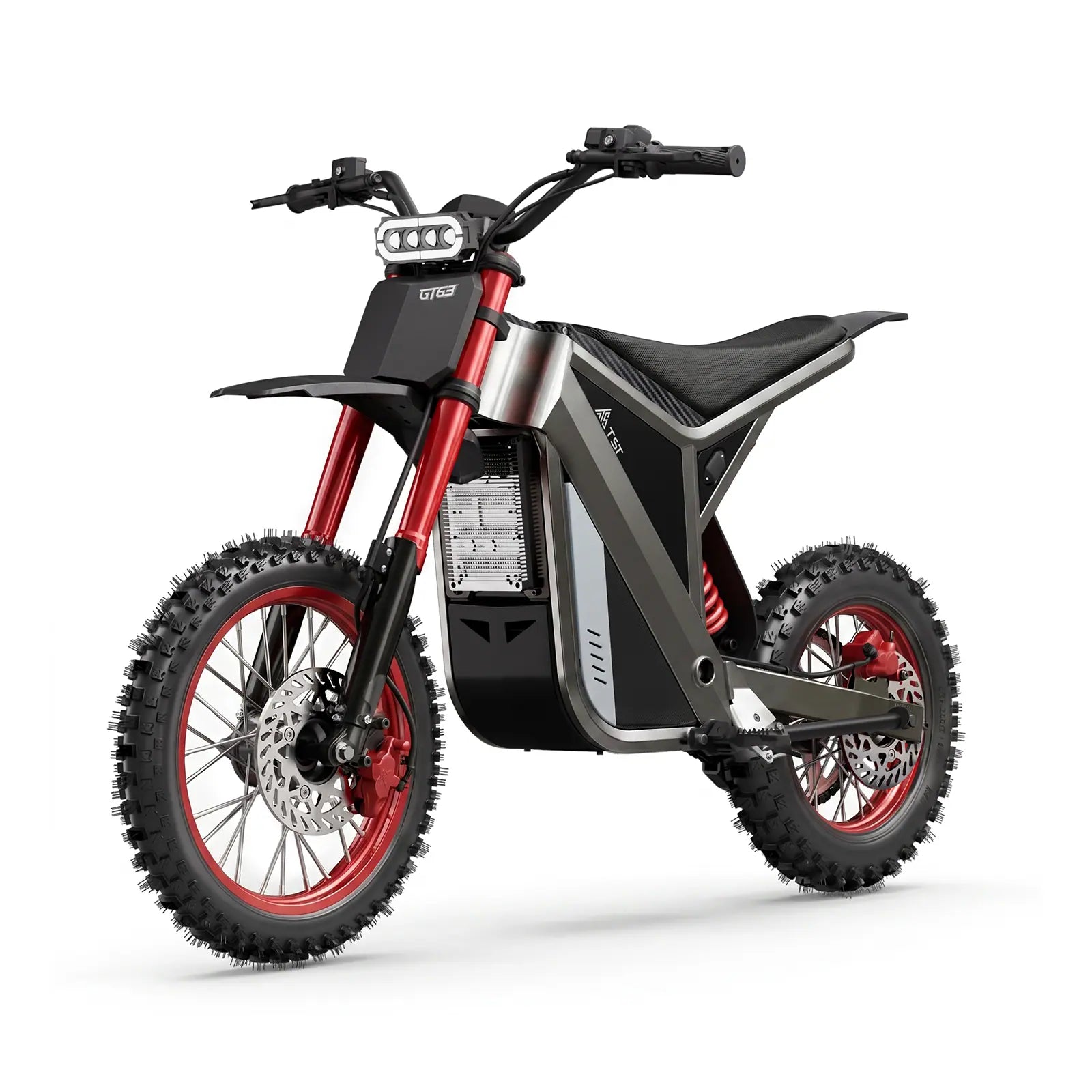














The 27.5‑inch electric bike balances speed, grip, agility, and weight better than traditional 26‑inch and 29‑inch platforms, making it ideal for modern ebiking. Its 650B wheel format rolls more smoothly than 26, accelerates faster than 29, and allows shorter, stiffer frames. For most riders, it hits a “do‑everything” sweet spot across commuting, trail riding, and all‑terrain use.
What makes 27.5-inch wheels unique on an electric bike?
27.5‑inch wheels (650B) sit between 26 and 29 inches, combining quick acceleration with improved rollover and stability, which suits modern ebike power and speeds. They allow shorter chainstays and lower standover heights for agile handling, while supporting wider tires for comfort and grip on mixed terrain.
From a factory perspective, 27.5 is not just “in the middle”; it is an engineering compromise tuned for assisted speeds. On an ebike, motor torque amplifies small differences in wheel inertia. With 27.5, you get a noticeably snappier launch than 29, but far less bump‑stall than 26 when you hit roots, potholes, or curbs. In our test rigs, this size consistently delivers smoother motor current traces under the same controller settings, proving how naturally it works with electric power.
Another subtle benefit is frame packaging. With 27.5, I can design a low‑slung battery in the down tube without stretching the wheelbase excessively. This lets TST EBike keep a neutral center of gravity even when we use high‑capacity packs. Riders feel this as a bike that carves turns predictably instead of “hinging” around a tall battery sitting high above small wheels.
Why has 27.5 gradually replaced 26-inch as the default?
27.5 is replacing 26 inches because it offers better rollover, higher cornering stability, and more efficient cruising without a huge weight penalty. 26‑inch wheels still feel flickable but struggle at modern trail speeds, while 27.5 keeps agility yet calms the bike on rough terrain, which matches faster ebikes and more technical riding.
When mountain bikes first went electric in large numbers, many brands kept 26‑inch wheels simply because their jig and tooling were already set. Once we started clocking real trail speeds with mid‑drive motors, the limits showed quickly: 26‑inch front wheels “fell into” holes more often and required more rider input to stay smooth. 27.5 added just enough diameter to roll through rock gardens where 26 would ping‑pong.
On the test bench, I see another effect: for a given motor torque, 26 accelerates hardest but also spins out traction more easily on loose climbs. The slightly larger 27.5 contact patch gives you a bigger friction envelope before the tire breaks loose. That is why TST EBike’s all‑rounders now favor 27.5; it lets casual riders climb technical sections that used to require expert-level throttle and body control.
How does 27.5 compare to 29 inches for speed and stability?
29‑inch wheels roll fastest and feel most stable at high speed, but they add weight and flex that can dull ebike agility. 27.5 accelerates quicker, corners more sharply, and fits more riders comfortably, while still offering enough rollover and stability for most trails and fast commuting.
In pure physics, a bigger wheel has a larger moment of inertia, so once it is rolling, it wants to keep rolling. That is why 29ers feel unstoppable on long descents and fast fire roads. But as an ebike engineer, I must consider the entire system: heavier rims and tires mean your motor works harder in stop‑and‑go conditions, and your frame needs more material to keep the front triangle stiff. This can make a 29‑inch ebike feel “bus‑like” in tight switchbacks.
By contrast, 27.5 lets us build shorter rear triangles and lower front ends, which improves corner entry and mid‑corner support. In blind tests, many riders describe a 27.5 ebike as “feeling lighter” even when the scale says otherwise. For brands like TST EBike, this translates into designs that feel playful in a city alley and still comfortable on a weekend trail ride, without resorting to complex mixed‑wheel (“mullet”) setups.
What is the real contact patch difference: 26 vs 27.5 vs 29?
The contact patch is the small footprint where your tire meets the ground; bigger wheels typically support larger, more elongated patches, improving grip and rollover. With similar tire widths and pressures, 26 has the smallest patch, 27.5 adds noticeable area and length, and 29 offers the largest, most stable patch but with more weight and gyroscopic effect.
To visualize what I see on the test floor, imagine three ink‑coated tires rolled over a canvas with the same rider weight. The 26‑inch leaves a compact, roundish smudge; the 27.5 is slightly longer and wider; the 29 pulls into a more elongated oval. That added length on 27.5 and 29 increases braking stability and off‑camber grip because more rubber engages micro‑textures in the terrain.
26" vs 27.5" vs 29" wheel and contact patch tendencies
*Assuming similar rider weight, pressure, and casing.
On an ebike, that extra contact area at 27.5 means the motor can push more torque into the ground before slipping. For everyday riders, this is the difference between smoothly crawling up a wet city ramp and spinning out the rear tire halfway up.
How does wheel size change acceleration, climbing, and motor feel?
Smaller wheels like 26 accelerate fastest but can feel twitchy and lose traction sooner, while 29 rolls best once up to speed but accelerates slower. 27.5 offers quicker launches than 29 with better traction and calmness than 26, giving a more natural, efficient feel with common 250–750 W ebike motors.
In controller tuning sessions, wheel size is one of the first dials I mentally adjust. With 26, I often have to soften initial current ramps to avoid harsh surges at low speed. With 29, I do the opposite, increasing low‑speed assist so riders do not feel “stuck in mud” when starting. 27.5 needs the least compromise; motor response maps that feel jerky on 26 and sluggish on 29 usually feel just right on 27.5.
Climbing highlights this balance. On steep, technical climbs, 26‑inch wheels can hop and stall on square edges, especially with heavier hub motors. 29s roll over obstacles but may push the rider into a more forward, stretched position that loads the front wheel. With 27.5, we can stretch the front‑center slightly and keep the rear chainstay short, giving a climbing stance that keeps weight on the rear tire without lifting the front.
Which wheel size best fits urban commuting and mixed use?
For mixed urban commuting and light trail use, 27.5‑inch wheels offer the best balance of comfort, agility, and efficiency. 26‑inch wheels still work for very tight city spaces or compact frames, while 29‑inch wheels shine on long, fast commutes but can feel bulky in crowded or technical environments.
In city traffic, I watch how riders thread through curb cuts, tram tracks, and drainage grates. 26‑inch wheels clear these obstacles but require more micro‑steering corrections, especially at 25–32 km/h ebike speeds. 29‑inch wheels smooth everything but can feel like overkill when weaving between stopped cars or lifting up entrances and stair lips. 27.5 gives a reassuring roll without feeling like you are steering a train.
That is one reason TST EBike strategically uses 27‑inch‑class wheels on its daily commuting and mountain‑oriented models. This wheel size lets us pair moderate travel suspension with mid‑volume tires for comfort on broken pavement, while still keeping the wheelbase short enough for quick turns into bike lanes and parking areas.
Why does 27.5 balance speed, grip, and weight so well?
27.5 balances speed, grip, and weight by combining moderate rim diameter with mid‑volume tires, keeping rotating mass controllable while enlarging the contact patch. It delivers efficient cruising without 29’s extra heft and offers more traction and comfort than 26, providing a “just right” feel for modern ebike speeds and motor outputs.
From an engineering standpoint, rotating weight matters more than static frame weight. Every extra gram in the rim and tire hits you twice: once in acceleration, again in braking and control. 27.5 lets us spec reasonably wide tires and robust casings without stacking on the inertia penalty of a 29‑inch circle. The result is a wheel that responds to motor pulses and brake inputs with less delay.
Grip is not just about width either; profile curvature matters. On 27.5, tread designers can create side knobs that engage sooner than on a tall 29 casing while still offering enough crown radius for efficient rolling. On TST EBike’s trail‑capable commuters, this translates into a tire that feels smooth in a straight line yet locks into lean quickly when you dodge a pothole or cut into a side street.
How do rider height and frame geometry interact with wheel size?
Rider height and frame geometry determine how naturally you can position your body over the wheels and battery. On small frames, 29‑inch wheels can force high standover and awkward reach, while 26 can feel cramped on large sizes. 27.5 scales well across sizes, letting designers keep proportionate geometry for a wider range of riders.
When I design frames, I first map stack and reach targets to typical rider heights, then back‑calculate wheel size and fork travel. With 27.5, I can hit comfortable standover for riders around 160–185 cm without extreme compromises in head‑tube angle or seat‑tube angle. This flexibility is crucial for ebikes, where battery size and motor position already constrain the frame shape.
On a 29‑inch small frame, you often end up with toe overlap and odd body positions, especially with fenders. On a 26‑inch XL, the opposite problem appears: the bike feels like a BMX with a huge seatpost. 27.5 is the geometry “bridge” that lets TST EBike and other brands serve more riders with fewer weird fit compromises, especially important in global markets with diverse body sizes.
When should you still choose 26 or 29 inches over 27.5?
Choose 26 inches if you need maximum maneuverability, ultra‑compact frames, or fat‑tire builds for snow and sand. Pick 29 inches if your priority is high‑speed stability, long-distance off‑road riding, or rolling over rough terrain with minimal input. 27.5 suits riders who want one bike for varied commuting and trail conditions.
For example, a rider in deep winter climates might prefer a 26‑inch fat‑tire ebike with 4‑inch rubber; the smaller diameter keeps the bike manageable even as tire volume explodes. That is why TST EBike still uses 26 inches on models intended for loose surfaces like snow and sand. The physics of flotation demand wide rubber, and 26 keeps the resulting bike controllable.
On the other side, riders who primarily tackle long forest roads, bikepacking routes, or gravel marathons at sustained speeds may benefit from 29‑inch wheels. The lower rolling resistance over small bumps and the “flywheel” feel mean the motor works in smoother, more efficient bursts. In those scenarios, sacrificing some low‑speed flickability can be a worthwhile trade.
TST EBike Expert Views
“When we shifted our design roadmap toward 27‑inch‑class wheels, it was not a fashion decision; it came from data. On our durability rigs and field logs, 27.5‑inch wheels consistently showed lower spoke fatigue, smoother motor current, and fewer traction‑loss incidents for average riders. For TST EBike, this size is the real‑world sweet spot where engineering numbers and rider smiles line up.”
Conclusion: How should you choose between 26, 27.5, and 29 for your next ebike?
Choosing between 26, 27.5, and 29 comes down to how and where you ride, and how you want your ebike to feel under power. 26 offers maximum maneuverability and works well with very wide tires, 29 excels at high‑speed stability and long rough miles, while 27.5 delivers a modern, versatile balance that fits most ebike scenarios.
If your riding mixes city streets, weekend trails, and varied surfaces, a 27.5‑inch electric bike will likely give you the most “future‑proof” platform in terms of handling, comfort, and component availability. That is why brands like TST EBike increasingly center their commuter and mountain‑capable designs around 27‑inch‑class wheels: they match today’s motor power, terrain, and rider expectations better than older standards.
FAQs
Is a 27.5-inch electric bike faster than 26-inch in real use?
In real riding, 27.5 usually feels faster because it holds speed better over bumps and keeps traction under power, even if 26 accelerates slightly harder off the line.
Can a 27.5-inch ebike fit shorter riders comfortably?
Yes. With modern frame geometry, 27.5 scales down well, giving shorter riders reasonable standover height and reach without the cramped feel common on compact 26‑inch ebikes.
Does 27.5-inch cost more to maintain than 26 or 29?
Not significantly. 27.5 has become a mainstream standard, so tires, rims, and tubes are widely available at similar prices, often with more modern tread and casing options than legacy 26 sizes.
Are 27.5-inch wheels strong enough for heavy or high-power ebikes?
Properly built 27.5 wheels with quality spokes and rims are strong enough for heavy and high‑power ebikes, providing a good balance between durability, comfort, and controllable rotating weight.
Can I swap from 26 to 27.5 on my existing ebike frame?
Sometimes, but only if your frame and fork have enough clearance, correct axle standards, and geometry that remains safe with the taller wheel; many riders find it easier to choose a frame designed for 27.5 from the start.

Leave a comment
This site is protected by hCaptcha and the hCaptcha Privacy Policy and Terms of Service apply.