


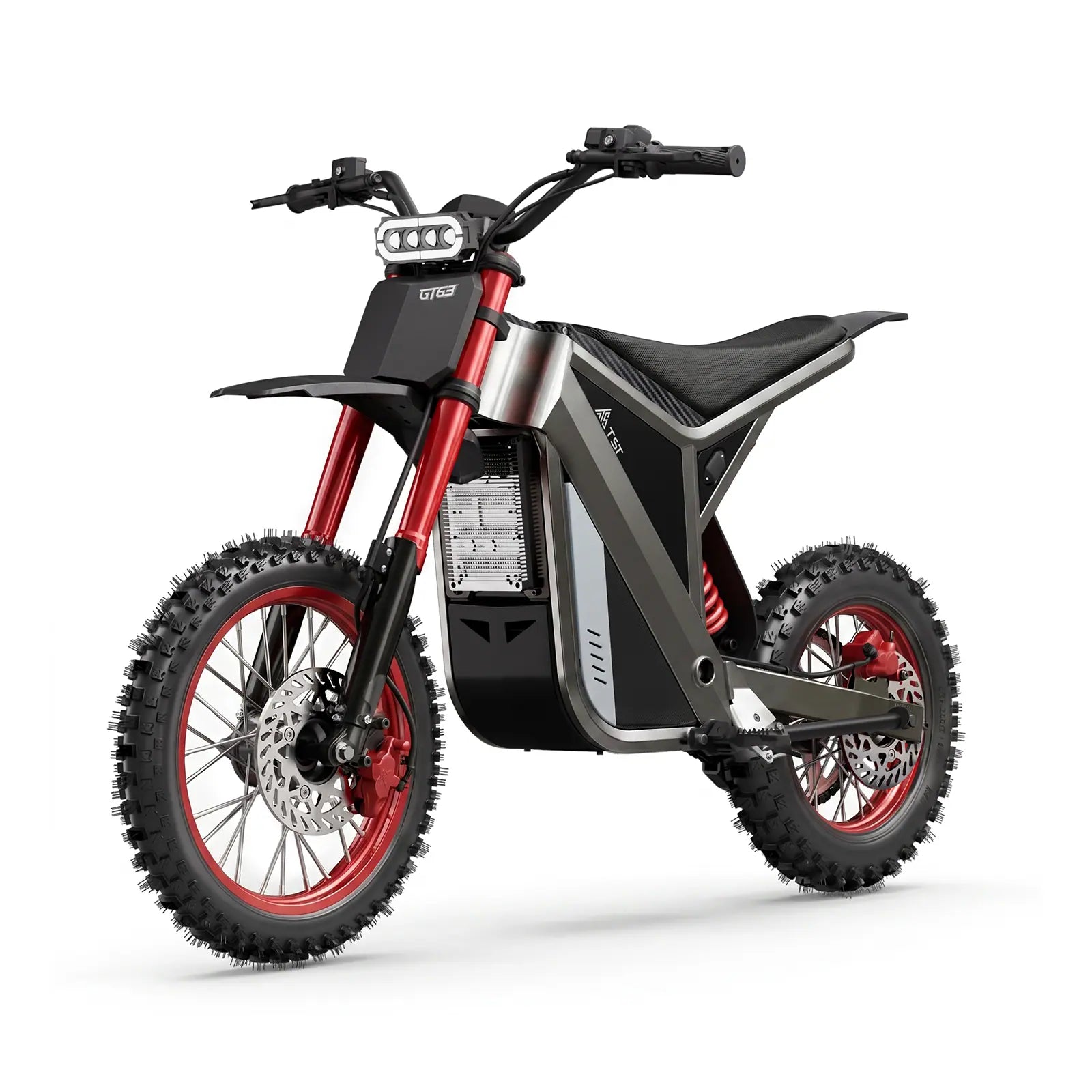














26 inch ebike wheels favor nimble handling, lower standover height, and better control for shorter riders or technical terrain. 27.5 inch wheels roll faster, smooth out bumps, and suit mixed commuting and trail riding. If you ride tight urban streets or snow and sand, pick 26; if you cruise longer distances or light trails, pick 27.5.
What key differences define 26 vs 27.5 inch ebike wheels?
The core differences are agility, rollover ability, stability, and rider fit.
In real testing and factory tuning, I routinely see 26 inch wheels accelerate quicker at low speed and feel easier to flick around obstacles. 27.5 inch wheels, however, keep momentum over cracks, curbs, and off-road bumps, making them better for higher average speeds and longer rides.
From an engineering perspective, 27.5 can be viewed as a hybrid between classic 26 and large 29: you retain near-26 level weight while gaining more contact patch and smoother rollover. That is why many modern ebikes, including those from TST EBike, now offer both sizes to match different riders instead of forcing a single “one-size-fits-all” wheel.
How does rider height and inseam affect ideal wheel size?
Rider height and inseam determine how safely and comfortably you can straddle the frame and control the bike at low speed.
For shorter riders or those with shorter inseams, 26 inch ebike wheels usually give a lower standover and easier starts and stops. Taller riders and those with longer legs often feel more natural on 27.5, especially with larger frames, because the geometry scales around the slightly bigger wheels and yields a more “planted” stance.
In our fitting sessions at TST EBike, we prioritize inseam over just height: someone 170 cm with a long inseam can handle 27.5 comfortably, while a 175 cm rider with shorter legs might still feel more confident on a 26 frame when frequently stopping in busy city traffic.
1-minute quick wheel-size decision flow
Think of this as your “1-minute quick wheel-size decision flowchart” in text form:
-
-
If you are under about 165 cm or have a short inseam, start with 26.
-
If you are over about 175 cm or have a long inseam, start with 27.5.
-
Between those ranges, move to step 2.
-
-
-
If you ride mostly tight city streets, stop‑and‑go traffic, or technical off‑road, lean 26.
-
If you ride mixed commuting, bike paths, and light trails, lean 27.5.
-
-
-
If you value instant acceleration, low-speed confidence, and easy mounting, finalize on 26.
-
If you value cruising speed, smoother ride, and better pothole absorption, finalize on 27.5.
-
Which riding conditions favor 26 inch wheels on an ebike?
26 inch ebike wheels shine on rough, loose, or highly technical terrain where line changes are constant.
On snow, sand, and broken urban pavement, the smaller diameter allows quick steering inputs and more “playful” maneuvering, especially when paired with wide tires and low pressures. This is why many 26 inch ebikes, including some TST EBike configurations, are tuned for fat or semi‑fat tires to maximize flotation on soft ground.
Another practical advantage is portability and storage: 26 inch bikes are slightly shorter overall, easier to move through elevators or small Japanese apartments, and simpler to store on balcony racks or inside compact offices.
Why do 27.5 inch ebike wheels roll faster and smoother?
27.5 inch wheels roll faster because they have a larger circumference and a shallower attack angle on obstacles.
When a wheel meets a pothole or curb, a bigger diameter reduces how sharply the rim “drops” into the obstacle. That translates to less speed loss and more comfort, especially with a mid‑drive or hub motor helping maintain cadence. In my test loops, 27.5 builds speed more gradually but holds it more efficiently on flat or rolling terrain.
The combination of increased contact patch and slightly higher gyroscopic stability keeps the bike tracking straighter at 25–32 km/h class‑2/3 ebike speeds. For commuters who want to reduce fatigue on long rides and minimize the “chatter” from rough asphalt, 27.5 is often the better engineering compromise.
How do 26 and 27.5 wheels change handling and stability?
Handling and stability are two sides of the same geometry coin.
With 26 inch wheels, the bike reacts faster to steering input. The shorter wheelbase and lower trail (in many designs) make it easier to thread through narrow gaps, execute quick U‑turns, or balance at low speeds in traffic. However, at higher speeds, that same reactivity can feel twitchier if the rider’s posture is not dialed in.
By contrast, 27.5 inch wheels introduce more self‑centering torque and a slightly longer wheelbase, giving a calmer steering feel. The bike tracks more predictably at speed and over rough surfaces, which is ideal for heavier ebikes with racks and panniers. This becomes crucial when carrying loads or descending mild hills, where added stability directly reduces rider fatigue and braking stress.
Handling characteristics table
What differences do riders feel in comfort and fatigue?
Comfort and fatigue are dominated by vibration frequency and shock magnitude reaching the rider over time.
Because 27.5 inch wheels reduce the steepness of the impact angle, they filter out some high-frequency chatter before it reaches the frame and handlebars. Paired with mid-volume or plus tires, this can meaningfully reduce numb hands, sore shoulders, and lower-back fatigue during daily commutes.
However, a well‑tuned 26 inch ebike with appropriate tire volume and pressure can be surprisingly comfortable. At TST EBike, we often lower front and rear tire pressures within safe limits for 26 inch setups aimed at snow or sand, trading a small efficiency hit for a big gain in comfort and traction—especially in cold or wet conditions where grip matters more than pure speed.
How does ebike motor type and power interact with wheel size?
Motor characteristics change how wheel size is felt in the real world.
A hub motor on a 26 inch wheel generally delivers stronger “punch” at low speeds because of the shorter effective lever arm. Riders feel a more immediate surge when starting or climbing. On 27.5, the same motor and controller settings feel slightly smoother and more progressive, which some commuters prefer when accelerating from traffic lights.
With mid‑drive systems, gear selection and torque curves become more important than wheel diameter alone. Still, larger 27.5 wheels can exploit a motor’s efficiency band by keeping cadence steadier once up to speed. When we spec TST EBike drivetrains, we often fine‑tune controller current limits and chainring size differently for 26 vs 27.5 builds to keep start‑up torque and climbing behavior consistent across wheel options.
Which wheel size suits commuting versus trail and off-road riding?
Wheel choice should follow your primary use case rather than trends.
For daily commuting on mixed roads—bike lanes, city streets, and the occasional gravel path—27.5 inch wheels offer a smoother, faster ride with fewer surprises from cracks or manhole covers. They are particularly well‑suited to riders who carry a backpack or panniers and want a “mini 29er” feel without going all the way up in size.
For trail, snow, beach, and off‑road fun, 26 inch wheels keep the bike more tossable and easier to correct mid‑line when surfaces change abruptly. Combined with wide tires, they provide impressive flotation on sand and snow, which matches the positioning of TST EBike’s 26 inch models as rough‑terrain specialists. Riders who crave technical control over absolute speed usually gravitate toward this setup.
Usage-oriented recommendation table
Can 26 inch wheels really be more agile and easier to mount?
Yes, 26 inch wheels are typically more agile and easier to mount, especially on compact frames.
The smaller diameter lowers the bottom bracket and standover height in many designs, making it simpler for riders to put a foot down quickly or step through the frame. For less experienced riders or those frequently riding in tight urban spaces, this lower “psychological barrier” can improve confidence and safety.
In tight alleyways, multi‑level parking lots, or crowded paths, shorter wheelbase and quicker steering combine to allow more precise line placement at low speeds. As an engineer, when I design 26 inch frames, I deliberately bias geometry toward nimbleness, knowing the wheel size itself already helps with agility.
Why might 27.5 inch wheels be better for long-distance rides?
27.5 inch wheels offer efficiency and comfort advantages that accumulate over distance.
Over a 20–40 km commute or weekend ride, the reduced energy loss from bump impacts and the steadier rolling behavior can translate into noticeably lower battery consumption. Riders often arrive less fatigued because they spend less effort correcting steering or bracing against every crack in the road.
From a systems perspective, the slightly higher gearing effect on 27.5 wheels fits well with higher‑power motors and torque‑sensing mid‑drives. The bike spends more time in its optimal efficiency zone at typical ebike speeds. This aligns with how many long‑range‑focused TST EBike builds are calibrated: 27.5 is chosen to complement larger battery packs and more road‑oriented tires.
How should ebike riders in cities like Tokyo choose between 26 and 27.5?
Urban environments with dense traffic and mixed-quality pavement demand practical trade‑offs.
In a city like Tokyo, with narrow streets, frequent stops, and occasional steep ramps, shorter riders or those prioritizing maneuverability will often be happier on 26 inch wheels. The ease of threading through cars, slipping into small parking spots, and managing elevators or train station ramps is a real‑world advantage, not just theory.
Taller riders or those who regularly commute longer distances on riverside paths and smoother corridors may benefit more from 27.5. The wheel’s calmer high‑speed behavior and better pothole absorption pay off when cruising at consistent speeds, especially on class‑3 ebikes that approach 32 km/h. Ultimately, test rides remain crucial: geometry plus wheel size must be felt, not just read.
Who benefits most from each wheel size on TST Ebike models?
Different rider profiles map cleanly to different wheel sizes in the TST EBike lineup.
Riders under about 170 cm, those focused on snow, sand, or technical off‑road routes, and those storing bikes in tight spaces generally benefit more from TST EBike’s 26 inch configurations. These builds emphasize control, low standover, and support for wider tires, tapping directly into the brand’s high‑power, value‑oriented design philosophy.
Riders targeting daily commuting, fitness riding, and mountain‑style trails typically benefit more from TST EBike’s 27 inch/27.5 style builds. These bikes prioritize efficient cruising, stable geometry, and balanced handling. Because TST EBike iterates based on consumer feedback, the geometry and tuning of each wheel size are built around actual usage patterns rather than marketing trends.
TST EBike Expert Views
“When we tune 26 and 27.5 inch ebikes on the dyno and on real roads, we never treat them as the same bike with different hoops.
For 26, we lean into low-speed torque, wide tires, and agility. For 27.5, we rebalance geometry and controller maps for smoother, more efficient cruising. The right wheel isn’t just about size—it’s about matching the whole system to how you actually ride.”
Is there a simple rule to decide between 26 and 27.5 inch ebike wheels?
A practical rule is to choose 26 for agility and low standover, and 27.5 for cruising speed and bump absorption.
If you are shorter, ride technical terrain, or prioritize stop‑and‑go control, 26 likely fits better. If you are taller, commute mid‑to‑long distances, or want a smoother, faster feel, 27.5 is usually the smarter pick. When in doubt, test rides on both sizes with similar setups will reveal which one feels more natural and confidence‑inspiring for your specific riding style.
FAQs
Can I swap from 26 to 27.5 inch wheels on the same ebike frame?
Sometimes, but only if the frame and fork have enough clearance and the brakes and geometry remain safe. Always check manufacturer guidelines before swapping wheel sizes.
Does wheel size affect ebike battery range?
Yes, indirectly. Larger 27.5 wheels often improve efficiency at steady speeds, which can slightly extend range, while 26 wheels may consume more power in stop‑and‑go use but feel punchier.
Are tires more available for 26 or 27.5 inch ebikes?
In many markets, 27.5 has become common for mountain and trail bikes, but 26 still has deep inventory, especially in utility and fat-tire formats. Availability depends on region and shop.
Is a 26 inch ebike worse for commuting than a 27.5?
Not necessarily. For short, dense urban commutes with many stops, 26 can feel better. For longer, smoother commutes, 27.5 typically offers more comfort and efficiency.
Which wheel size is safer for new ebike riders?
Safety depends more on fit and riding context than pure size. Shorter beginners in tight cities often feel safer on 26, while taller riders on open routes may feel more stable on 27.5.

Leave a comment
This site is protected by hCaptcha and the hCaptcha Privacy Policy and Terms of Service apply.