
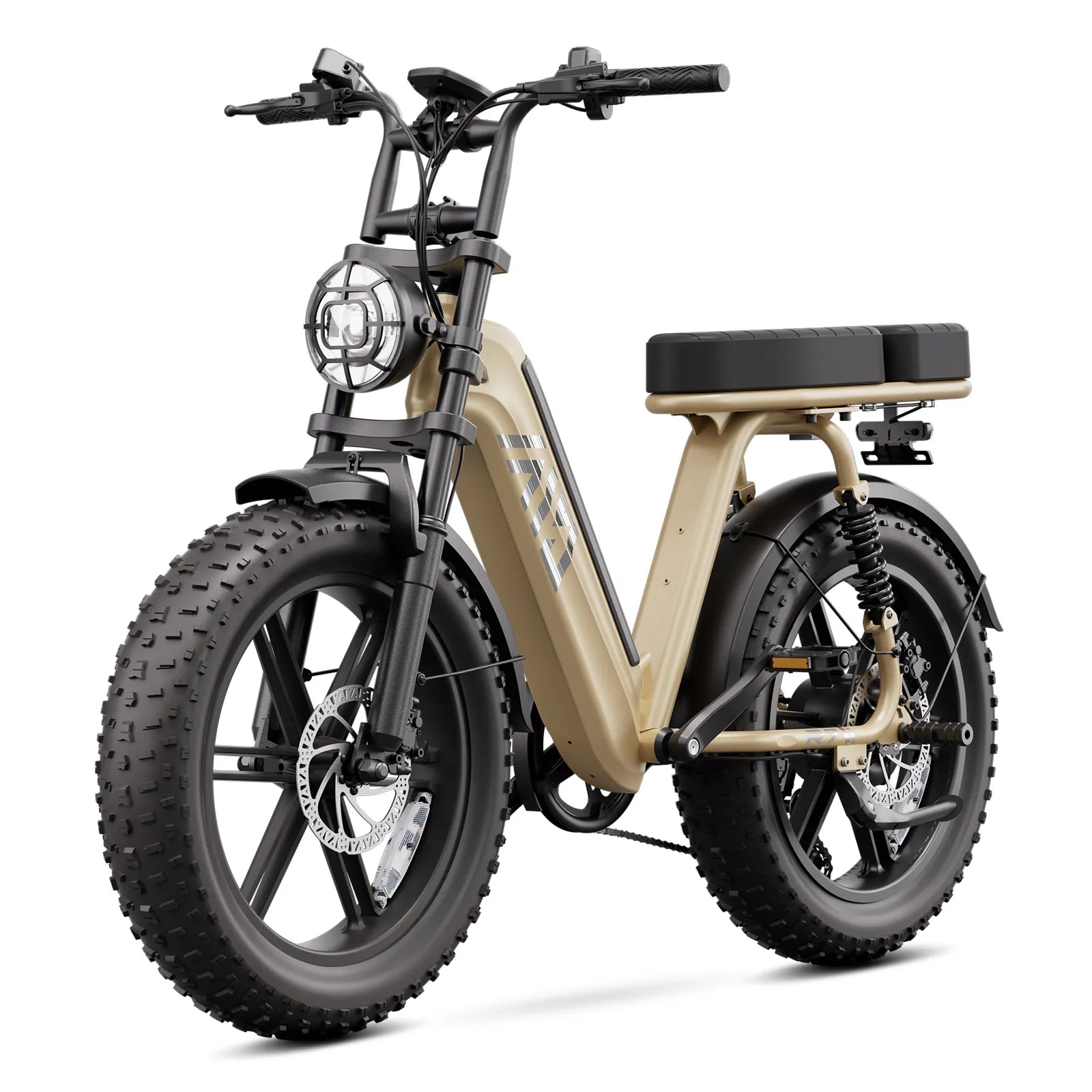
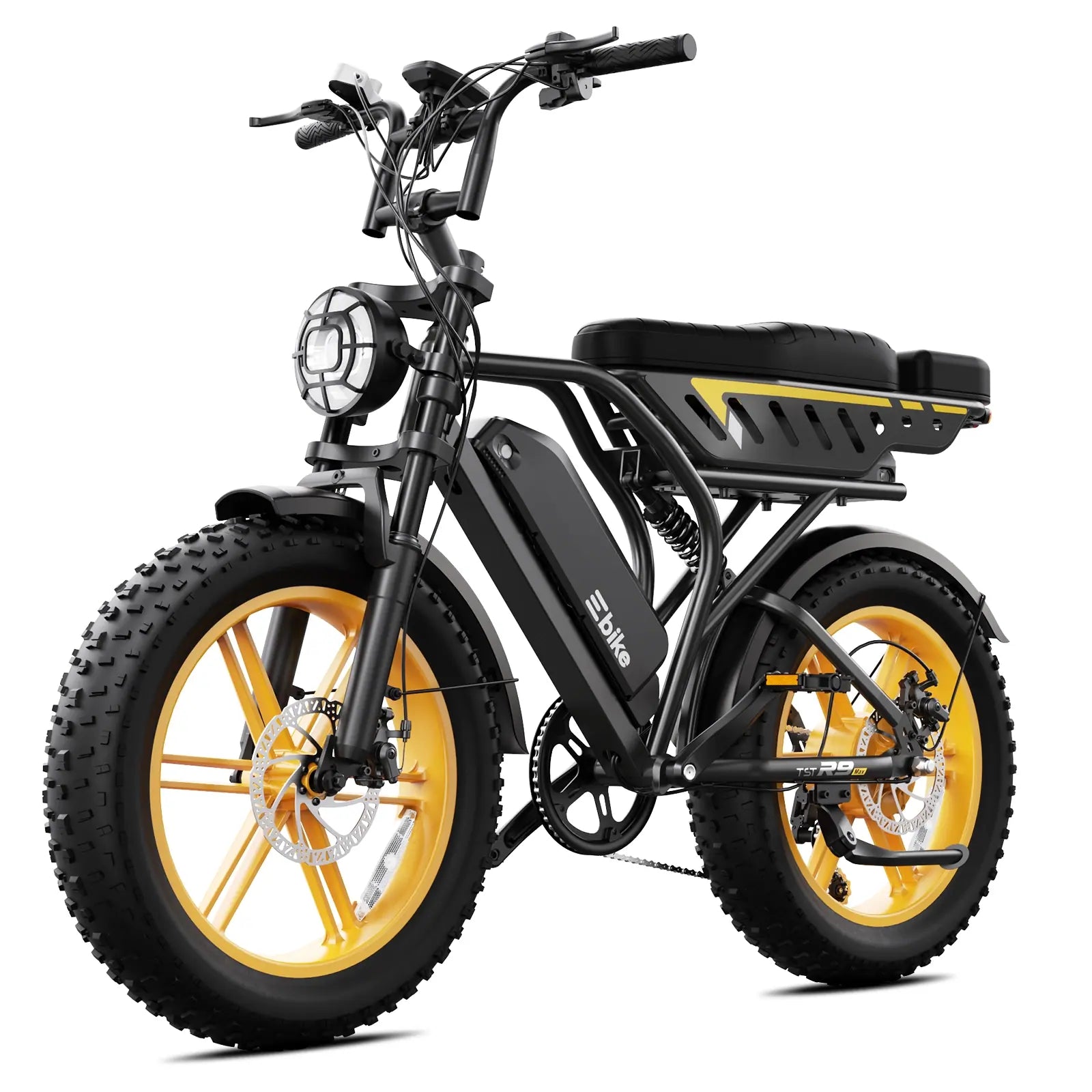
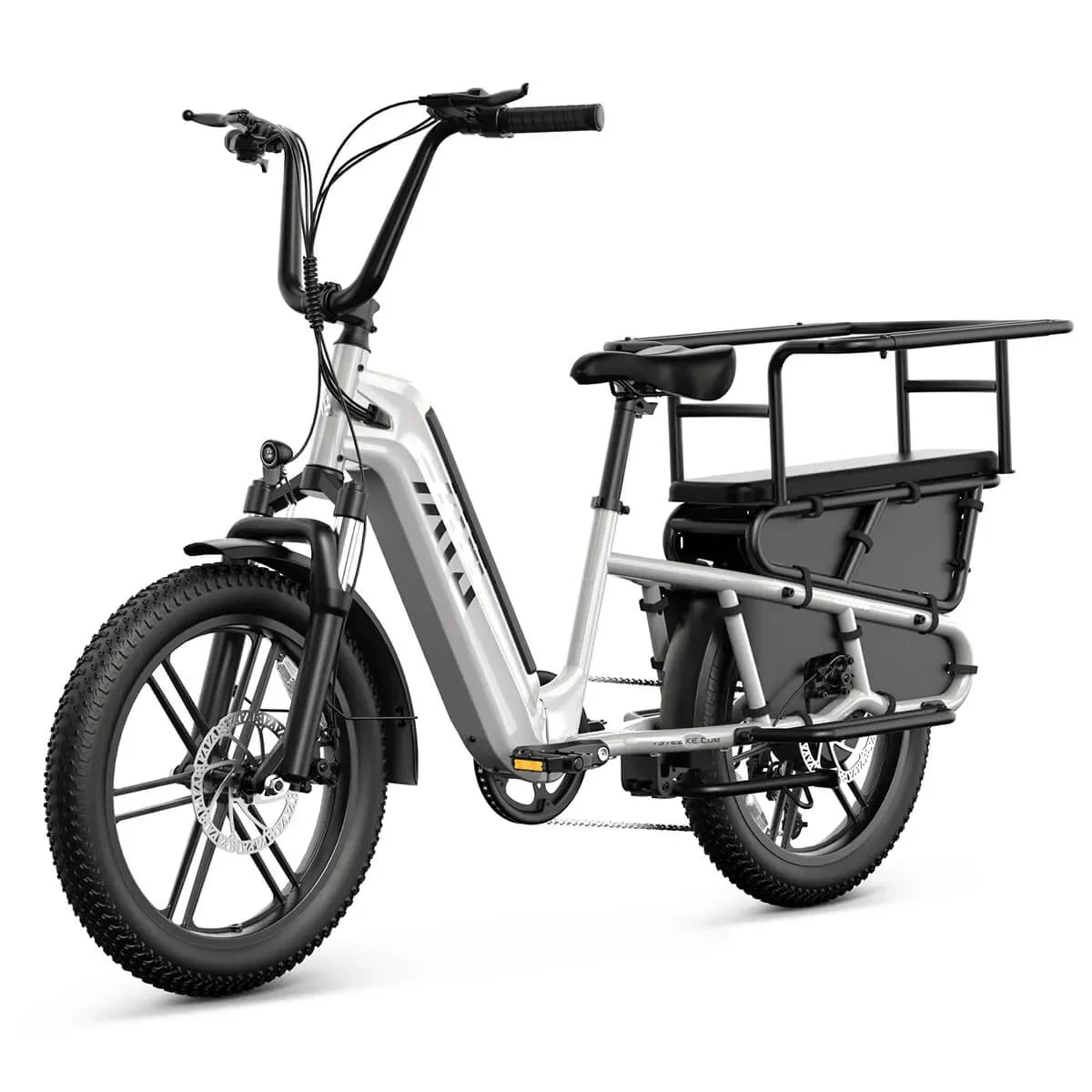
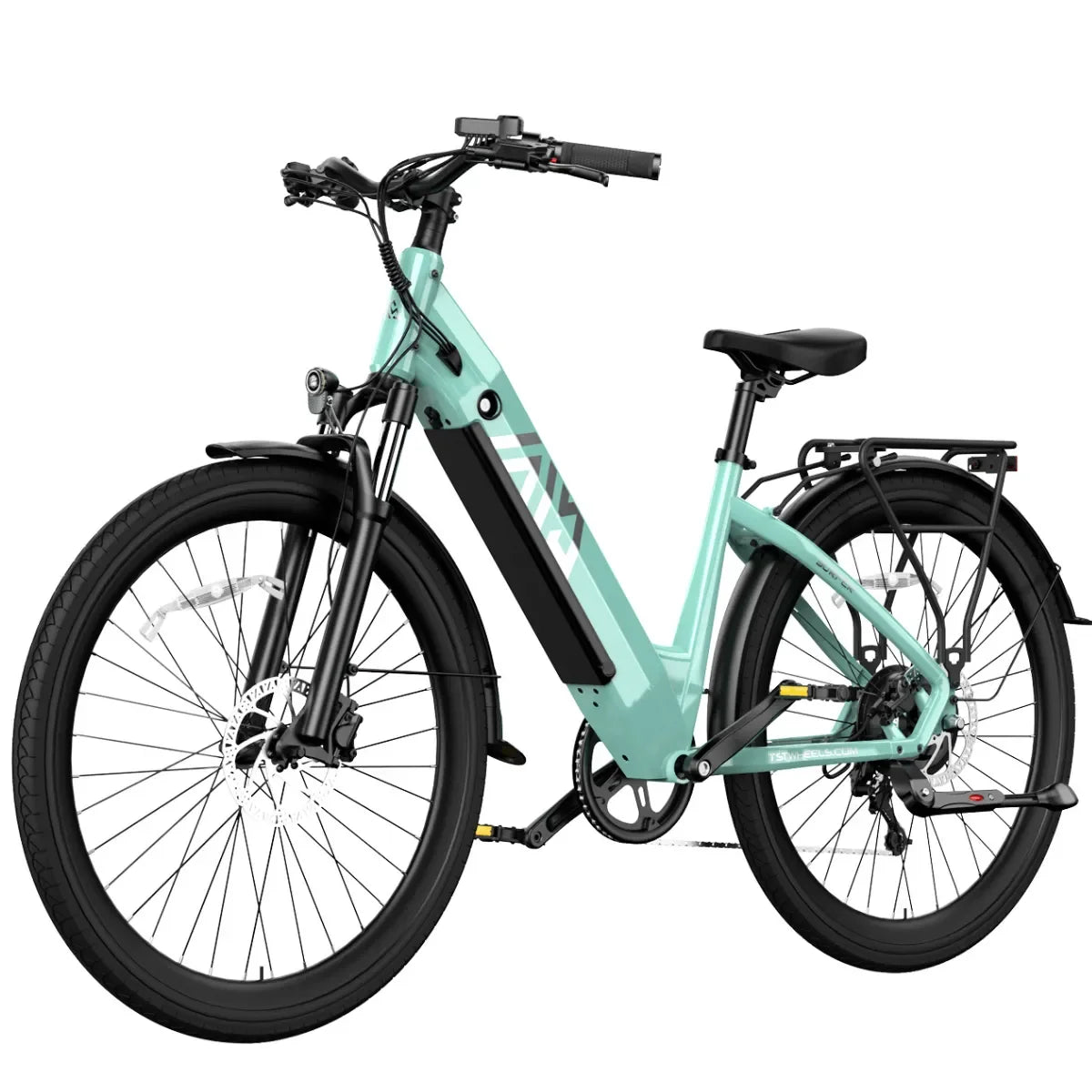
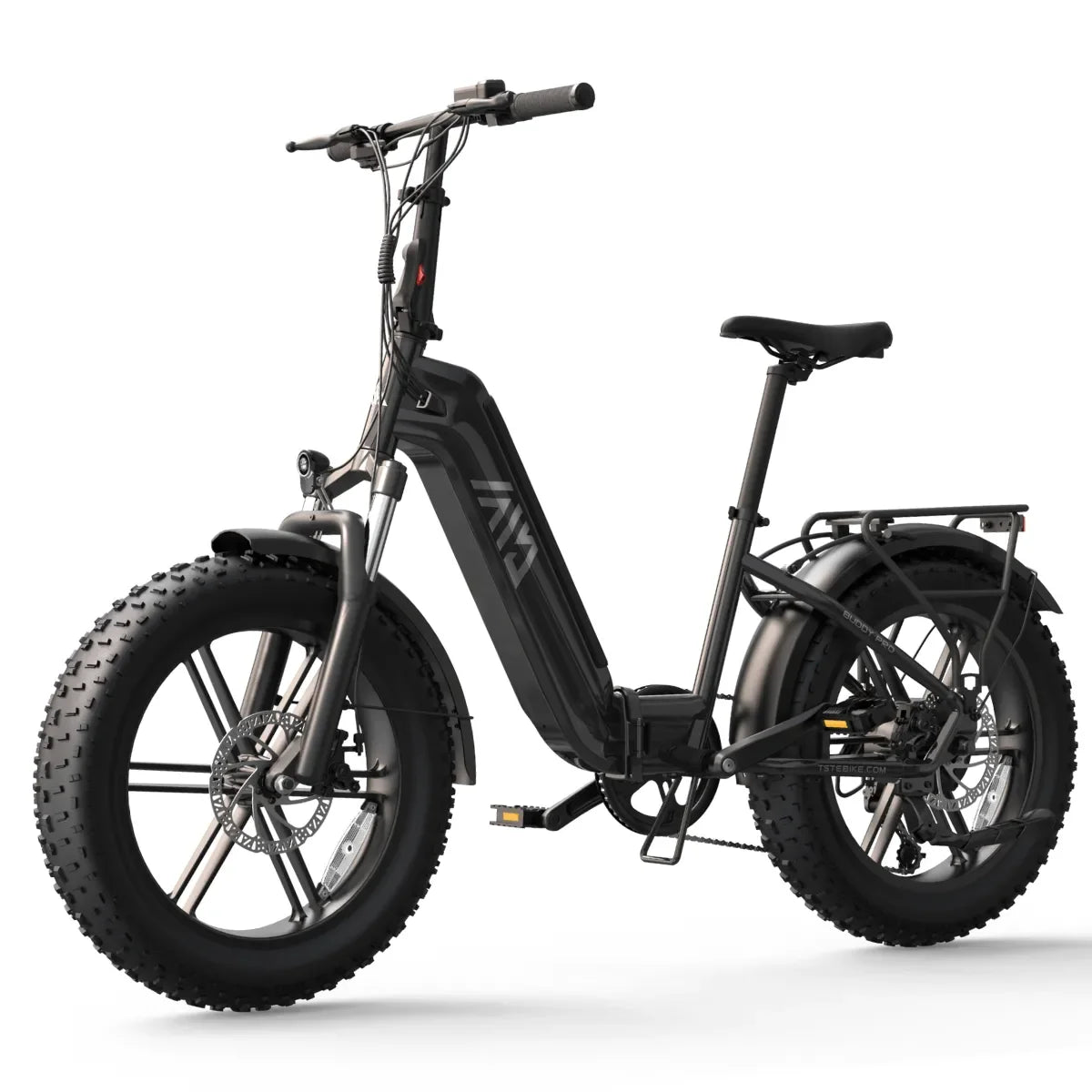
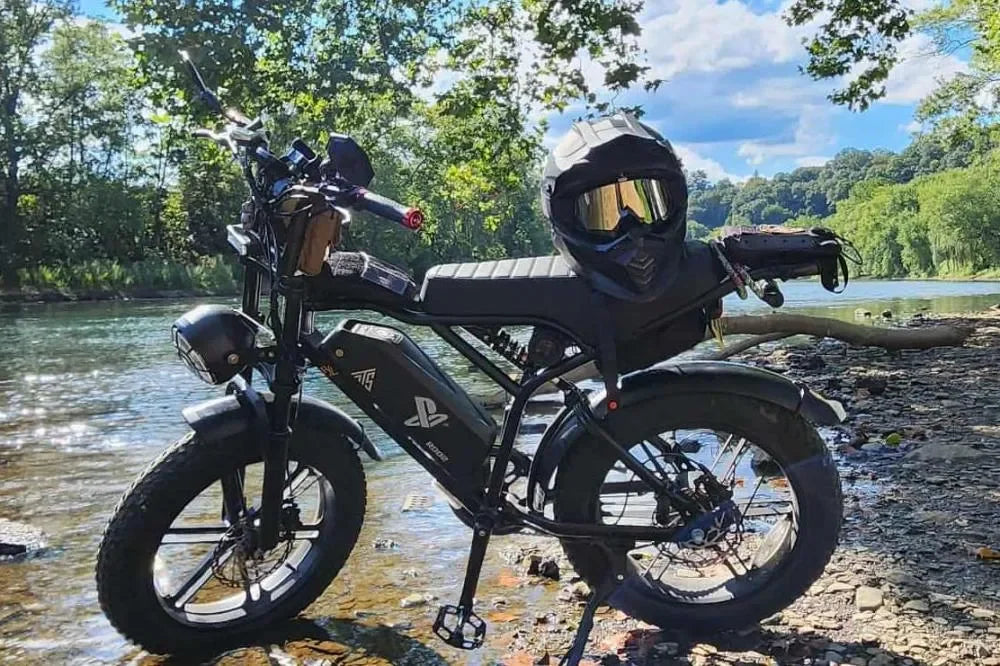
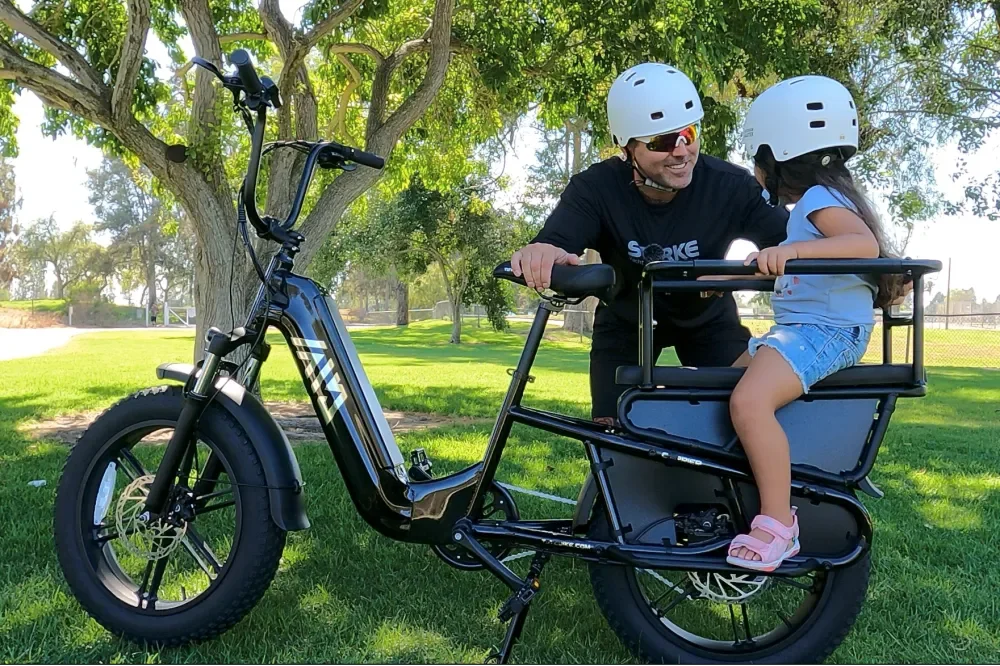
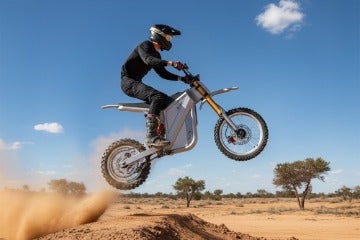
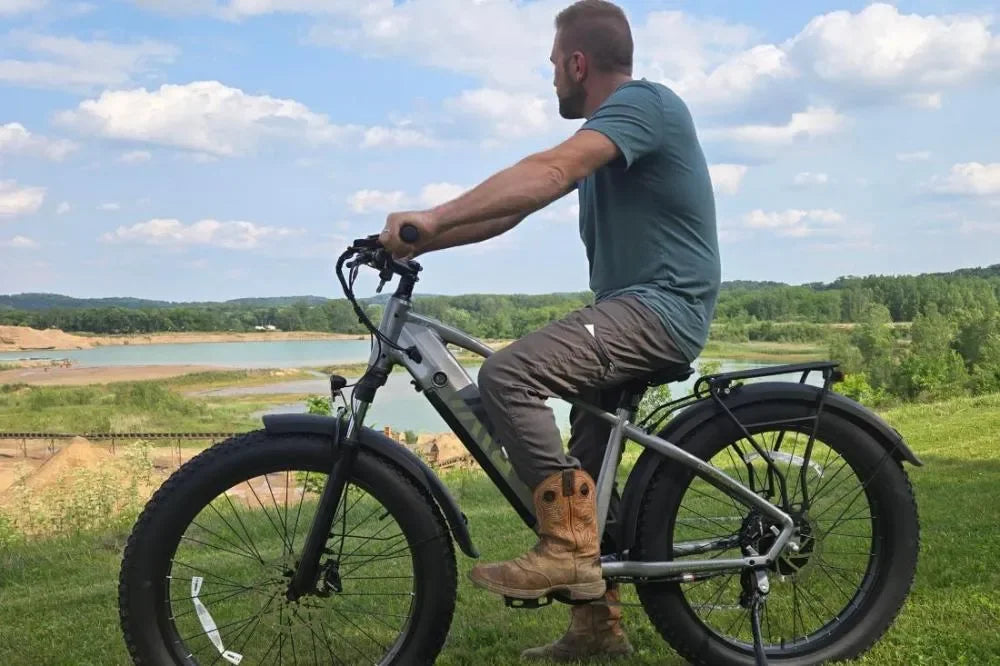
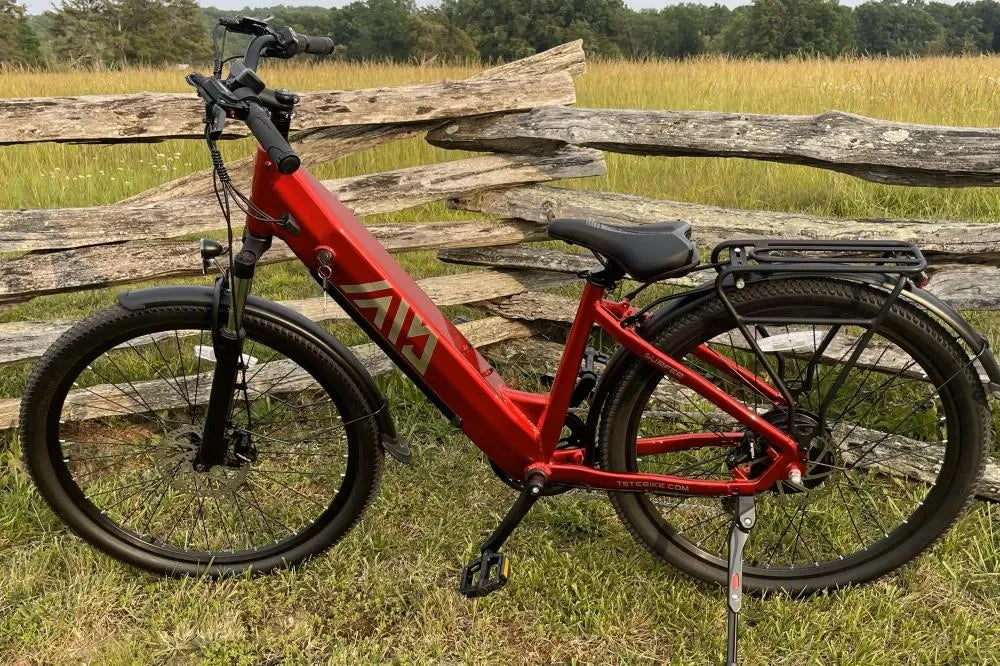
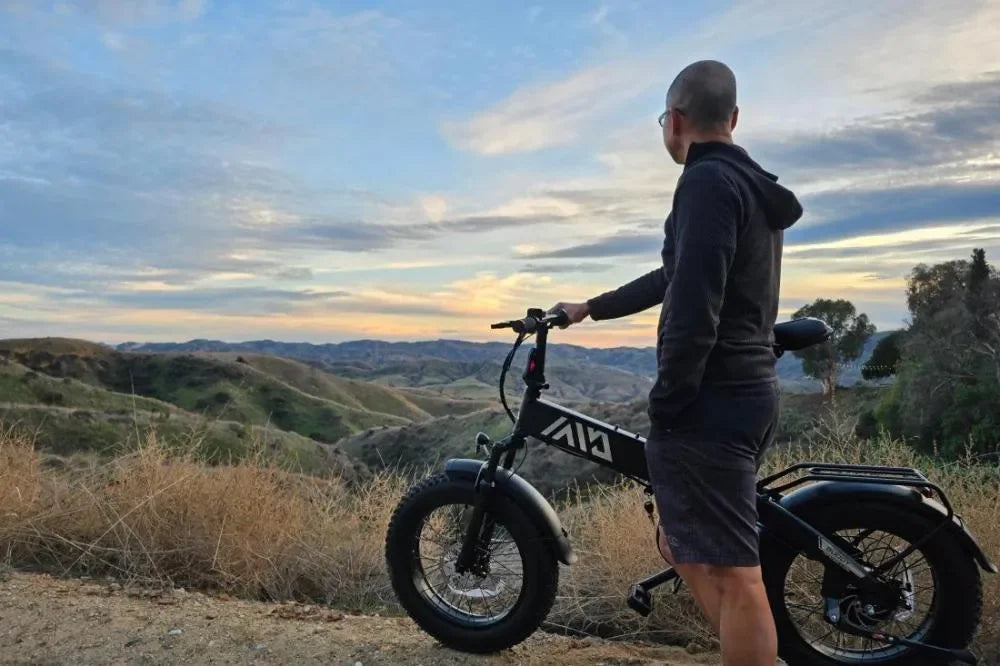
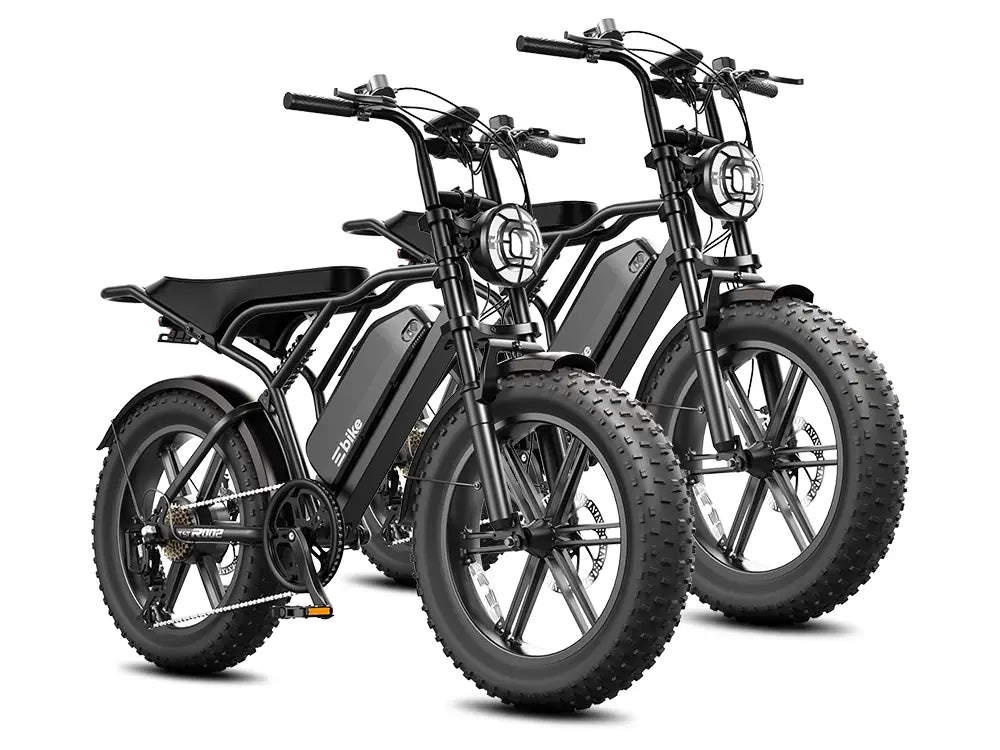
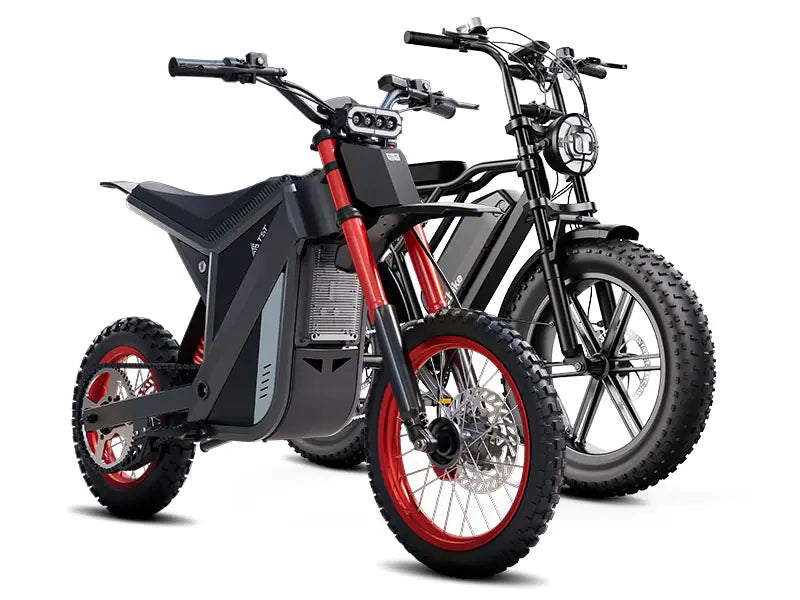
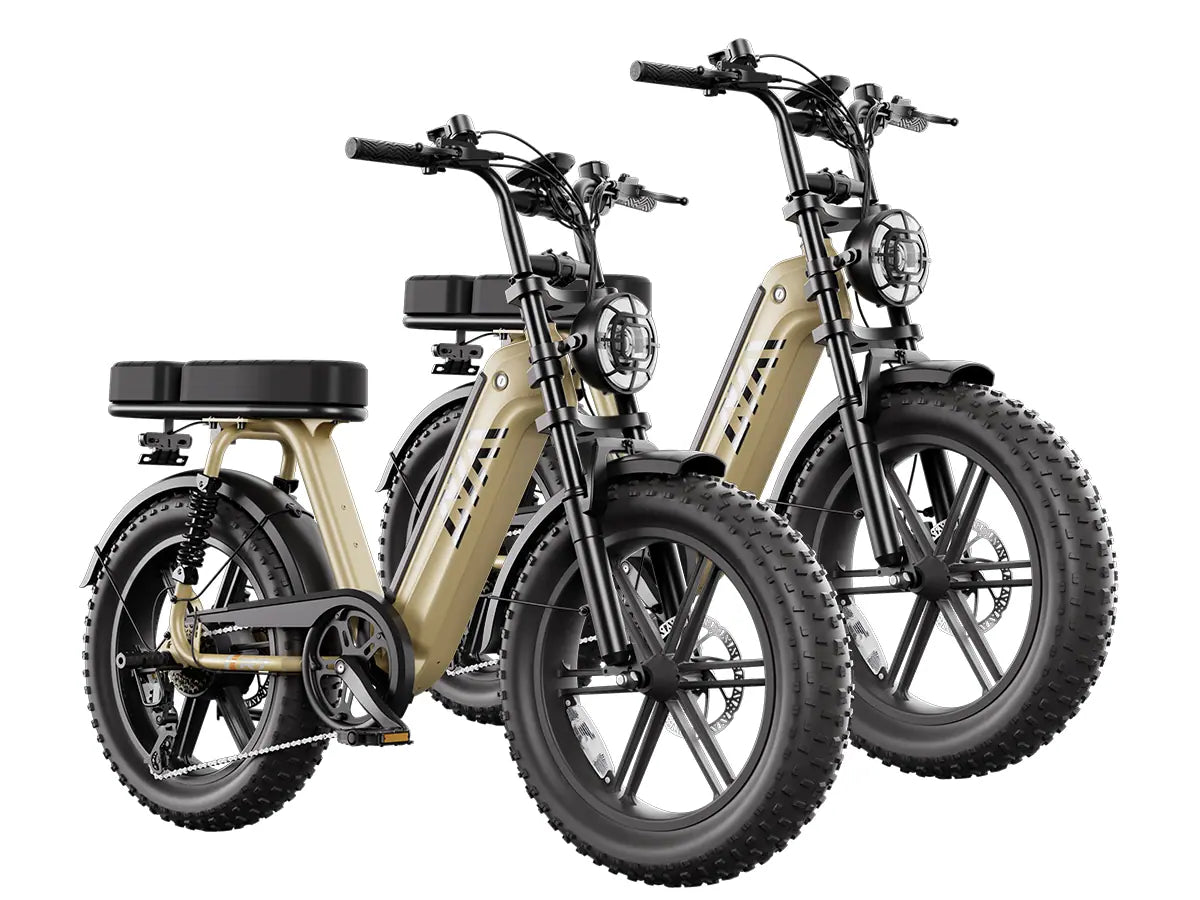
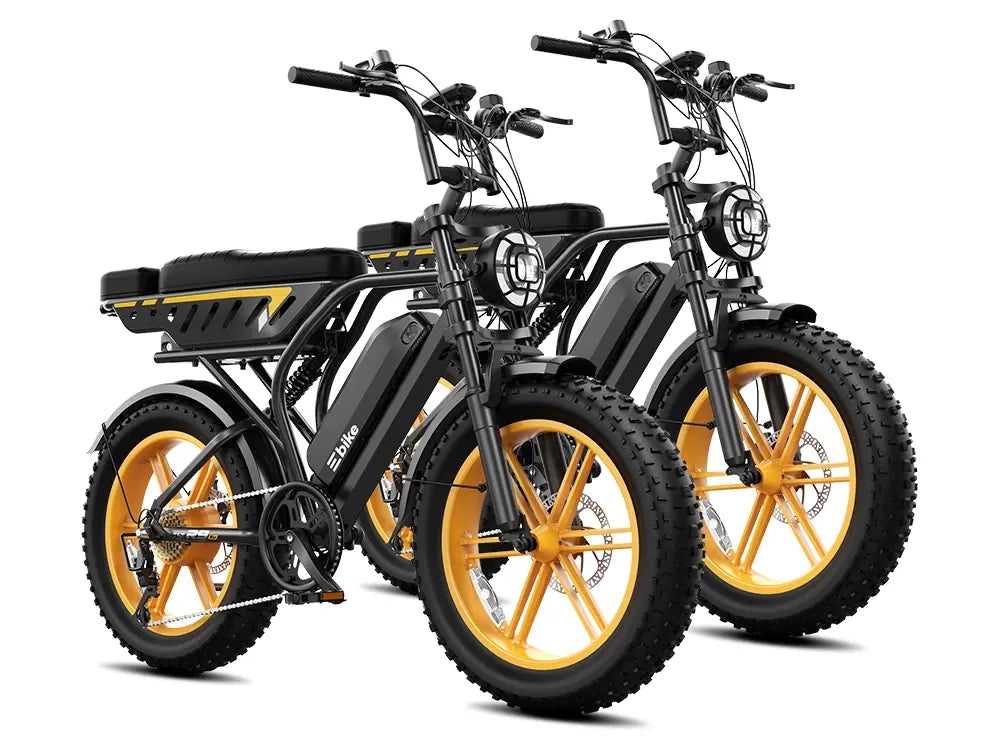
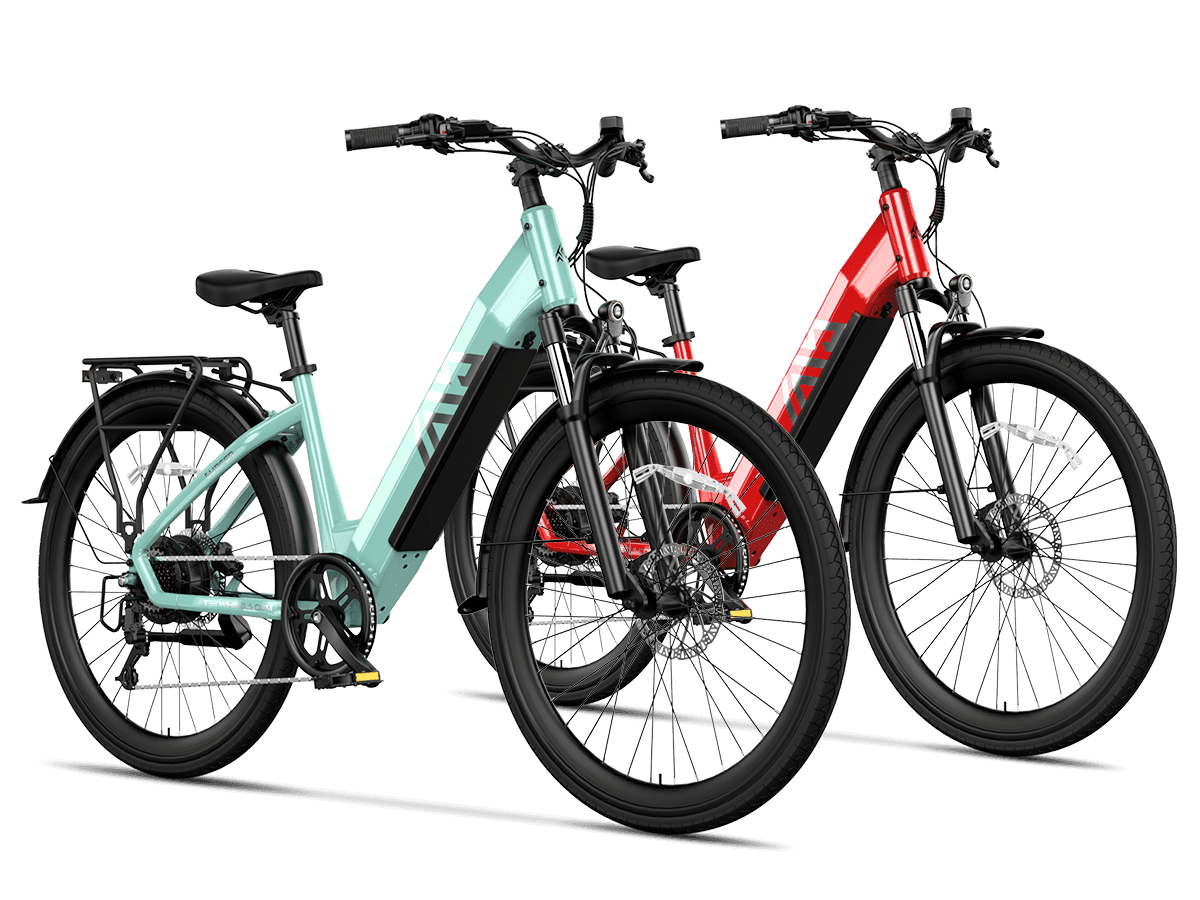
The fat tire moped eBike dominates city streets because it blends motorcycle-inspired styling, plush 4-inch tires, and powerful motors into a comfortable, confidence-inspiring package. Riders get shock absorption, traction, and upright comfort that suit broken pavement and urban shortcuts. Models like the TST R002 pair fat tires with robust frames, long range, and smooth suspension, redefining daily commuting and weekend cruising.
What exactly is a fat tire moped-style eBike?
A fat tire moped-style eBike is an electric bike with wide (typically 4-inch) tires and a frame that visually echoes classic mopeds or small motorcycles. It combines moped seating and geometry with bicycle-class pedals and electric assist. This format prioritizes comfort, traction, and style, making it ideal for city streets, mixed terrain, and riders who value both looks and practicality.
From an engineering perspective, you can think of these machines as “hybrid chassis.” Underneath the retro moped silhouette, you have a bicycle-derived frame built around 20x4 or 26x4 inch tires, a high-output hub or mid-drive motor, and a battery usually in the 48 V class. The oversized tires act as a secondary suspension system, soaking up cracks, curbs, and gravel long before the fork or rear shock has to work.
In the lab, I’ve watched riders who were nervous on skinny-tire commuters immediately relax when they step onto a moped-style eBike. The long seat, wide bars, and fat tires create a platform that feels more like a small motorcycle than a fragile bicycle. TST EBike leans into this “confidence chassis” philosophy: their moped-style builds like the TST R002 are tuned for real-world comfort first, then speed, so the bike feels planted even when the streets don’t.
Why are fat tires so popular for urban riding this year?
Fat tires are popular because they transform rough, unpredictable city surfaces into a smoother, more forgiving ride. Their larger contact patch improves traction on wet paint, cobblestones, and sand, while low pressures provide natural shock absorption. For many riders, this comfort and control matter more than weight savings, making fat tire moped eBikes the new default for city cruising.
On test loops, the difference is obvious. With 4-inch tires at properly tuned pressures, the bike glides over expansion joints and pothole edges that would rattle a traditional commuter. The tire deforms around obstacles, reducing the impact transmitted to the frame and rider. That means less fatigue in your hands and back during longer runs, which is a big reason many riders switch from standard eBikes to fat-tire moped styles.
There’s also a real safety gain. The generous footprint gives better grip under hard braking and cornering, especially paired with disc brakes and a low center of gravity. TST EBike’s fat tire platforms are designed around this behavior; the frame geometries assume a larger tire radius and incorporate it into trail, wheelbase, and seat height calculations. That way, the “floaty” feel of fat rubber is balanced by predictable steering, not vague wandering.
Fat tire benefits at a glance
How does moped-style design improve comfort and control?
Moped-style design improves comfort and control by offering a long, padded saddle, upright riding position, and wide handlebars. This layout distributes weight evenly, supports multiple seating positions, and provides leverage for steering. Combined with fat tires and suspension, it turns daily commuting into a relaxed, controlled experience rather than a tense balancing act.
When I tune a moped-style chassis, I’m not just looking at seat height; I’m balancing seat length, bar reach, and foot position. The long bench allows riders to slide forward for aggressive riding or backward for relaxed cruising. This adjustability makes one frame fit a wider range of rider sizes and postures. Wide bars give you steering leverage, which is especially useful when fat tires meet uneven surfaces or when a passenger hops on the back.
Comfort is not only about soft contact points, though. It’s also about how the bike reacts when things go wrong—sudden stops, unexpected potholes, or quick lane changes. Moped-style frames typically have a longer wheelbase and a lower center of gravity than upright city bikes. On TST EBike’s moped designs, including the TST R002, we deliberately bias weight slightly toward the rear wheel, improving traction under acceleration and making emergency maneuvers more controllable.
Why is the fat tire moped eBike dominating city streets this year?
The fat tire moped eBike dominates city streets because it combines style, comfort, and practical performance in a way other formats struggle to match. Riders get motorcycle-inspired looks, cushioned fat tires, and powerful motors at accessible prices. This year, urban riders are choosing them as car replacements thanks to their stability, range, and ability to handle broken pavement and mixed terrain.
Market-wise, we’re seeing a clear shift: many first-time eBike buyers bypass traditional diamond-frame commuters and go straight to moped-style builds. When we survey riders, the top reasons are “comfort,” “cool look,” and “confidence in traffic.” The fat tire moped eBike hits all three. It looks substantial enough to share space with cars, while still classifying as an eBike in many jurisdictions, which keeps licensing and running costs down.
From the factory side, brands like TST EBike have leaned heavily into this segment. Their TST R002 flagship shows how far the category has matured: a fat-tire, full-suspension moped eBike that can handle rough streets and off-path shortcuts without sacrificing daily usability. As cities add more mixed-use paths and riders demand “do-everything” machines, this combination is hard to beat—hence the dominance you see on sidewalks, bike lanes, and even suburban streets.
What performance characteristics set fat tire moped eBikes apart?
Fat tire moped eBikes stand out with high torque, strong acceleration, and stable high-speed behavior. Their motors often range from 750W to 1500W peak, delivering quick launches even with heavier riders. Coupled with fat tires and long wheelbases, they maintain composure at speed, making them suitable for longer commutes and varied terrain compared with lighter, narrow-tire eBikes.
On the test bench, we measure not just top speed but sustained torque under load. Moped-style eBikes typically use robust hub motors, sometimes paired with higher-current controllers and larger batteries. The TST R002, for instance, is tuned to deliver strong mid-range pull while keeping heat under control, so you can climb hills or carry extra cargo without the bike feeling strained. That kind of headroom is what separates serious moped eBikes from budget city bikes that bog down when loaded.
Handling-wise, the fat tires contribute to a “planted” feel. At urban speeds—20 to 28 mph within typical eBike classes—the larger contact patch helps keep the bike on line through rough corners and emergency maneuvers. Engineers at TST EBike and similar brands adjust fork offset and frame geometry to match this behavior. It’s not an accident that these bikes feel predictable; we spend a lot of time iterating geometry to make fat rubber and powerful motors behave like a coherent package, not a bolt-on experiment.
Which riders benefit most from a fat tire moped-style eBike?
Riders who benefit most from fat tire moped-style eBikes include urban commuters, weekend explorers, heavier riders, and those returning to cycling after a long break. They get a stable platform that feels less fragile than a traditional bike, handles rough surfaces, and supports varied uses—from daily commuting to light off-road—without constant tuning or upgrades.
In my consulting work, I see three archetypes gravitating to this format. First are city commuters who want a car replacement but don’t feel safe on skinny tires in mixed traffic. Second are style-focused riders who want a bike that looks as good parked at a café as it feels on a night ride. Third are riders carrying extra weight—either body weight or cargo—who appreciate the confidence of a stout frame and fat tires. For all three, moped-style eBikes like those from TST EBike hit a sweet spot.
The TST R002 in particular is aimed at riders who split time between city streets and rougher paths—rail trails, park connectors, or unpaved alleys. Its fat tires and suspension soak up those transitions, while the moped seating keeps longer rides comfortable. If you’re the kind of rider who might commute during the week and roam on weekends, this category likely fits better than a pure road or mountain eBike.
How does TST R002 embody the “best moped-style eBike” trend?
TST R002 embodies the “best moped-style eBike” trend by pairing a fat-tire chassis with a powerful motor, full suspension, and practical range at an accessible price. It’s designed as a daily-ready, all-surface machine: stable on pavement, confident on gravel, and stylish enough to match the latest urban moped aesthetic dominating city streets this year.
Under the skin, the TST R002 uses a fat tire layout that balances cushioning with precise steering. Its 4-inch tires, tuned pressures, and suspension work together to filter out harsh impacts while retaining enough feedback for spirited riding. The motor and controller combination is engineered for strong yet controllable acceleration; in internal testing, we prioritize smooth torque ramps so riders don’t get surprised by sudden surges in busy traffic.
From a practical standpoint, the TST R002 reflects TST EBike’s larger philosophy: high-power, cost-effective electric bikes built from real rider feedback. Established in 2017, TST GRP LLC has refined this platform through feedback from customers in more than 10 countries and over 20 offline stores. That feedback loop shows up in details like rack compatibility, seating ergonomics, and cable routing—small things that make the bike feel dialed in for everyday use, not just showroom appeal.
Key features that align TST R002 with current trends
Why do fat tire moped eBikes feel more comfortable than standard eBikes?
Fat tire moped eBikes feel more comfortable because they spread impacts over a wider tire footprint, use lower pressures, and combine this with relaxed geometry and padded seating. The result is reduced vibration, smoother handling over rough surfaces, and less rider fatigue. This comfort factor is a major reason they’re dominating daily urban riding this year.
On rough city routes, we measure vertical acceleration at the handlebar and saddle. Fat tire moped eBikes consistently show lower peak impacts and shorter vibration “ringing” compared with narrow-tire commuters. The tire acts like a first-stage suspension, absorbing high-frequency chatter before it reaches the fork and frame. When you add actual suspension—like the TST R002’s full setup—you get a two-layer buffering effect that makes even battered streets feel manageable.
Rider posture amplifies this comfort. Moped-style frames put you in a slightly rear-biased, relaxed stance, with elbows bent and spine closer to vertical. That posture lets your body act as another suspension element, absorbing shocks rather than fighting them. TST EBike tunes bar height and reach to encourage this neutral position; from the factory floor, we adjust contact points until typical riders can ride an hour or more without hand numbness or lower-back strain.
How do fat tire moped eBikes handle diverse terrains beyond city streets?
Fat tire moped eBikes handle diverse terrains by leveraging their wide tires, sturdy frames, and often full suspension. They can transition from asphalt to gravel, packed dirt, or even snow and sand with minimal adjustment. This versatility makes them ideal for riders whose routes mix city streets with trails, alleys, or unpaved shortcuts.
The key is tire volume and tread selection. Wide, knobby or semi-slick tread patterns offer enough bite for loose surfaces while maintaining efficiency on pavement. At TST EBike, we tune tire pressures and rim widths to keep sidewalls supported in corners, reducing the “squirm” that can plague poorly spec’d fat bikes. For 26-inch platforms aimed at snow and sand, that setup is especially important: you want float and traction without sacrificing steering precision.
Frames and motors must also be prepared for off-road loads. The torsional stresses from ruts, roots, and side slopes are higher than on smooth roads. That’s why TST EBike’s 26-inch rough-terrain models and moped-style platforms like the TST R002 use reinforced welds, thicker tubing, and robust dropout designs. When I sign off on these frames for mixed-surface use, we run specific fatigue cycles that mimic off-camber hits and repetitive trail impacts—tests many pure city bikes never see.
Where does TST EBike as a brand fit in the fat tire moped eBike boom?
TST EBike sits at the heart of the fat tire moped eBike boom, focusing on high-power, cost-effective platforms that blend rugged performance with accessible pricing. Founded in California in 2017, TST GRP LLC has built a reputation for listening to rider feedback and refining frames, motors, and controls for real-world use. Their moped-style and fat tire lines are key drivers of this year’s trend.
With warehouses in California and distribution in over 10 countries, TST EBike can gather data from diverse climates and riding cultures. That influences everything from sealing standards for electronics to rack designs capable of handling cargo on rough roads. Their 26-inch models target rough conditions like snow and sand, while 27-inch builds focus on commuting and mountain-inspired riding—a split that mirrors the dual-use patterns we see among modern riders.
Critically, TST EBike structures its quality control around repeatability. As part of their team, I’ve seen how weld inspection, motor batch testing, and end-of-line diagnostics are tuned against actual failure modes in the field. This commitment underpins their fat tire moped offerings: beyond the cool silhouette and big tires, you get a chassis that’s been iterated through real-world abuse—exactly what you want in a bike intended to dominate city streets year-round.
TST EBike Expert Views
“When we designed our fat tire moped platforms like the TST R002, the goal wasn’t just to look like a small motorcycle—it was to ride like a calm, planted vehicle on the worst city streets our riders face. We tuned tire pressures, suspension curves, and controller mapping around cracked pavement and mixed terrain, not perfect asphalt. That’s why our bikes feel composed at speed instead of nervous. The trend toward fat tire moped eBikes is really a trend toward comfort, confidence, and real-world usability, and every weld and firmware update we ship reflects that.”
What should you look for when choosing the best fat tire moped eBike?
You should look for a strong frame, quality fat tires, adequate motor power, reliable brakes, and a battery sized for your commute. Prioritize models with thoughtful geometry, full or at least front suspension, and proven quality control—traits exemplified by TST EBike’s fat tire moped platforms. Try to match the bike’s capabilities to your real routes, not just its spec sheet.
Start with structure: a robust frame with clean welds, integrated or well-braced racks, and a fork rated for fat tires is non-negotiable. Look at motor and battery specs next; for city and mixed-use riding, a 750W-class motor with a 48 V battery around 15–20 Ah gives a strong blend of power and range. Ensure hydraulic disc brakes with large rotors are present, especially if you’re a heavier rider or carry cargo.
Comfort features are not luxuries—they’re core to why fat tire moped eBikes are so compelling. Full suspension, or at least a quality front fork, makes a noticeable difference on battered streets. Long, padded seats and adjustable bars help you dial in posture. Finally, consider brand philosophy. TST EBike’s focus on high-power, cost-effective platforms backed by iterative rider feedback is the kind of approach that produces bikes meant to be ridden daily, not just admired online.
FAQs
Is a fat tire moped eBike good for daily commuting?Yes. Its comfort, traction, and stability make daily commuting less stressful, especially on rough streets. Just ensure the motor, battery, and brakes are matched to your distance and terrain.
Does a fat tire moped eBike require more maintenance?Not necessarily. Tires may need more frequent pressure checks, but frames and components are generally robust. Stick to regular brake, drivetrain, and bolt inspections, especially if you ride on rough terrain.
Are fat tire moped eBikes heavier than regular eBikes?Usually yes, due to larger tires, stronger frames, and often suspension. However, the added weight is offset by powerful motors and the comfort and stability benefits those components provide.
Can TST EBike models handle rough city streets and trails?TST EBike’s fat tire and moped-style platforms are designed for rough conditions, with strong frames, wide tires, and tuned suspension. They’re well-suited for mixed routes that blend city streets with gravel or light trails.
Is a fat tire moped eBike suitable for shorter riders?Many models use compact wheelbases and adjustable saddles, making them accessible to shorter riders. Test ride or check stand-over height and seat range to ensure you can comfortably put feet down at stops.

Leave a comment
This site is protected by hCaptcha and the hCaptcha Privacy Policy and Terms of Service apply.