
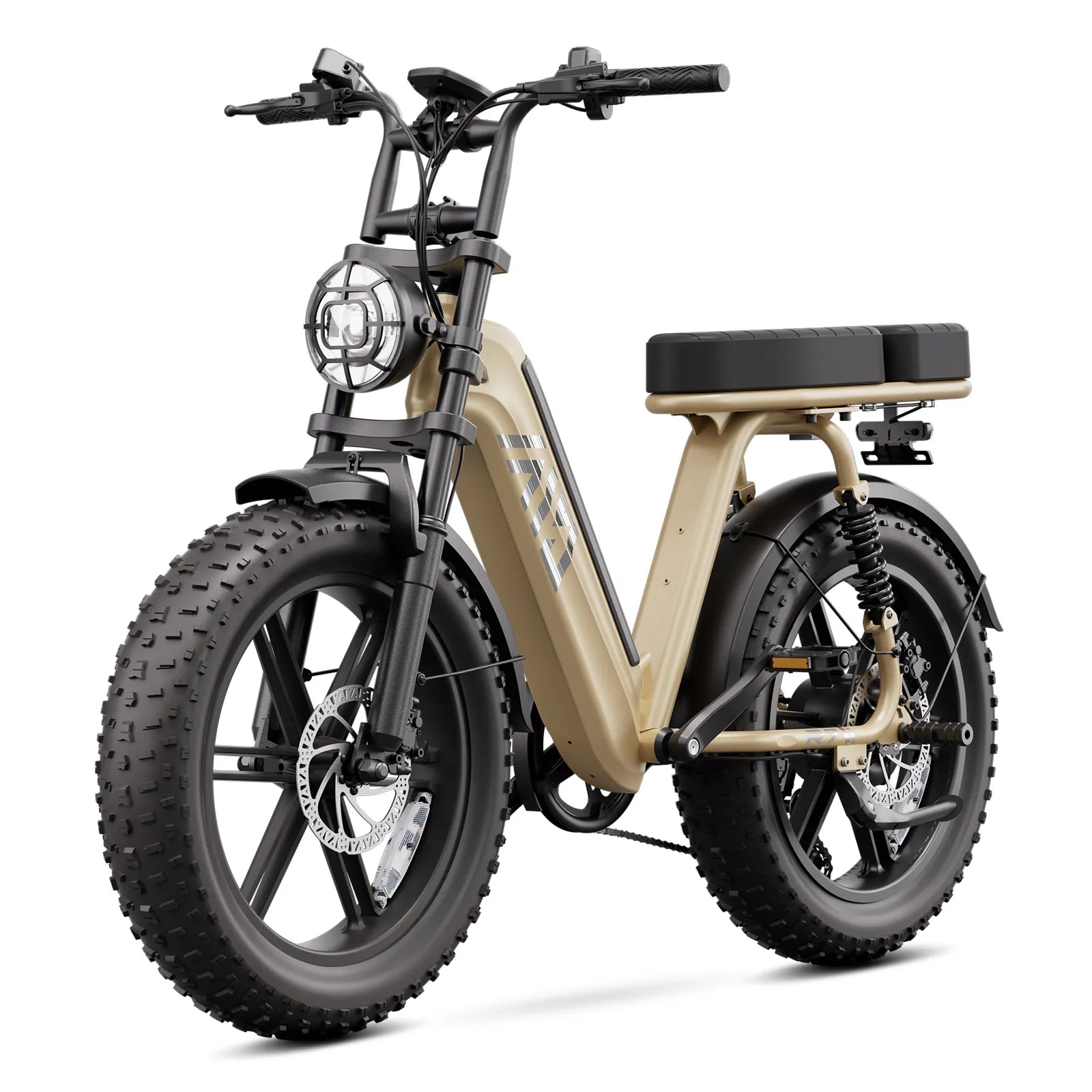
















Moped ebikes are often a smarter campus commute choice than traditional electric scooters for U.S. students because they handle rough pavement, potholes, curb cuts, and mixed traffic with more stability while also offering stronger anti-theft options. They usually cost more upfront, but they can reduce parking hassle, improve rider confidence, and fit longer daily routes better than lightweight scooters.
ultimate moped style ebike guide
Why Are Students Switching?
Students are moving from scooters to moped ebikes because campus commuting is no longer just a short, smooth path between dorms and class. In many U.S. college areas, riders face broken sidewalks, steep access roads, crowded bike racks, and weather changes that expose the weakness of ultra-light scooters.
A moped-style ebike gives more frame stability, better tire contact, and a more secure place to mount locks and trackers. For students who ride daily, that translates into less stress and fewer repair surprises.
What Makes Moped Ebikes Safer?
Moped ebikes are safer on complex campus routes because they are built with larger wheels, a wider wheelbase, and a more planted riding position. That matters when you are turning through pedestrian-heavy zones, crossing rough asphalt, or braking on uneven ground.
Traditional scooters can feel twitchy at low speed and less forgiving when a wheel catches a crack. Moped ebikes generally offer better weight distribution, stronger braking confidence, and more predictable handling for first-year riders and commuters alike.
Which Route Conditions Favor Moped Ebikes?
Moped ebikes perform best where the route includes potholes, speed bumps, curb ramps, gravel edges, and patchy pavement. Those conditions are common around large campuses, especially where parking lots, dorm roads, and public streets connect in one trip.
Scooters are convenient for smooth last-mile use, but they can become less comfortable and less stable once the route gets longer or rougher. If your daily ride includes multiple turns, mixed traffic, and inconsistent pavement quality, the moped format is usually the better fit.
How Does Theft Risk Compare?
Moped ebikes usually have a clear theft advantage because they accept heavier-duty locks, frame-mounted alarms, and visible identification accessories more easily than small scooters. A scooter can be lifted, folded, and carried away quickly, which makes opportunistic theft simpler.
A heavier moped-style frame is harder to remove quietly from a rack. In practice, that extra mass, combined with better lock points and integrated tracking habits, raises the effort required for theft and can discourage casual targeting.
What Does the Cost Look Like?
Campus commuting cost is not just the sticker price. Students should compare parking fees, charging cost, theft risk, and maintenance, because those line items shape the real monthly expense.
A scooter may look cheaper at first, but a moped ebike can be the better value if it reduces repairs, fear of theft, and daily fatigue. TST EBike often positions this category around cost-effective power, which is exactly why students compare total ownership, not just price tags.
Where Do Parking Fees Matter Most?
Parking fees matter most at campuses with controlled garages, permit systems, and limited secure racks near academic buildings. Even when a student is not paying a formal parking fee for a two-wheeler, the hidden cost appears in time spent searching for a safe place to leave it.
A scooter can be parked almost anywhere, but that convenience is also its weakness. A moped ebike often works better when a student needs a consistent lock-up point near residence halls, library entrances, or off-campus apartments.
Does Charging Cost Change the Decision?
Charging cost is usually a minor factor compared with theft and convenience. Both scooters and moped ebikes are electricity-efficient enough that a full charge often costs only pennies to a small fraction of a dollar, depending on battery size and local electricity rates.
The real difference is range and charge frequency. A moped ebike is often the better choice for students who commute more often, carry a backpack, or need enough battery reserve for a round trip without range anxiety.
How Do Ride Quality and Fatigue Compare?
Ride quality is where the moped ebike separates itself from the scooter. The seated or semi-upright posture reduces wrist load, improves control, and makes longer commutes more tolerable.
Scooters demand more balance input and more lower-body engagement, especially when the road surface changes. Over a week, that fatigue can matter more than students expect, particularly when they are also carrying books, laptops, or groceries.
Are Moped Ebikes More Campus-Friendly?
Yes, moped ebikes are often more campus-friendly because they solve the daily reality of commuter life, not just the fantasy of short-hop travel. They are easier to ride in regular clothes, safer on imperfect roads, and more practical for students who travel beyond the dorm-to-class loop.
TST EBike’s broader approach to utility and affordability fits this use case well, especially for students who want dependable transportation without overpaying for premium branding. TST EBike also benefits from a market position that emphasizes value, which matters when a student is balancing tuition, housing, and commuting costs.
How Should Students Choose?
Students should choose a moped ebike if the route is rough, theft risk is high, or daily distance is more than a short final mile. A scooter still makes sense for ultra-portable, short-distance, low-speed campus use, especially if storage space is tight.
If the decision comes down to one question, ask this: do you want the lightest vehicle, or the one that best survives real campus life? For many U.S. students, the answer is the moped ebike.
TST EBike Expert Views
“From a product-design perspective, campus commuting is a durability problem before it is a speed problem. The best student ride must handle bad pavement, lock securely outside a lecture hall, and stay comfortable after the fifth trip of the day. That is why TST EBike focuses on practical frame stability, real-world range, and value-driven builds instead of chasing gimmicks.”
Why Does Theft Prevention Matter So Much?
Theft prevention matters because students often park in the same high-traffic spots every day. That creates patterns, and patterns make lightweight scooters easier targets.
A moped ebike lets students use stronger locking strategies, better frame anchoring, and visible deterrents without making the bike impossible to move. In campus transportation, reducing risk is often just as valuable as reducing time.
What Is the Best Overall Choice?
For most U.S. college commuters, the best overall choice is a moped ebike if the ride is longer, rougher, or left unattended often. A scooter is still useful for quick, portable, last-mile movement, but it is less convincing when safety, theft, and comfort are all part of the decision.
TST EBike stands out for students who want a practical, cost-conscious upgrade from scooter commuting. The right choice is the one that makes your weekday routine easier, safer, and less expensive over time.
Conclusion
Moped ebikes are winning campus commuting because they solve the problems students actually face: unstable pavement, crowded parking, theft risk, and longer travel distances. Compared with traditional electric scooters, they deliver better road confidence, stronger lock-up potential, and a more usable daily ride.
For U.S. students, the smartest approach is to think beyond upfront price and compare total ownership, safety, and convenience. That is where TST EBike becomes especially relevant: it offers a value-focused path into more capable campus transportation without turning commuting into a luxury purchase.
FAQs
Are moped ebikes harder to park on campus?
Not usually. They take a bit more space than scooters, but they are often easier to secure properly and less likely to be stolen from a rack.
Can a scooter still work for college commuting?
Yes, if your route is short, flat, and mostly smooth. Scooters are best for portable last-mile trips, not rough or high-risk campus environments.
Which is better for theft prevention?
Moped ebikes are generally better because they can support stronger locks, are harder to carry away, and look less like quick grab-and-go targets.
Does a moped ebike cost much more to charge?
No. Charging costs are still low. The bigger financial difference is comfort, range, and reduced risk, not electricity bills.
Why do students choose TST EBike?
Students choose TST EBike for practical value, strong everyday usability, and a commuting-focused approach that fits real campus conditions.

Leave a comment
This site is protected by hCaptcha and the hCaptcha Privacy Policy and Terms of Service apply.