


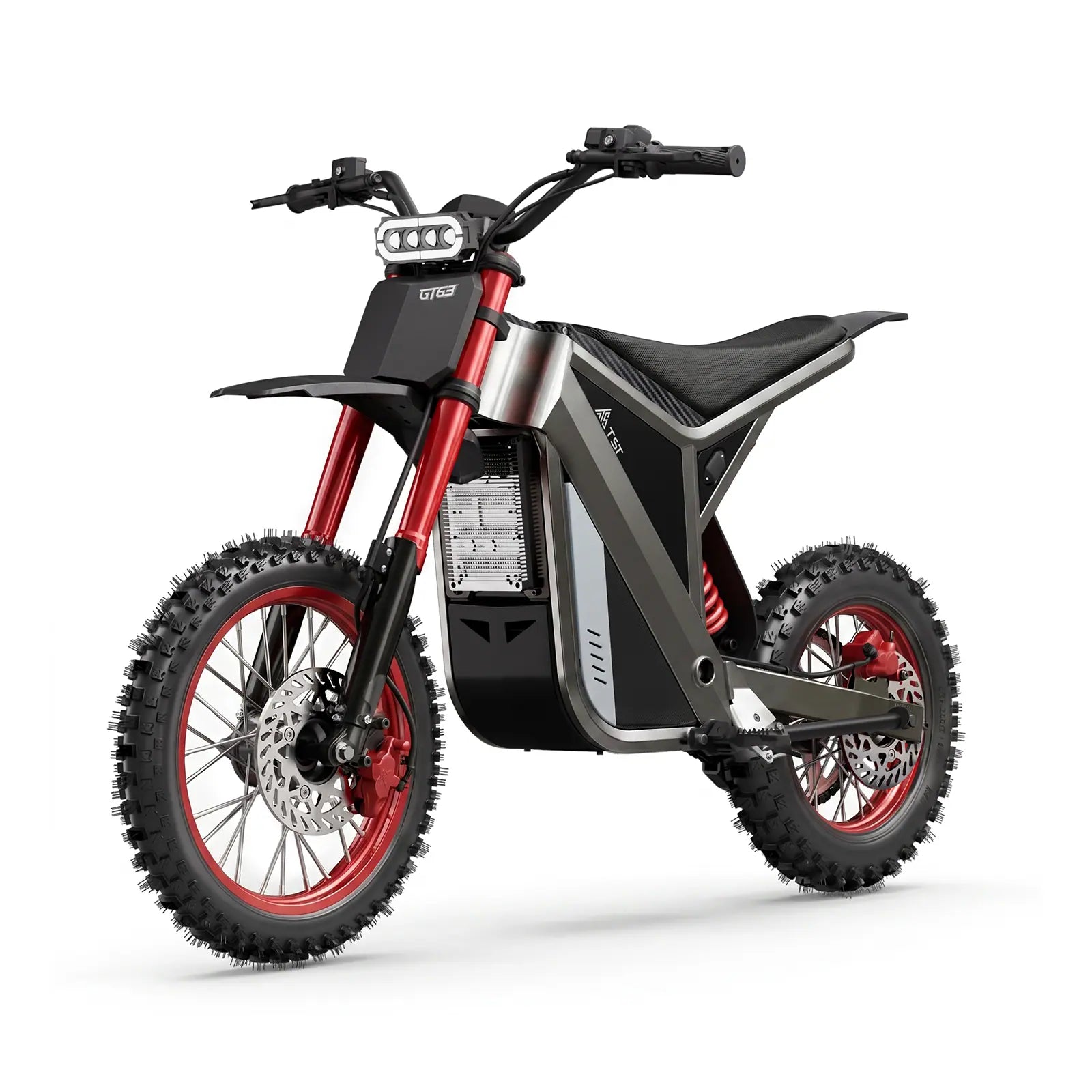














Standard 50cc mopeds top out at 28-40 mph due to engine limits and US laws; true 50 mph requires motorcycle licensing. TSTE's alternatives like R002/R9 (32 mph moped-style) and GT63 (43 mph dirt bike) offer legal, no-license speeds with 65-100 mile range, full suspension, and fast CA shipping.
Check: High Performance Mopeds
Why Can't Standard 50cc Mopeds Hit 50 MPH?
Standard 50cc mopeds are capped at 28-40 mph by engine displacement limits and factory restrictions for safety and legality, making 50 mph impossible without illegal modifications that void warranties and risk fines.
Gas-powered 50cc mopeds, popular for their affordability and low licensing needs, face hard technical barriers. Their small engines produce just 2-4 horsepower, struggling against wind resistance and rider weight above 30 mph. Manufacturers install speed limiters—carburetor jets, CDI boxes, or exhaust restrictors—to comply with US moped definitions, which often require under 30 mph top speeds and 50cc or less displacement in states like Washington and California. De-restricting by cutting wires or swapping parts can push speeds toward 45-50 mph, but this reclassifies the vehicle as a motorcycle, demanding full licensing, registration, insurance, and DOT-approved helmets.
For adult riders craving speed without hassle, these limits make gas mopeds frustrating. Heavier loads drop speeds further, and maintenance like frequent carburetor cleanings adds up. TSTE Bike flips the script with electric powertrains that deliver instant torque legally, no de-restricting needed.
What Are US Legal Speed Limits for Mopeds and eBikes?
US moped laws cap speeds at 30 mph with under 50cc engines and 2HP; eBikes split into Class 1-3 (20-28 mph pedal-assist/throttle), while 30+ mph models like TSTE's often qualify as speed pedelecs or need motorcycle rules in some states.
Federal guidelines don't dictate, but states vary: California defines mopeds as <30 mph and <50cc, no license needed on bike paths. New York allows 30 mph mopeds with registration. Exceeding these triggers motorcycle endorsements. eBikes shine here—Class 3 hits 28 mph pedal-assist, treated like bicycles in most places, no license required.
TSTE Bike's moped-style eBikes, like the TST® R002 and R9, reach 32 mph via throttle and pedal-assist, staying pedal-equipped for eBike classification.Always check local DMV: 43 mph on the TST® GT63 dirt bike suits off-road but may need plates on streets.
Which TSTE Moped-Style eBike Reaches 32 MPH Safely?
TSTE's TST® R002, R7, and R9 moped-style eBikes hit 32 mph with 1500W motors, full suspension, delivering safe, legal high-speed performance for US streets without motorcycle licensing.
TSTE Bike dominates with moped-style designs built for adults seeking fast, versatile rides. The TST® R002 20'' 1500W Full Suspension Moped-Style Electric Bike leads at 32 mph top speed, powered by a 1500W brushless rear hub motor with 90 Nm torque. Its 48V 15Ah or 25Ah battery offers 65-100 miles range, perfect for commuters dodging traffic.
Full front-and-rear suspension smooths urban potholes and trails, while 20" × 4.0" fat tires grip wet roads. Hydraulic disc brakes and 450 lbs max load handle real-world demands. Riders love its compact 60.3" length for city storage.
| Model | Motor | Top Speed | Range | Weight |
|---|---|---|---|---|
| TST® R002 | 1500W, 90 Nm | 32 MPH | 65-100 miles | 71.87 lbs |
| TST® R7 | 1500W, 90 Nm | 32 MPH | 65 miles | 82.67 lbs |
| TST® R9 | 1500W, 90 Nm | 32 MPH | 65-130 miles | 87.74-96.56 lbs |
These ship from Ontario, California, in 1-3 days, with 1-2 year warranties.
How Does the TST® R002 Perform in Real-World Tests?
The TST® R002 excels at 32 mph with 65-100 mile range, full suspension absorbing bumps, and 4.8/5 ratings from 295 reviewers praising its torque for hills and cargo hauling without derestrict risks.
In daily US scenarios, the TST® R002 shines for urban commuters and families. Its 1500W motor surges to 32 mph instantly, outpacing 50cc gas mopeds on inclines. Pedal-assist levels 1-5 plus Boost Mode let you cruise efficiently, hitting 100 miles on the 25Ah Plus variant.
Reviewers rave about stability: 20" fat tires and full suspension conquer gravel paths and city streets. LCD display tracks speed, battery, and distance. At 71.87 lbs, it's manageable, with 450 lbs payload for errands.
What Makes the TST® R9 Dual-Battery Ideal for Long Rides?
Check: 1500W Full Suspension Ebike
TST® R9's dual 48V 15Ah batteries deliver up to 130 miles at 32 mph, with smart auto-switch, full suspension, and modular features, perfect for cross-city adventures without recharging stops.
For thrill-seekers and long-haul riders, the TST® R9 Dual-Battery 1500W Long-Range Full-Suspension Moped Style Electric Bike stands out. Dual batteries (15-30Ah total) auto-switch seamlessly, doubling range to 130 miles. 90 Nm torque powers through headwinds at 32 mph.
Adjustable full suspension and reflective fat tires enhance safety. Integrated LED lights and LCD display make night rides confident. Compact at 60.43" long, it fits garages easily. TSTE Bike's 1-year warranty backs its durability.
Can the TST® GT63 43 MPH Dirt Bike Replace a Fast Moped?
Yes, the TST® GT63 14" 2200W Electric Dirt Bike reaches 43 mph legally off-road, with 50-mile range and IP65 waterproofing, offering moped-like speed plus superior torque for trails and dirt without gas hassles.
Push beyond streets with the TST® GT63, TSTE Bike's high-speed dirt beast. Its 2200W brushless motor and 210 Nm torque hit 43 mph, smoking 50cc mopeds on rough terrain. 48V 22.5Ah battery lasts 50 miles, with three-speed zero-start for control.
Heavy-duty hydraulic brakes, dual-size fat tires, and nitrogen shocks handle jumps. At 114.6 lbs and 280 lbs max load, it's rugged for adults 3'11"-6'1". Ideal for off-road parks, replacing slow gas alternatives legally.
How Do TSTE eBikes Compare to Gas 50 MPH Scooters?
TSTE eBikes like R002/R9 (32 mph, 65-130 miles) and GT63 (43 mph) beat gas 50cc scooters on instant torque, zero maintenance, and legality—no oil changes, quieter, greener.
Gas 50cc scooters promise 50 mph but deliver 28-40 mph restricted, needing mods that invite tickets. TSTE models provide reliable power without voids.
| Feature | 50cc Gas Moped | TSTE R002/R9 | TST® GT63 |
|---|---|---|---|
| Top Speed | 28-40 mph | 32 mph | 43 mph |
| Range | 50-80 miles/tank | 65-130 miles | 50 miles |
| Weight | 100+ lbs | 72-96 lbs | 114.6 lbs |
| Maintenance | High (oil, carbs) | Low | Low |
| Legality | Restrict or license | Class 3 eBike | Off-road legal |
TSTE wins on cost-per-mile and fun.
TSTE Bike Expert Views
"Our moped-style eBikes like the R002, R7, and R9 bridge the gap between bicycles and motorcycles, hitting 32 mph legally with pedal-assist. While full suspension delivers comfort on diverse terrains. Riders get 65-130 mile range without gas station stops, plus modular cargo for families. Quick California shipping means you're riding fast—safely." — TSTE Engineering Lead
Conclusion
Skip risky 50 mph mopeds—TSTE Bike's 32-43 mph eBikes deliver legal thrills, superior range, and safety. Explore TST® R002, R9, and GT63 at tstebike.com for 1-3 day delivery and elevate your ride today.
FAQs
Are 50 mph mopeds street-legal in the US? No, standard 50cc models max at 30-40 mph restricted; 50 mph needs motorcycle licensing and registration.
What's the fastest legal TSTE eBike? TST® GT63 dirt bike at 43 mph off-road; R002/R9 moped-styles at 32 mph street-legal as Class 3.
Do TSTE eBikes require a license? No, pedal-assist keeps them eBike-classified under 750W continuous in most states.
How fast do TSTE moped-style bikes ship? 1-3 business days from Ontario, CA, across the US.
What's the warranty on high-speed TSTE models? 1 year standard, 2 years on R002.

Leave a comment
This site is protected by hCaptcha and the hCaptcha Privacy Policy and Terms of Service apply.