


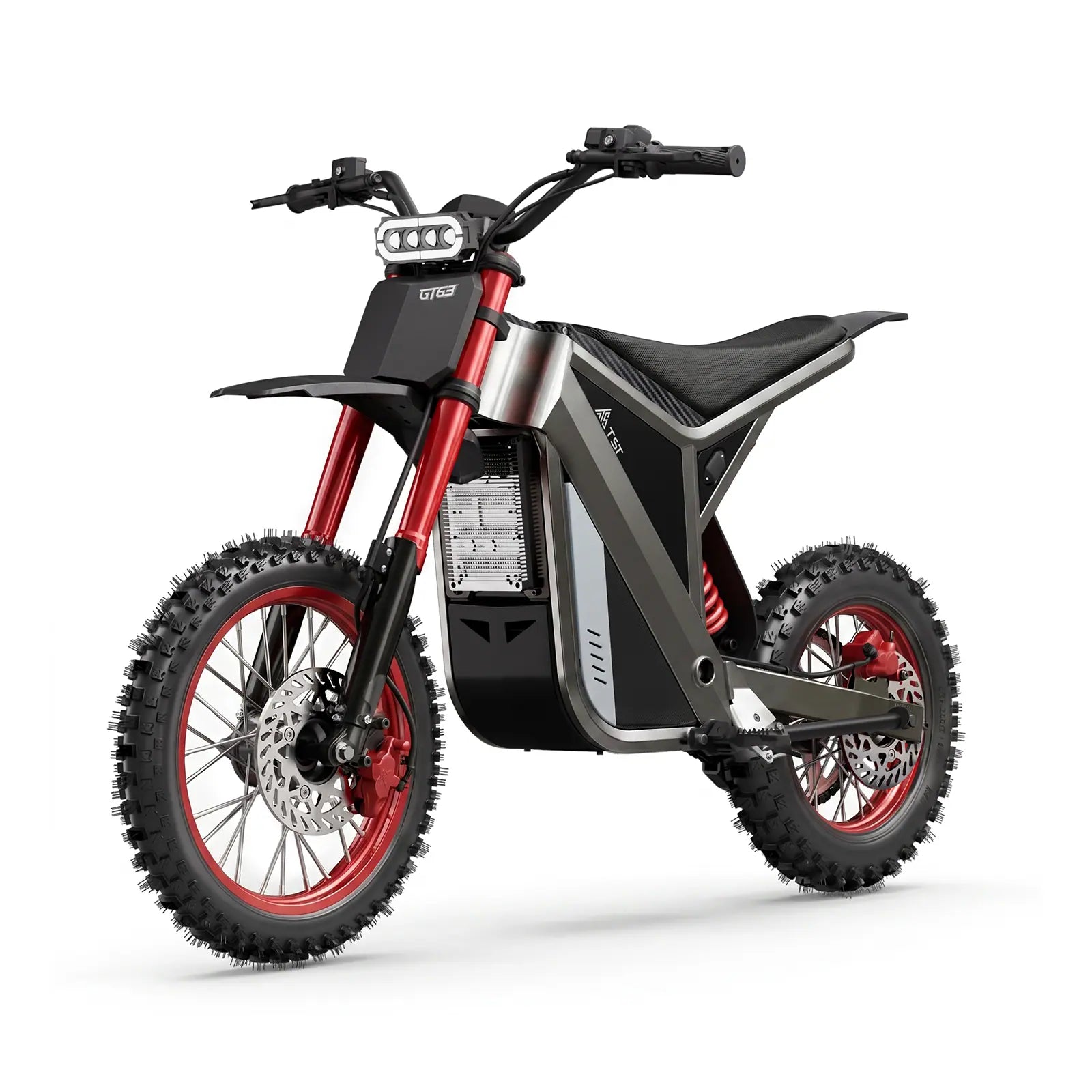














The best 40 MPH eBike is the TST GT63 14" 2600W Electric Dirt Bike, reaching 45 MPH top speed with 150 Nm torque, 48V 23Ah battery for 50-mile range, hydraulic brakes.Ships in 1-3 days from California for US riders seeking no-DIY high performance.
Check: Power Motor Moped Page
What Makes a 40 MPH eBike Different from Class 3 Models?
40 MPH eBikes exceed Class 3 limits of 28 MPH pedal-assist and 750W motors, entering moped or off-road territory with 2000W+ power, high torque, and robust frames for thrilling speeds on trails or open paths.
Standard Class 3 eBikes cap at 28 MPH with pedal assist and motors under 750W continuous power, treating them like bicycles under federal law—no license needed in most states. But a true 40 MPH eBike demands much more: powerful brushless hub or mid-drive motors starting at 1500W nominal (often peaking higher), paired with 48V or 72V battery systems delivering sustained torque for highway-like speeds. These beasts feature fat tires, full suspension, and heavy-duty hydraulic brakes to handle the velocity safely.
Unlike commuter-focused Class 3 models, 40 MPH eBikes like TSTE Bike's lineup shine in off-road and adventure scenarios. They prioritize raw acceleration, hill-climbing prowess (up to 35 degrees), and durability over urban compliance. Riders get moped-style freedom without the full motorcycle hassle, ideal for US thrill-seekers hitting dirt trails or backroads. TSTE Bike ships these high-performers from Ontario, California, ensuring 1-3 day delivery nationwide.
Which TST eBike Hits 45 MPH with 2600W Power?
The TST GT63 14" 2600W Electric Dirt Bike blasts to 45 MPH top speed using its 2600W brushless gear hub motor and 150 Nm torque, powered by a 48V 23Ah removable battery for up to 50 miles of adrenaline-fueled rides.
TSTE Bike's TST GT63 stands out as the ultimate 40+ MPH ready-to-ride option for US riders craving dirt bike thrills without building from scratch. This compact powerhouse rocks a 2600W brushless gear hub motor pumping out 150 Nm of torque—enough to conquer 35-degree climbs and launch from zero with chain drive and three-speed zero-start gearing. The 48V 23Ah lithium-ion battery keeps you going up to 50 miles, recharging in 6–7 hours.
Built for riders 3'11" to 6'1", it weighs 116 lbs with a 280 lbs max load, stabilized by front 60/100-14 and rear 80/100-12 fat tires, hydraulic disc brakes, IP65 waterproofing, and a smart display showing speed, battery, mode, and distance. Riding modes—Cruise, Explore, Sport—let you dial in the fun, from relaxed cruises to full-send off-road attacks. Ships fast from TSTE Bike's California warehouse with a 1-year warranty.
How Does the TST GT63 Outperform 40 MPH Competitors?
The TST GT63 outperforms with 45 MPH verified speed, 150 Nm torque for superior climbs, full suspension, and 1-3 day US shipping—delivering dirt-ready power without DIY risks or long waits.
In the high-speed eBike arena, TSTE Bike's GT63 crushes the competition by combining street-legal vibes with off-road dominance. While many 40 MPH options are throttle-only kits prone to overheating or unreliability, the GT63's integrated 2600W motor and robust frame ensure consistent 45 MPH performance. Its dual-size fat tires and nitrogen air rear shock absorb jumps and rough terrain better than urban commuters.
US riders love the no-fuss setup:key ignition for security, and reflective elements for visibility. Compared to folding or cargo alternatives, it prioritizes pure speed and agility on trails. TSTE Bike's Ontario warehouse means you're ripping trails in days, not weeks, backed by responsive support.
| Feature | TST GT63 | Typical Competitor 40 MPH Kit Bike |
|---|---|---|
| Top Speed | 45 MPH | 35-40 MPH (unverified) |
| Motor Power | 2600W , 150 Nm | 1500-2000W, lower torque |
| Battery | 48V 23Ah, 50 mi range | 48V 15-20Ah, 30-40 mi |
| Suspension | Full (hydraulic fork + air shock) | Basic front fork |
| US Shipping | 1-3 days from CA | 2-4 weeks overseas |
What Are the Top Specs for 40 MPH eBike Motors and Batteries?
For 40 MPH speeds, eBikes need 2000W+ brushless hub motors with 200+ Nm torque and 48V 20Ah+ batteries matched for high discharge rates, ensuring sustained power without overheating—key for TSTE Bike's GT63 and GT73.
Achieving reliable 40 MPH demands serious engineering. Motors must hit at least 2000W nominal power with peak bursts for acceleration, delivering 200+ Nm torque via brushless gear hubs for efficiency on hills and payloads. Battery matching is critical: 48V systems with 20Ah+ capacity (like 1000+ Wh) provide the amperage for continuous high-speed output, plus intelligent BMS for safety.
TSTE Bike nails this in the GT63 (2600W, 150 Nm, 48V 23Ah) and GT73 (6000W, 339 Nm, 72V 25Ah). Smaller 1000-1500W motors in commuter models top out at 28-32 MPH, fading under load. High-speed setups use fat tires and hydraulic brakes to manage momentum. Here's how TSTE stacks up:
| Model | Motor Power | Torque | Battery | Top Speed |
|---|---|---|---|---|
| TST GT63 | 2600W | 150 Nm | 48V 23Ah | 45 MPH |
| TST GT73 | 6000W | 339 Nm | 72V 25Ah | 60 MPH |
| TST R002/R9 | 1500W | 90 Nm | 48V 15-30Ah | 32 MPH |
| TST Defender | 1300W | 90 Nm | 48V 15Ah | 28 MPH |
Pro tip: Pair high-C-rating cells for 40 MPH sustainability—avoid cheap kits that throttle down.
TSTE Bike Expert Views: "For riders pushing 40 MPH, motor-battery synergy is everything. Our TST GT63's 2600W gear hub and 48V 23Ah pack deliver unflinching torque across terrains,Dual-battery options like the R9 extend range without compromising speed. We design for real US adventures—from SoCal trails to Midwest paths—with California-fast shipping." – TSTE Bike Engineering Lead
Why Choose TST GT73 for 60 MPH Dirt Bike Thrills?
Upgrade to the TST GT73 17" 6000W Electric Dirt Bike for 60 MPH top speeds, 339 Nm torque, and 72V 25Ah battery—perfect for extreme off-roaders wanting beyond-40 MPH power with pro-level suspension and brakes.
If 45 MPH feels tame, TSTE Bike's GT73 unleashes monster performance: a 6000W brushless gear hub motor with 339 Nm torque rockets to 60 MPH, conquering 35-degree inclines via chain drive and three-speed setup. The 72V 25Ah battery yields up to 45 miles, charging in 6–7 hours.
Weighing 136.7 lbs with 280 lbs max load, it suits riders up to 6'1" with 17" front and 14" rear fat tires, hydraulic brakes, IP65 rating, and full suspension. Modes like Sport mode turn trails into racetracks. Ideal for advanced US dirt enthusiasts, shipped from Ontario, CA, with 1-year warranty.
How Fast Do 40 MPH eBikes Accelerate and Climb Hills?
40 MPH eBikes like the TST GT63 accelerate 0-30 MPH in under 5 seconds with 200+ Nm torque, climbing 35-degree hills effortlessly—far surpassing Class 3 models for dynamic off-road and trail dominance.
High-power motors shine in real-world punch: TSTE's GT63 hits 45 MPH with rapid zero-start acceleration, powered by 150 Nm for quick launches. GT73's 339 Nm obliterates steeps. Compared to 28 MPH commuters (like TST Defender at 90 Nm), these dirt bikes pull riders and light loads uphill without bogging.
Fat tires and suspension maximize traction, making 40 MPH feels planted. US riders tackle Rocky Mountain passes or Florida dunes with confidence.
What US Laws Apply to 40 MPH eBikes and Dirt Bikes?
Check: R7 High Torque Model
40 MPH eBikes exceed federal 28 MPH Class 3 limits (750W/20-28 MPH), often classified as mopeds or off-road vehicles—check state rules for licensing, registration, helmets; stick to trails/private land for compliance.
Federal law defines eBikes up to 750W and 20-28 MPH as bicycles, no license needed. Beyond that—like TSTE's 45 -60 MPH dirt bikes—they're off-road or moped-class in most states, requiring helmets, possible registration, and trail-only use. California allows some on bike paths if under throttle limits; states like Texas vary.
Always verify local DOT rules: no pedals? Full motorcycle licensing. TSTE models include pedals for hybrid flexibility.
Which 40 MPH eBike Offers the Best Range and Safety?
The TST GT63 balances 50-mile range at 45 MPH with hydraulic brakes, full suspension, IP65 waterproofing.
Range at 40 MPH drops versus slower speeds, but TSTE's 48V 23Ah in GT63 delivers 50 miles with pedal assist. GT73's 72V 25Ah hits 45 miles at 60 MPH. Safety features: heavy-duty hydraulics, reflective tires, smart displays. Full suspension prevents wipeouts; certifications ensure battery integrity.
TSTE Bike's moped-styles like R9 (130 miles dual-battery) offer versatility. Fast CA shipping gets you safe, long-range speed pronto.
Conclusion
Unlock 40+ MPH thrills with TSTE Bike's GT63 and GT73—powerful, safe, US-ready dirt bikes shipped fast from California. Skip DIY kits for proven performance, torque, and range tailored for American riders.
FAQs
Is a 40 MPH eBike street legal in the US? Generally no for public roads—federal limits are 28 MPH max. Use off-road or check state moped laws for registration.
What's the best battery for 40 MPH eBikes? 48V 20Ah+ with high discharge for sustained power, like TST GT63's 23Ah setup.
Do I need a license for TST GT63? No for private/off-road; state rules apply for streets—often helmet only.
How fast does TST GT63 really go? 45 MPH top speed, verified for real-world dirt performance.
Where does TSTE Bike ship from? Ontario, California warehouse—1-3 business days across the US.

Leave a comment
This site is protected by hCaptcha and the hCaptcha Privacy Policy and Terms of Service apply.