












A controller's current rating sets a ceiling on how much electrical power can reach the motor at any instant, but it does not tell you what the motor actually outputs, for how long, or how that translates into hill-climbing ability, top speed, or range. If you're comparing e-bikes using a "peak watts" label or trying to back into a power figure from voltage and amps, the resulting number is a bounded estimate of electrical input — not a measurement of mechanical performance.
This matters because most spec sheets, including TST's own model comparison page, publish a single "Peak Motor" wattage figure alongside battery voltage and amp-hours, without a separate continuous power rating or a stated controller current limit. That gap is common across the industry, and understanding what it hides is more useful for a purchase decision than memorizing the formula.
What the Voltage-Times-Current Math Actually Shows
Electrical power in watts equals voltage multiplied by current: a system running at 48 volts with a controller current limit of 20 amps can theoretically pass up to 960 watts to the motor. This is the calculation that produces most "peak power" figures you see on e-bike listings, and it is arithmetically correct as far as it goes.
The catch is that this number describes electrical input capacity, not mechanical output. A controller's maximum current draw typically applies for only a few seconds — enough to clear a stop sign or power through a short grade — before the system throttles back to protect the motor and battery from overheating. Grin Technologies, an e-bike components manufacturer that publishes detailed motor testing methodology, states plainly that peak output occurs right at the point where the motor controller hits the battery current limit, and that this figure has little to do with any rating printed on a spec sheet. EVELO's technical writeup makes the same point: peak power is a function of the controller and battery, rather than the motor itself.
Two systems with identical peak-wattage labels can behave very differently on the road. A lower-voltage system with a high current limit and a higher-voltage system with a lower current limit can both claim the same peak wattage, yet the higher-voltage system often sustains speed better under load because voltage — not just current — determines how power holds up as speed increases. This is why comparing peak watts alone, without knowing continuous rating, voltage, and current together, does not reliably predict which bike climbs a hill better or accelerates from a stop with more authority.
Continuous Power Is the Number That Predicts Sustained Performance — and It's Usually Missing
Continuous (or "rated") power is what a motor can deliver indefinitely without overheating; this is the figure most directly tied to real riding behavior on hills, with cargo, or during repeated stop-and-go starts. Peak power, by contrast, is a short-duration ceiling — commonly available for only seconds at a time before thermal or current limits force a reduction.
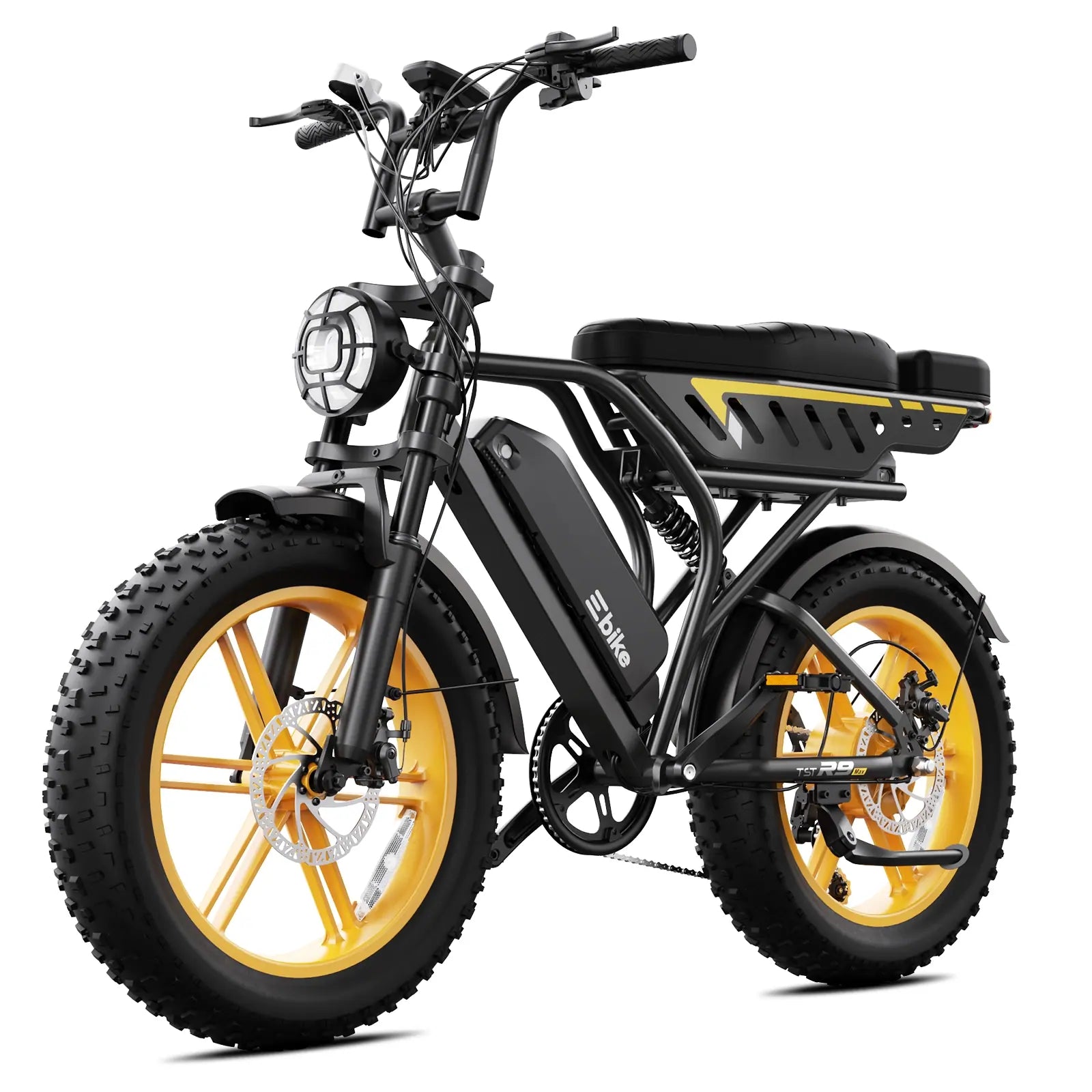
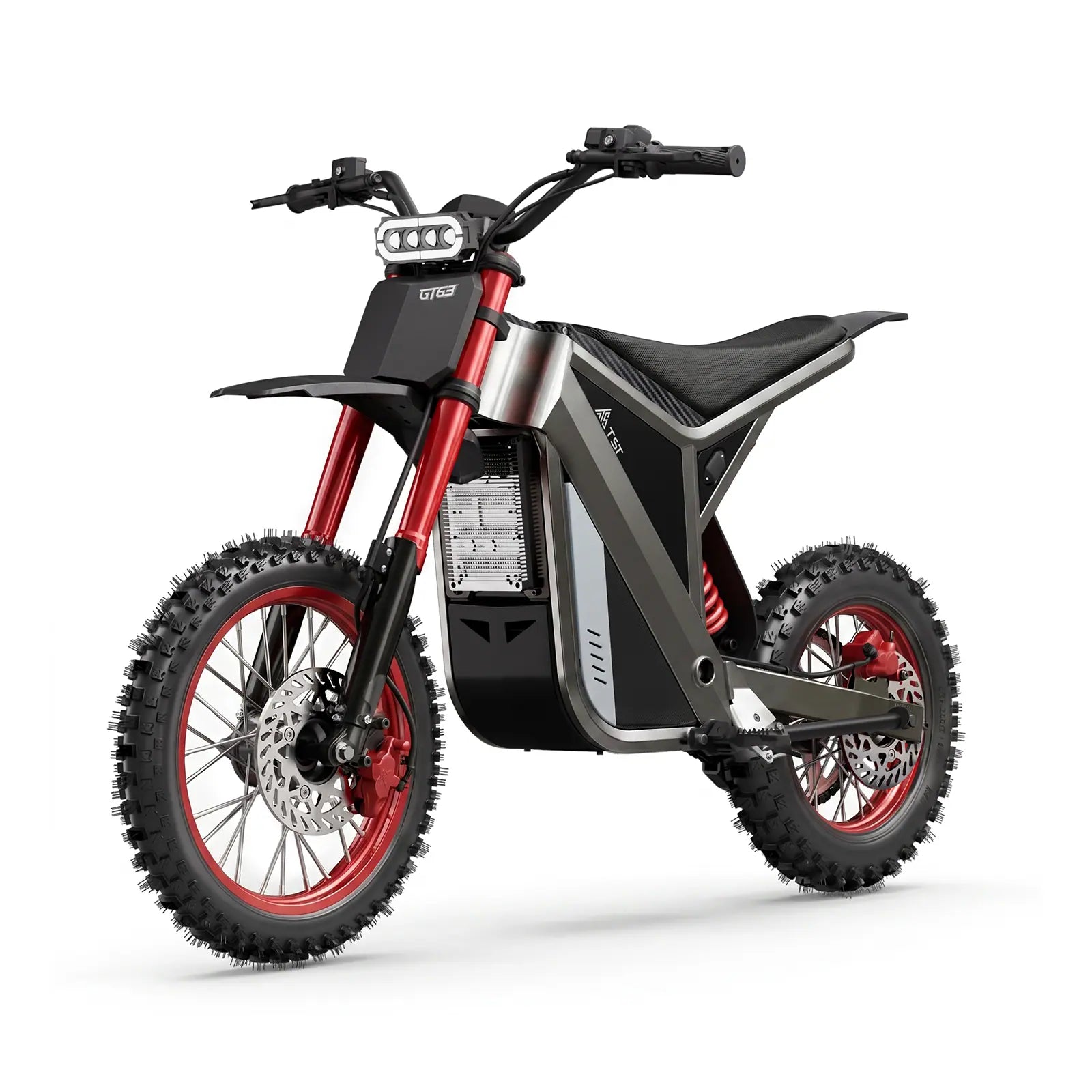
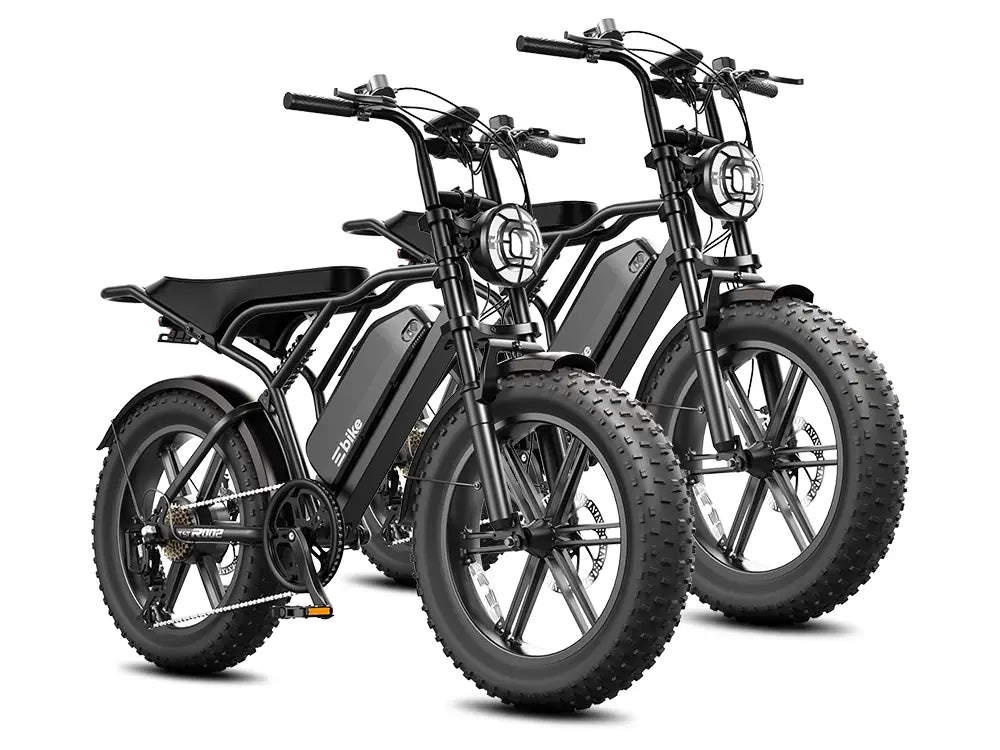
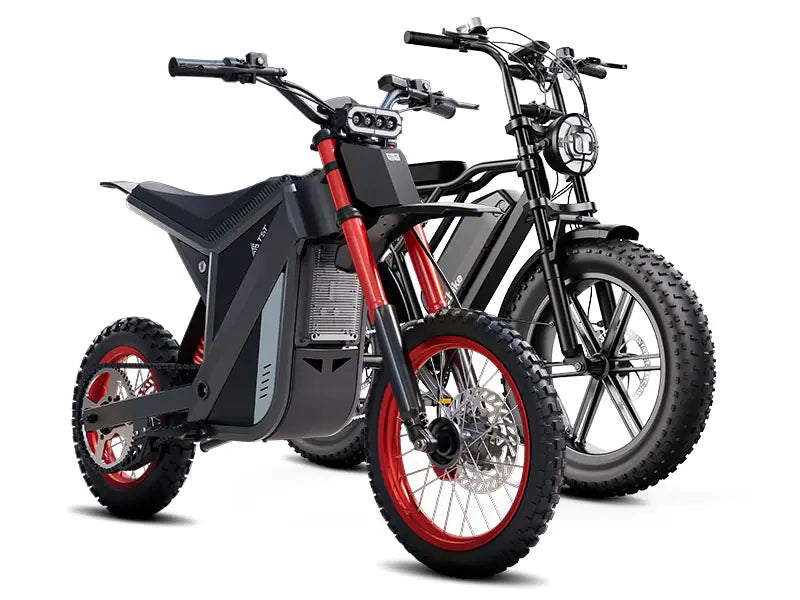
Reviewing TST's compare-models page for its current lineup — models including the R002, Carrier, R9, R7, Buddy, and GT63, among others — every listing publishes a "Peak Motor" figure, ranging from roughly 1,000 W on entry commuter models to 6,000 W on the off-road dirt-bike model, alongside battery specs such as 48V 15Ah or 48V 15–30Ah and charger ratings around 54.6V/3A. None of the published listings on that page state a separate continuous or rated wattage, and no controller current-limit figure is listed independently of the peak-power number. That means a buyer comparing two TST models, or a TST model against a competitor, is comparing peak labels only — a comparison that technical explainers caution is unreliable for predicting sustained hill-climbing or loaded-cargo performance.
If continuous power matters to your decision — for example, because you'll be climbing sustained grades with cargo rather than making short bursts through intersections — the number to ask about is the continuous or rated wattage of the specific model and configuration you're buying, not the peak figure on the compare page. TST's hub motor explainer describes how the controller protects against overheating or power surges, and that geared hub motors generally handle hill climbing more efficiently than gearless direct-drive designs. That page explains the mechanism, though, not the continuous-versus-peak number for a specific model.
Why More Available Current Increases Battery Drain and Heat
Because power is voltage times current, allowing a controller to draw more current at a given voltage draws more energy from the battery per unit of time. Higher sustained current draw does three things simultaneously: it accelerates battery voltage sag under load, it increases resistive heating in the motor windings and controller electronics, and it shortens the time before thermal protection intervenes. A motor controller acts as the safeguard here, managing current flow through its switching electronics, with a distinct continuous-current rating and a separate, higher, short-duration peak-current rating built into the hardware.
This is also where duty cycle enters the picture: an e-bike that draws high current in short bursts, such as accelerating from stops, behaves very differently, thermally and energy-wise, than one drawing moderate current continuously up a long grade. The battery management system inside the pack is responsible for cutting or limiting current if voltage, temperature, or current thresholds are exceeded, but a BMS is a protective cutoff — it does not increase efficiency, and it does not prevent every overheating or fault condition under all conditions. Any change to a controller's current limit, or use of an unauthorized higher-current controller or charger, should be evaluated only through the manufacturer's own documentation and support channel; modifying or bypassing a controller's current limit is not something this explanation supports or recommends.
What a Wattage Label Still Cannot Tell You
Even a fully documented voltage, amp-hour, and current figure leaves several buyer-relevant questions unanswered, and no calculation from the label alone can fill these gaps.
-
Real-world range, because that depends on rider and cargo weight, terrain, elevation change, assist level or throttle use, speed, tire pressure, temperature, and stop-and-go pattern — not on peak wattage.
-
Legal classification, because in the United States the federal Consumer Product Safety Act defines a low-speed electric bicycle as having fully operable pedals, a motor of less than 750 watts, and a motor-only top speed under 20 mph on a level paved surface with a 170-pound rider — a definition tied to actual motor output and speed under those test conditions, not to a manufacturer's peak-wattage label. The Consumer Product Safety Commission has stated directly that the popular Class 1, 2, and 3 e-bike framework used by many states is an industry and state-law construct, not a CPSC statute, and that the agency evaluates products case by case under the federal definition.
-
Torque and hill-climbing feel, because torque depends on motor winding design and drive type — hub versus mid-drive, geared versus gearless — as much as on wattage.
-
Acceleration and top speed, because these depend on the full drivetrain, tire size, rider weight, and firmware-level speed limiting in throttle, pedal-assist, and locked or unlocked modes — not on a single power number.
-
Thermal durability over repeated use, because that depends on continuous rating, motor cooling design, and riding pattern, none of which a peak-watt label discloses.
For a specific purchase decision, the practical path is to translate what you actually need — sustained hill climbing with cargo, short urban bursts, or occasional throttle use — into the specific specification that predicts it, whether that's continuous power, torque, drive type, or battery voltage under load, then compare only the models where that matched specification is actually published. TST's model comparison page is the place to check current peak-wattage, torque, battery, and charger figures for a specific model such as the R002, R9, or GT63, and the individual product page for that model is the place to verify continuous rating, controller current, and configuration details before buying. This article does not substitute for either.

Leave a comment
This site is protected by hCaptcha and the hCaptcha Privacy Policy and Terms of Service apply.