


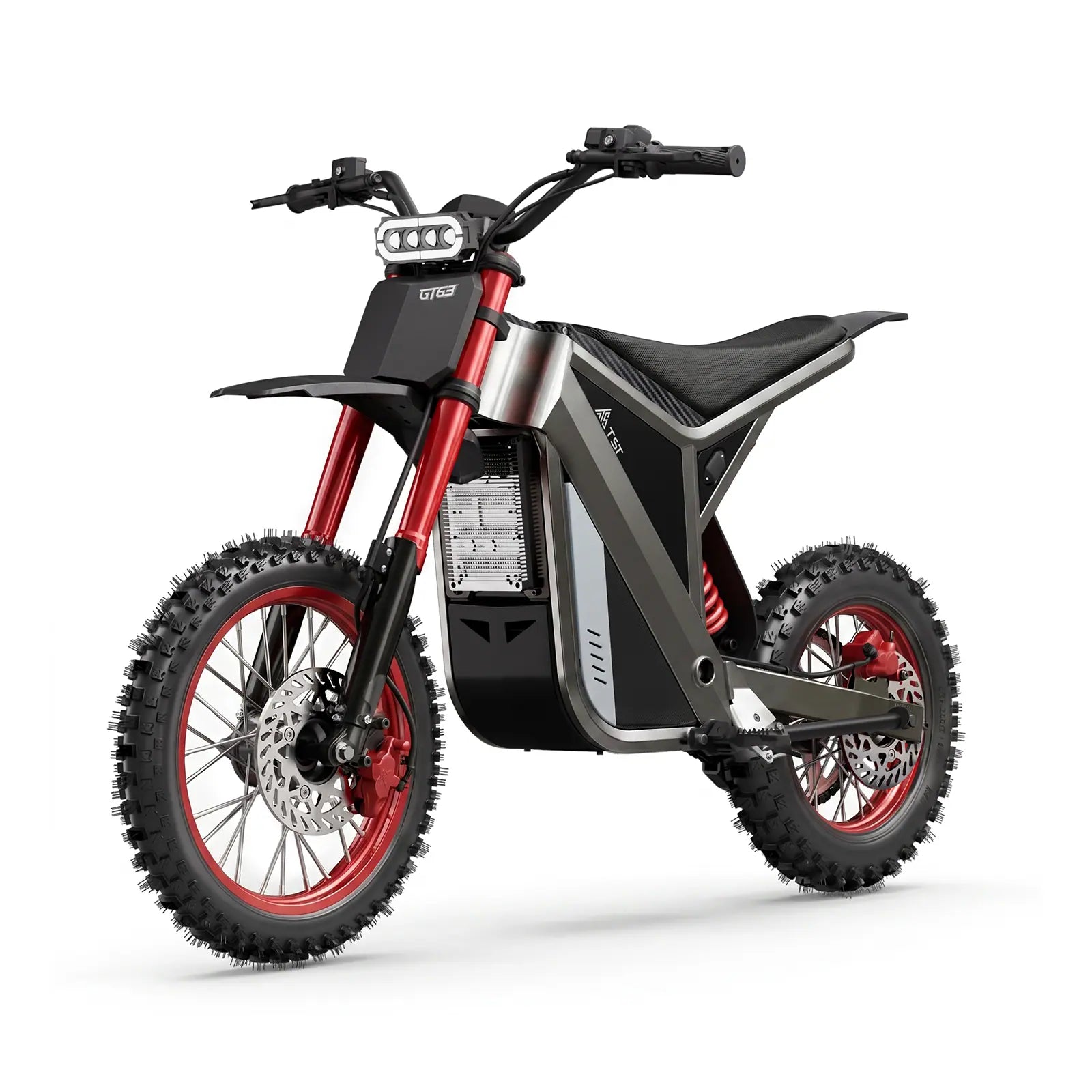














Locking a moped-style e-bike is a geometry problem before it is a hardware problem. The method that works is a security-rated U-lock or chain passed through a structural frame member — or through the rear wheel inside the rear triangle — and around a fixed, immovable anchor, with as little open space inside the lock as possible, then battery and wheels handled separately according to how long and where you park. No lock or routine is theft-proof; the realistic goal is to remove the two things a thief wants most: time and quiet. That is why this guide works through frame geometry, anchor quality, and recovery records rather than ranking lock brands — the right method depends on your exact frame, anchor, and parking time.
Why Moped-Style Geometry Changes the Locking Problem
Two features of moped-style e-bikes break the standard "U-lock through the top tube" advice that most lock guides assume.
First, weight is not security. TST's moped-style models run from roughly 72 lb for an R002 to over 96 lb for a dual-battery R9, with the Carrier at about 90 lb — but a two-person crew can still lift any of them into a van in seconds. Kryptonite's e-bike guidance is explicit on this point: a plug-in chain or equivalent primary lock is needed specifically to prevent roll-away, ride-away, and lift-away theft, and the bike must always be attached to a solid object it cannot be lifted over.
Second, there is often no top tube to lock through. Moped-style and step-through frames — like TST's Dreamer 26 step-thru or Surfer 27.5 commuter — move the usable locking points down to the rear triangle, seat tube, and chainstays. Body panels, integrated racks, and suspension linkages can also hide or block the frame openings that a conventional bike exposes, which changes both what you lock through and how much lock reach you need. That geometry is where most lock-ups fail, so the next two sections work through it directly.
Valid Locking Points on a Step-Through or Moped-Style Frame
A valid locking point is a structural frame member that a thief cannot unbolt or remove, paired with a lock long enough to also capture the anchor. On step-through and moped-style frames, the workable points are the rear wheel inside the rear triangle (the widely used "Sheldon" routing, which lets the stays prevent the wheel from being pulled through the lock), the seat tube, one or both chainstays, and the rear wheel paired with a stay. Kryptonite's priority order for e-bikes is frame first, then back wheel, then front wheel — because each step down the list is easier to steal.
Never route a lock through any of these, no matter how convenient they look:
-
Cables, cable housing, or brake lines — cutting them disables the bike and the lock accomplishes nothing
-
Removable or quick-release racks, baskets, and fenders — the accessory comes off with your lock still attached to it
-
Brake rotors, calipers, or suspension fork lowers — removing them is a repair, not a security barrier, and you risk damaging the controls
-
Plastic body panels or frame covers common on moped-style designs — a panel is not a structural tube
If your bike has a pre-installed battery lock, Kryptonite's guidance is to actually engage it when you lock up — an unlocked battery mount is one of the fastest things to take. Where a manufacturer's manual identifies preferred attachment points, follow that over any generic diagram, since only the manual reflects your exact frame.
Three Geometry Cases and What Each Frame Needs
The table below matches common TST frame styles to their usable locking points and the reach implication of each. Model weights are from TST's current comparison page.
For the full-suspension case, the practical move is to measure before buying any lock: the internal dimensions of the U-lock shackle or the usable chain length must clear both your fattest structural tube (or tire, for rear-triangle routing on a 4-inch fat tire) and the anchor you actually park at. A lock that is mechanically excellent but cannot complete the routing around your frame plus a rack post is simply the wrong fit for your bike.
For step-throughs, Kryptonite specifically flags the dropped-top-tube shape as one where a chain or a long-shackle U-lock is often the practical answer, since the chain's flexibility lets one lock capture the frame, a wheel, and the anchor in a single pass. A folding lock is a workable moderate-security secondary for the front wheel and frame on these frames, but it should not be the only thing standing between a moped-style e-bike and the street.
For cargo frames, remember that the rack is the least trustworthy tube on the bike. Lock through the frame's rear triangle, not the platform, and treat the extra wheelbase as extra lock length you must budget for.
The Anchor Decides More Than the Lock
A $200 lock attached to a weak anchor is a weak lock. Thieves who cannot beat a good lock will instead attack whatever it is attached to: wooden fence posts, thin sign poles, parking meters with removable tops, and temporary construction fencing all fail faster than the lock does. Before you commit to a spot, evaluate the anchor the way you would evaluate the lock: is it thick, solid, and fixed — a rack bolted into concrete, a railing fused to a building, a heavy post sunk into the ground?
Once you have a real anchor, lock position does the rest of the work:
-
Get the tightest fit possible — the less room inside the lock, the less room for a thief's tools and the less leverage for prying
-
Keep the lock off the ground so the pavement cannot serve as a brace for bolt cutters or a jack, and turn the keyhole down or toward the bike to resist picking and weather
-
Park in well-lit, high-traffic areas where cutting tools draw attention
One structural note for moped-style owners: because these bikes are heavy and wide, riders tend to leave generous slack in the chain to maneuver it around the frame. Slack is the enemy — take up the excess by capturing the rear wheel along with the frame, which both fills the lock and protects the wheel.
Battery, Wheels, and Secondary Security by Parking Risk
Which parts need secondary security depends on how long the bike sits and how exposed the spot is. The battery is the highest-value quick-grab: a removable pack can represent hundreds of dollars and disappears in seconds. Kryptonite's guidance for e-bikes is to bring easy-to-remove accessories — batteries, GPS screens, lights — with you when leaving the bike.
Match the routine to the situation:
-
Quick stop, line of sight: primary lock through frame plus rear wheel and anchor; battery locked or taken
-
Workday or errand parking, public rack: add a second locking system of a different type — Kryptonite recommends high security or greater for most e-bikes, and two different lock types force a thief to carry two tool sets
-
Overnight or long-term outdoor: not recommended for a moped-style e-bike; if unavoidable, use two high-security locks, remove the battery, and add tamper alerts
-
Home storage: lock to a wall or floor anchor — an unanchored bike in a garage or hallway is carried out as easily as from a street rack
For the front wheel and seatpost, locking skewers or a secondary cable or chain through both wheels removes the quick-unbolt targets. A GPS tracker does not stop a theft, but real-time location data can turn one into a recovery mission by giving law enforcement coordinates; the same logic applies to alarms that make the attempt loud.
Finally, build the recovery file before you need it. Photograph the bike, record the serial number, keep the purchase receipt, and register with a local or national bike registry so police can reunite a recovered bike with its owner. Some lock makers also run registration-linked anti-theft programs — Kryptonite's, for example, offers optional coverage up to five years and up to $5,000 depending on the lock, and requires registration before coverage applies. If you carry dedicated e-bike insurance, read the policy's locking clause first: many policies only pay when a rated lock was used on an immovable object.
Before You Walk Away
Run a ten-second check: the lock passes through a structural frame member (not a rack, cable, or rotor), the bike is attached to an anchor that cannot be lifted over, cut, or unbolted, there is minimal open space inside the lock, the battery is locked or with you, and the front wheel is secured. If you ride a TST moped-style model and are working out which accessories fit your frame — including racks and parts that change your usable locking points — TST's model comparison page lists current specifications by model, and its accessories collection is the place to verify exact fit for your bike before you buy anything that affects your lock-up.

Leave a comment
This site is protected by hCaptcha and the hCaptcha Privacy Policy and Terms of Service apply.