

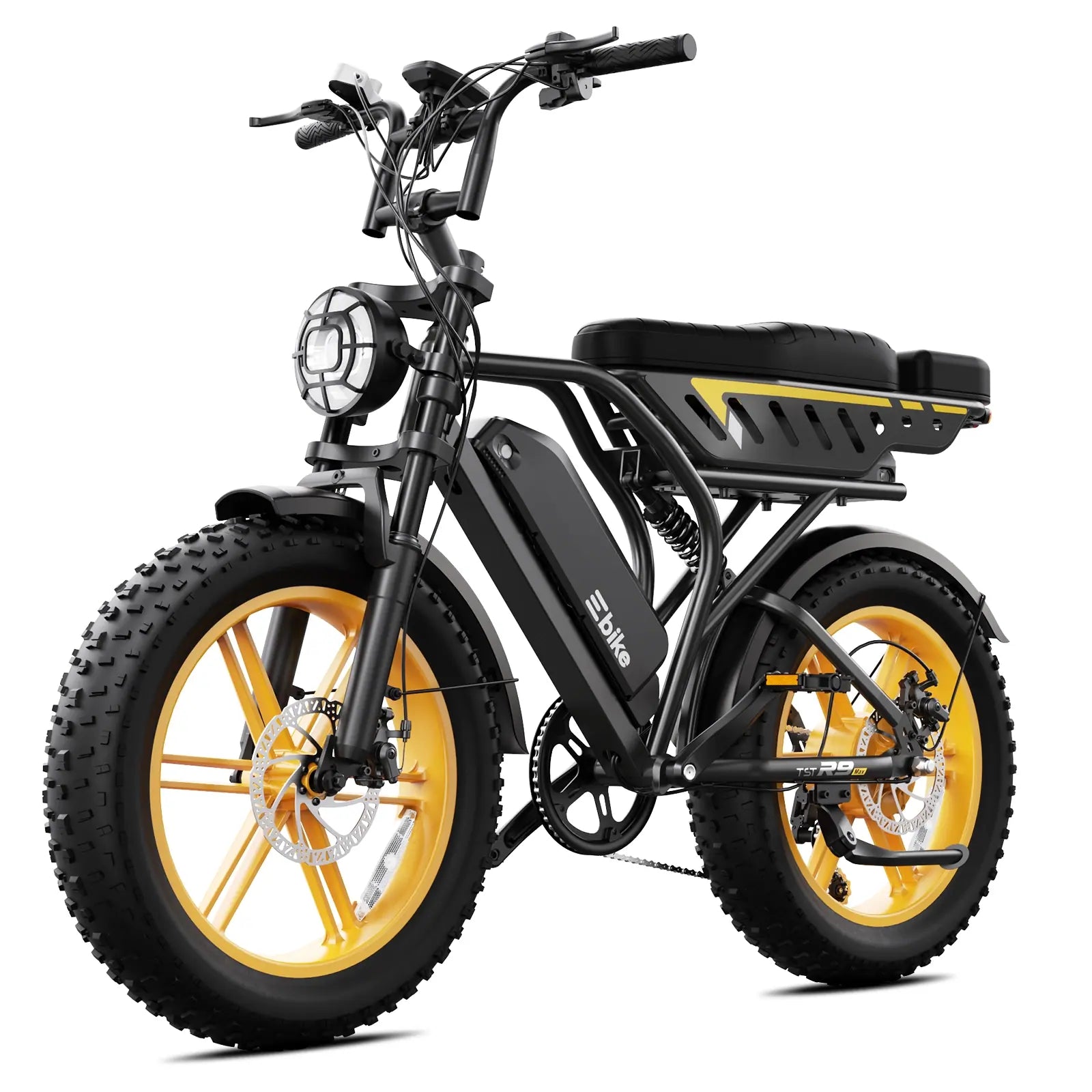
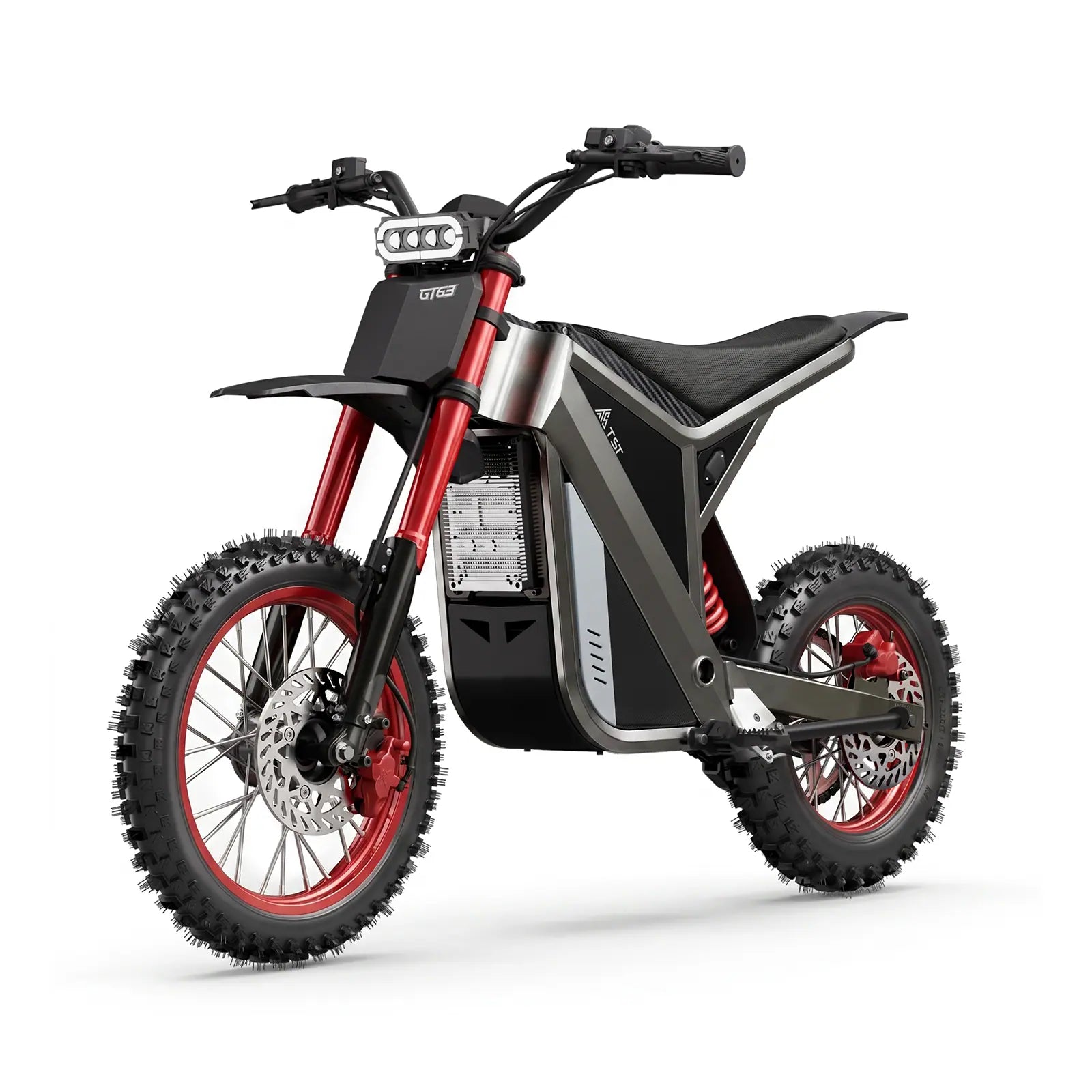









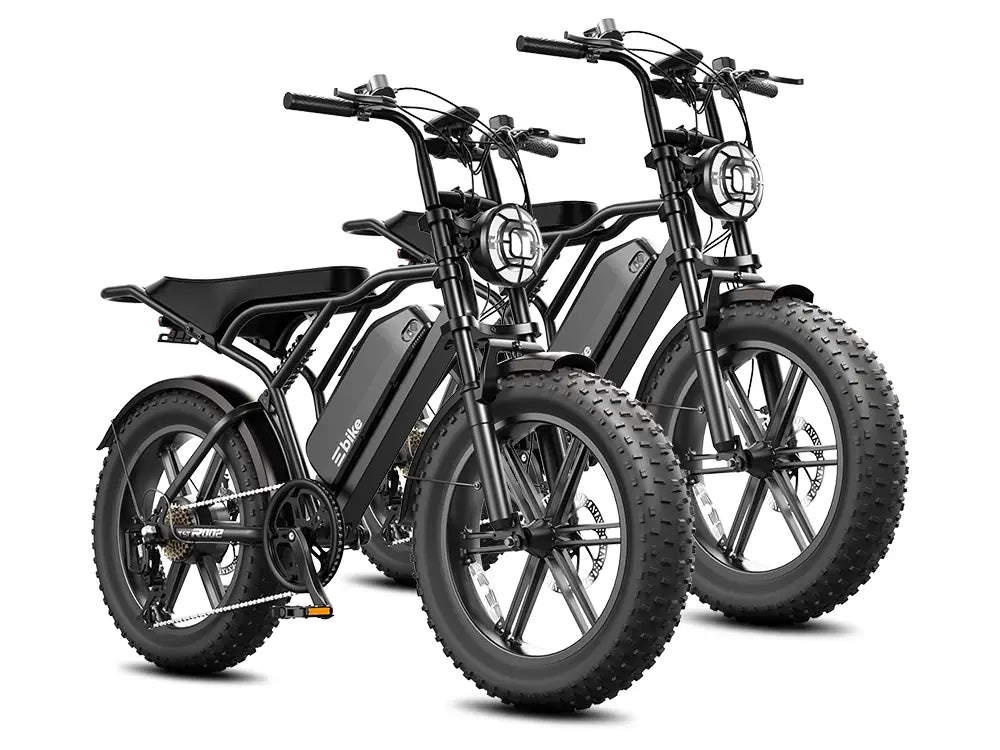
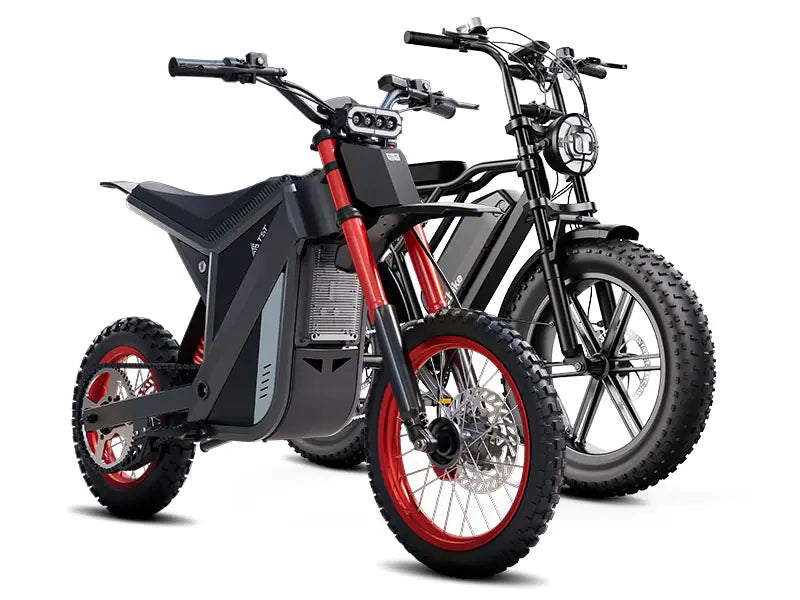

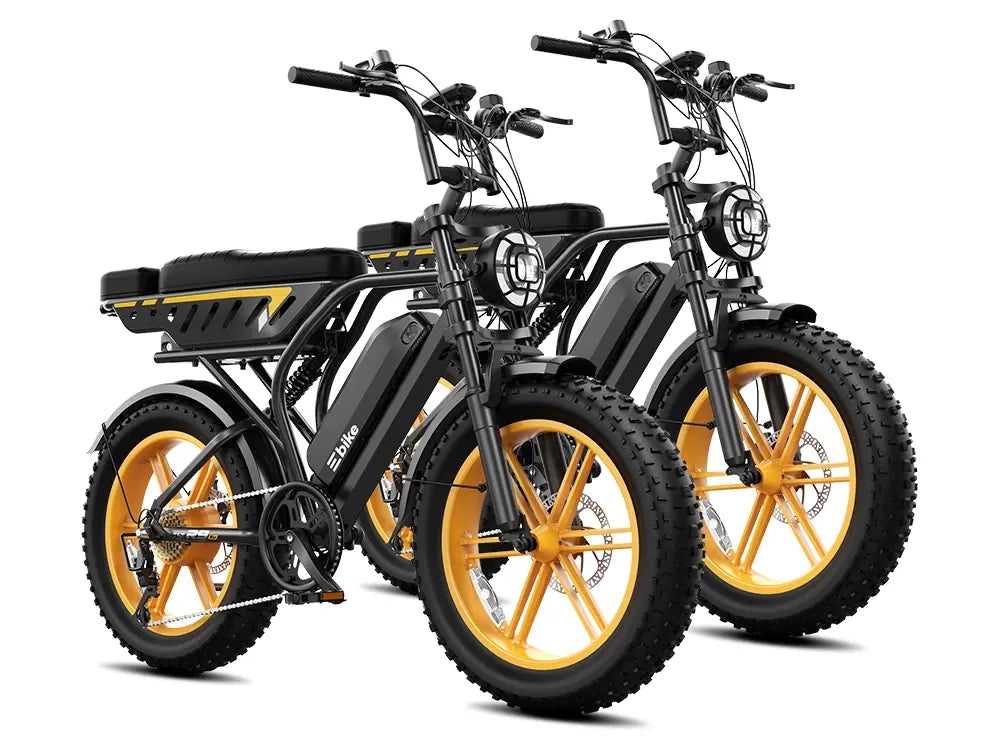

A well-designed moped-style ebike can be very comfortable and safe for tall and heavy riders when the seat length, frame geometry, and tested payload all match your height, inseam, and riding style. The keys are extended saddle length, reinforced frame and rear rack, correct knee angle, and a realistic weight rating above your full riding weight.
ultimate moped style ebike guide
How does rider height affect moped ebike comfort and knee angle?
Taller riders need longer reach and higher saddle positions to keep the knee angle in the ideal 25–35° range at the bottom of the pedal stroke, which reduces joint stress and improves power. If the frame is too short or the seat is too low, your knees stay over-bent, causing soreness and inefficient pedaling. For riders over 6 feet, checking standover height, seatpost adjustment range, and effective top-tube length matters more than frame “size” labels.
For moped-style ebikes, the straight top tube and bench seat make height fit feel different from a traditional diamond frame. I have found that riders from 6'0" to 6'5" often sit further back on the long saddle to open their hip and knee angles. This is why a truly extended bench (over 23–25 inches usable length) is critical: it gives tall riders room to shift their hips rearward without sliding off the back of the seat.
What is the ideal knee bend range for tall ebike riders?
For most tall riders, the most joint-friendly position is an almost straight leg at the bottom of the pedal stroke with a slight 25–35° bend at the knee. That means when your heel is on the pedal at the lowest point, your knee should be just barely flexed. If you can easily push your heel down and still have a large bend in your knee, the saddle is too low for efficient pedaling.
On moped-style ebikes that are ridden more with throttle than pedaling, many tall riders tolerate slightly more knee bend because they pedal less intensely. But if you want to combine throttle and genuine pedaling, you should still aim for that 25–35° zone. In practice, that usually means the saddle height (measured from bottom bracket to saddle top) should be around 0.88 × your inseam length.
What seat height and inseam formula works best for tall moped ebike riders?
A proven formula to approximate saddle height is: seat height (center of bottom bracket to top of saddle) ≈ inseam × 0.883. For example, a rider with a 34-inch inseam would target about 30 inches of saddle height. This formula comes from traditional bike fitting but still works well for tall riders who plan to pedal their moped-style ebike, not just rely on the throttle.
Because moped ebikes often have thicker saddles and slightly different pedaling positions, I usually recommend tall riders test 0.87–0.88 of inseam rather than going above 0.88. If your inseam is 36 inches, start around a 31–31.5-inch saddle height, then fine‑tune in 0.25-inch steps. The key is to adjust while sitting in your actual riding position on the bench seat, not just measuring on a stand.
How can a height–weight fit table help tall riders choose a moped ebike?
A simple height–weight fit reference helps tall riders quickly see whether a given moped ebike’s geometry is likely to feel cramped, neutral, or stretched. It combines your height and weight with typical bench-seat and frame proportions used in modern designs. While it cannot replace a test ride, it prevents obviously mismatched choices, such as a short bench and low frame for a 6'4" rider.
Below is a practical guide for tall U.S. riders comparing typical payload needs with seat height and frame expectations:
Use this table as a starting point: if your total riding weight with backpack, lock, and accessories is near the upper limit, you should choose an ebike with at least 10–15% extra payload capacity above that number for long‑term durability.
Which moped ebike frame features matter most for tall and heavy riders?
The most critical frame features for tall and heavy riders are reinforced main tubes, long wheelbase, and a stout rear rack or subframe integrated into the chassis. A long wheelbase gives more fore–aft stability so the bike does not feel nervous when a heavier rider shifts position on the bench. Reinforced tubes and gussets reduce frame flex, keeping handling predictable even at 28–30 mph.
In practice, I look closely at three numbers: tested payload rating (not just marketing claims), standover height, and seat tube to handlebar “effective reach.” For riders over 6 feet, standover should be low enough for easy step-through, typically under 18 inches on step‑through moped frames, while reach should be long enough that you are not cramped, but not so long that you must lock your elbows.
Why does an extended seat and wide frame improve load capacity?
A longer bench seat spreads your weight over more frame length, reducing peak loads on the seatpost or central welds. In engineering terms, you are lowering the stress concentration at the seat cluster by distributing force into a larger structure. A wider, boxier frame with multiple weld points from the seat rails to the rear triangle further reduces flex and micro‑cracks over time.
On the factory floor, I have seen what happens when a tall, 260‑lb rider repeatedly hits potholes on a short‑bench moped ebike: the seat tube welds show hairline cracks after a few thousand miles. On a similar bike with an extended, better‑braced bench and triangulated rear frame, the same abuse barely leaves a mark. This is why tall and heavy riders should treat frame width and seat length as structural features, not just styling.
How do long moped seats change knee angle and riding comfort for 6-foot-plus riders?
Long bench seats let tall riders slide back several inches, effectively lengthening the cockpit and opening the hip and knee angles. When you sit further back, your knee tracks closer to that ideal 25–35° bend at the bottom of the pedal stroke without needing an excessively tall seatpost. This reduces knee pressure and avoids the “scooter crouch” posture common on short moped saddles.
Another subtle benefit is that a long bench lets you change positions throughout a ride. On a 45‑minute commute, a 6'3" rider can shift forward for city maneuvering and back for cruising, which changes knee and hip angles enough to delay fatigue. For riders over 6 feet, I consider any bench under about 22 inches of flat usable length too short for serious daily riding.
What does a height–knee bend coordinate chart look like for moped ebikes?
If you plot rider height on one axis and saddle height on the other, lines of equal knee angle form bands where comfort is highest. Imagine three zones: over‑bent knees (too low), optimal bend (25–35°), and over‑extended (too high). For each height, there is a narrow saddle‑height range that lands your knees in that optimal band, assuming a standard crank length.
For moped ebikes, crank arms are often shorter than on road bikes, which slightly widens the “comfort band” for tall riders. A simple way to visualize it is to mark your height on a chart, then draw a horizontal line at your inseam‑based saddle height. If that line crosses the optimal band, you will likely feel good pedaling; if it sits well below, your knees will stay too bent and the ride will feel cramped.
Why is weight capacity more than just a number on the spec sheet?
Weight capacity is not just a marketing rating; it reflects whether the frame, wheels, fork, and rear rack were tested to survive repeated impacts at your total laden weight. For big and tall riders, it is common to underestimate real riding weight by forgetting backpack, locks, accessories, and cargo. Every extra 20–30 lb accelerates fatigue on spokes, rims, and welds.
From an engineering standpoint, ebikes that honestly support 350–400 lb payloads use thicker wall tubing in critical areas and higher‑spoke‑count wheels with double‑wall rims. They are also more likely to have rear racks bolted into multiple frame points instead of thin seat‑post clamps. When a brand shares that their bikes are tested to standards like EN 15194 or ISO 4210, it shows they are serious about real‑world loads, not just lab guesses.
How should tall and heavy riders calculate “real” payload needs?
Add your body weight, clothing, helmet, backpack, water, lock, groceries, child seat, and any future cargo to estimate realistic payload. Many riders are surprised to discover 30–50 lb of “invisible” weight they carry daily. Then add a 10–15% safety margin for unexpected loads or long‑term fatigue. If that total is 320 lb, you should look at ebikes rated at least 350–360 lb.
For riders above 260 lb, I strongly recommend choosing an ebike whose rated payload is at least 20% above their normal total, especially if they ride on rough roads or at higher speeds. That margin is what protects your wheels from repeated spoke breakage and keeps the frame from developing creaks and flex over a few thousand miles.
How does TST EBike design for tall and heavy riders?
TST EBike designs its 26‑inch and 27‑inch models with tall and heavier riders in mind by combining longer frames, robust wheelsets, and carefully chosen tire sizes. The 26‑inch versions are optimized for rough terrain like snow and sand, where a strong frame and wide footprint matter more than absolute speed. The 27‑inch models focus on daily commuting and mountain riding, balancing agility with stability.
In our experience at TST EBike, riders over 6 feet often benefit from the 27‑inch platform because the slightly larger wheel diameter and geometry offer a more stretched cockpit without feeling twitchy. For heavier riders who frequently ride off‑road or carry cargo, the 26‑inch fat‑tire platforms absorb impacts and reduce pinch flats. Across both platforms, we prioritize high‑power, cost‑effective motors paired with frames tested well above nominal payloads.
What makes TST EBike’s approach different for big and tall riders?
Because TST EBike was built around rider feedback, we receive continuous data from tall U.S. customers, especially those above 6 feet. Instead of just scaling up a medium frame, we adjust seat tube angles, handlebar rise, and wheelbase to keep weight distribution balanced under larger bodies. The result is a bike that does not feel rear‑heavy or “hinged” in the middle when a tall rider hits a bump.
Additionally, TST EBike combines warehouse presence in California with offline stores, so tall riders can test real fit before buying. From a service perspective, this matters more to big and tall riders because they stress components more and need quick warranty support if anything feels off. By pairing high‑power, affordable drivetrains with tight quality control, we aim to give tall and heavy riders both value and durability instead of making them choose one or the other.
Are 26-inch and 27-inch moped-style ebikes suitable for riders over 6 feet?
Both 26‑inch and 27‑inch ebike platforms can work well for riders over 6 feet if frame geometry, seat height, and handlebar position are tuned correctly. The wheel size alone does not guarantee a good fit, but it influences how stable the bike feels and how it rolls over obstacles. For taller riders, 27‑inch wheels often give a slightly more natural proportion to the frame.
In real‑world use, a 6'2" commuter may prefer a 27‑inch bike for its smoother, more efficient rolling at speed, while a 6'1", 260‑lb rider who frequently rides on mixed terrain may prefer a 26‑inch fat‑tire moped for its traction and cushioning. Brands like TST EBike deliberately offer both options so tall riders can choose based on terrain and riding style rather than height alone.
Which wheel and tire setups work best for tall, heavy riders?
For tall and heavy riders, wheel and tire choice is a trade‑off between comfort, strength, and agility. Wider 26‑inch tires (like 3–4 inches) create a large air volume that acts as suspension, protecting rims and reducing hand and back fatigue. Slightly narrower but larger‑diameter 27‑inch tires (for example 2.4–2.6 inches) roll faster and track more predictably at higher speeds.
In practice, I recommend heavy riders who are new to ebikes start on wider 26‑inch or similar fat‑tire setups, then move to 27‑inch commuting tires once they are confident and mostly ride on good pavement. Regardless of wheel size, tall riders should look for at least double‑wall rims and 12‑gauge spokes if they are near the upper payload limit.
Does frame geometry change knee comfort more than wheel size for tall riders?
Frame geometry has a much greater influence on knee comfort than wheel size for tall riders. Wheel diameter affects rolling behavior and standover height, but knee angle depends mostly on seat tube length, seatpost adjustment, crank length, and where the saddle sits relative to the bottom bracket. You can have a 27‑inch wheel bike that still feels cramped if the top tube and bench are too short.
What I see in fits for tall riders is that a slightly slacker seat tube angle and a longer effective top tube give the knees more room to track naturally. This prevents the feeling of “kneeing the handlebars” when turning. For moped ebikes, where bench seats replace standard saddles, manufacturers must carefully align the bench with the bottom bracket to avoid over‑bent knees in taller riders.
How can tall riders quickly test geometry without tools?
When you sit on the moped ebike with one heel on the pedal at its lowest point, your knee should be almost straight without your hips rocking side to side. Then, with the ball of your foot in the correct position, you should feel a slight bend in the knee. Next, check that your knees do not hit or come overly close to the handlebar during tight turns.
Finally, while sitting in your preferred position on the bench (often slightly back for tall riders), rest your hands on the bars and see if your elbows are slightly bent and relaxed. If you are either hugging your knees into the bar or fully locking your elbows, the geometry is off for your body, regardless of wheel size or seatpost adjustment.
TST EBike Expert Views
“When we prototype a moped-style ebike for tall riders at TST EBike, we do not start from the average body. We load the frame and wheels close to their rated limits, then put riders over 6 feet on the bench seat and ask them to move around like they do in real traffic. That chaos—hard braking, sudden lane changes, potholes—shows us whether the geometry and welds are truly tuned for big and tall bodies, or just pretending on paper.”
What are the most important buying steps for a tall, heavy moped ebike rider?
The most important steps are to verify real payload capacity, check geometry and bench length against your height and inseam, and, if possible, test ride with your usual gear. Do not rely only on generic “one size fits all” claims. Tall, heavy riders benefit from brands like TST EBike that openly share geometry and testing details, and offer both 26‑inch and 27‑inch platforms to match different terrains.
Before you buy, list your height, inseam, body weight, and typical cargo. Use that to estimate real payload and target saddle height, then compare those numbers with the manufacturer’s specs. When you test ride, focus less on top speed and more on whether your knees, wrists, and lower back feel neutral after 15–20 minutes of stop‑and‑go riding.
Conclusion: How can tall and heavy riders avoid common moped ebike fit mistakes?
Tall and heavy riders can avoid common moped ebike fit mistakes by refusing to compromise on frame strength, bench length, and knee angle. Instead of chasing the lightest bike or the highest top speed, prioritize a long, well‑braced frame with a realistic 330–400 lb payload rating and a bench that lets you slide back to open your hip and knee angles. Brands like TST EBike, which build around real rider feedback and test in demanding conditions, are better equipped to meet the needs of 6‑foot‑plus U.S. riders.
A practical checklist is simple: confirm payload with a safety margin, calculate your target saddle height from inseam, ensure your knees stay in the 25–35° bend range, and verify that you can change position on a long bench without upsetting the bike’s balance. When these boxes are checked, a moped-style ebike becomes not only rideable for tall and heavy riders, but genuinely comfortable and confidence‑inspiring for years of daily use.
FAQs
Are moped-style ebikes safe for riders over 300 lb?
Yes, as long as the bike has a verified 330–400 lb payload rating, reinforced frame and wheels, and is used within its design limits. Always include your gear weight in the total.
Can a 6'4" rider fit comfortably on a moped ebike?
Yes, but only on models with extended bench seats, long wheelbases, and tall enough cockpits. Short benches and compact frames usually feel cramped and over‑bend the knees.
Is a 26-inch or 27-inch wheel better for tall riders?
Both can work. 26‑inch fat tires feel more cushioned and forgiving, while 27‑inch wheels roll smoother and more efficiently on pavement for tall commuters.
Does a long bench seat really matter for tall riders?
Yes. A long bench lets tall riders slide back, opening hip and knee angles and distributing weight better, which improves comfort and structural durability.
What knee angle should I aim for on a moped ebike?
Aim for an almost straight leg at the bottom of the stroke with about 25–35° of knee bend. This position balances joint comfort, power, and long‑term knee health.

Leave a comment
This site is protected by hCaptcha and the hCaptcha Privacy Policy and Terms of Service apply.