
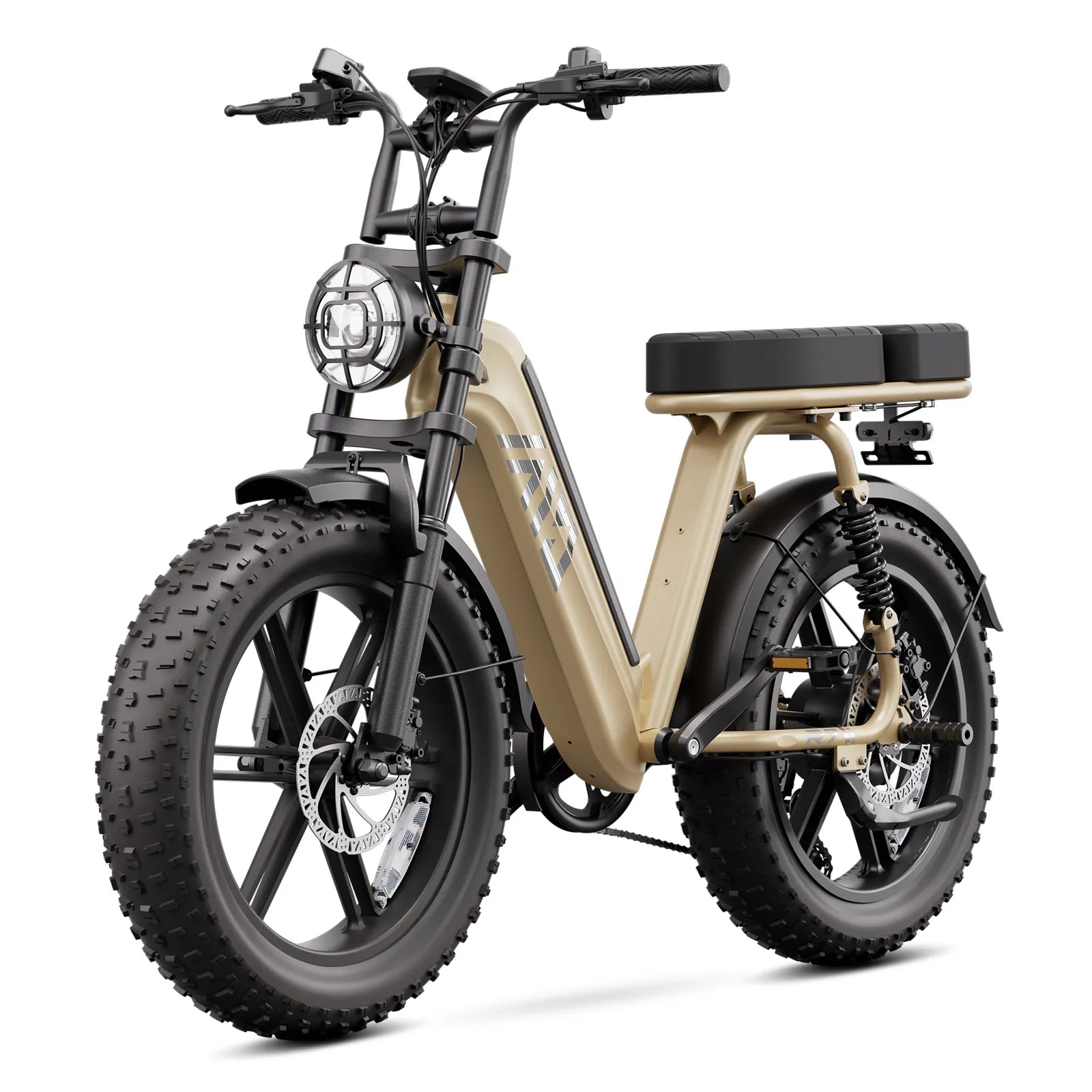
















Dual-battery ebike systems help riders go farther with fewer charging stops. Learn how they work, why they matter, and how TST fits long-range riding in 2026.
Why dual-battery ebikes matter in 2026
Electric bikes are no longer a niche option for hobby riders. They are now part of how people commute, run errands, avoid fuel costs, and expand weekend riding without depending on a car.
That shift has created a new expectation: riders do not just want assistance, they want dependable range. A single-battery setup can work for short urban trips, but once daily mileage grows, hills get steeper, or cargo gets heavier, battery limits become much more obvious.
This is exactly why the dual-battery ebike category has gained so much attention. It solves one of the most common frustrations in e-bike ownership by giving riders more usable range, more flexibility, and more confidence across longer days.
Why TST enters the conversation early
TST positions itself around high-power, cost-effective electric bikes designed for practical riding rather than purely cosmetic upgrades. In the dual-battery conversation, that matters because buyers looking for longer range usually also care about motor output, payload, stability, and everyday usability.
Among the brand’s most relevant options, the R9-style dual-battery platform stands out for combining two batteries, strong motor performance, fat tires, suspension, and long-range intent in a package aimed at riders who need more than a basic commuter ebike.
What is a dual-battery ebike?
A dual-battery ebike is an electric bicycle that uses two battery packs instead of one in order to deliver more total energy capacity and extend riding range.
In practical terms, that means the bike can support longer commuting days, heavier loads, more aggressive assist use, and broader route planning without forcing the rider to worry constantly about where the next charge will come from.
The biggest pain points dual-battery ebikes solve
One of the biggest issues with standard e-bikes is that advertised range and real-world range are often very different. Wind, rider weight, hills, stop-and-go traffic, tire pressure, assist level, and cargo all reduce battery efficiency. A bike that seems fine on paper can suddenly feel restrictive once it enters real daily use.
That becomes more frustrating for commuters. Someone riding to work, then to the grocery store, then back home may cover far more distance than expected in a single day. If the battery gets low late in the ride, the final miles can become slower, heavier, and less enjoyable.
Another pain point is behavioral compromise. Riders with limited battery capacity often hold back on using the assist level they actually want. Instead of enjoying the bike, they manage it cautiously, lowering support on hills, avoiding throttle use, or skipping extra stops just to preserve charge.
Cargo use makes the problem worse. Add a child seat, groceries, work gear, or larger body weight, and the battery drains faster while the motor works harder. In those cases, a single-battery ebike can still function, but it may no longer feel like a true transportation replacement.
Dual-battery setups reduce those trade-offs. They give riders more freedom to use the bike as intended, not as a machine that always demands energy-saving compromises.
The key statistic behind long-range demand
The strongest reason riders upgrade to a dual-battery ebike is simple: more usable range means fewer compromises in real life.
TST vs common alternatives
Dual-battery ebike features that matter most
Battery capacity and energy strategy
The main advantage of a dual-battery ebike is not just “more battery.” It is the ability to turn extra stored energy into a more relaxed ownership experience. Riders can commute farther, ride at a more comfortable assist level, and finish long days with margin left.
Motor output and climbing confidence
More available battery capacity pairs naturally with stronger motor systems. This matters on hills, under load, and during repeated acceleration in city riding. When a bike is designed for long range but lacks enough power, the experience feels unbalanced.
Chassis stability and braking control
A long-range bike must also feel planted. Fat tires, a more substantial frame, suspension, and dependable braking are not luxury details in this category; they are part of what makes a heavier, higher-capacity ebike feel safe and predictable.
Three simple use examples
A daily commuter uses one bike for work, errands, and evening return trips without planning the whole day around a charger.
A parent carries groceries and a child seat with less worry about hills draining the battery too quickly.
A weekend rider explores farther routes with enough reserve to enjoy the ride home instead of rationing power.
Related TST options for different rider needs
Not every buyer needs the brand’s longest-range setup immediately. Some riders want a dual-battery ebike as their primary vehicle replacement, while others simply want a dependable second step after outgrowing a basic commuter model.
That is where a broader lineup helps. Riders who want a lighter, more affordable setup may prefer one of TST’s simpler city-oriented electric bikes, while riders focused on range, payload, and stronger road presence may naturally gravitate toward the brand’s larger fat-tire models.
This also creates cross-sell logic that feels natural rather than forced. A household may choose one long-range dual-battery bike for shared utility and one smaller ebike for quick local trips, giving them flexibility across commuting, errands, and leisure riding.
How to choose the right dual-battery ebike
-
Measure real daily distance
Start with actual use, not ideal use. Add commuting, errands, detours, and weekend riding together to understand whether a single-battery bike would feel tight after a few weeks. -
Think beyond flat-ground assumptions
If the route includes hills, frequent stops, rough pavement, or heavier rider weight, battery demand will rise. A dual-battery setup becomes more valuable when riding conditions are less forgiving. -
Check whether cargo is part of the plan
Anyone carrying bags, work equipment, a passenger, or family gear should evaluate payload and stability early. Range and load go together more often than buyers expect. -
Match motor feel to riding style
Some riders want gentle assistance; others want strong acceleration and easier hill starts. Long-range ownership feels better when motor power and battery capacity are balanced. -
Look at comfort and control together
Longer rides expose weaknesses quickly. Tire volume, suspension, riding posture, saddle comfort, and braking confidence matter more on a bike meant for extended use. -
Buy for the second month, not the first day
The right dual-battery ebike should still feel useful once riding habits expand. Many people discover they ride more often and farther than they originally planned.
Dual-battery ebike scenarios in real life
Scenario: The long suburban commute
Traditional approach
A rider uses a normal single-battery commuter ebike for the trip to work and back. It works at first, but range feels tighter during windy days, colder weather, or weeks with extra errands after work.
After switching to TST
The ride becomes less restrictive. The rider can use more comfortable assist settings, arrive less tired, and stop worrying that a changed route or late-day detour will turn into a battery problem.
Scenario: The family errand loop
Traditional approach
A parent still relies on a car for school pickups and grocery runs because the e-bike feels underpowered or too limited once loaded.
After switching to TST
The bike becomes a more serious utility tool. Longer range and stronger ride confidence make multi-stop trips more realistic, which is exactly what helps an ebike replace short car journeys.
Scenario: The weekend adventure rider
Traditional approach
A recreational rider keeps routes conservative and always thinks about whether enough power remains for the return leg.
After switching to TST
The rider plans around enjoyment rather than battery stress. More available range opens up longer loops, mixed terrain, and spontaneous route changes without the same mental load.
Dual-battery ebike buying signals to watch
A good dual-battery ebike should feel like a complete system, not just a larger battery number attached to a generic frame. Buyers should pay attention to how the powertrain, braking, geometry, tire format, and frame purpose all work together.
That is one reason this category deserves more careful evaluation than entry-level e-bikes. Once total capacity rises, the bike often becomes heavier and more capable, which means ride quality, handling, and component balance matter even more.
For many shoppers, the best signal is whether the bike seems designed for the exact use case they have in mind. Commuting, cargo, and long mixed-use rides all demand slightly different strengths, even when “range” is the headline feature.
Why a brand like TST appeals in this category
TST’s appeal in the dual-battery segment comes from practical alignment. Buyers looking at this type of bike usually want stronger value, noticeable power, useful range, and hardware that looks built for real riding instead of minimalist showroom styling.
That gives the brand a clear lane. Rather than centering the conversation only on lifestyle branding, it can meet the needs of users who care about transportation utility, hill performance, heavier-duty capability, and cost-conscious long-range ownership.
In SEO terms, that also makes the brand a natural fit for long-tail searches such as dual-battery ebike for commuting, long-range fat tire ebike, and high-power dual-battery electric bike.
FAQ about dual-battery ebikes
What is the benefit of a dual-battery ebike over a single-battery model?
The main benefit is more total usable range, but the deeper advantage is flexibility. Riders can use stronger assist settings, handle longer routes, and worry less about running out of charge during a full day of riding.
Is a dual-battery ebike good for commuting?
Yes, especially for riders with long daily mileage, hills, or multi-stop routines. It is also useful for people who want their ebike to function more like a dependable transportation tool than an occasional convenience.
Who should buy a dual-battery ebike?
This category suits long-distance commuters, heavier riders, cargo users, suburban riders, and anyone who regularly outgrows basic range limits. It is also a smart fit for people trying to replace more car trips.
Does a dual-battery ebike feel too heavy?
It can feel heavier than a standard commuter ebike, but weight alone does not determine ride quality. If the frame, tires, braking, and power delivery are balanced properly, the bike can still feel stable and controlled.
Is TST a good fit for riders who care about value?
For shoppers looking at long-range, higher-power e-bikes without moving into far more expensive categories, TST is positioned as a cost-effective option. That makes it relevant for buyers who want capability without paying mainly for premium branding.
What long-tail searches are most relevant to this topic?
Useful keyword variations include dual-battery ebike for long-distance commuting, best dual-battery fat tire ebike, long-range electric bike with two batteries, and dual-battery commuter ebike for hills.
Why this category keeps growing
The dual-battery ebike category continues to grow because it removes one of the biggest remaining barriers to wider e-bike adoption: practical range limitations in everyday life.
As more riders expect one bike to cover commuting, errands, recreation, and cargo tasks, extra battery capacity stops being a luxury feature and starts becoming a functional advantage. In that environment, dual-battery designs make increasing sense for riders who want fewer compromises over time.
CTA
A dual-battery ebike is not just about going farther on paper. It is about making everyday riding easier to trust, easier to enjoy, and easier to use as a real alternative to car trips.
TST is a brand focused on high-power, cost-effective electric bikes built for practical range, stronger riding performance, and everyday utility.

Leave a comment
This site is protected by hCaptcha and the hCaptcha Privacy Policy and Terms of Service apply.