
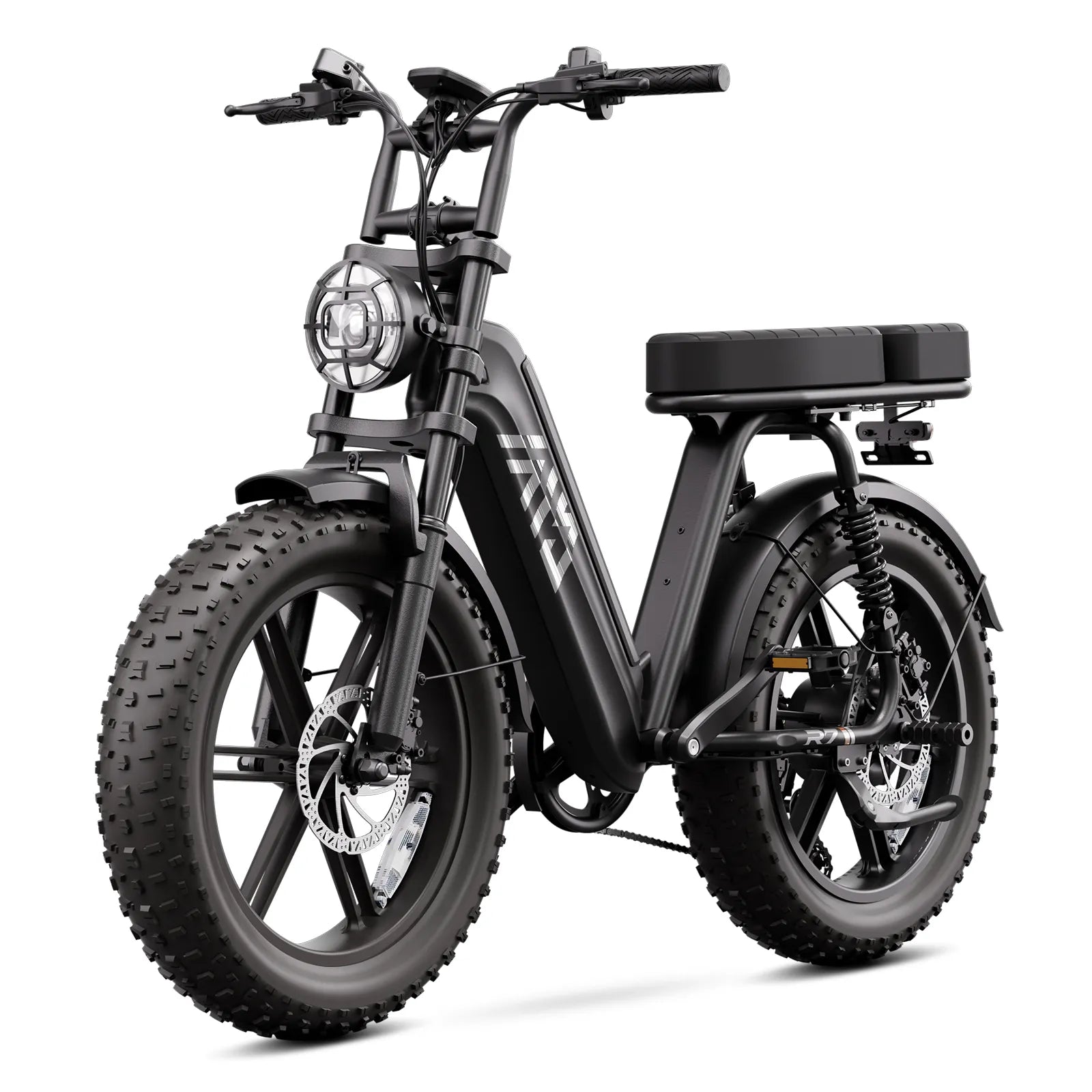




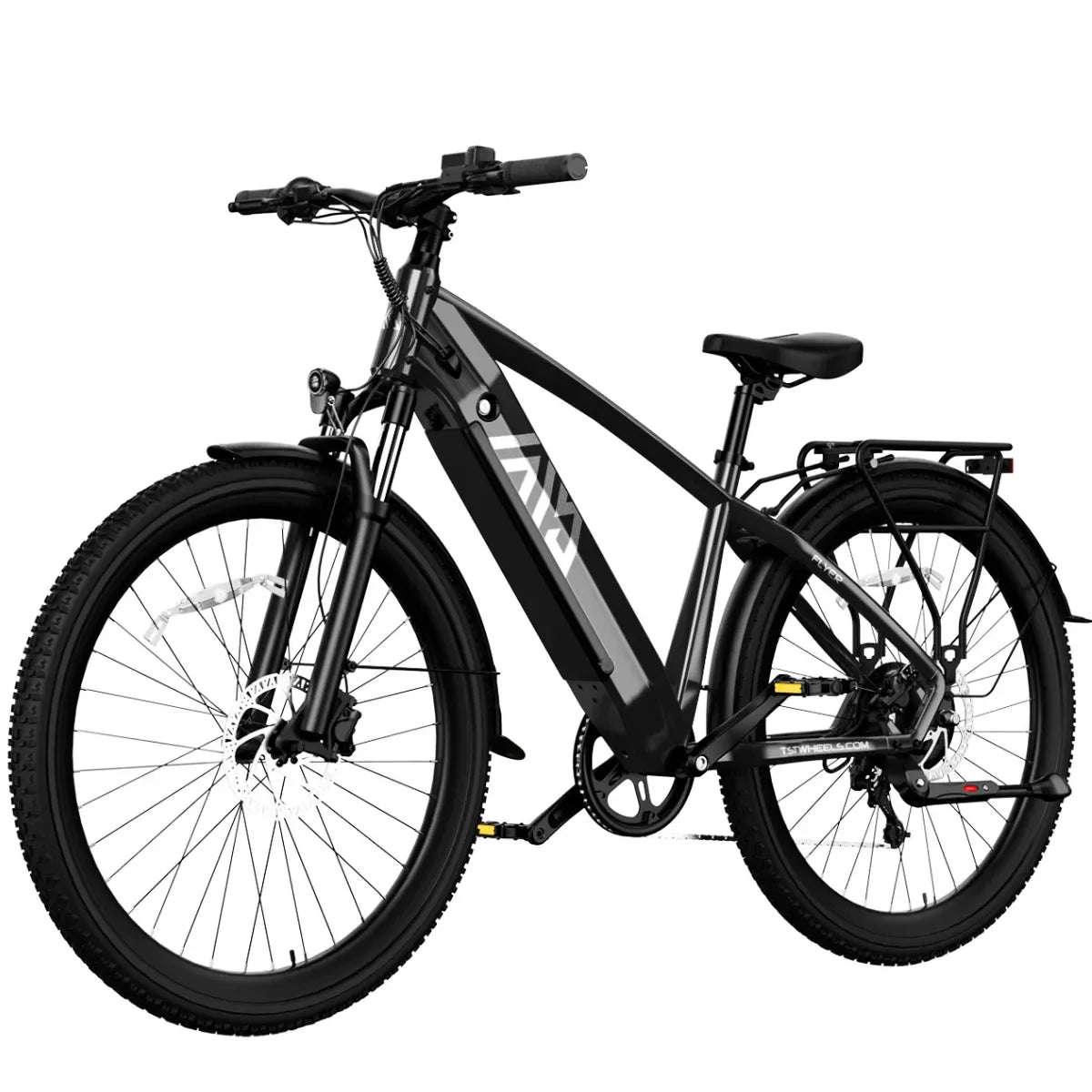












For TSTE ebikes in 2025, use 54.6V chargers: 54.6V/3A for Flyer, Defender, Surfer, Dreamer, and GT63 (4–5 hour charge); 54.6V/2A for Carrier, Buddy, R7, and R9 (5–8 hours). Match amperage to battery specs, prioritize UL 2849 certification for fire safety, and verify connectors for compatibility—this prevents damage and extends battery life.
Check: 2025 Charger Standards
Choosing the right ebike charger in 2025 is no longer just about convenience—it's about safety. With lithium-ion battery fires making headlines and new fire prevention standards dominating the industry, US riders need reliable, certified chargers that match their specific ebike models. Whether you're commuting on a TSTE Flyer, hauling cargo on a Carrier, or exploring trails on a Defender, understanding charger compatibility, voltage, amperage, and safety certifications is essential to protect your investment and your home.
This comprehensive guide walks you through everything you need to know about selecting the best ebike charger for your TSTE model in 2025, including fire safety practices, smart charging technology, and practical buying tips backed by the latest industry standards.
What Makes a Charger Compatible with TSTE Ebike Batteries?
Compatibility depends on three factors: voltage (48V or 72V), amperage (2A or 3A), and connector type. TSTE batteries are designed to work only with chargers that match these exact specifications. Using an incompatible charger can damage the battery's internal management system (BMS), cause overcharging, or create fire hazards. Always verify your battery voltage and amperage before purchasing a replacement charger.
TSTE Bike designs every model with a removable lithium-ion battery and an intelligent Battery Management System (BMS) that communicates directly with the charger. This BMS is your first line of defense against overcharging, overheating, and short circuits. When you plug in a charger, the BMS reads the voltage and amperage signals to regulate the charging process safely.
The charger's job is to deliver the correct electrical current at the correct voltage. If the voltage is too high, it can overcharge cells and trigger thermal runaway—the cascade effect that leads to battery fires. If the amperage is too low, charging takes longer; if it's too high, the charger may overheat or damage the battery's internal circuitry. This is why TSTE specifies exact charger ratings for each model.
Additionally, the physical connector—whether it's a standard barrel connector, Anderson connector, or proprietary plug—must match. A wrong connector won't fit, protecting you from accidental mismatches. However, always double-check your battery's connector type before ordering a charger online to avoid disappointment.
Which Charger Voltage and Amperage Match TSTE 48V Models?
Most TSTE commuter and cargo models use 48V batteries and require 54.6V chargers (the correct charging voltage for 48V lithium-ion packs). Amperage varies: 54.6V/3A for standard models like Flyer and Defender, and 54.6V/2A for cargo and folding models like Carrier and Buddy. Always match amperage to your battery specification to avoid damage.
Understanding voltage and amperage is fundamental to safe ebike charging. A 48V lithium-ion battery consists of 13 cells wired in series. Each cell nominally stores 3.7V, so 13 cells × 3.7V = 48.1V. When charging, the charger pushes voltage slightly higher—to 54.6V—to fill the cells completely. This is the standard charging voltage for all 48V ebike batteries and is non-negotiable.
Amperage, measured in amps (A), determines how fast the charger delivers energy. A 54.6V/3A charger delivers 3 amps of current, while a 54.6V/2A charger delivers 2 amps. More amps = faster charging, but also more heat. TSTE's engineering team specifies 3A for standard-capacity 15Ah batteries in commuter models because the battery and BMS can safely handle that current. For cargo and folding models with slightly different battery configurations or thermal profiles, 2A is recommended to extend battery lifespan and reduce heat stress.
| TSTE Model | Battery Voltage & Capacity | Recommended Charger | Charging Time | Best For |
|---|---|---|---|---|
| Flyer 27.5" | 48V 15Ah | 54.6V/3A | 4–5 hours | Daily commuting, trails |
| Defender 26" Fat Tire | 48V 15Ah | 54.6V/3A | 4–5 hours | Off-road, all-terrain |
| Surfer 27.5" Step-Thru | 48V 15Ah | 54.6V/3A | 4–5 hours | Accessible commuting |
| Dreamer 26" Step-Thru Fat | 48V 15Ah | 54.6V/3A | 4–5 hours | Comfortable urban riding |
| Carrier 20" Cargo | 48V 15Ah | 54.6V/2A | 7–8 hours | Heavy cargo hauling |
| Buddy 20" Folding | 48V 10Ah | 54.6V/2A | 4–5 hours | Portable commuting |
| Buddy Pro 20" Folding | 48V 15Ah | 54.6V/2A | 3–4 hours | Quick-charge portability |
| R002 Moped-Style | 48V 15Ah or 25Ah | 54.6V/3A | 4–5 hours | Long-range moped riding |
| R7 Cargo Moped | 48V 15Ah | 54.6V/2A | 5–6 hours | Modular cargo transport |
| R9 Dual-Battery Moped | Dual 48V 15Ah (48V 15–30Ah total) | 54.6V/2–3A per battery | 5–6 hours per battery | Extended range adventures |
The high-performance dirt bikes—TST GT63 and GT73—operate at different voltages. The GT63 uses a 48V 22.5Ah battery with a 54.6V/3A charger, while the GT73 steps up to 72V 25Ah with an 84V/4.5A charger. These higher voltages and amperages are necessary to support the extreme power demands of off-road riding, so never mix chargers between voltage classes.
How Do You Identify Your TSTE Ebike's Connector Type?
Check your battery's charging port—it's usually located on the battery pack itself or on the frame near the seat tube. TSTE batteries use standard connectors (commonly barrel or Anderson plugs) that match the included charger. Take a photo of the connector or measure its diameter before ordering a replacement to ensure compatibility and avoid costly mistakes.
Every TSTE ebike ships with a proprietary charger that connects to your battery via a specific connector type. This connector is the physical interface between the charger and battery. If you lose your charger or need a backup, identifying the correct connector is your first step.
Most TSTE models use industry-standard connectors that are widely available through ebike retailers and online marketplaces. However, some premium models like the R002 and R9 may use specialized connectors. The best approach is to:
1. Locate your battery pack. On TSTE commuter models like the Flyer, Defender, and Surfer, the battery is removable and typically sits on the downtube or integrated into the frame. On cargo and moped-style bikes, it's often mounted low for weight distribution.
2. Find the charging port. Look for a small, recessed port on the battery pack—it's usually labeled with a charging icon or "DC IN."
3. Examine the connector. Note the shape (round barrel, two-pin Anderson, etc.) and approximate diameter or size.
4. Consult your manual or contact TSTE support. TSTE Bike's customer support team can verify your exact connector type and recommend compatible chargers available in the US market.
Ordering the wrong connector is frustrating and delays your riding plans. When in doubt, reach out to TSTE's support team before purchasing—it's a quick confirmation that saves money and hassle.
What Are the Best Charger Types for 2025 Ebike Safety?
Check: Smart Charging Solution
In 2025, three charger types dominate: standard chargers (reliable, affordable), fast chargers (higher amperage, shorter charging time, more heat), and smart chargers (BMS-integrated, adaptive output, fire prevention). Smart chargers with real-time monitoring and automatic shutdowns are the safest choice for daily riders, especially in homes with limited electrical oversight.
The 2025 fire prevention standards emphasize intelligent charging technology. The NFPA's "Charge into Fire Safety" campaign highlights that certified products, safe charging practices, and responsible recycling are the three pillars of lithium-ion battery protection. Your charger choice directly impacts all three.
Standard Chargers: These are the baseline—they deliver a fixed voltage and amperage until the battery reaches full charge, then stop. TSTE includes a standard charger with every ebike. They're reliable, affordable, and sufficient for most riders. However, they lack real-time monitoring, so if something goes wrong (a faulty BMS, a damaged cell), the charger may not detect it immediately.
Fast Chargers: These deliver higher amperage (e.g., 5A or 6A instead of 3A) to cut charging time in half. Fast chargers are convenient for busy commuters but generate more heat. Excessive heat accelerates battery aging and increases fire risk if the BMS fails. Use fast chargers sparingly and only with batteries designed for them.
Smart Chargers: These are the gold standard for 2025. Smart chargers integrate advanced electronics that communicate with your battery's BMS in real time. They monitor cell voltage, temperature, and charge state, adjusting output dynamically to optimize safety and longevity. Many smart chargers include automatic shutdowns if they detect anomalies—a critical safety feature. Some even provide smartphone alerts or display screens showing charge progress and battery health.
For TSTE Bike owners, the included charger is a solid standard option. If you ride daily or want extra peace of mind, investing in a UL 2849-certified smart charger is worthwhile. The marginal cost (often $20–40 more) pays dividends in battery lifespan and fire prevention.
Why Is UL 2849 Certification Essential for Ebike Chargers?
UL 2849 is the US safety standard for electric bikes and their electrical systems, including chargers. Chargers certified to UL 2849 have undergone rigorous testing for electrical safety, thermal performance, and fire hazard mitigation. In 2025, many US states and rebate programs require UL 2849 certification. Always verify your charger carries this mark before purchase.
UL (Underwriters Laboratories) is an independent safety certification body that tests products to prevent fires, electrical shock, and other hazards. UL 2849 specifically covers ebikes and their components—motors, batteries, chargers, and controllers. A charger bearing the UL 2849 mark has passed tests including:
Electrical Safety: The charger won't deliver dangerous voltage to the user or create shock hazards.
Thermal Performance: The charger is designed to dissipate heat safely and won't overheat under normal or fault conditions.
Fire Hazard Mitigation: The charger includes protective circuits (fuses, thermal cutoffs, BMS integration) to prevent thermal runaway and fires.
Mechanical Durability: The charger's housing and connectors withstand repeated use without degradation.
TSTE Bike's premium models—the R002 Moped-Style, R7 Cargo Moped, R9 Dual-Battery Moped, and GT63 Electric Dirt Bike—carry UL 2849 certification, signaling to buyers that every electrical component, including the charger, meets the highest US safety standards. This certification is a major selling point for families and commuters who prioritize safety.
In California, rebate programs under SB 1271 increasingly require UL 2849 certification to qualify for state incentives. If you're considering a rebate, verify that your charger and ebike meet this standard. TSTE's certified models make rebate eligibility straightforward.
How Can You Prevent Ebike Charger Fires in 2025?
Follow these 2025 fire prevention best practices: (1) Use the manufacturer's charger or a UL 2849-certified replacement; (2) Charge on hard, non-flammable surfaces away from paper, fabric, or furniture; (3) Avoid overcharging—unplug once the battery reaches 100%; (4) Never charge overnight unattended; (5) Keep chargers and batteries in cool, dry places; (6) Inspect cables for damage before each use; (7) Replace batteries showing swelling, leaks, or burn marks immediately.
Lithium-ion battery fires are rare but catastrophic. The NFPA reports rising incidents linked to uncertified chargers, damaged batteries, and poor charging practices. Fortunately, most fires are preventable through awareness and discipline.
Buy Certified Products: Start with UL, ETL, or CSA-certified chargers. These marks indicate third-party safety testing. Avoid cheap, uncertified chargers sold online—they often lack protective circuits and are primary culprits in fire incidents.
Designate a Charging Zone: Charge your TSTE ebike in a well-ventilated area on a hard surface—concrete, tile, or metal shelving. Keep chargers and batteries away from paper, cardboard, curtains, upholstered furniture, and bedding. If a battery does catch fire (rare), hard surfaces prevent the fire from spreading to flammable materials.
Monitor Charging: Don't leave your ebike charging overnight or unattended for extended periods. Charge during the day when you're home and alert. Most TSTE batteries reach full charge in 4–8 hours, so plan accordingly. Once fully charged, unplug the charger immediately. Leaving a fully charged battery plugged in stresses the BMS and risks overcharging.
Maintain Your Battery: Inspect your TSTE battery regularly. If you notice swelling (the battery pack looks puffy), leaking fluid, burn marks, or a burnt smell, stop using it immediately and contact TSTE support. These are signs of internal failure and fire risk. Replace the battery under warranty or purchase a new one.
Check Cables: Before each charging session, visually inspect your charger cable for cracks, fraying, or damage. Damaged insulation exposes live wires and creates shock and fire hazards. If your cable is damaged, replace it or contact TSTE for a replacement.
Store Safely: Store batteries in cool, dry places. Extreme heat (above 113°F) or cold (below 32°F) degrades lithium-ion chemistry and increases fire risk. If you store your TSTE ebike for winter or long periods, charge the battery to 50% and keep it in a climate-controlled garage or shed.
What Are TSTE-Specific Charger Buying Tips and Charts?
When buying a TSTE charger, verify: (1) voltage and amperage match your battery (see compatibility chart above); (2) connector type matches your charging port; (3) charger is UL 2849-certified; (4) seller is authorized or reputable; (5) charger comes with a warranty. TSTE Bike offers genuine chargers and accessories through its Ontario warehouse with 1–3 day US shipping, ensuring fast replacement and compatibility peace of mind.
Replacing or upgrading your TSTE charger requires careful shopping. Here's a practical checklist:
Step 1: Confirm Your Battery Specs. Check your TSTE manual or battery pack label for voltage (48V or 72V) and capacity (Ah). Cross-reference the compatibility chart above to find your charger rating. Write it down—54.6V/3A, 54.6V/2A, or 84V/4.5A for GT73.
Step 2: Verify Connector Type. Take a photo of your charging port or measure the connector diameter. Contact TSTE support if unsure. This prevents ordering the wrong charger.
Step 3: Search for UL 2849-Certified Chargers. Use keywords like "UL 2849 ebike charger 54.6V 3A" or "TST ebike charger replacement." Filter results to show only certified products. Check seller ratings and reviews—look for mentions of compatibility with similar TSTE models.
Step 4: Compare Prices and Warranties. Genuine TSTE chargers range from $40–80 depending on amperage and smart features. Third-party chargers may be cheaper but carry higher risk. Compare warranty coverage—TSTE chargers typically include 1-year warranties.
Step 5: Buy from Authorized Retailers or TSTE Directly. TSTE Bike sells genuine chargers and replacement batteries through its website, with 1–3 day shipping from the Ontario, California warehouse. This guarantees compatibility and fast delivery. If your charger fails, you can order a replacement and receive it within days, minimizing downtime.
| Charger Type | Voltage/Amperage | Charging Speed | Heat Level | Best For | Safety Features |
|---|---|---|---|---|---|
| Standard Charger | 54.6V/2–3A | 4–8 hours | Low | Daily commuters, budget-conscious buyers | Basic BMS integration, thermal cutoff |
| Fast Charger | 54.6V/5–6A | 2–3 hours | High | Riders with tight schedules | Overcurrent protection, limited use recommended |
| Smart Charger | 54.6V/2–3A (adaptive) | 4–6 hours | Low to moderate | Safety-conscious riders, frequent users | Real-time BMS monitoring, auto-shutoff, app alerts, temperature sensors |
| Portable Smart Charger | 54.6V/2A (compact) | 5–7 hours | Low | Travelers, TSTE Buddy folding bike owners | Lightweight, smart monitoring, travel-friendly |
Pro Tip for TSTE Owners: If you own multiple TSTE models—say a Flyer for commuting and a Buddy Pro for travel—you can use the same 54.6V charger for both, provided the amperage matches your most demanding battery. However, purchasing model-specific chargers ensures optimal charging profiles and battery longevity.
TSTE Bike Expert Views: "At TSTE Bike, we engineer every model with removable, intelligent batteries and matched chargers to prioritize rider safety and convenience. Our 48V and 72V systems undergo rigorous testing to UL 2849 standards, and our chargers include automatic overcharge protection and thermal monitoring. For 2025, we recommend using the original charger shipped with your TSTE model whenever possible. If you need a replacement, TSTE Bike's genuine chargers are available through our Ontario warehouse with 1–3 day US shipping and full warranty coverage. Our customer support team is also available to verify compatibility and answer technical questions. By pairing TSTE's certified ebikes with certified chargers and following safe charging practices, you're investing in years of reliable, fire-safe riding."
Conclusion
Choosing the right ebike charger in 2025 is a critical decision that impacts your safety, battery lifespan, and riding experience. By understanding voltage and amperage compatibility, prioritizing UL 2849 certification, and following fire prevention best practices, you can confidently charge your TSTE ebike every day without worry.
TSTE Bike's full lineup—from the commuter-friendly Flyer and Defender to the long-range R002 and R9 moped-style bikes—ships with certified chargers matched to each model's battery specifications. If you need a replacement charger, backup power source, or upgrade to a smart charger, TSTE Bike offers genuine, compatible options through its California warehouse with fast 1–3 day US shipping.
Whether you're a daily urban commuter, cargo hauler, or adventure seeker, investing in a certified charger and following safe practices ensures your TSTE ebike remains your trusted companion for years to come.

Leave a comment
This site is protected by hCaptcha and the hCaptcha Privacy Policy and Terms of Service apply.