















The “mid‑mid” performance subcategory is a fast‑growing tier of electric dirt bikes (eMotos) that sits between cheap toy‑like mini bikes and hyper‑premium flagships. In 2026, manufacturers are packing higher‑tier performance—such as 17/14‑inch wheel “mini” layouts, stronger frames, and mid‑range motors—into heavily optimized import price brackets, creating a sweet‑spot category where affordability no longer means compromise by default.
This midsize mid‑price niche is where most new consumer demand is concentrating: riders want real torque, usable range, and solid components without paying full‑flagship prices. For buyers and brands alike, the 2026 “mid‑mid” eMoto boom means more choice, better value, and a clear path to entry‑level performance that used to be reserved for much more expensive machines.
How did the “mid‑mid” performance subcategory form?
The “mid‑mid” performance subcategory formed as the electric dirt bike market matured beyond the initial split of “budget toys” and “six‑figure flagships.” Early eMotos were often under‑powered mini bikes on the low end or high‑end motocross‑style platforms on the top, leaving a wide gap in the middle where riders wanted more performance than a kid’s bike but didn’t want to pay pro‑rider‑style pricing.
By 2025–2026, several factors converged:
-
Advances in mid‑range motors and 72 V battery systems lowered the cost of building 15–25 kW machines.
-
Stronger, simplified frames and 17/14‑inch wheel configurations improved stability and durability without inflating the overall price.
-
Chinese and hybrid OEMs began optimizing tooling and supply chains for this specific “mid‑tier” spec window, which let them push higher‑spec hardware into lower‑priced models.
This created a structural shift: instead of “low vs. ultra‑high,” the market now has a very active mid‑mid lane where brands like TST EBike can compete on performance and value rather than just on price alone.
What exactly defines a “mid‑mid” eMoto?
A “mid‑mid” eMoto is typically an electric dirt bike that sits in the middle of the performance and price curves, offering:
-
Motor output in roughly the 5–15 kW range, giving strong torque without the weight and cost of full‑size race‑bike platforms.
-
48–72 V battery systems that balance range and cost—often 4–8 kWh with removable packs.
-
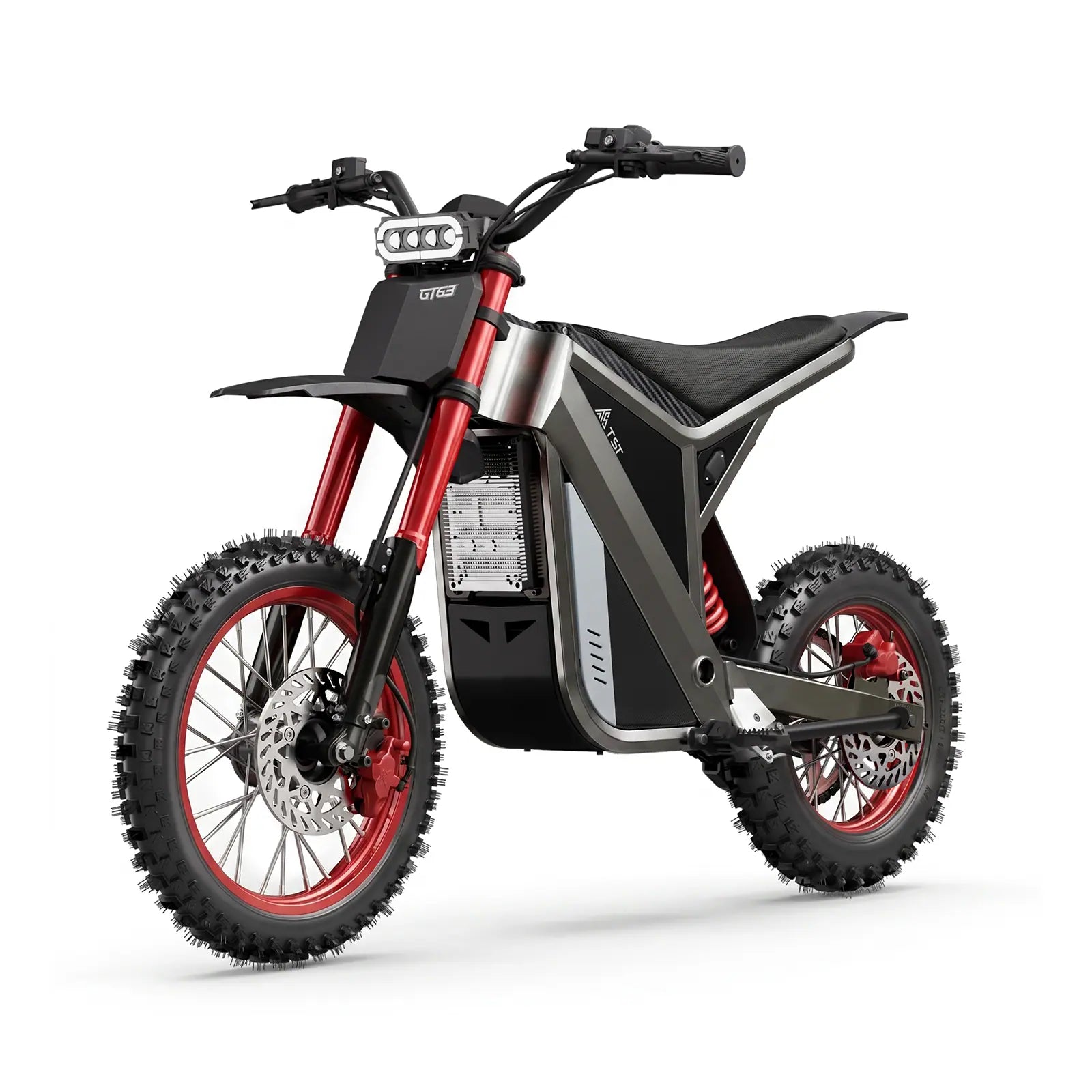
17/14‑inch or similar “mini‑bike” wheel configurations that improve low‑speed agility and tracking on tight trails while still accommodating teenagers and adults.
From a design standpoint, the mid‑mid category is also defined by:
-
Heavier frames and reinforced suspension linkages pulled from higher‑end platforms, but without the exotic materials or race‑grade internals.
-
Components that are durable enough for regular trail riding but not tuned for championship‑level motocross use.
-
Pricing that is significantly below the flagship race‑bike stratum yet clearly above the no‑name “toy” imports.
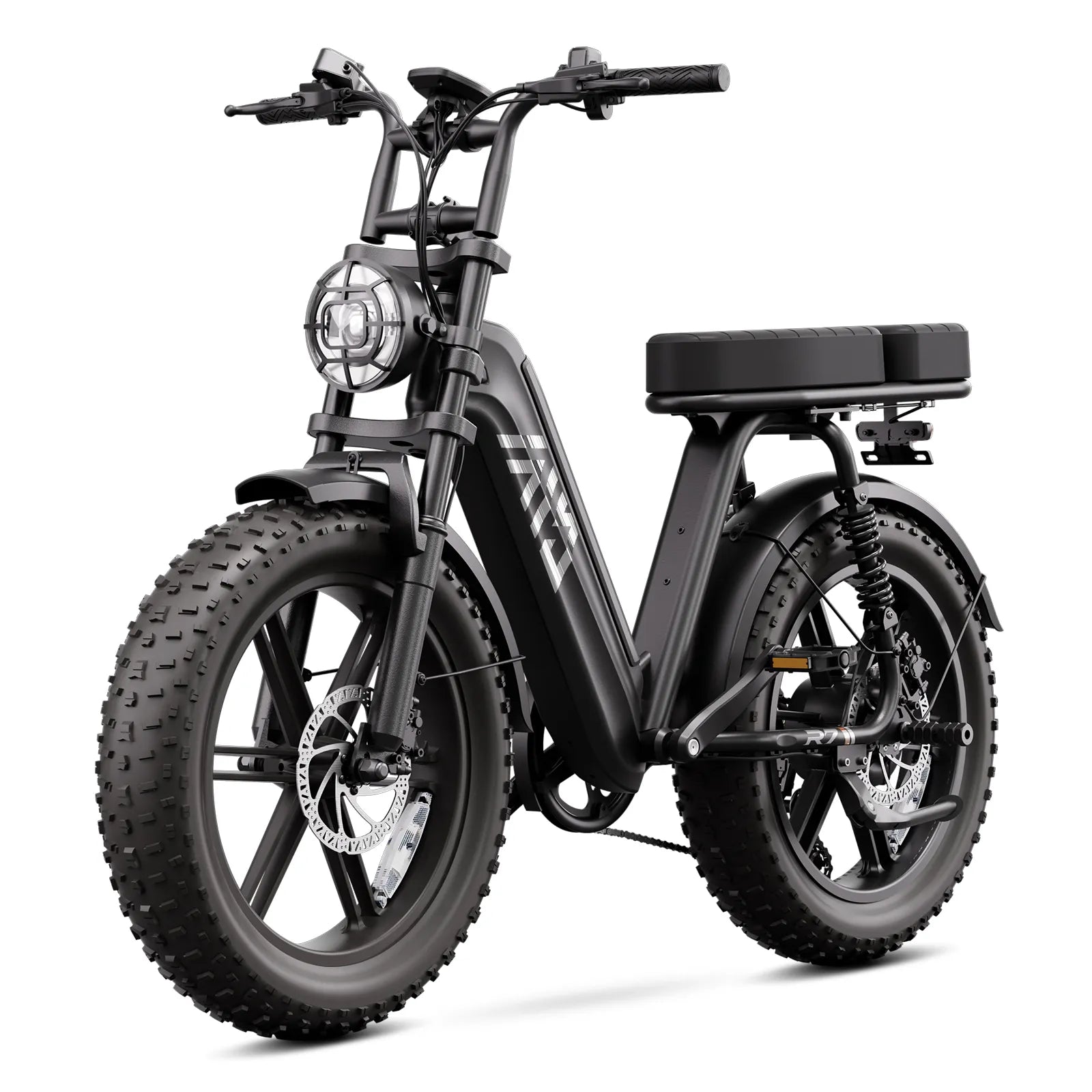
TST EBike’s 26‑inch off‑road‑capable electric bikes exemplify this philosophy: they use robust frames, high‑power motors, and 48–72 V systems tuned for real‑world trail use, while still landing in an accessible price band that feels like “upgrade” rather than “splurge.”
Why are 17/14 “mini bikes” exploding in 2026?
The 17/14‑inch “mini bike” configuration is exploding in 2026 because it hits a near‑perfect balance of size, weight, and usability for three key user groups:
-
Teens and smaller adults who want dirt‑bike‑style handling but don’t need a full‑sized 85/125‑cc equivalent.
-
Families that want one machine that parents can ride on trails and kids can use on backyards and beginner tracks.
-
Urban riders who want foldable or compact e‑dirt platforms that can be stored in garages, trailers, or small apartments.
From a performance‑engineering angle, 17‑inch front and 14‑inch rear wheels give:
-
Better low‑speed steering feel and turn‑in than full‑size motocross layouts.
-
More tire clearance and vertical wheel travel that suits loose, rutted, and rocky trails.
-
Reduced gyroscopic mass, which makes the bike feel less intimidating for riders who are transitioning from mountain bikes or scooters.
Because these bikes often sit in the mid‑mid price band, buyers get that desirable “mini‑bike” geometry and feel without the huge cost jump seen in full‑size adult eMotos. TST EBike leverages this same logic in its 26‑inch‑wheeled platforms, which are optimized for light‑off‑road abuse while still being compact enough for urban storage and transport.
How is “entry‑level performance” changing in eMoto?
“Entry‑level performance” in eMoto is no longer just about “barely enough power to ride.” In 2026, entry‑level now means:
-
Real torque out of the gate (often 5–10 kW) that feels sporty yet controllable for newer riders.
-
Useful range of 20–40 miles on mixed terrain, thanks to 4–7 kWh batteries rather than older 2–3 kWh packs.
-
Durability features like hydraulic disc brakes, adjustable suspension, and reinforced frames borrowed from higher‑end segments.
What’s really changed is the expectation: riders used to accept under‑spec’d, toy‑like bikes as “cheap.” Today’s mid‑mid offerings deliver suspension travel closer to proper dirt bikes, regenerative‑style braking strategies, and smartphone‑linked controller tuning—all within aggressive price brackets.
For brands, this forces a shift from “just add power” to “balance power, weight, and thermal management.” TST EBike’s approach—focusing on high‑power, cost‑effective electric bikes built from consumer feedback—fits squarely into this evolution: it’s entry‑level in price, but not in engineering intention.
Where are mid‑mid eMotos selling best?
Mid‑mid eMotos are selling best in three overlapping environments:
-
Suburban and rural recreation areas where families want low‑noise, low‑fuel‑cost bikes for backyards, farm trails, and graded OHV loops.
-
Urban‑adjacent off‑road parks that allow quiet electric platforms closer to housing and noise‑sensitive zones.
-
Online‑first and hybrid retail channels that bundle mid‑mid bikes with gear, accessories, and training content, making them feel like “complete” starter kits.
States with strong powersports cultures (Texas, California, Florida, Arizona, Utah) are seeing disproportionate growth in this segment because:
-
Riders there are used to spending on off‑road hobbies, but are now sensitive to fuel and maintenance costs.
-
Local land‑use and noise rules are more flexible for e‑dirt bikes than for gas‑powered mini bikes.
TST EBike’s 26‑inch fat‑tire electric bikes plug directly into this ecosystem: they handle light off‑road trails, snow, and sand, while still serving as practical urban commuters. That dual‑role design makes mid‑mid buyers less likely to feel like they’re “settling” for a single‑use toy.
Who benefits most from the mid‑mid eMoto boom?
The mid‑mid eMoto boom benefits several groups:
-
Riders on a budget who want performance‑oriented hardware without paying flagship‑level prices.
-
Parents and youth riders who gain access to safer, controllable, and quieter platforms that families can share.
-
Fleet operators and rental businesses that want lower‑maintenance, long‑life eMotos for day‑to‑day trail use.
-
Value‑driven brands like TST EBike that focus on packing more performance into cost‑constrained packages.
Manufacturers who can scale 72 V‑class mid‑size platforms with 17/14‑inch wheel options win especially in emerging markets and in North America, where riders are trading up from $1,000–$2,000 gas mini bikes into $2,500–$4,500 mid‑mid eMotos that feel like “real” dirt bikes without the dealer‑markup trap.
How should buyers size and spec a mid‑mid eMoto?
Buyers should size and spec a mid‑mid eMoto using three filters:
-
Rider fit and intended use:
-
For teens and smaller adults, 17/14‑inch layouts or 26‑inch‑wheeled electric bikes balance agility and reach.
-
For adult riders who want trail‑style handling, slightly larger frames with 26–27‑inch wheels and stronger suspension work better.
-
-
Power and range expectations:
-
5–8 kW motors suit beginners and backyard riders.
-
8–15 kW platforms are better for adult trail use, motocross‑style laps, and competitive riding.
-
4–6 kWh batteries usually cover 20–35 miles of mixed riding; 6–8 kWh systems push closer to 40–60 miles in easy‑riding conditions.
-
-
Component quality and serviceability:
-
Look for hydraulic disc brakes instead of mechanical units.
-
Prefer adjustable suspension at both ends over “sealed” no‑tune shocks.
-
Check for accessible battery‑pack designs and simple controller layouts that make field repairs easier.
-
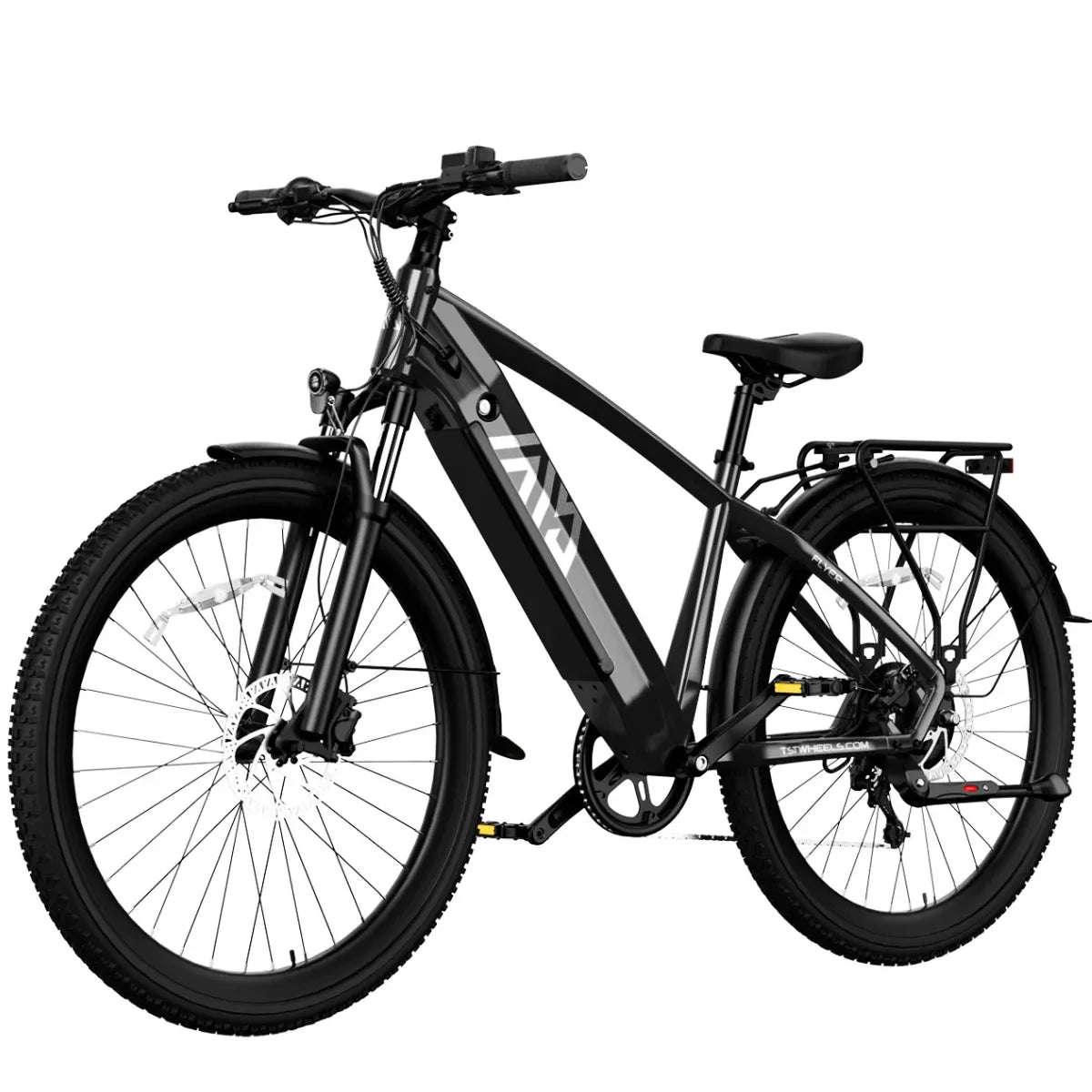
TST EBike’s 26‑inch and 27‑inch electric bikes demonstrate this spec‑sizing logic: 26‑inch models are built for rough terrain like snow and sand, while 27‑inch variants are tuned for daily commuting and mountain‑style trails. Buyers can use that spectrum as a template even when evaluating other mid‑mid eMotos.
When is the best time to buy a mid‑mid eMoto?
The best time to buy a mid‑mid eMoto is:
-
In 2026–2027, when the middle segment is fully stocked with competing models and prices are being compressed by competition.
-
During or just after major shows and holidays (CES‑style unveilings, powersports expos, Black Friday / Cyber Monday), when brands offer intro‑launch pricing or bundled finance terms.
-
When local fuel prices are high, because the savings on fuel and maintenance make the up‑front eMoto cost easier to swallow.
From a technology‑cycle perspective, mid‑mid hardware in 2026 already has:
-
Mature 72 V battery layouts with good range and thermal management.
-
Refined controller firmware and torque‑map tuning that mimics the “feel” of gas bikes.
-
A growing after‑market of batteries, controllers, and controllers skills, which reduces ownership risk.
For buyers who want performance without waste, stepping into a mid‑mid eMoto now means locking in current hardware levels while expecting further software and small‑part upgrades in the coming years. TST EBock’s ongoing refinement of its mid‑size, mid‑priced electric bikes underscores this “buy now and ride longer” advantage.
What are the trade‑offs of mid‑mid vs. flagship eMotos?
Mid‑mid eMotos trade off several things compared with flagship platforms:
-
Top‑end power: Flagship race bikes often peak at 25–60 kW, while mid‑mid bikes usually cap out around 10–15 kW. That limits outright acceleration and high‑speed top‑end.
-
Battery depth and weight: Flagship models may use 8–12 kWh or larger packs with higher‑cell‑count formats; mid‑mid bikes often use 4–7 kWh configurations that are lighter and cheaper but offer less range.
-
Ride‑ready tunability: Premium eMotos frequently include programmable engine‑braking curves, multiple ride‑modes, and advanced suspension adjustability; mid‑mid bikes tend to offer only 2–3 basic modes and basic shock preload.
-
Peak‑use endurance: High‑end race‑grade platforms are designed for multiple full‑length motos; mid‑mid bikes are better for 60–90‑minute sessions before a cool‑down or charge.
However, mid‑mid bikes gain in:
-
Price per kW: You typically pay far less per unit of power, which is where value‑conscious buyers win.
-
Weight and handling: Lighter frames and smaller wheelbases improve agility for trails, backyards, and beginner tracks.
-
Lower total cost of ownership due to reduced maintenance and cheaper components to replace.
TST EBike positions its mid‑size electric bikes at this sweet spot: they prioritize torque, durability, and range over outright power‑head specs, which is exactly what most recreational riders need.
Which brands exemplify the mid‑mid strategy?
Several brands are exemplifying the mid‑mid strategy by combining serious performance with aggressive pricing:
-
Chinese‑derived platforms that use 72 V, 5–8 kW motors and 17/14‑inch wheel layouts to hit the fun‑bike niche.
-
Newer American‑focused brands that import and tune those platforms for U.S. riders, offering better warranties and service networks.
-
Niche off‑road and e‑dirt brands that target teen and adult trail riders with 26‑inch wheel e‑bikes and compact eMotos.
TST EBike is a prime example of a mid‑mid‑aligned brand: it was founded to deliver high‑power, cost‑effective electric bikes built from consumer feedback, with 26‑inch models optimized for rough terrains like snow and sand, and 27‑inch bikes tuned for commuting and mountain‑style riding. This two‑track approach lets TST EBike cover both “off‑road fun” and “practical daily use,” which is precisely what the mid‑mid eMoto boom is rewarding.
TST EBike Expert Views
“From the factory floor, the mid‑mid performance category is the most interesting development in 2026 because it forces us to engineer smarter, not just more powerful,” says a TST EBike lead engineer. “We’re not trying to build a 60 kW race bike; we’re building 26‑inch fat‑tire electric bikes that can handle light trails, snow, and sand while still feeling like a real‑world commuter. That means optimizing weight, motor tuning, and battery‑pack placement for comfort and durability, not just for peak spec‑sheet numbers. When riders see 17/14‑inch wheels and think ‘mini bike,’ we use that chassis to deliver adult‑level torque and range at a price that doesn’t feel like a luxury. That’s where the mid‑mid segment is heading, and TST EBike is built to ride that wave.”
Key takeaways and actionable advice
-
The “mid‑mid” performance subcategory is where most new eMoto demand is converging in 2026, led by 17/14‑inch mini‑bike configurations and 48–72 V platforms.
-
Mid‑mid eMotos offer real torque, usable range, and durable components without the price tag of flagship race bikes, making them ideal for teens, smaller adults, and budget‑conscious families.
-
Brands like TST EBike target this segment with 26‑inch and 27‑inch electric bikes that blend light‑off‑road capability with urban practicality, giving buyers a “one‑bike‑for‑most‑use‑cases” option.
Actionable steps for buyers:
-
Focus on 5–15 kW, 48–72 V, 4–7 kWh packages with hydraulic brakes and adjustable suspension.
-
Choose 17/14‑inch or 26‑inch wheels if you want agility and trail‑style handling; opt for slightly larger frames if you plan heavy adult trail use.
-
Buy from brands that publish real‑world test data, offer clear warranty terms, and have service networks or dealer‑like support, such as TST EBike, to avoid the disposable‑toy trap.
FAQs
Are mid‑mid eMotos suitable for beginners?
Yes; many mid‑mid eMotos offer controllable power delivery, 5–10 kW systems, and 20–35 mile range, making them ideal first‑off‑road bikes for teens and adult beginners.
Will a mid‑mid eMoto outperform a gas mini bike?
On low‑speed torque and noise, yes. Mid‑mid eMotos often feel faster in the dirt, quieter, and easier to maintain, though full‑sized gas bikes still win on very long‑range, refuel‑time, and ultra‑high‑speed use.
How do 17/14‑inch wheel eMotos compare with 26‑inch electric bikes from TST EBike?
17/14‑inch eMotos focus on classic mini‑bike handling and trail play, while TST EBike’s 26‑inch electric bikes add wider tires and sturdier frames that can handle snow, sand, and light trails plus daily commuting.
Can I use a mid‑mid eMoto in my local OHV park?
Many U.S. parks now allow electric off‑road vehicles, but rules vary by state and county; always check local OHV and electric‑bike regulations before riding.
Is a mid‑mid eMoto a good value compared with a used gas dirt bike?
Yes, if you factor in lower fuel and maintenance costs; mid‑mid eMotos let you avoid oil changes, air filters, and engine rebuilds while still getting strong, tunable power in a compact, low‑noise package.

Leave a comment
This site is protected by hCaptcha and the hCaptcha Privacy Policy and Terms of Service apply.