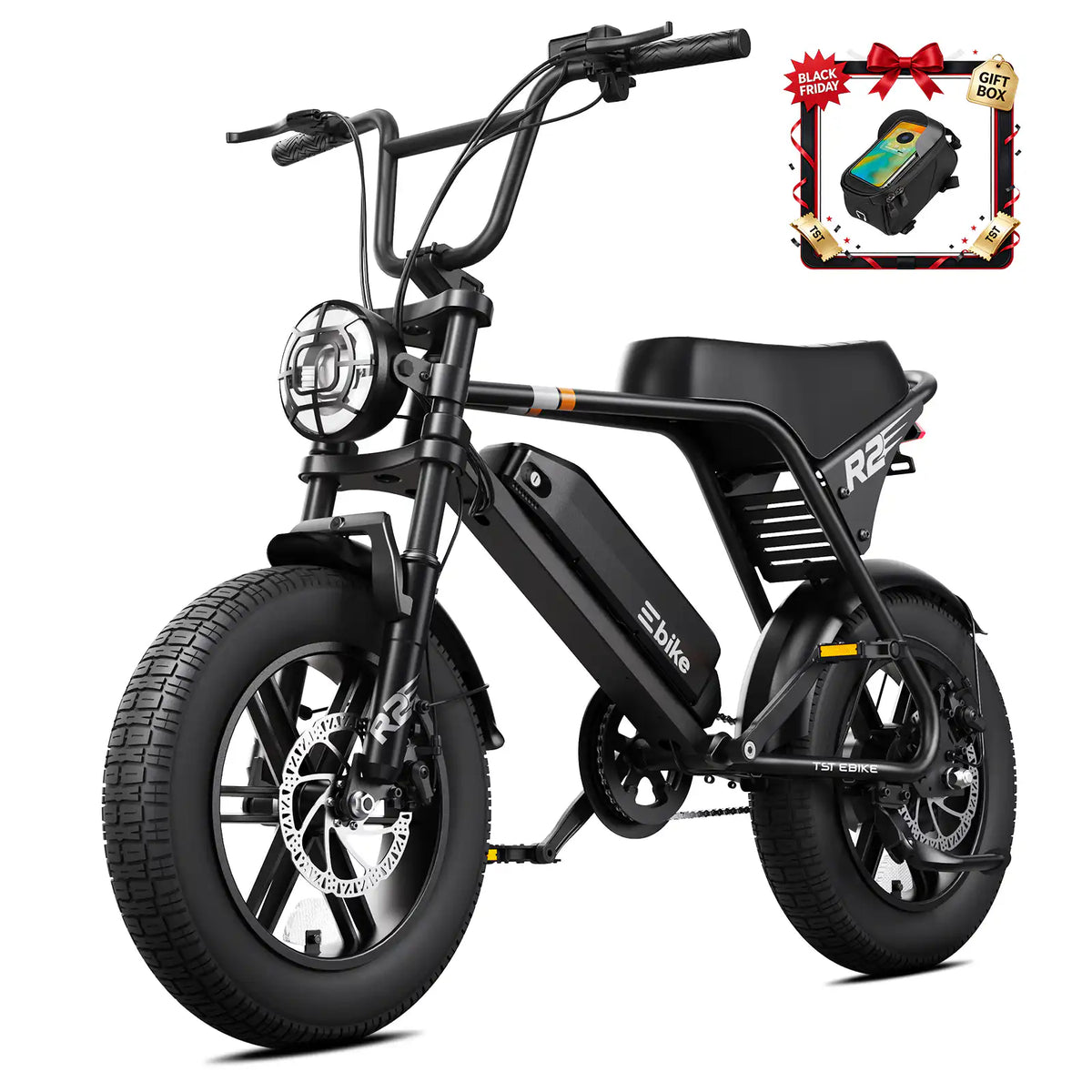
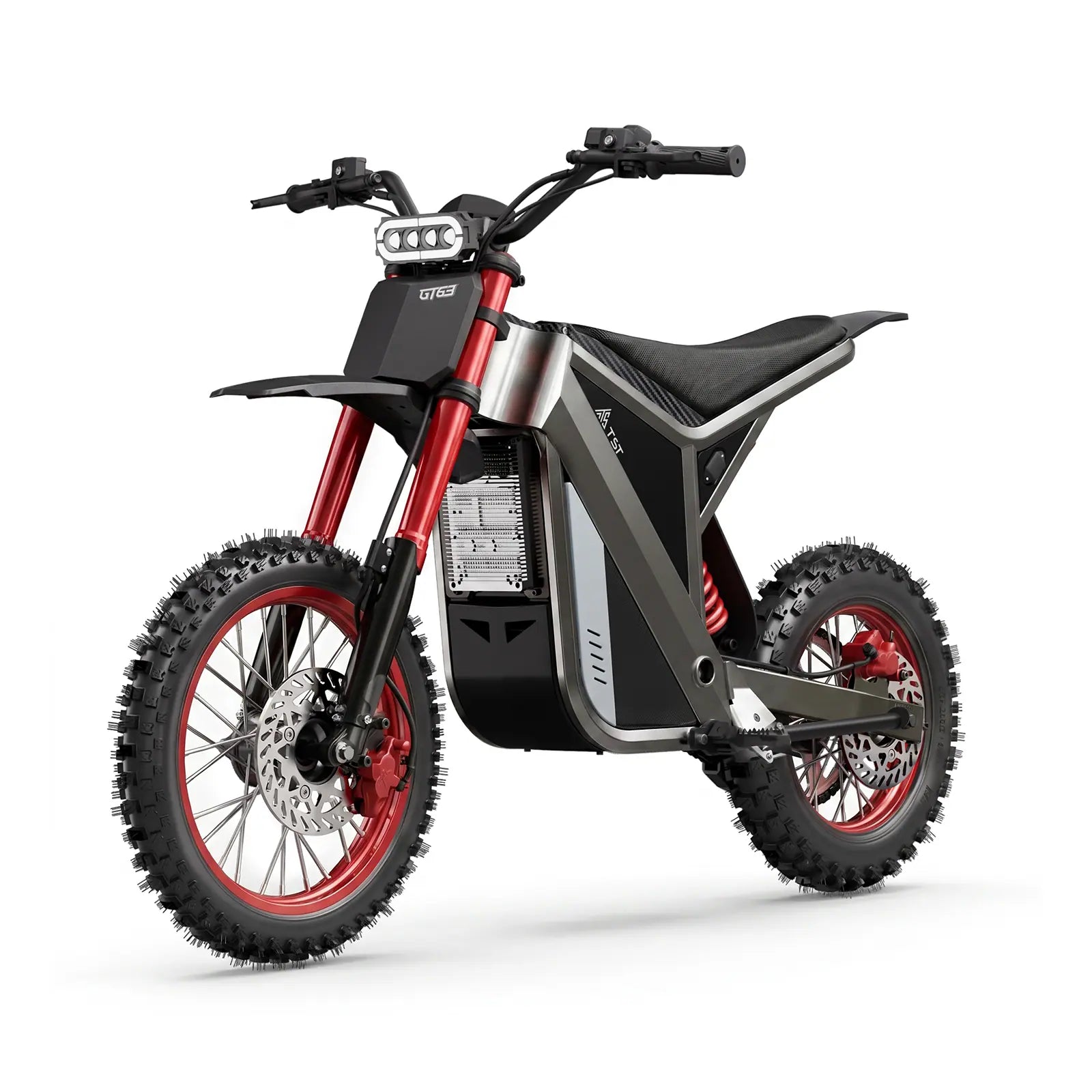


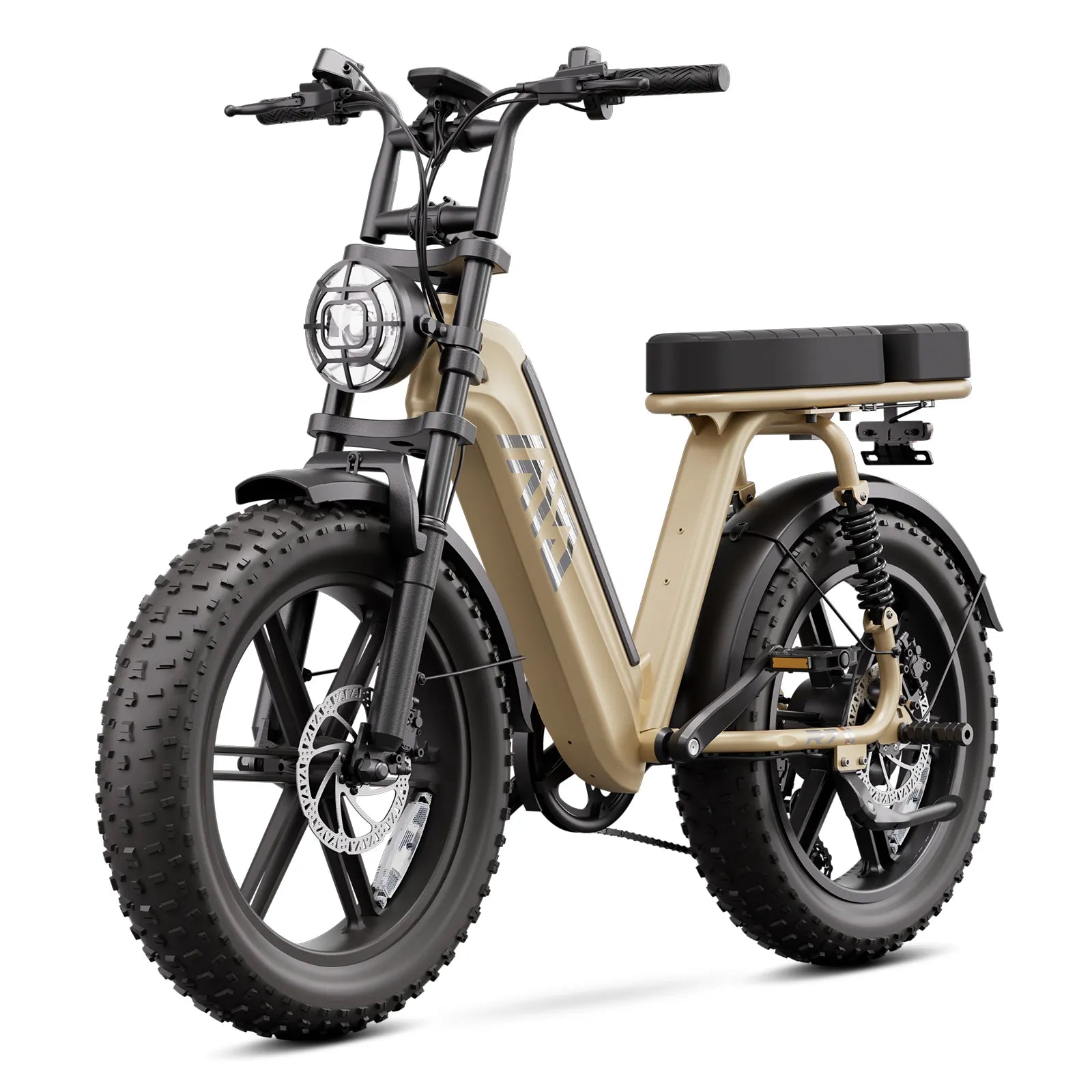
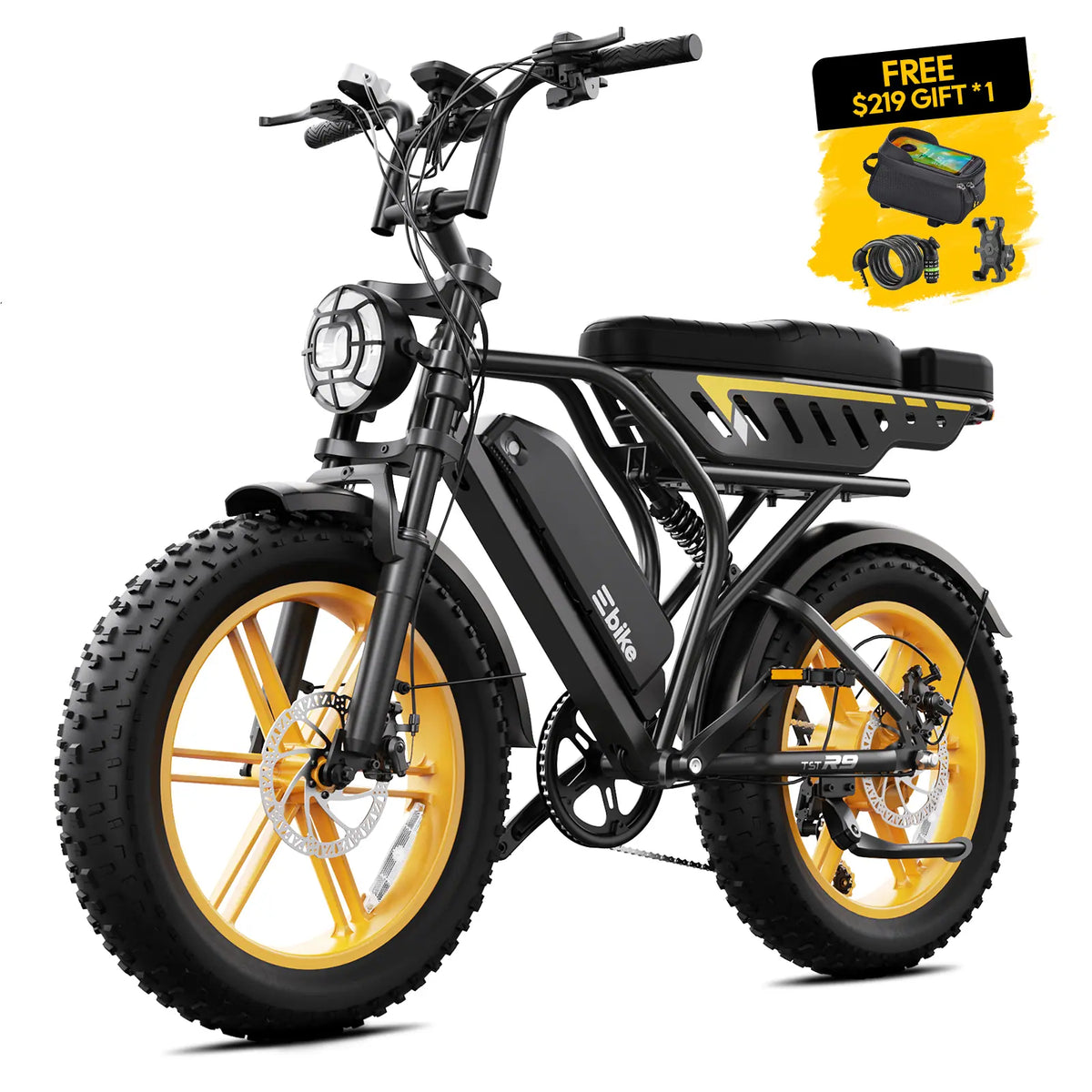

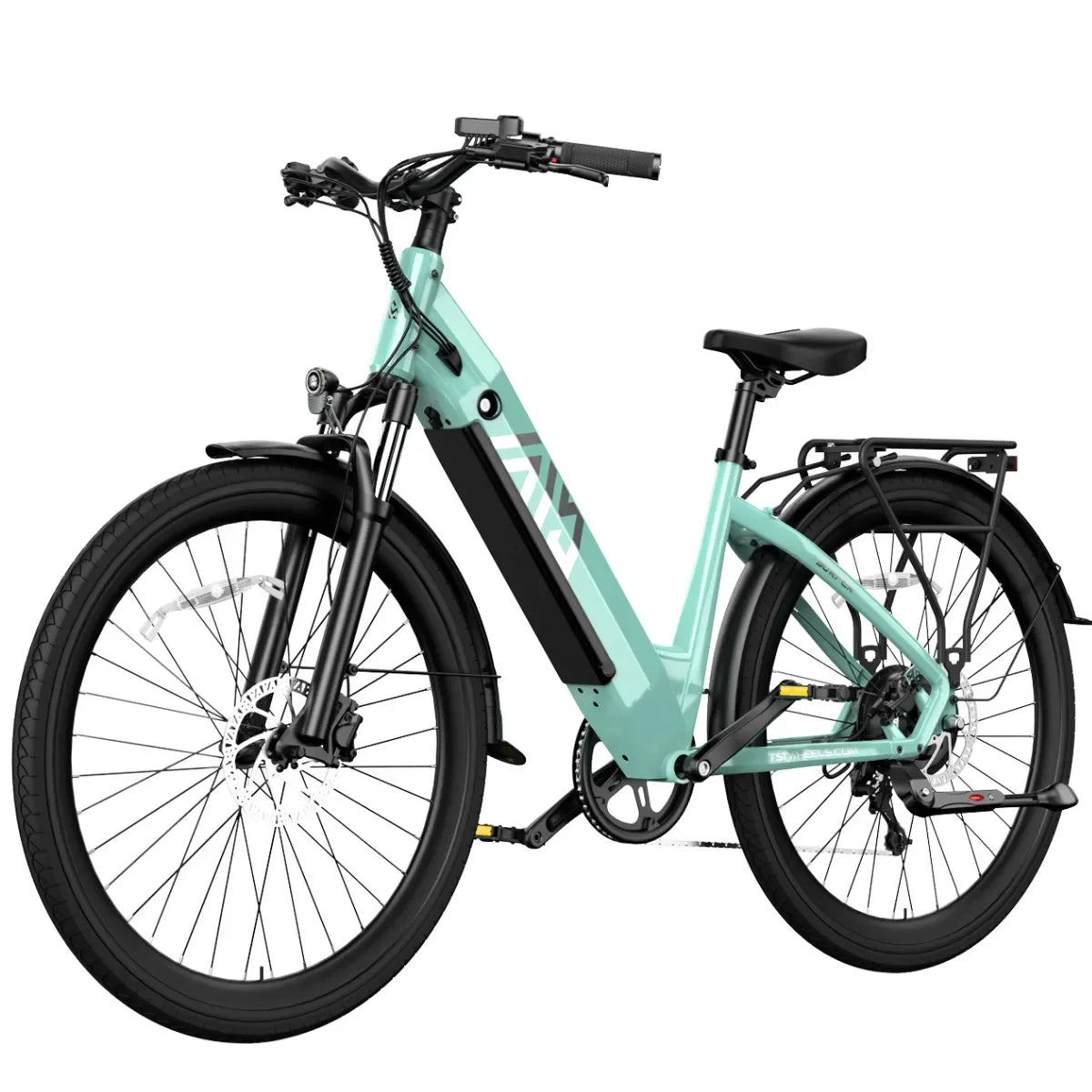
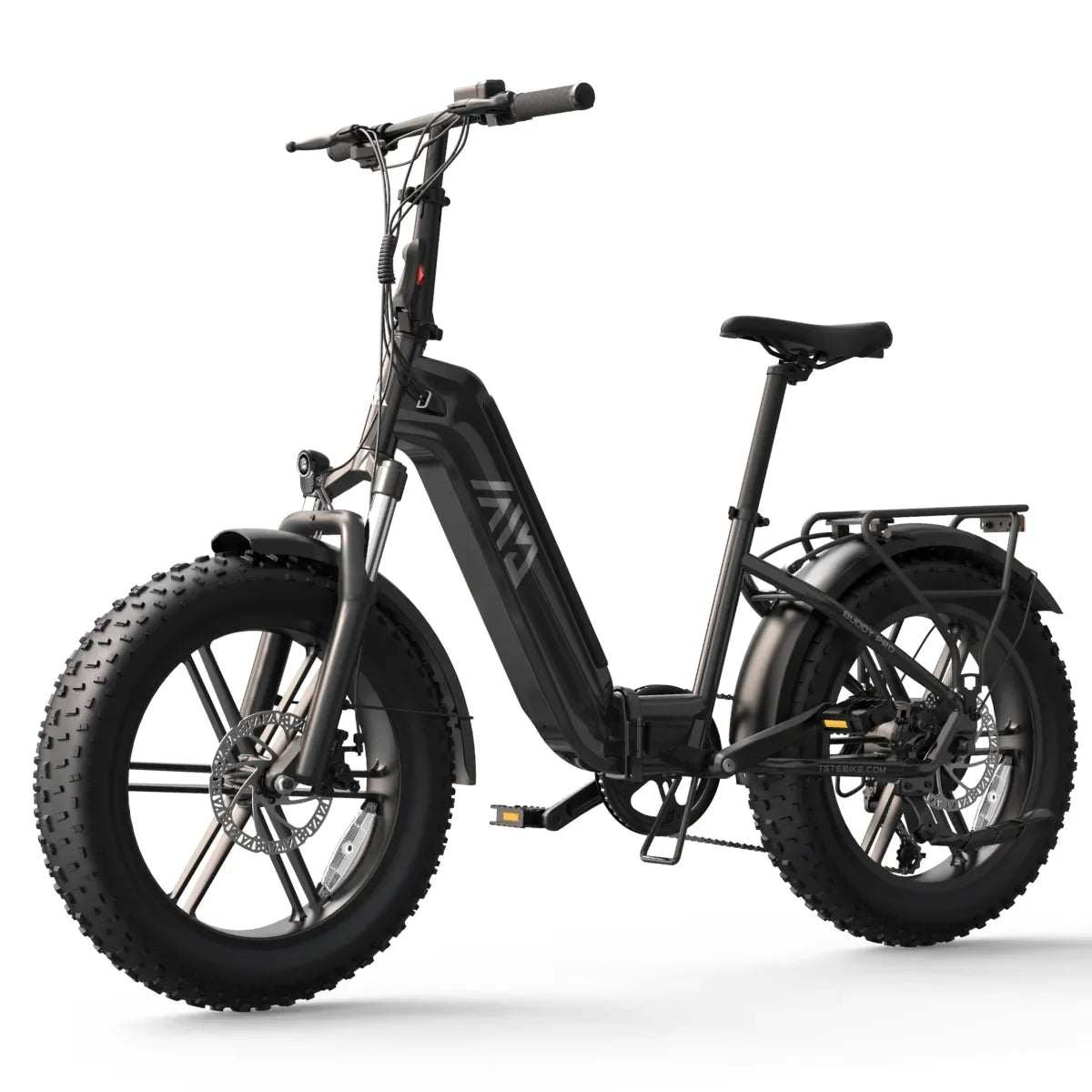
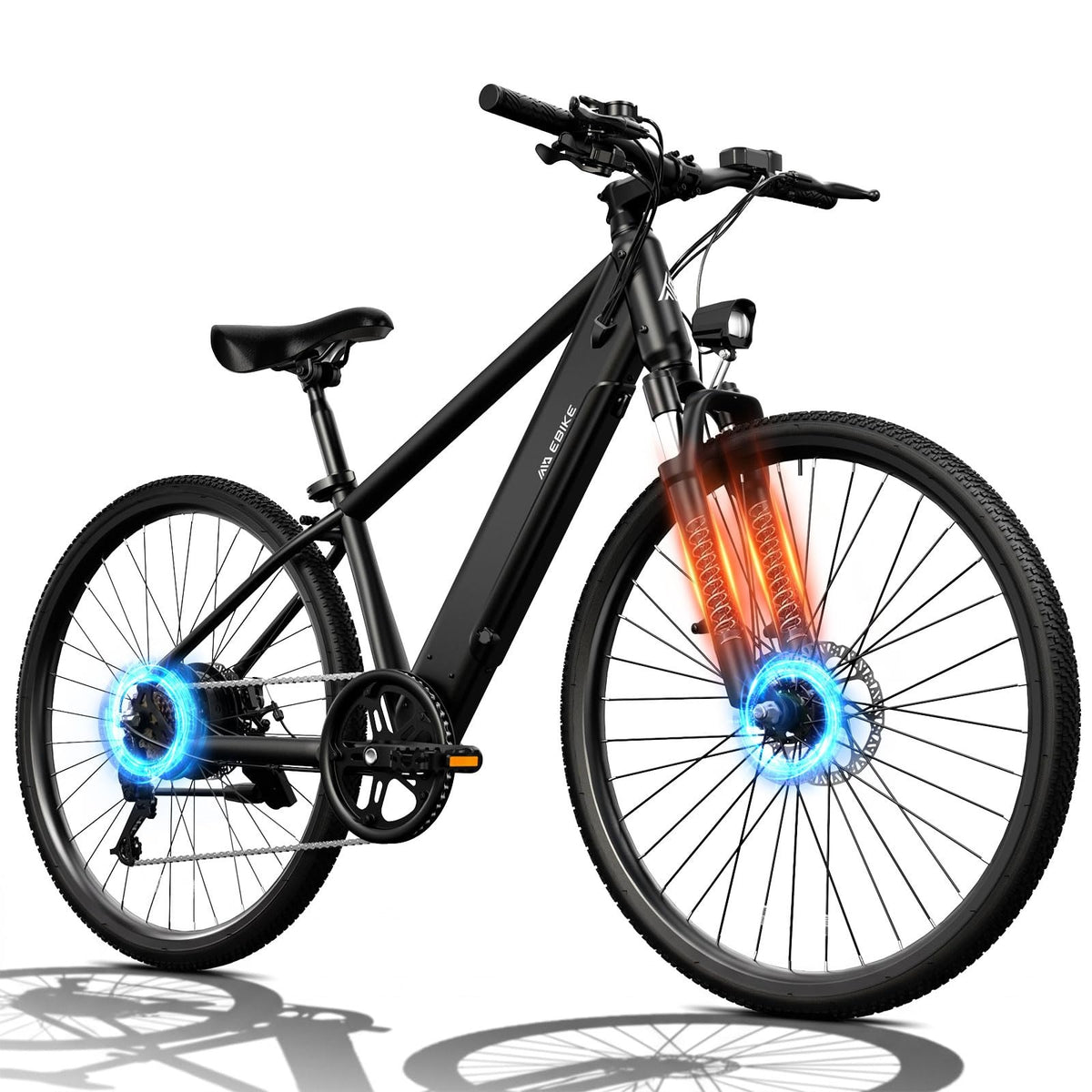
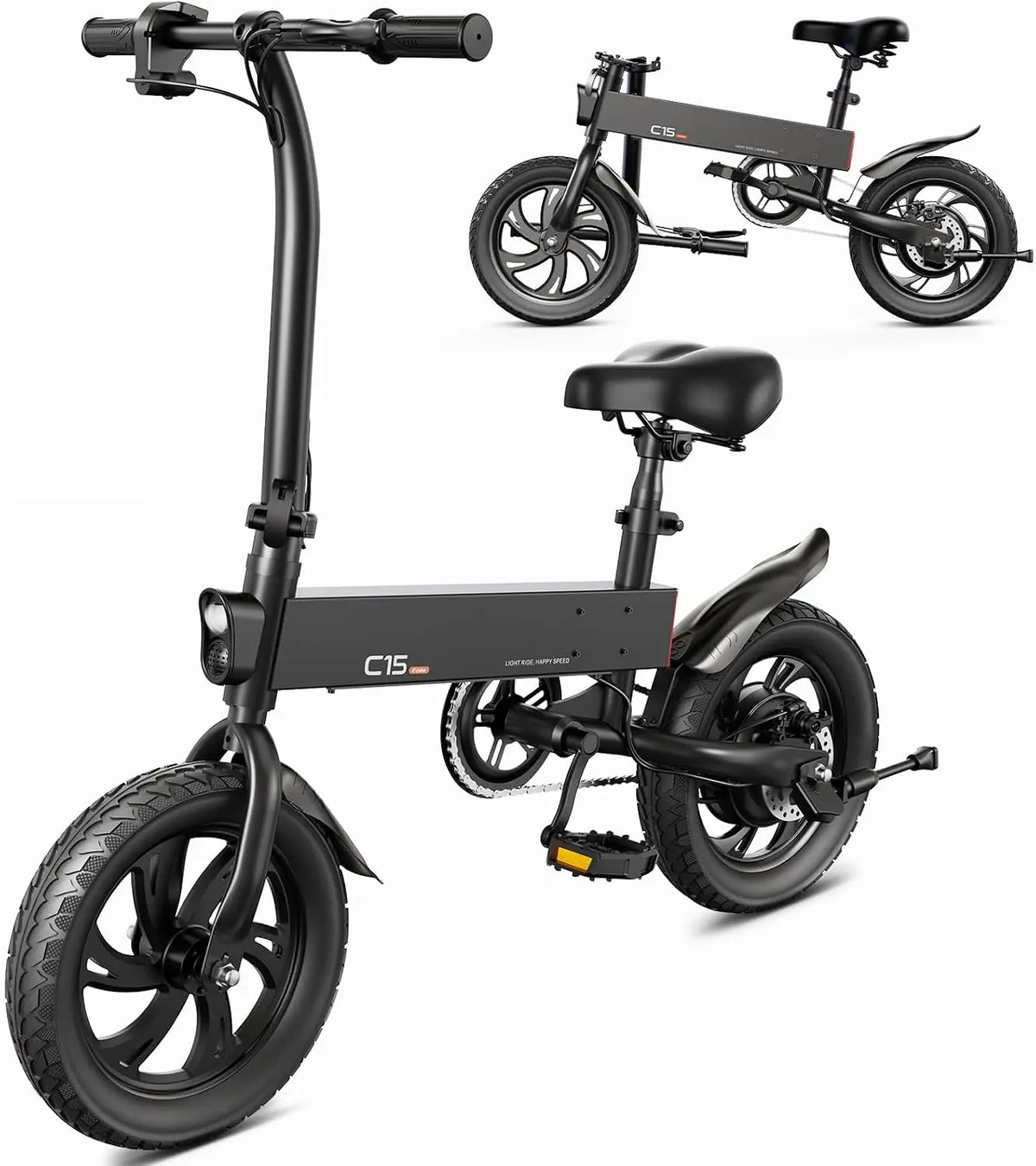
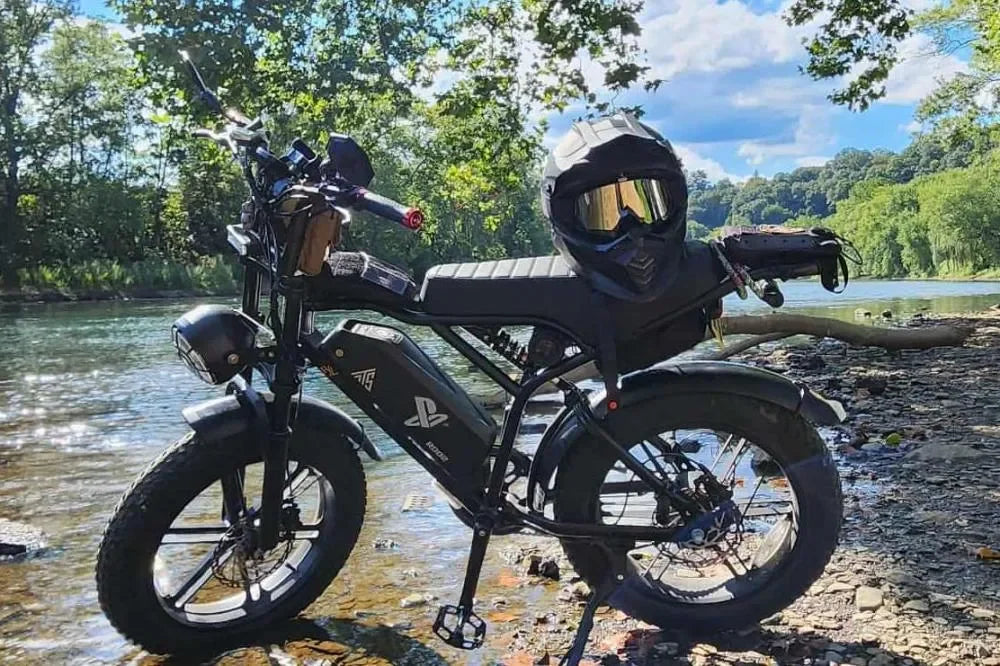
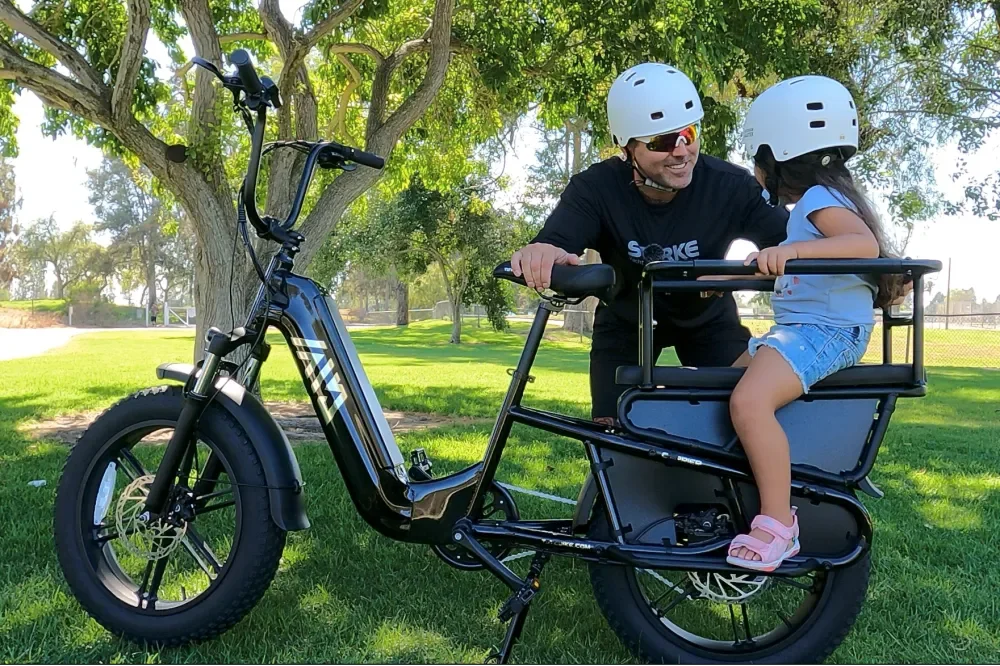
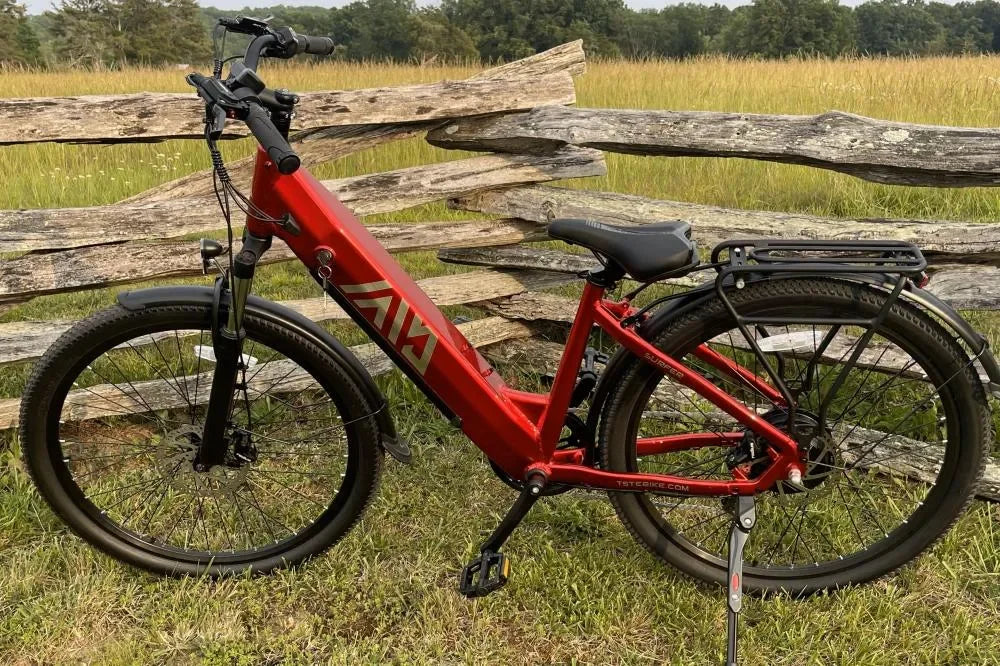

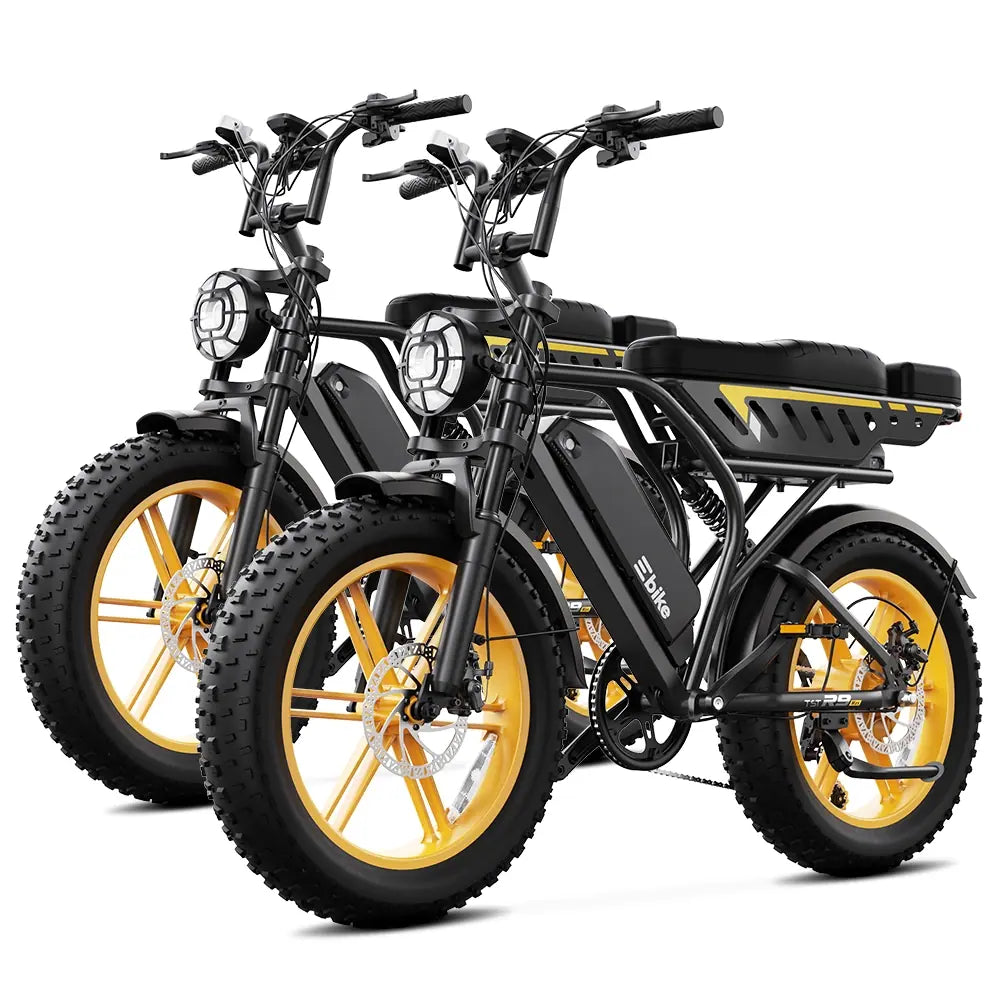

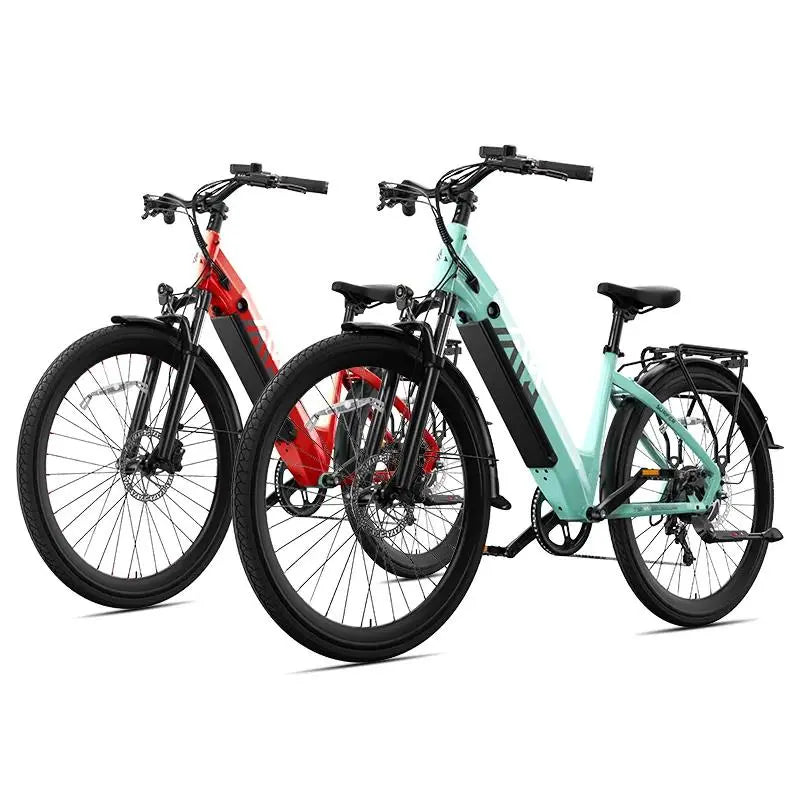
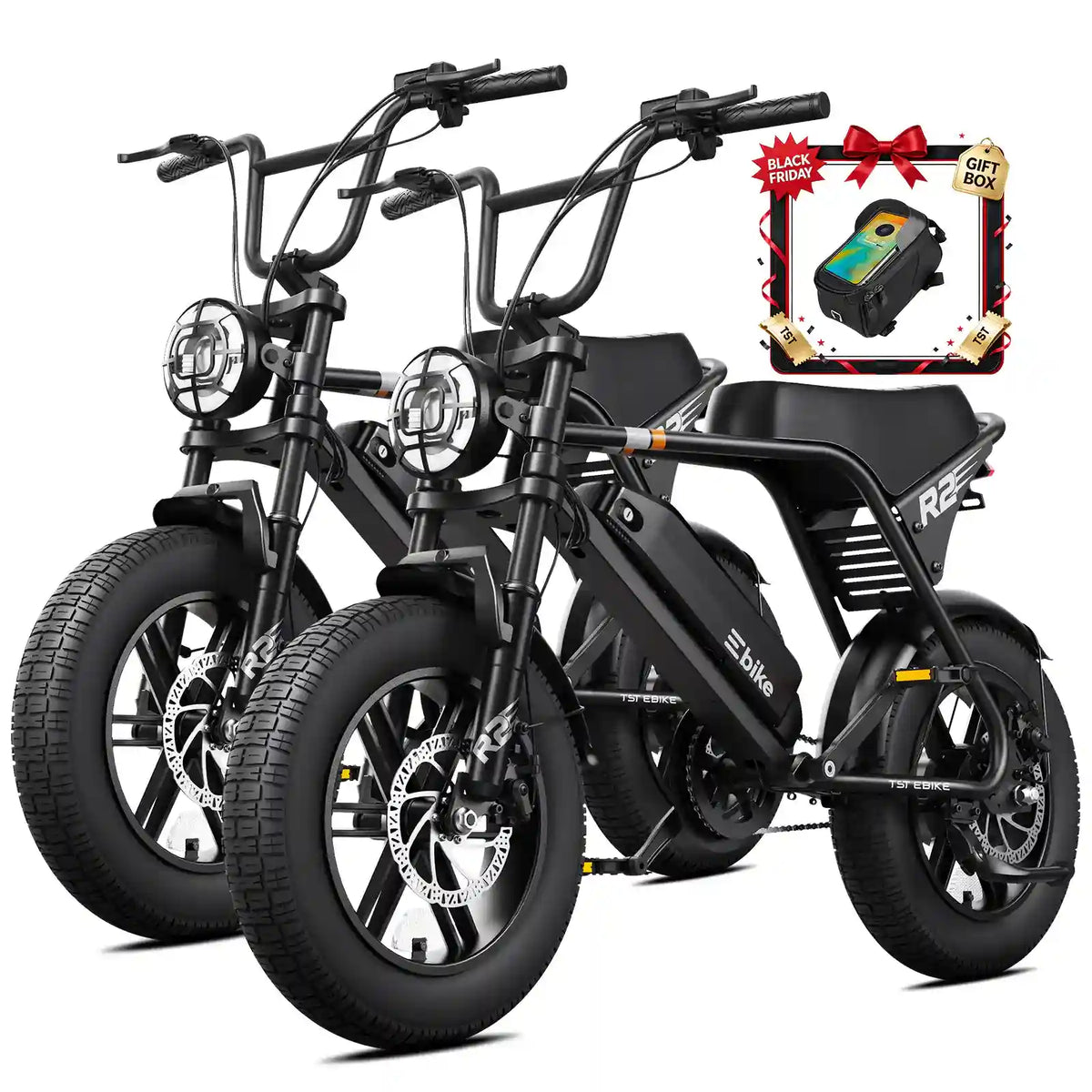


An electric bike’s range depends on battery capacity, pedal assist level, rider weight, terrain, and riding conditions. The TST R9 delivers up to 65 miles on a single battery or 130 miles with dual batteries under pedal assist.
So, what affects an e-bike’s actual range, and how can you get more miles from each charge? Let’s take a closer look.
How Far Can the TST R9 Go on One Charge?
The TST R9 is designed for riders who want more battery capacity and fewer interruptions for charging. It comes in two configurations, making it easier to choose a range that fits your riding habits.
| Features | Single-Battery Version | Dual-Battery Version |
|---|---|---|
| Battery Capacity | 48V 15Ah / 720Wh | 48V 30Ah / 1440Wh |
| Battery Setup | 1 removable battery | 2 removable batteries |
| Max Range | Up to 65 miles (Pedal Assist) | Up to 130 miles (Pedal Assist) |
| Charging Time | 5–6 hours | 5–6 hours per battery |
The single-battery version is worth considering for regular commuting and shorter recreational rides. If your routes are longer or you want more battery capacity for extended outings, the dual-battery version provides twice the listed battery capacity.
Beyond its battery setup, the R9 features a 1500W peak motor, 90 N·m of torque, and five levels of pedal assist. Its full suspension and 20" × 4.0" fat tires also provide a more accommodating setup for varied riding surfaces.
Both batteries are removable, so you can take them off the bike for charging in a suitable location. This is particularly convenient if you do not have an accessible charging point where you store your bike.
The listed range is a maximum pedal-assist estimate, not a guaranteed distance for every ride. Your actual mileage will depend on how and where you ride.
What Determines How Far an Electric Bike Can Go?
Battery capacity matters, but it is only one part of the equation. Several factors affect how quickly an e-bike uses its stored energy.
1. Battery Capacity
Battery capacity is one of the first specifications to check when comparing electric bikes. It is commonly expressed in watt-hours (Wh), which indicates how much energy a battery can store.
You can calculate watt-hours by multiplying voltage (V) by amp-hours (Ah):
Wh = V × Ah
For example, the TST R9 offers two battery configurations:
- Single battery: 48V × 15Ah = 720Wh
- Dual battery: 48V × 30Ah = 1440Wh
A larger watt-hour rating generally means more stored energy and greater range potential, assuming other riding conditions are similar. However, battery capacity alone cannot determine exactly how far you will travel.
2. Pedal Assist Level and Riding Speed
The level of motor assistance affects battery consumption. Higher pedal-assist settings generally require more energy from the battery, while lower settings can help conserve power when conditions allow.
Speed and riding style matter, too. Frequent acceleration, sudden stops, and sustained high speeds can increase energy use. On a long ride, choosing a comfortable, steady pace can help make better use of your available battery capacity.
3. Rider Weight and Cargo
The total weight carried by an e-bike includes the rider, the bike, and any additional cargo. More weight can require more motor assistance, particularly when starting from a stop or climbing a hill.
If you are planning a longer ride, consider carrying only what you need. A lighter load can help reduce the demand on the motor.
4. Terrain and Road Conditions
A flat, paved route usually places different demands on an e-bike than a route with frequent climbs, loose gravel, or rough surfaces.
Climbing hills requires additional effort from both the rider and motor. Uneven surfaces can also increase rolling resistance. If your route includes challenging terrain, allow for a larger battery reserve rather than planning around the maximum advertised range.
5. Weather and Tire Pressure
Cold temperatures, strong headwinds, and other weather conditions can affect battery performance and energy use. Tire pressure matters as well. Underinflated tires create additional rolling resistance, which may reduce range.
Check the recommended tire pressure for your bike and inspect your tires before longer rides. These small habits can make everyday riding more efficient.

How Does Battery Capacity Affect E-Bike Range?
When comparing battery options, look at watt-hours rather than relying on voltage or amp-hours alone. Voltage describes the electrical potential of the battery, while amp-hours describe its charge capacity. Watt-hours combine both values to provide a clearer picture of stored energy.
The TST R9's dual-battery configuration increases total capacity from 720Wh to 1440Wh. That gives the bike twice the listed battery energy of the single-battery version and supports its higher maximum pedal-assist range.
For riders whose daily routes are relatively short, the single-battery version may be sufficient. Those who regularly plan longer outings may appreciate the additional energy reserve of the dual-battery setup.
How Long Does It Take to Charge an Electric Bike?
Charging time depends on battery capacity, charger output, and the battery's current charge level.
The TST R9 comes with a 54.6V / 2–3A charger, and its listed charging time is approximately 5–6 hours per battery. Because both batteries are removable, riders can take them off the bike and charge them in a suitable location.
For a more convenient routine, charge the battery after your ride when needed rather than waiting until you are about to leave. Always use the supplied or manufacturer-approved charger, and follow the battery safety instructions. Avoid charging a battery in an unsuitable location or leaving it exposed to extreme temperatures.
How Can You Get More Miles from One Charge?
Even with a large battery, a few practical habits can help you make better use of each charge.
- Choose a suitable pedal-assist level. Use lower assistance when the terrain is flat and conditions allow. Save higher assistance for hills or situations where you need extra support.
- Maintain a steady speed. Avoid unnecessary rapid acceleration and repeated hard stops. A smoother riding style can help manage energy use.
- Check tire pressure regularly. Keep your tires within the recommended pressure range to avoid unnecessary rolling resistance.
- Pack thoughtfully. Carry essential items, but avoid adding weight you do not need.
- Plan your route. Consider hills, road surfaces, wind, and the distance to your destination. Leave enough battery reserve for unexpected detours.
These steps will not guarantee a specific mileage increase, but they can help reduce avoidable energy use and make longer rides easier to plan.
How to Choose an Electric Bike for Longer Rides?
If range is high on your priority list, look beyond the maximum mileage shown on a product page. Consider how far you ride on a typical day, whether you can charge the bike between trips, and how much battery capacity you may need for less predictable routes.
Here are four details worth checking:
- Battery capacity: Compare total watt-hours to understand how much energy the battery can store.
- Removable batteries: A removable design can make charging more convenient when a bike cannot be parked near an outlet.
- Charging time: Check how long the battery takes to recharge and whether that fits your schedule.
- Riding comfort: Suspension, tire size, and overall fit can matter on longer rides, especially when road surfaces vary.
The TST R9 offers a practical choice between two battery configurations. The single-battery version provides up to 65 miles of pedal-assist range, while the dual-battery version offers up to 130 miles under the stated conditions.
Ready to find the right range for your rides? Explore the TST R9 and compare its single- and dual-battery options.
Frequently Asked Questions
1. How Many Miles Can an Electric Bike Go on Average?
Most standard e-bikes can travel around 20–60 miles per charge, while models with larger batteries may reach 50–120 miles or more under favorable riding conditions. Actual range varies with battery size, pedal assist level, rider and cargo weight, terrain, speed, and weather.
2. Does Using the Throttle Drain an E-Bike Battery Faster?
Yes. Throttle-only riding generally uses more battery energy than pedal assist because the motor provides all the propulsion instead of sharing the workload with the rider. As a rough guide, throttle-only range may be around half the distance available with pedal assist, although the difference varies with speed, terrain, rider weight, and battery capacity.
3. Does a Bigger Battery Mean a Longer E-Bike Range?
Generally, a battery with a higher watt-hour capacity stores more energy and can provide greater range potential when other conditions are similar. However, a larger battery does not guarantee a fixed distance. Riding style, terrain, speed, and total load still matter.
4. How Long Does an Electric Bike Battery Last on One Charge?
That depends on the battery's capacity and how much energy the motor uses during a ride. For example, the TST R9 is listed for up to 65 miles with its 720Wh single-battery setup and up to 130 miles with its 1440Wh dual-battery setup under pedal assist.
5. How Long Does It Take to Fully Charge an E-Bike Battery?
Charging time varies with battery capacity and charger output. The TST R9 uses a 54.6V / 2–3A charger, with a listed charging time of approximately 5–6 hours per battery.
6. Is a Dual-Battery Electric Bike Worth It?
A dual-battery e-bike can be useful for riders who regularly cover longer distances or want more energy available between charges. If your daily rides are shorter and you can recharge regularly, a single-battery model may be enough. The TST R9 offers both options, so you can choose based on your typical riding distance and charging routine.

Leave a comment
This site is protected by hCaptcha and the hCaptcha Privacy Policy and Terms of Service apply.