

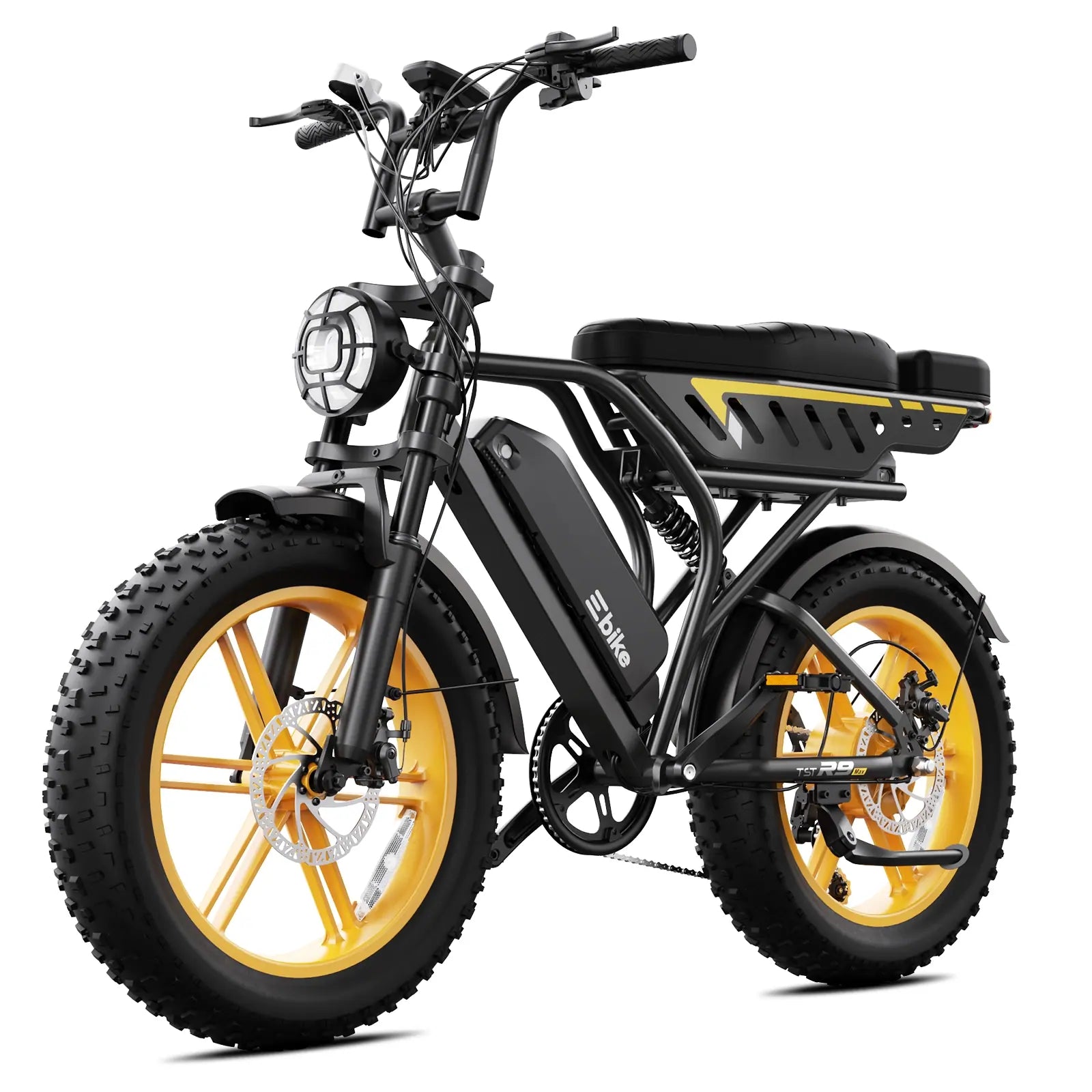
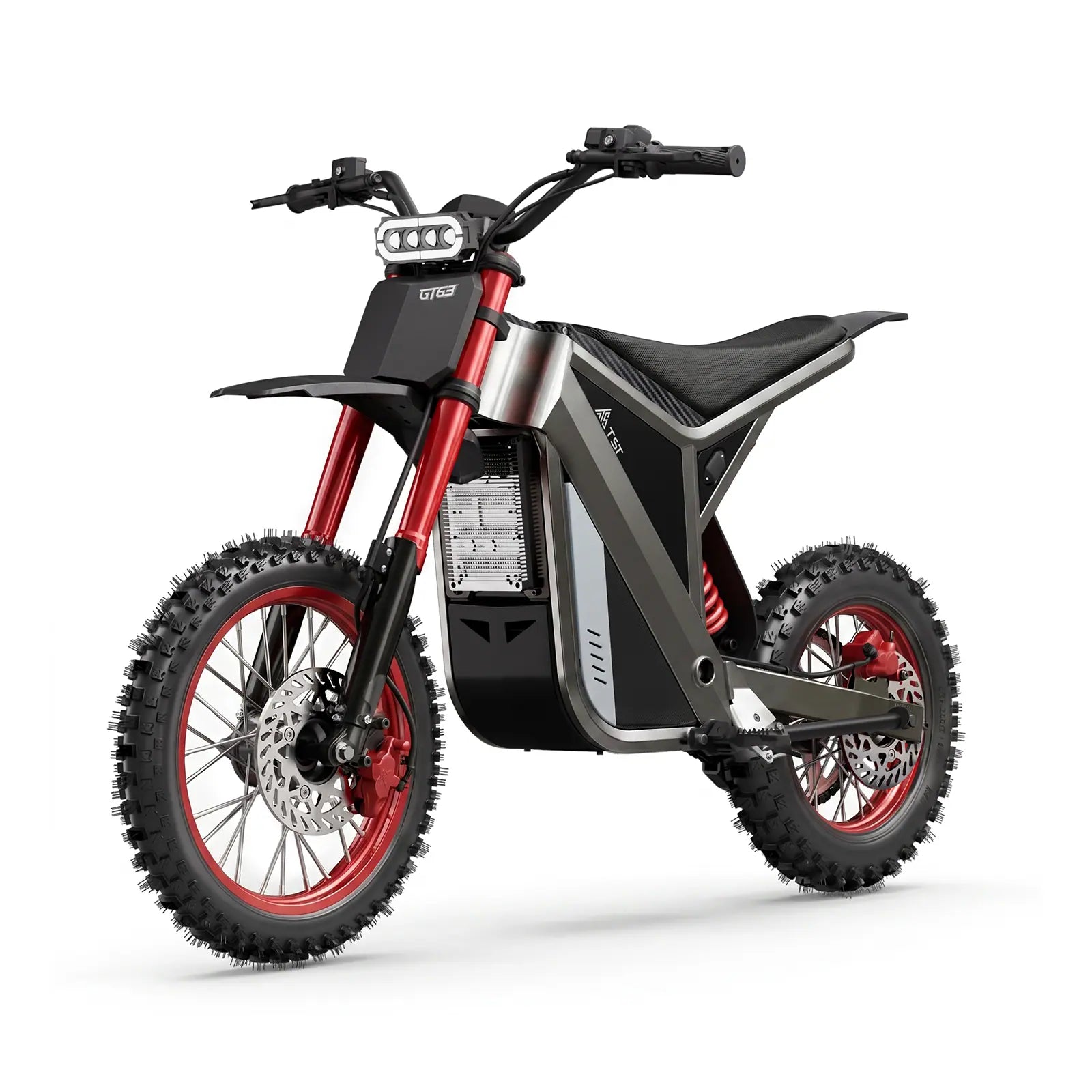









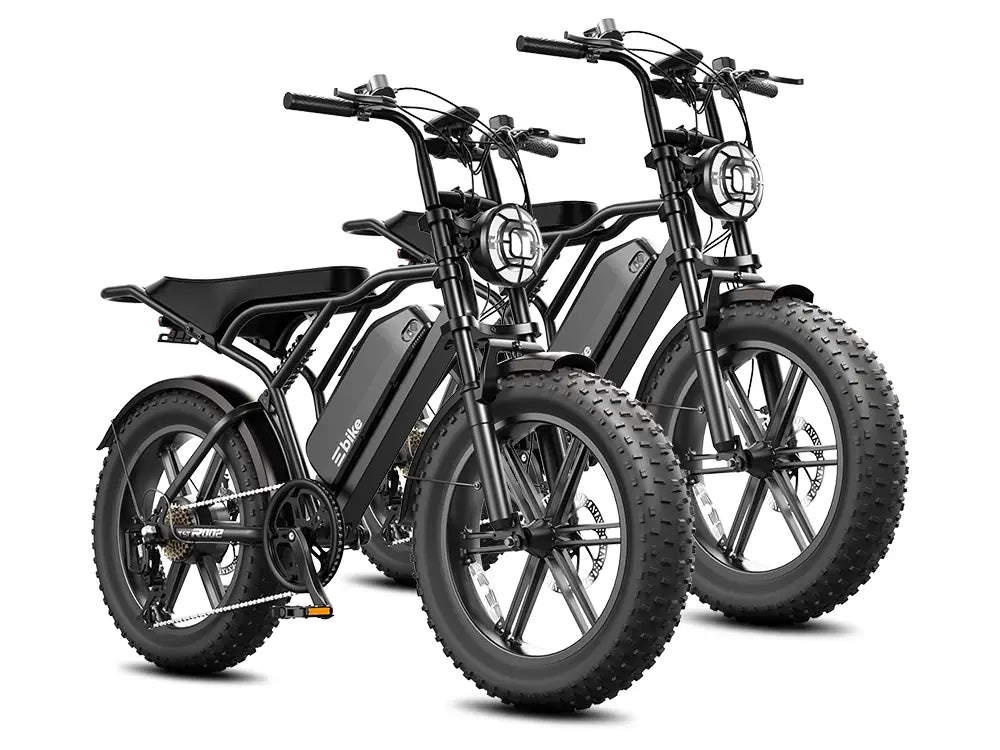
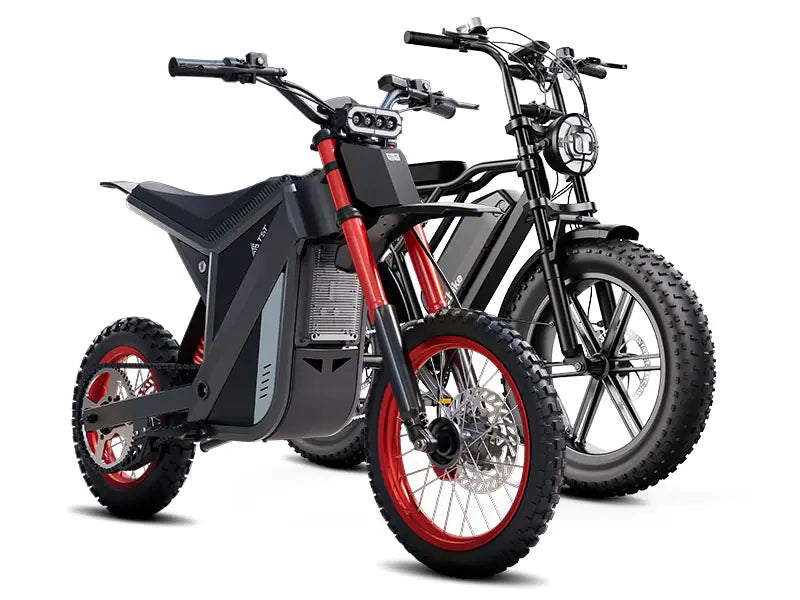

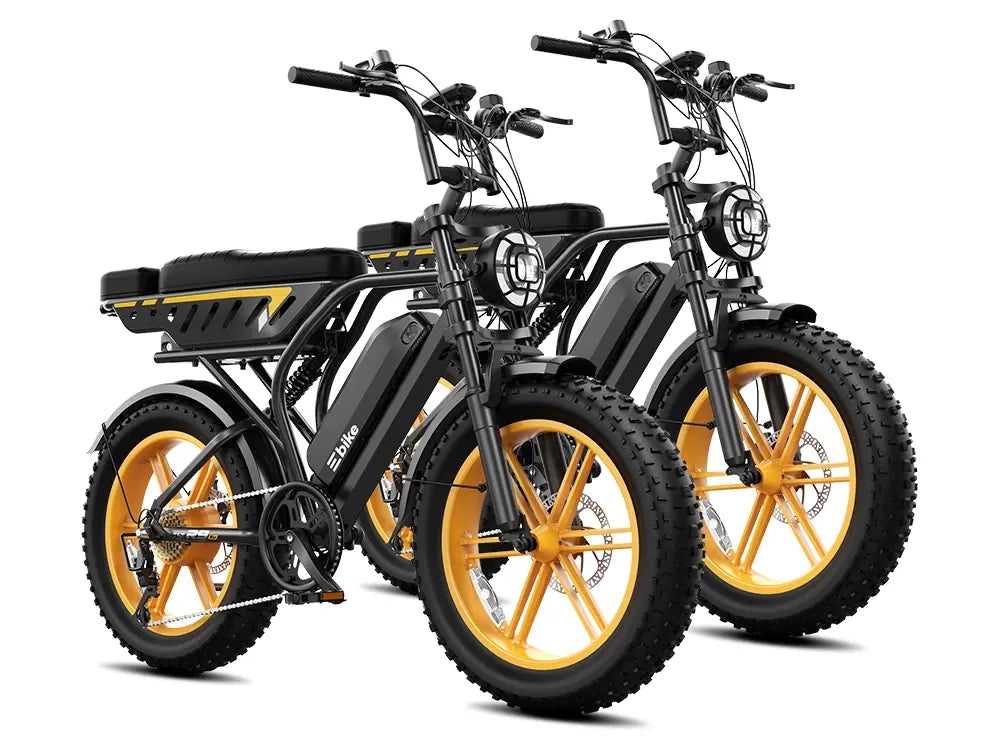

For high-torque cargo e-bikes, a reinforced chain drivetrain is usually the more practical choice because it tolerates shock loads, supports derailleur gearing, and costs far less to repair. Belt drives are clean and quiet, but a properly maintained thick KMC chain offers stronger field-serviceability and lower replacement cost for demanding 1,500W riding.
heavy duty cargo ebike maintenance checklist
What Makes Cargo E-Bike Drivetrain Wear Different?
Cargo e-bike drivetrain wear is driven by torque spikes, load weight, contamination, and shifting under power—not simply mileage. A loaded bike starting uphill can place several times more stress on chain pins, rollers, teeth, and derailleur pulleys than a lightly loaded commuter bike.
A conventional bicycle drivetrain was designed around human power that rises and falls smoothly. A high-power cargo e-bike faces a different duty cycle: hard launches, steep climbs, stop-and-go traffic, rough pavement, rider pedaling torque, motor assistance, and potentially 100 pounds or more of cargo.
The engineering issue is not merely “chain stretch.” Chains do not literally elongate like rubber bands in normal use. What riders call stretch is progressive clearance growth at the pin-and-bushing interfaces. Abrasive dust combines with lubricant and becomes grinding paste. That paste wears pins, rollers, and sprocket teeth until the chain’s pitch no longer matches the teeth precisely.
From a workshop perspective, the worst wear pattern is easy to recognize: a rider applies maximum power while climbing, shifts late under load, and continues riding with a dry or dirty chain. The chain may not break immediately, but every high-load articulation accelerates pin wear.
For TST EBike riders using high-output electric assistance, drivetrain maintenance should be treated as a load-management task, not a cosmetic cleaning chore.
How Do Belt Drives and Chains Transfer Power?
A chain transfers force through metal rollers engaging sprocket teeth, while a belt uses carbon-fiber-reinforced teeth engaging matched pulleys. Chains tolerate derailleur movement and easy gearing changes; belts require precise alignment, fixed tension, and a compatible frame structure.
A Shimano-compatible chain is a linked mechanical system. Its rollers seat into cassette and chainring teeth, allowing the chain to run across multiple rear sprockets. This makes a wide gear range possible and lets riders select a low gear before a heavy uphill start.
A belt drivetrain uses a toothed belt and dedicated front and rear pulleys. It is not a friction belt in the automotive sense; its teeth interlock with pulley teeth. That gives it clean, quiet operation, but it also demands accurate belt line, correct tension, and a frame that can open at the rear triangle so the continuous belt can be installed.
This frame requirement is not a minor detail. A chain can be opened with a master link, repaired roadside, shortened, or replaced without altering the frame. A belt requires a belt-split frame and a complete compatible ecosystem: belt, cogs, tensioning setup, and usually an internally geared hub or single-speed arrangement.
For cargo use, the drivetrain choice is also a repair-strategy choice.
Which System Handles 1,500W Torque Better?
A reinforced chain generally offers better high-torque flexibility because it can work with multi-speed gearing, absorb real-world shock events, and be replaced economically. However, whether a 1,500W motor loads the chain directly depends on whether the bike uses a mid-drive or hub-drive layout.
The phrase “1,500W chain load” needs engineering context. Power is not force. Chain tension depends on power and chain speed:
Chain tension=Chain speedPower
At a relatively low 60 rpm cadence with a 46-tooth chainring, chain speed is approximately 0.58 m/s. If the full 1,500W passes through the crank drivetrain—as it can in a mid-drive system—the theoretical steady chain pull is roughly 2,570 N, or about 262 kgf, before transient shock loads.
At 90 rpm, the same power produces less chain tension because chain speed rises. Selecting a lower gear and maintaining cadence is not just easier on the legs; it materially reduces drivetrain force.
Tensile strength is a break-test value, not a recommended continuous operating load. A chain with a higher listed breaking strength is not automatically better if its width, shifting profile, lubrication state, and sprocket compatibility are wrong. KMC publishes tensile-strength specifications for some chain categories, but the exact value must be confirmed by the part number—not assumed from chain thickness alone.
That distinction matters for TST EBike: a thick KMC chain can be a rational high-value solution, but responsible technical communication should never invent a tensile-strength number that the specific chain manufacturer has not published.
Why Does a Thicker KMC Chain Offer Economic Value?
A thicker KMC chain can reduce replacement cost over the life of a high-torque cargo e-bike because it uses common service parts, handles repeated load cycles well, and can be replaced independently from the chainring and cassette when wear is detected early.
The real economic advantage is not that a chain never wears. It is that chain wear is predictable, inspectable, and inexpensive to manage.
A reinforced KMC chain typically brings more robust plates and pins than a lightweight performance chain designed primarily for minimum mass. More plate material can improve resistance to lateral flex and side-loading. Stronger pin retention and durable roller interfaces matter when a cargo bike hits potholes while the rider is applying power.
But “thicker” should not be misunderstood. The chain must still match the drivetrain speed count and tooth profile. Installing an overly wide chain on a narrow multi-speed cassette can cause poor shifting, noise, or derailment. The correct chain is the one that matches the cassette, chainring, derailleur, and expected torque—not simply the heaviest chain on the shelf.
The replacement-cost advantage becomes clear when comparing service events:
-
A worn chain can often be replaced before it damages the cassette.
-
A master link can restore mobility after a chain failure.
-
Local bike shops commonly stock compatible chain tools and replacement links.
-
A rider can carry a compact chain tool, quick link, and disposable gloves.
-
A belt failure is less likely in normal clean commuting, but it is not usually a roadside patch job.
Independent drivetrain testing has found that chain efficiency can be slightly higher at lower power levels, while belt efficiency may become competitive at higher rider output under controlled conditions. Real cargo-bike conditions, however, add dirt, load, gearing, and service access to the equation.
How Does Bending Resistance Affect Chain Life?
Bending resistance matters because every chain link articulates as it enters and leaves a sprocket. Strong plates resist lateral deformation, while durable pins and rollers resist the internal wear that causes pitch growth and eventually damages cassette teeth.
Cargo-bike chains do not fail only by snapping. More commonly, they lose efficient engagement gradually. Each link bends around the chainring, jockey wheels, cassette, and rear derailleur path thousands of times per ride. Add lateral movement during cross-chaining and imperfect shifts, and the outer plates experience repeated flexing.
A thick chain plate can resist bending better than an ultralight plate, but plate thickness alone does not determine durability. Pin diameter, heat treatment, roller material, bushing geometry, corrosion protection, and factory tolerances all matter.
Here is the factory-floor rule I use when inspecting a drivetrain: look for wear patterns, not just dirt. A chain that looks clean can still be worn beyond service limits. Use a quality chain checker, measure regularly, and replace before the chain begins to climb or skip under load.
For a high-torque TST EBike setup, inspect the chain after the first 100 to 200 miles of hard cargo use. This early inspection catches incorrect tension, poor shifting adjustment, abnormal wear, or contamination before it becomes an expensive cassette replacement.
What Maintenance Prevents Premature Chain Wear?
The most effective chain-wear prevention is regular cleaning, correct lubrication, early wear measurement, and reducing motor power during shifts. High-torque riders should clean after wet or dusty rides and replace a worn chain before it damages the cassette and chainring.
Do not over-lubricate. Excess wet lube attracts dirt, which becomes abrasive paste. Apply lubricant to the rollers, rotate the cranks, let it penetrate, then wipe the outside plates until they look nearly dry. The lubricant belongs inside the joints, not on the exterior where it collects grit.
Use this practical service rhythm:
-
Wipe the chain after dusty, wet, sandy, or salted-road rides.
-
Clean and relubricate when the chain feels gritty, sounds dry, or leaves dark residue.
-
Check chain wear at least monthly for frequent cargo riding.
-
Reduce assist pressure momentarily before shifting.
-
Shift before a steep climb rather than shifting after motor load peaks.
-
Replace the chain before excessive elongation wears sprockets into hooked “shark-fin” profiles.
Never pressure-wash directly into chain joints, bottom-bracket seals, hubs, or derailleur pivots. High-pressure water can push contamination past seals and strip lubricant from areas that need it most.
Can Riders Reduce Peak Chain Load While Riding?
Yes. Riders reduce peak chain load by downshifting before stops and climbs, spinning at a higher cadence, easing off motor power while shifting, and avoiding full-throttle starts in tall gears. These habits can extend the life of chains, cassettes, and chainrings.
The most damaging moment is often the loaded restart. Imagine a cargo bike stopped on an incline in a high gear. The rider applies full throttle and stands on the pedals. At that instant, chain tension rises sharply while the chain is moving slowly—the exact condition that produces high force.
Select a lower gear before stopping. Start smoothly, establish wheel speed, then shift upward only after the drivetrain is rotating freely. A cadence near 70 to 90 rpm generally lowers chain tension for a given transmitted power compared with grinding at 40 to 50 rpm.
This is the operational advantage of a chain-based multi-speed drivetrain: it lets the rider choose mechanical leverage. Treat gearing as torque control, not just speed selection.
Where Do Chains and Belts Fail in Real Cargo Use?
Chains usually fail through wear, corrosion, poor lubrication, bent links, or shifting under load. Belts more often fail through misalignment, incorrect tension, debris damage, pulley wear, or sudden tooth damage that requires replacing the entire belt.
Chains provide warning signs: noise, stiff links, poor shifts, measurable wear, skipping under load, and hooked sprocket teeth. Most of these symptoms appear gradually and can be corrected with routine servicing.
Belts are exceptionally clean and can deliver long service life in aligned, dry, urban conditions. Yet they are not maintenance-free. Belt tension and pulley alignment still require inspection. Small stones or debris entering a belt-pulley interface can cause damage, and a belt cannot be shortened or repaired with a roadside master link.
For riders who value silent commuting and have an internal-gear setup, a belt remains a strong option. For riders hauling cargo, traversing uneven terrain, requiring broad gearing, and prioritizing affordable repairs, a reinforced chain is often the more resilient system.
Is a Chain Drivetrain More Affordable Over Time?
A chain drivetrain is usually more affordable to maintain because chains, quick links, cassettes, and chainrings are widely available in many price tiers. Belt systems may last longer in clean conditions, but replacement components and frame compatibility can increase repair cost.
A belt’s long projected life can be attractive, but total ownership cost must include the system around it. A belt is not a universal replacement part. The pulley sizes, belt length, frame split, tensioner setup, and internal gearing arrangement must all be correct.
A chain drivetrain separates wear into manageable stages. Replace the chain early, and the cassette may survive several chain cycles. Ignore a worn chain, and it will accelerate wear across the entire drivetrain.
This is why TST EBike’s thick KMC chain approach makes practical sense for high-power value-focused riders: it directs budget toward a robust, replaceable wear component rather than locking the rider into a higher-cost proprietary transmission format.
What Are TST EBike Expert Views?
“At TST EBike, we do not judge a drivetrain by how clean it looks on day one. We judge it by how it behaves after loaded starts, steep climbs, wet roads, and thousands of power-assisted shifts. A reinforced KMC chain is not magic—it still needs cleaning, lubrication, and timely replacement. But it gives cargo riders something extremely valuable: a durable mechanical link that can be inspected, adjusted, repaired, and replaced without turning routine wear into a major ownership expense.”
That perspective reflects the real difference between laboratory durability and ownership durability. A component may have an impressive advertised lifespan, but the best solution for a working cargo e-bike must also be available, repairable, compatible with wide-range gearing, and economical after the warranty period.
Could a Belt Still Be the Right Choice?
A belt can be the right choice for riders who prioritize clean clothing, quiet operation, minimal lubrication, and predictable urban commuting. It is less ideal when the rider needs derailleur gearing, frequent roadside repairability, or the lowest replacement cost under severe cargo loads.
Choose a belt when your use is mostly paved commuting, your drivetrain uses internal gearing, your frame is belt-compatible, and you prefer low-maintenance cleanliness over low-cost parts availability.
Choose a reinforced chain when you ride with heavy cargo, need broad gear ratios, face steep grades, operate in mixed terrain, want easy service access, or expect to replace wear parts economically.
The technical winner is not universal. The operational winner depends on how power reaches the rear wheel, how much weight the bike carries, how often the rider shifts, and whether repairability matters more than spotless convenience.
Conclusion
For a high-torque cargo e-bike, durability is not just a tensile-strength number on a specification sheet. It is the combination of appropriate gearing, a reinforced chain, clean lubrication, controlled shifting, and early replacement before secondary components wear out.
A belt offers a refined, clean solution for the right rider. But for demanding cargo duty, the thick KMC chain used by TST EBike delivers a more serviceable and economical drivetrain strategy: handle power intelligently, inspect wear early, and replace the affordable component before it turns into a costly system repair.
FAQs
Does 1,500W automatically mean the chain sees 1,500W?
No. A mid-drive can transmit motor power through the chain, while a hub motor sends power directly to the wheel. Rider pedaling still loads the chain in either setup.
How often should a cargo e-bike chain be replaced?
Replace it based on measured wear, not a fixed mileage number. Wet weather, sand, heavy loads, and aggressive shifting can shorten service life dramatically.
Can I use any KMC chain on a Shimano drivetrain?
No. Match the chain to the drivetrain’s speed count, cassette spacing, and manufacturer compatibility guidance.
Why does my chain skip only when climbing?
High torque exposes worn chain-and-cassette tooth engagement. Measure chain wear and inspect the cassette and chainring for hooked teeth.
Should I lubricate a chain after every ride?
Not necessarily. Wipe it after harsh rides and lubricate when it is dry, noisy, gritty, or after cleaning. Over-lubrication attracts abrasive contamination.
Can a belt drivetrain be repaired on the trail?
Usually not in the way a chain can. A damaged belt normally needs a correct replacement belt and a compatible split-frame installation process.

Leave a comment
This site is protected by hCaptcha and the hCaptcha Privacy Policy and Terms of Service apply.