


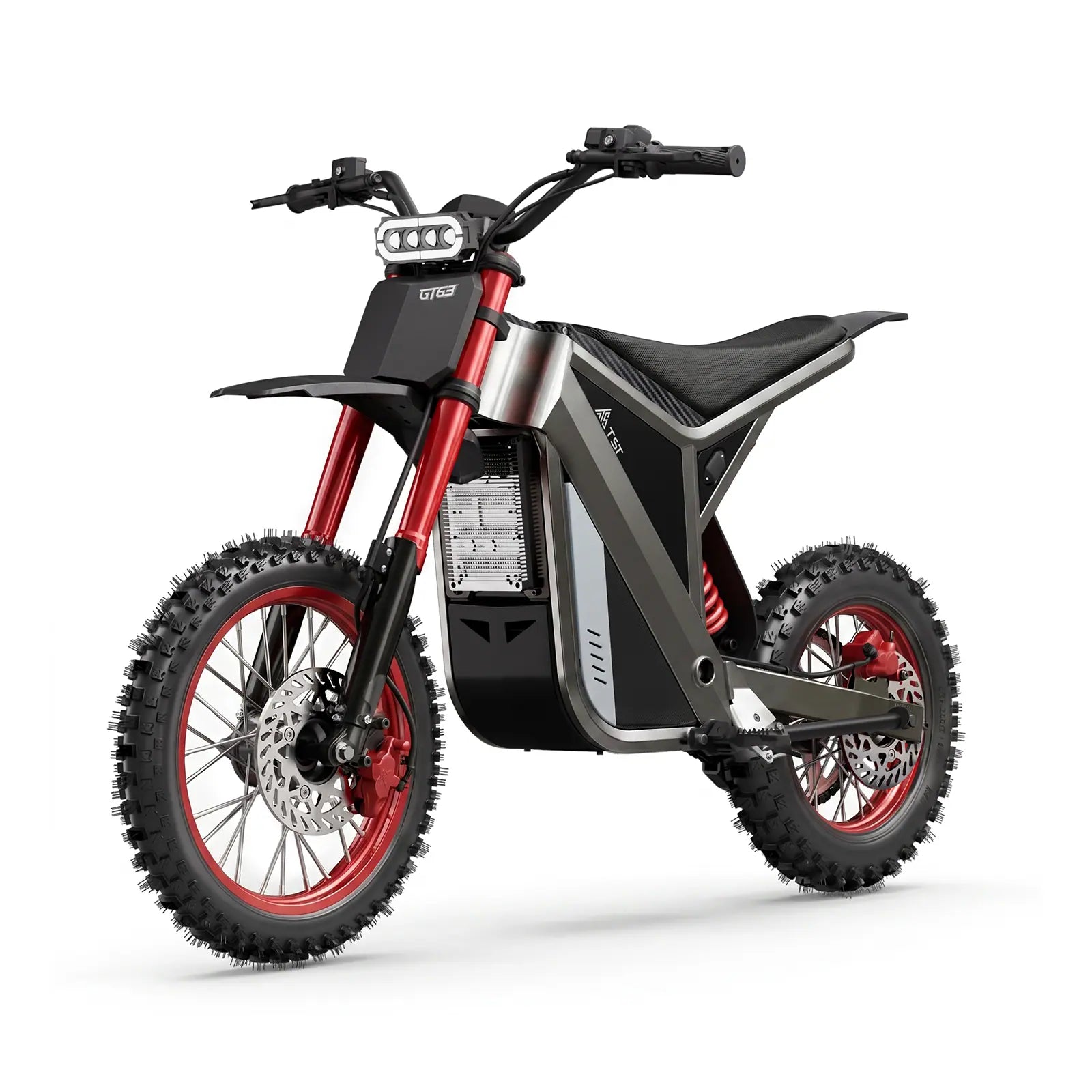














Wheel guards, running boards, foot pegs, and a child seat solve four different problems, and none of them stands in for the others. A wheel guard closes the gap where a small foot, shoelace, or pant leg could reach the spokes or chain; it does nothing to hold a child in position or keep them from falling off the back of the bike. Before you treat any cargo e-bike as "kid-ready," you need to know which of these parts you're missing, and whether the exact combination you're buying is one the manufacturer actually stands behind for your bike.
This matters because cargo e-bike listings often bundle these parts together and describe the result as a passenger-ready package. That bundling is a convenience decision by the seller, not a safety certification. The U.S. Consumer Product Safety Commission's Micromobility Information Center does not certify passenger kits or bless specific accessory combinations; it tells riders to follow the manufacturer's stated weight and age limits and to use only accessories confirmed by the device maker to work safely with that specific bike. That distinction — manufacturer confirmation versus generic marketing language — is the crux of this decision.
What a wheel guard is for, and what it can't do
A wheel guard (sometimes sold as a spoke guard or wheel guard set) is a mesh or panel barrier mounted over the exposed sides of the rear wheel and drivetrain. Its single job is intrusion protection: keeping a passenger's foot, ankle, loose shoelace, or clothing hem from reaching the spinning wheel or moving chain. Independent accessory guides that cover multiple cargo-bike brands describe this the same way — a barrier for feet and legs, not a load-bearing or restraint component.
A wheel guard does not:
-
keep a child seated or balanced on the bike
-
provide a place to rest feet during the ride
-
count toward a rack's weight rating
-
substitute for a harness, backrest, or enclosed seat
Manufacturer accessory listings usually reflect this narrow scope. TST's Carrier Wheel Guard Set is sold and priced as a standalone component fitted to the TST Carrier 20 rear wheel area, separate from the seat, seat pad, or running boards, which are listed and priced as their own individual products. Treating the wheel guard as sufficient on its own — because it's the part most associated with "child safety" in search results — skips the positioning and restraint problem entirely.
Running boards versus foot pegs: they are not interchangeable
Running boards and foot pegs both give a passenger somewhere to put their feet, but they distribute weight and require balance differently, and manufacturers do not treat them as drop-in substitutes for each other.
A running board is a flat, fixed platform, usually mounted low near the rear wheel or rack, wide enough for a child's full foot or both feet together. It requires less active balance from the passenger because the foot rests on a stable surface rather than gripping a point. Foot pegs are small cylindrical or folding posts that a passenger's foot hooks onto individually; they demand the rider actively hold a foot position, which is workable for an older child or adult passenger with some riding experience but is a poor fit for a young or first-time passenger who may not keep their feet clear of the wheel without a full platform underneath them. General accessory guidance covering cargo bikes across brands frames rails and running boards as the baseline expectation once you're carrying a child or adult passenger, specifically because they combine a handhold and a planted foot position in one system, whereas pegs alone do not.
TST's own accessory language for cargo-style passenger kits describes foot pegs as paired with a padded rear seat and grab handles, aimed at a passenger who can hold a stable position rather than a young child who needs to be secured. Neither running boards nor pegs, on their own, authorize carrying a child. They solve foot placement — one part of the passenger problem.
Passenger positioning is a separate requirement from foot protection
Foot protection and foot support answer "where do the feet go and stay safe." They don't answer "what keeps the child on the bike." That's the job of an approved seat, backrest, and harness or restraint system, matched to the child's age and weight and mounted to a point on the frame or rack the manufacturer has rated for that use.
Other cargo e-bike manufacturers that publish detailed passenger guidance are explicit that a full system requires seating, a handhold, foot support, and foot/leg protection together, plus, for younger children, a compatible child seat chosen for age and weight rather than assumed from the frame alone; a wheel guard or running board is listed as one component among several, not a stand-in for the others. That four-or-five-part framework is a useful checklist regardless of brand: if any one of seating, handhold, foot support, or wheel/chain protection is missing, the setup is incomplete, even if the bike "has" the other three.
Which exact accessory set a specific bike approves
The manufacturer's product listing for the exact bike model is the only reliable source for which accessories are approved together — not a general cargo-bike buying guide and not a competitor's accessory page. For the TST Carrier 20'' Cargo Electric Bike specifically, the bike ships with a 450 lb total payload capacity and a rear carrier area rated by TST for cargo or passenger use, and the manufacturer sells a matched accessory set for that model: a children's seat, running boards, a seat pad, and a wheel guard set, each listed as an individual product rather than a single locked bundle. A promotional package bundling these parts at no extra cost has appeared with the bike at various times; current pricing, stock, and what's included with a given order should be confirmed on the live product page rather than assumed from any article, including this one.
Two things to verify before assuming this accessory set makes the bike passenger-ready for your situation:
Fit between the specific accessories still matters. A children's seat, seat pad, running boards, and wheel guard set sold for the Carrier 20 are designed to work with that frame and rack; parts from a different TST model or a different brand are not confirmed compatible unless the manufacturer states so directly. Mixing accessory lines is exactly the kind of substitution that turns a documented setup into an undocumented one.
Age and weight limits are set by the accessory, not by the bike's total payload figure. A bike's 450 lb payload capacity describes total capacity across rider, cargo, and passenger combined — it is not the weight limit for a single child seat or running board, which will carry its own, lower limit from the accessory manufacturer or the child seat's own maker. Don't subtract or estimate this number yourself; confirm the specific accessory's rated limit and the manual's combined-load instructions before loading the bike.
What accessories cannot authorize
None of these accessories — individually or as a set — makes carrying a passenger legal or automatically safe. Three separate conditions have to be true at the same time, and accessories only address one of them:
The bike has to qualify as the vehicle type your state regulates the way you intend to ride it. This is a live and specific check, not a marketing claim. In Washington, for example, state law caps a legal "electric-assisted bicycle" at a 750-watt motor and defines three operating classes by top assisted speed; a bike whose motor and top-speed specification exceed those figures does not automatically qualify as an e-bike under state law regardless of how it is marketed or labeled, and a 2026 amendment specifically excludes vehicles capable of exceeding 20 mph on motor power alone from the e-bike definition. A cargo bike specified at 1300 watts and 28 mph, for instance, sits well above the 750-watt cap that Washington law uses to define an e-bike in the first place, which is a materially different legal question from whether it carries CPSC-referenced voluntary safety features. Confirm your own state and local rules directly; power and speed thresholds, helmet rules, and sidewalk or path access vary by state and by class, and some counties add helmet requirements state law does not.
The child has to meet the seat or restraint manufacturer's own age and weight rules. Accessory pages and child-seat manufacturers set these limits independently of the bike's payload rating, and they exist because a young child's balance, grip strength, and reaction time — not just their weight — determine whether a given seat or running-board setup keeps them secure.
The setup has to match what the manual describes as the approved combination for that model. A running board bolted onto a bike it wasn't designed for, or a wheel guard installed without the fasteners specified in the manual, is not the same product as a set on which the manufacturer has published fit and torque instructions. If a manual, packaging insert, or the product listing for your exact model doesn't confirm a given accessory combination, treat it as unverified rather than assuming compatibility because the parts are sold on the same site.
No accessory in this category — wheel guard, running board, or foot peg — substitutes for an approved seat, a working harness or restraint, or confirmation that your state and local rules permit carrying that passenger on that bike in that location. Wheel guards reduce one specific injury pathway; they were never designed to answer the other two questions.
Before you buy or install anything
Work through the requirements in this order, since each step narrows what's actually available to you:
-
Confirm your state and local rules for carrying a passenger, including motor-power and speed thresholds that affect whether the bike even counts as an e-bike, plus any local helmet ordinance.
-
Confirm the exact cargo bike model and variant you have or intend to buy, since payload capacity, rack rating, and approved accessories are specific to that model — not to the brand generally.
-
Confirm the accessory manufacturer's age and weight limit for the child seat, seat pad, or running board you're considering, separate from the bike's total payload figure.
-
Confirm, from the current product listing or manual for your exact bike, which accessories are sold and rated for that model, and install them following the manufacturer's instructions rather than a general how-to guide.
The TST Carrier 20'' Cargo Electric Bike product page lists current specifications, payload rating, and available accessories for that specific model; the TST Carrier Wheel Guard Set and TST Carrier Ebike Children's Seat pages list current pricing, stock, and fit information for those individual accessories. Treat the owner's manual that ships with the bike as the final word on approved combinations and installation steps.

Leave a comment
This site is protected by hCaptcha and the hCaptcha Privacy Policy and Terms of Service apply.