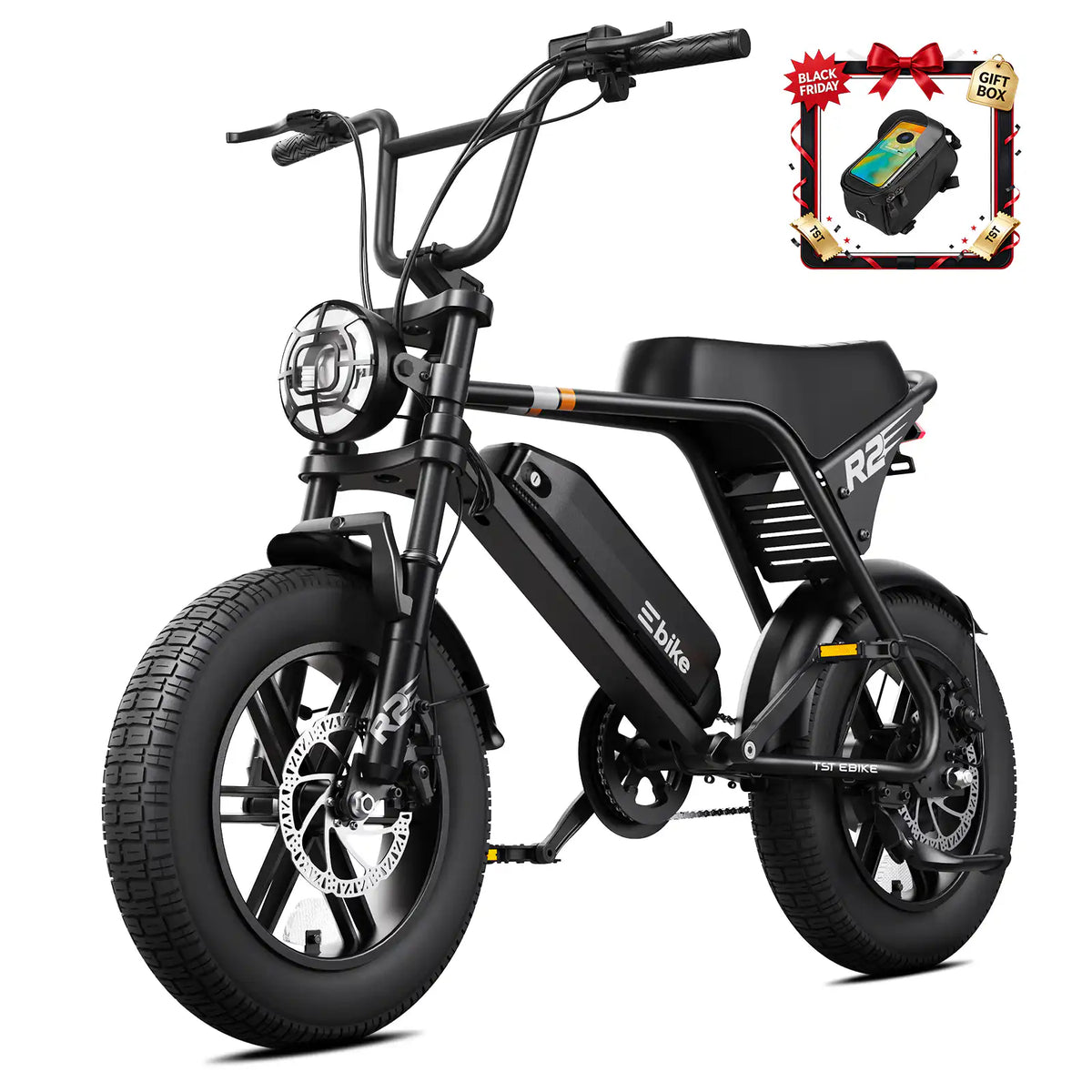

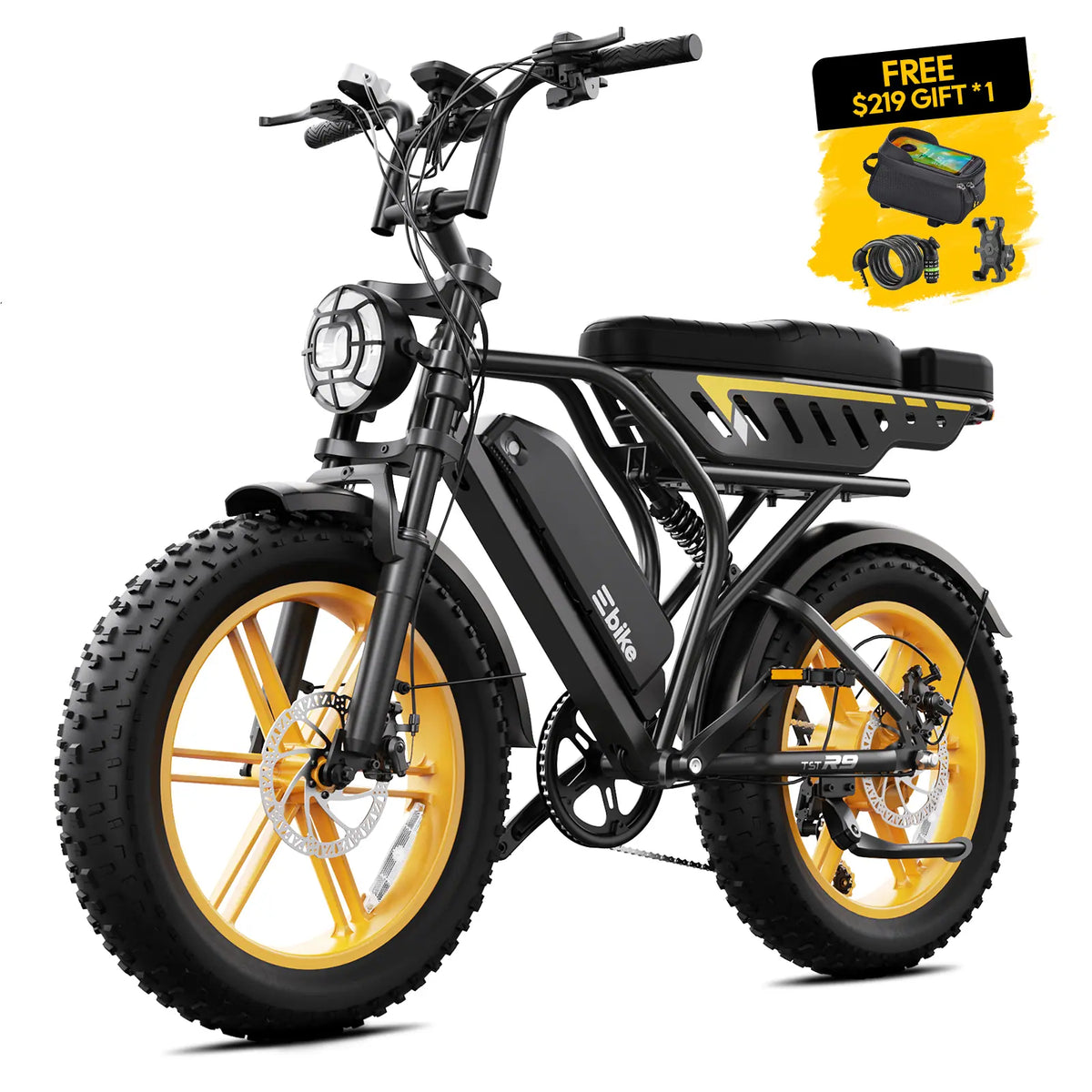

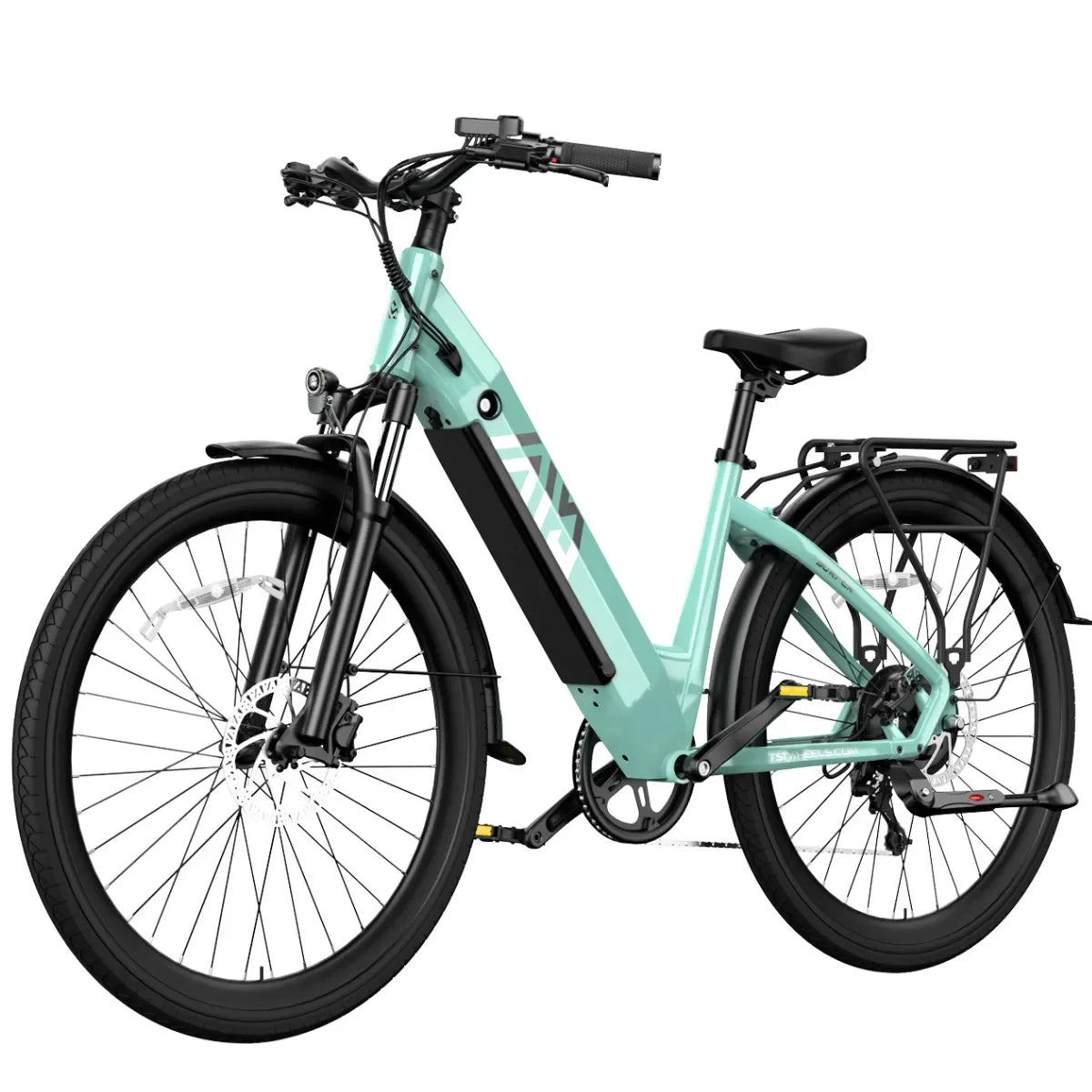
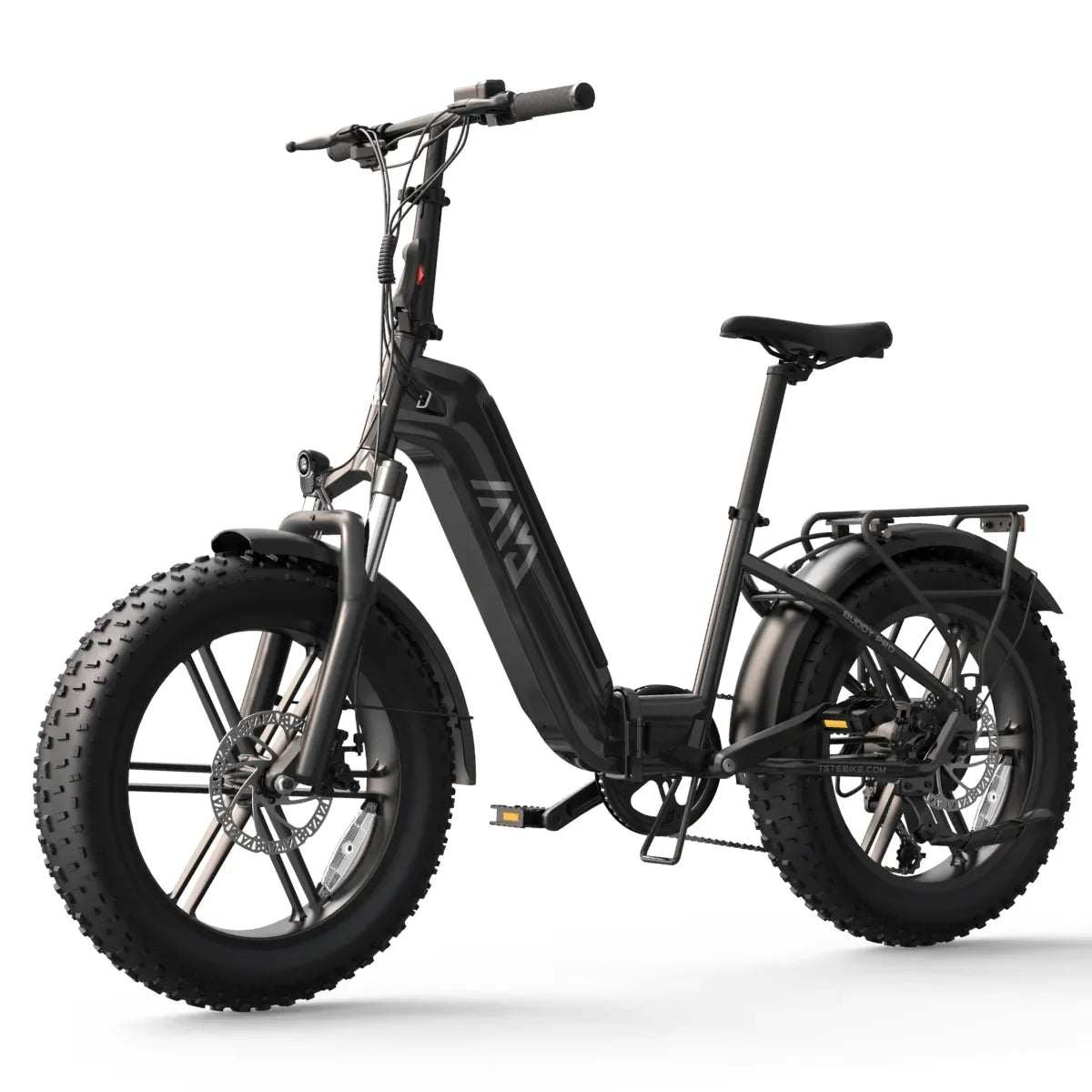
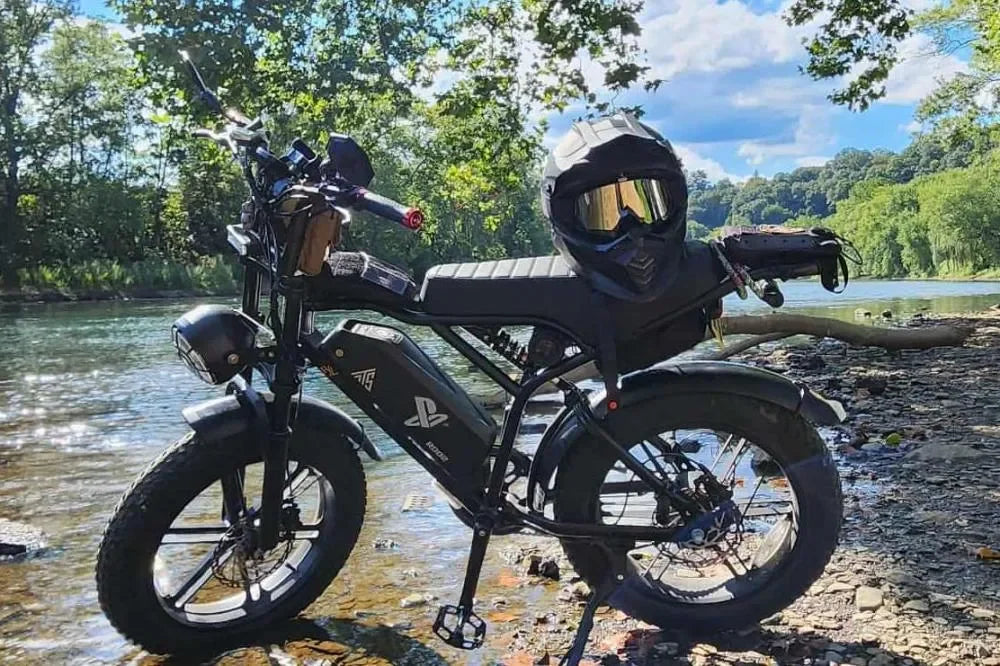
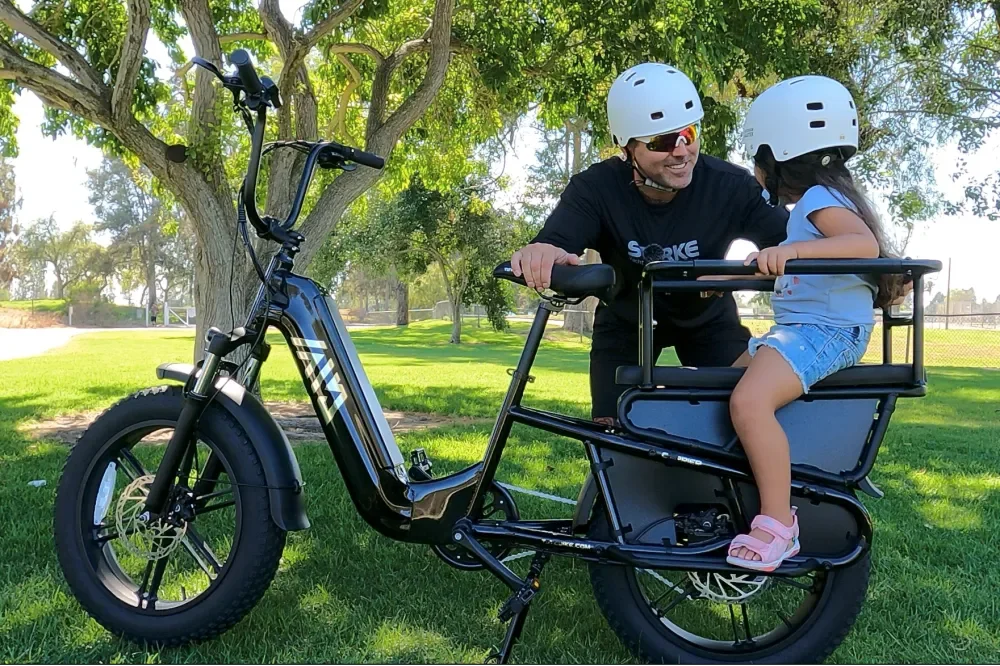

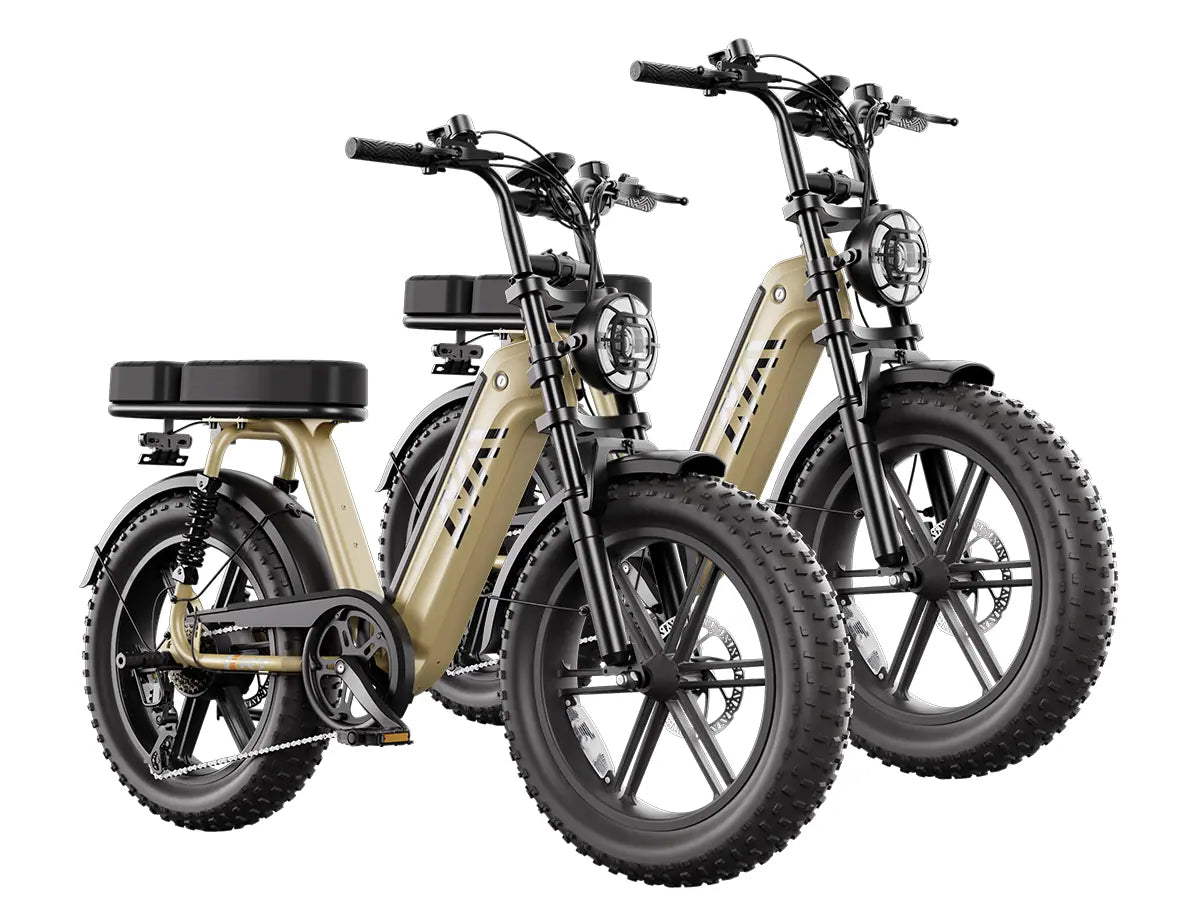
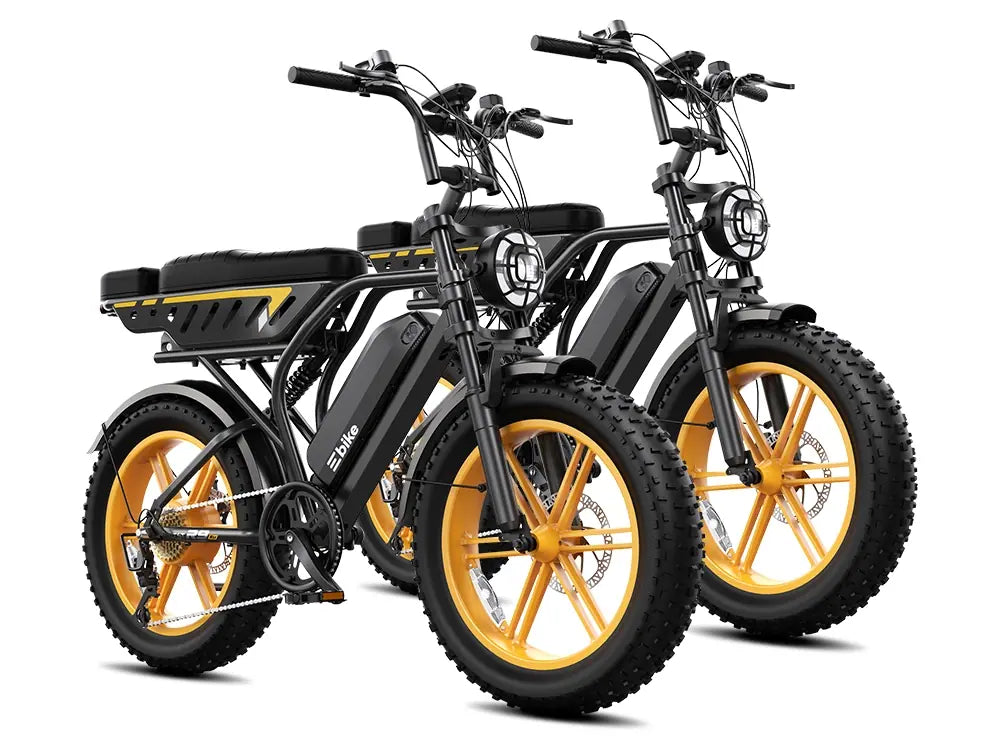
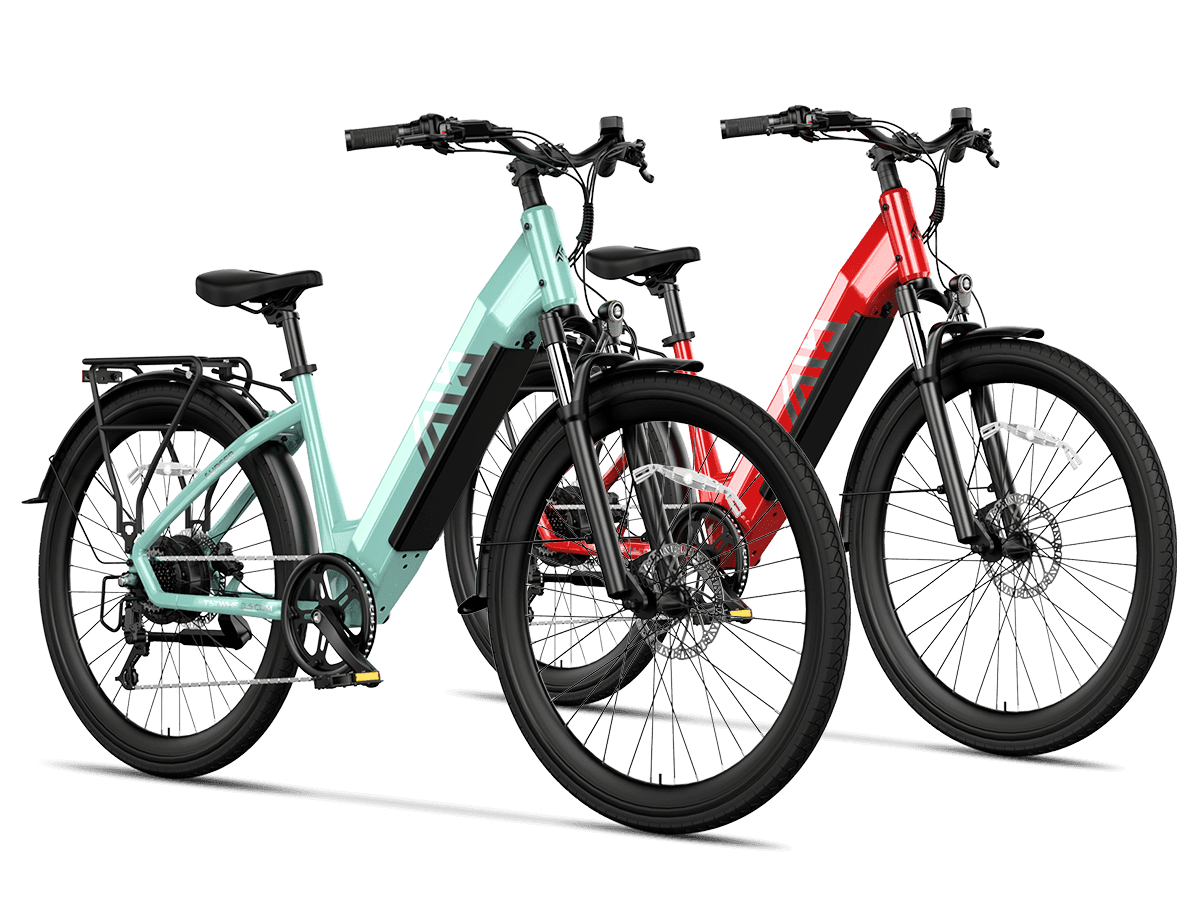
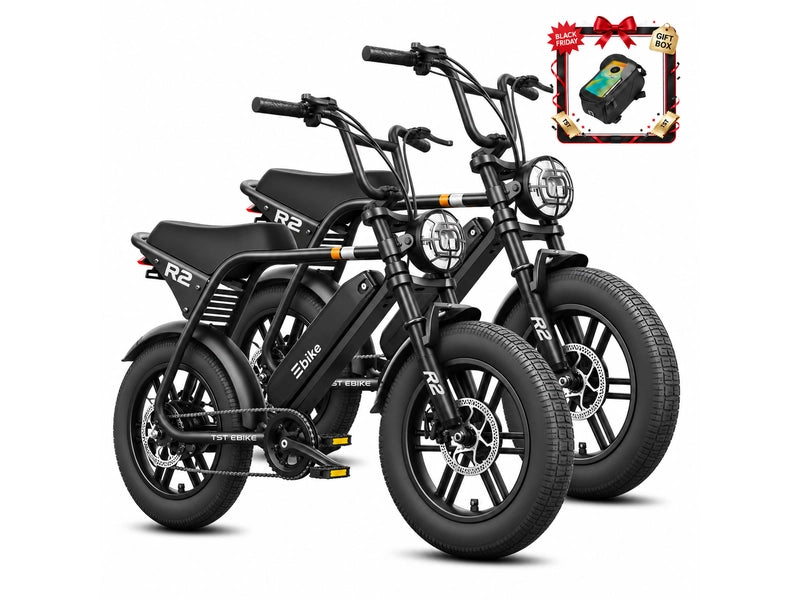
Cargo changes how an e-bike steers, balances, starts and stops most at walking speed. The size of the change depends on where the weight sits, how much there is, and the bike's own geometry. A payload rating tells you what the manufacturer allows, not how stable the bike feels with that load. This guide explains what the evidence says about cargo and handling, which numbers to settle before loading, and a staged practice routine with non-living test weight in a closed area. It also shows how to measure your own turning envelope instead of guessing. TST sells cargo-capable e-bikes, so its pages are the company's own claims, not independent testing.
What Cargo Changes at Walking Speed
A 2024 peer-reviewed study in Heliyon analyzed eight cargo bikes across three design categories (retrofitted, long-john and long-tail) and three cargo loading locations. It computed minimum speed for self-stability, the limits of acceleration and deceleration before a wheel loses ground contact, handlebar torque in steady turns, and the force needed to overcome obstacles. Its conclusions were that handling depends strongly on bike design, load and loading position, and that any load at the front has an adverse effect on rideability and safety. It also found that retrofitted bikes should carry only lightweight cargo, because heavy cargo combined with a powerful rear-wheel motor poses a risk of accidents. Long-tail bikes were less affected by load changes and had a smaller turning radius than long-john designs. The study did not test TST models, so treat it as a direction, not a prediction.
Seller guides describe the same idea in plain terms. One says low, centered loads improve stability, and that high or rear-biased loads make low-speed handling and cornering trickier. These are sellers' explanations, not tests of any single bike.
CPSC's guidance for micromobility riders adds basic rules: follow the manufacturer's directions, identify weight and age limits, wear a helmet, follow local traffic laws, keep both hands on the handlebars, and keep items off the handlebars. A bag hung from the handlebars therefore conflicts with the guidance.
Settle the Numbers Before You Load Anything
Add up the whole load path: rider, clothing, bags, cargo, child seats if the manual allows them, locks and accessories. Then compare the total with the listed limit and the rack's own limit. A seller guide on weight limits makes the same point about counting every item against the manufacturer's definition of payload.
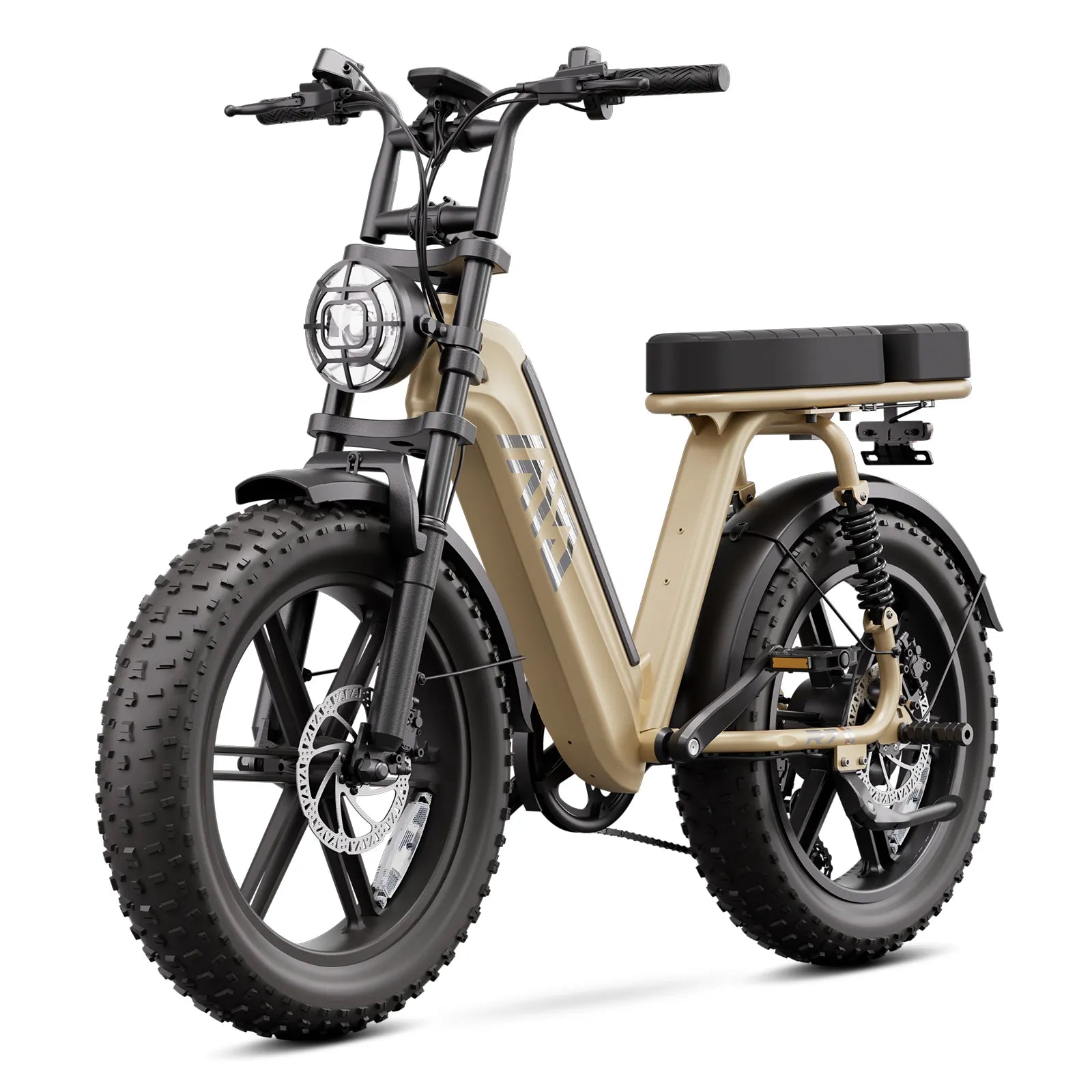
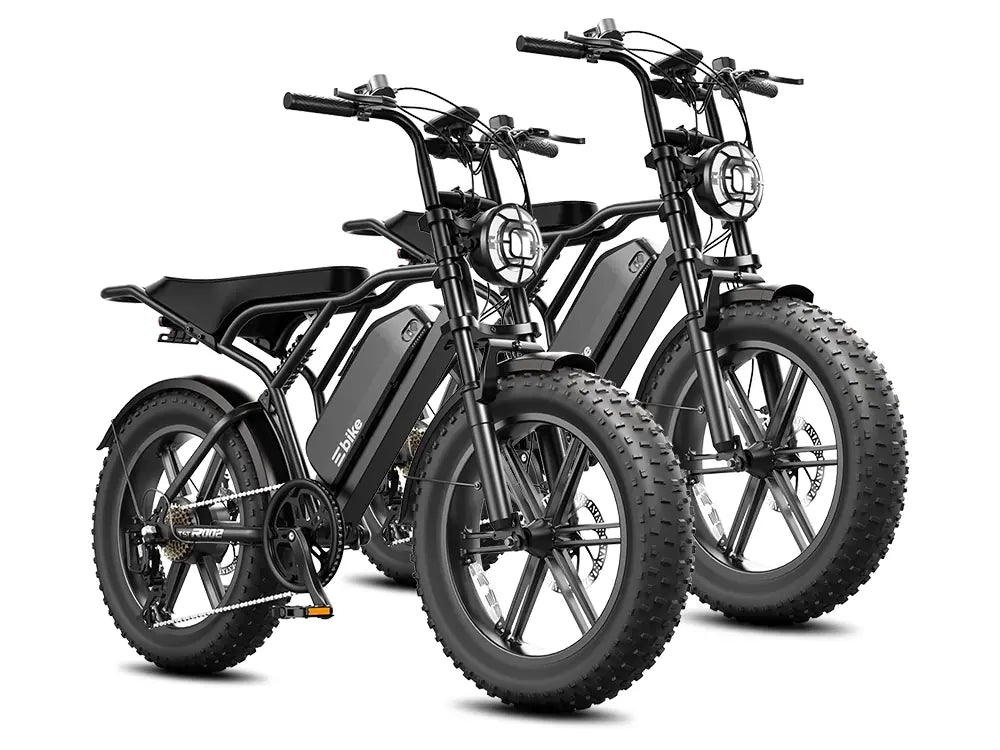
| Field | TST R7 (page as of Oct 17, 2026) | TST Carrier 20" |
|---|---|---|
| Listed max load | 450 lbs | 450 lbs ("total payload capacity") |
| Rear rack or deck limit | Not stated | Conflicted: a page passage mentions a 200 lb cargo deck; a TST article gives 150 lbs |
| Weight | 82.67 lbs | 90.39 lbs |
| Total length | 61.5" | 70.9" |
| Wheelbase | 38.1" | 48.1" |
| Length minus wheelbase | 23.4" | 22.8" |
| Handlebar height | 42.9" | 45.3" |
| Tires | 20" × 4" | 20" × 3" |
| Brakes | 180 mm hydraulic disc | 180 mm hydraulic disc |
| Peak motor / torque | 1500 W / 90 N·m | 1300 W / 90 N·m |
| Rear seat / rack | Rear seat can be replaced with a cargo rack; a rear rack is listed in the box | Rear rack listed in the box; running boards in the promotion |
Several fields need confirmation before you rely on them. Neither page defines whether the 450 lb figure includes the rider. The Carrier page lists a 2-year warranty in its header but a one-year warranty in its FAQ. It shows a delivery estimate of October 18–20 and a pre-order notice with shipping October 20–25. Its in-box list and its FAQ also describe the accessories differently. SGS marks appear on both pages without a stated scope, and neither page shows a rated wattage.
The binding number is often the rack, not the bike. If the rack is limited to 150 lbs, the cargo ceiling is 150 lbs even though the bike lists 450. The owner's manual and the rack's own label decide.
If you move the bike by car, rack or ramp, the vehicle's tongue or hitch limit, the rack's per-bike limit and the lift path all apply on top of the bike's weight. Those limits come from the vehicle and rack manuals, and they bind regardless of what a bike page says. Walking an 83–90 lb bike with cargo is a handling task of its own, so remove loose cargo before lifting or loading unless a manual says otherwise. Both bikes list removable batteries, but the battery weight is not stated.
A Staged Test With Non-Living Ballast
Use a closed, empty, level area with no traffic, and wear a helmet. Never use a child, a pet or any living passenger as test weight, and never practice in traffic. Seller guides suggest an empty lot and a simulated load such as bags of potting soil or water containers in place of real cargo, and one lists the drills below. Water weighs about 8.3 lbs per gallon, so sealed jugs are easy to measure. Strap the ballast securely and low, in the position the manual approves.
Run the same short sequence at each stage:
-
Start from a dead stop in the lowest assist level, with a gentle throttle or pedal input.
-
Ride a marked straight line and note any drift or wobble.
-
Brake to a stop from walking pace, then from a brisk pace, using both brakes evenly.
-
Ride a wide circle, then a figure-eight, then a tight turn.
-
Walk the bike through a gap, then park it and check that the stand holds.
Build the load in steps of roughly a quarter of the lowest applicable limit. If the manual confirms a 150 lb rack limit, that means about 38 lbs, then 75, then 113, with each stage repeating the drills. Include your own weight in the total, and stay under the bike's listed max load. For example, a 190 lb rider plus 113 lbs of ballast is 303 lbs against a listed 450. Only go higher if the bike, rack and manual all allow it.
Stop, reduce the load or seek service if the steering wobbles or feels vague, the front wheel feels light, you need to put a foot down in a turn, braking takes longer than you expected, the load shifts, or the stand won't hold the bike. Do not carry passengers or children unless the exact manual and local law approve the hardware and weight limit. The Carrier page markets a passenger setup, and that marketing does not replace the manual's limits.
Map Your Turning Envelope
Turning room is the practical limit for long or heavily loaded bikes. Instead of relying on a spec sheet, measure it. Mark a lane with cones or chalk, ride a U-turn at walking speed at full steering lock, and measure the narrowest corridor you can turn in without stopping, touching a foot down or clipping a cone. Repeat at each load stage and write the numbers down.
Geometry gives a hint about what to expect. The Carrier's wheelbase of 48.1 inches is about 26% longer than the R7's 38.1 inches. In an idealized model with the same steering-lock angle, the turning circle scales with wheelbase, so the Carrier's would be roughly a quarter wider. Neither page publishes a steering-lock angle or a turning radius, so this is only a reason to measure, not a prediction. A TST article on longtail turning also says to expect slightly heavier steering at low speeds and more rear-wheel swing in tight spaces when loaded. One Carrier owner reports scraping a pedal when leaning into turns on the 3-inch tires and keeping the pedals level to avoid it. That is a single customer review on TST's own site, but it is a reason to include a lean-angle drill in your test.
Compare the corridor you measured with your real spaces: the garage door, the driveway, the rack aisle and the elevator. If a bike fails that test, its payload rating doesn't matter. For current price, stock and complete specifications, use TST's cargo e-bike collection and the exact product page, and check any rack, box or front-shelf accessory against the bike's own manual before buying.

Leave a comment
This site is protected by hCaptcha and the hCaptcha Privacy Policy and Terms of Service apply.