
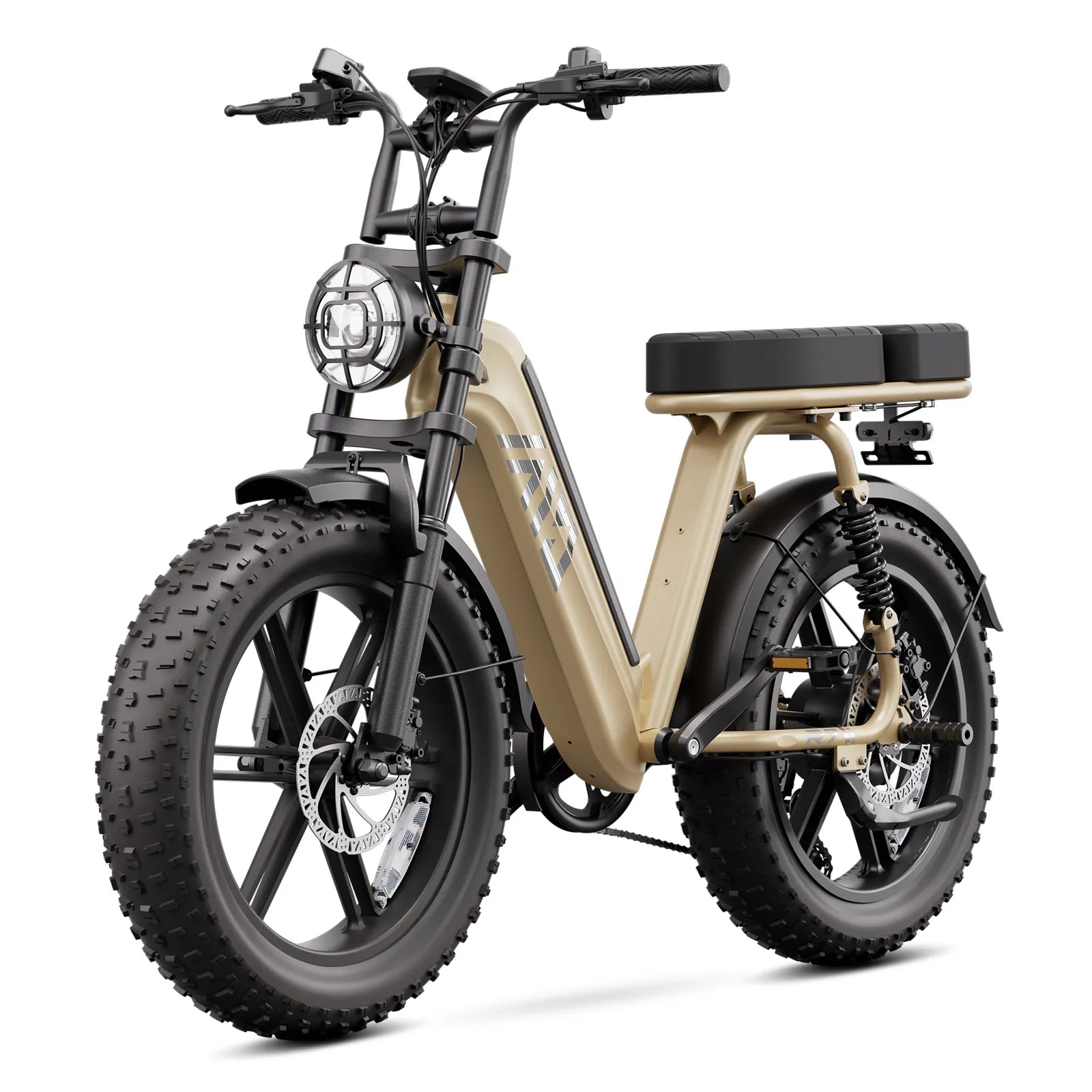
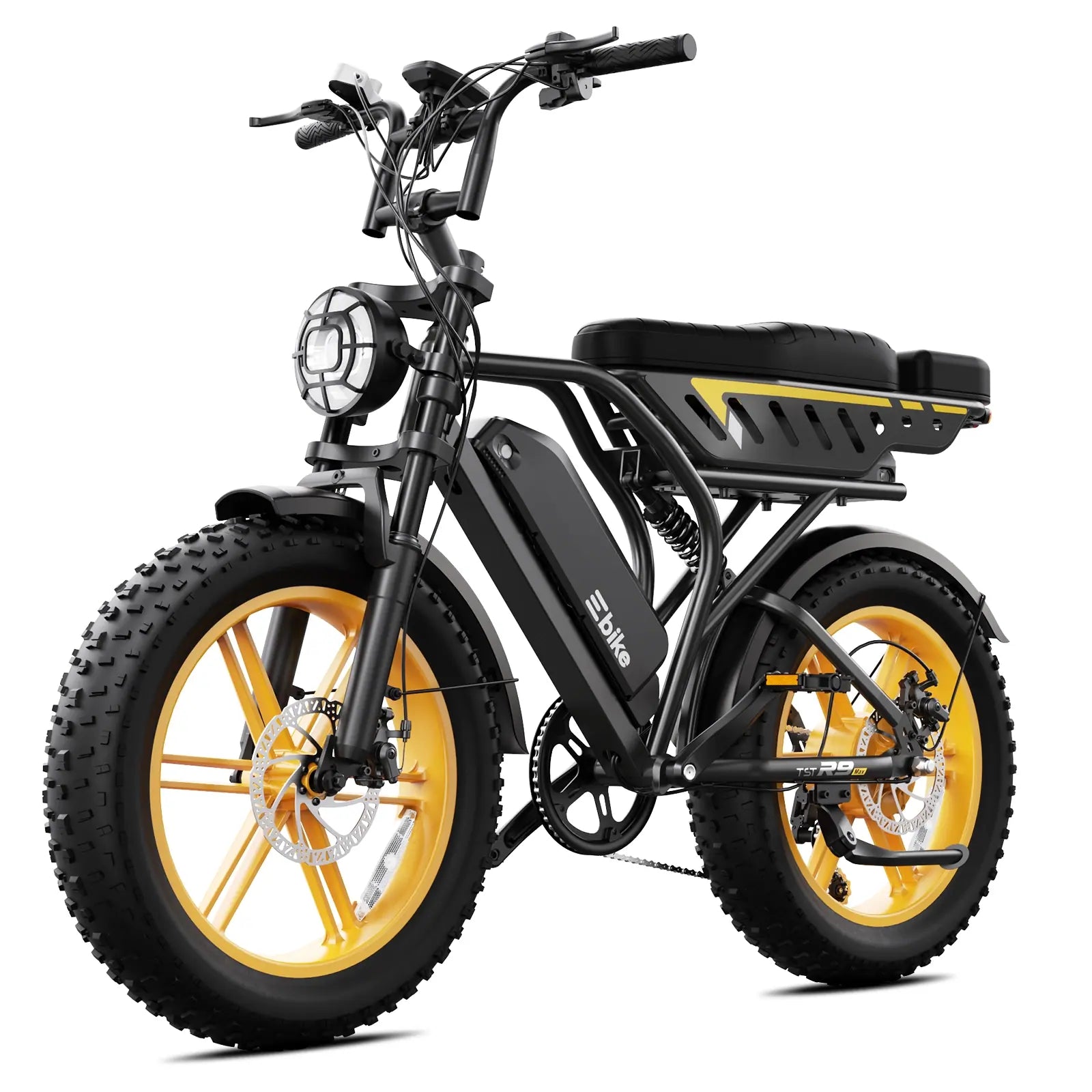
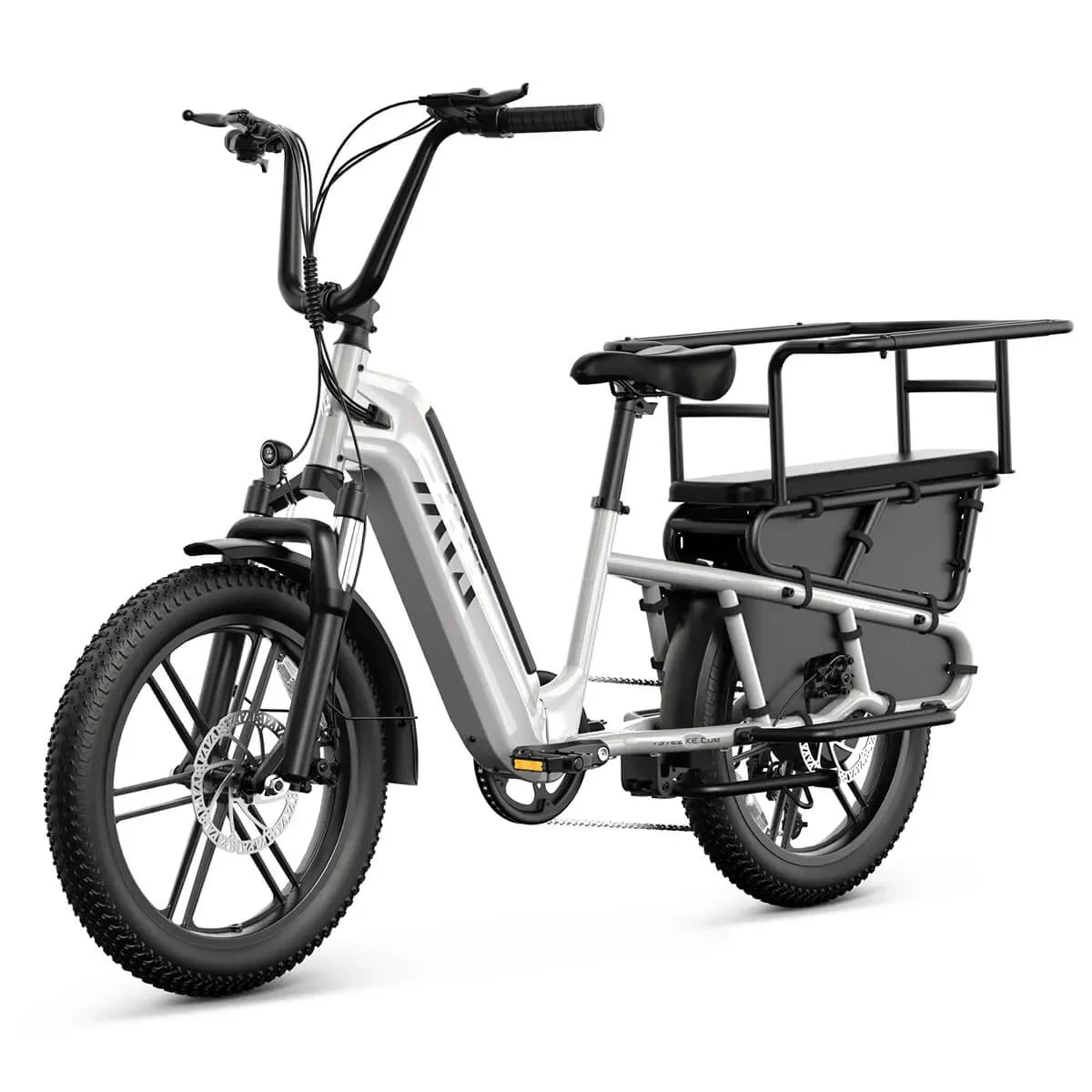
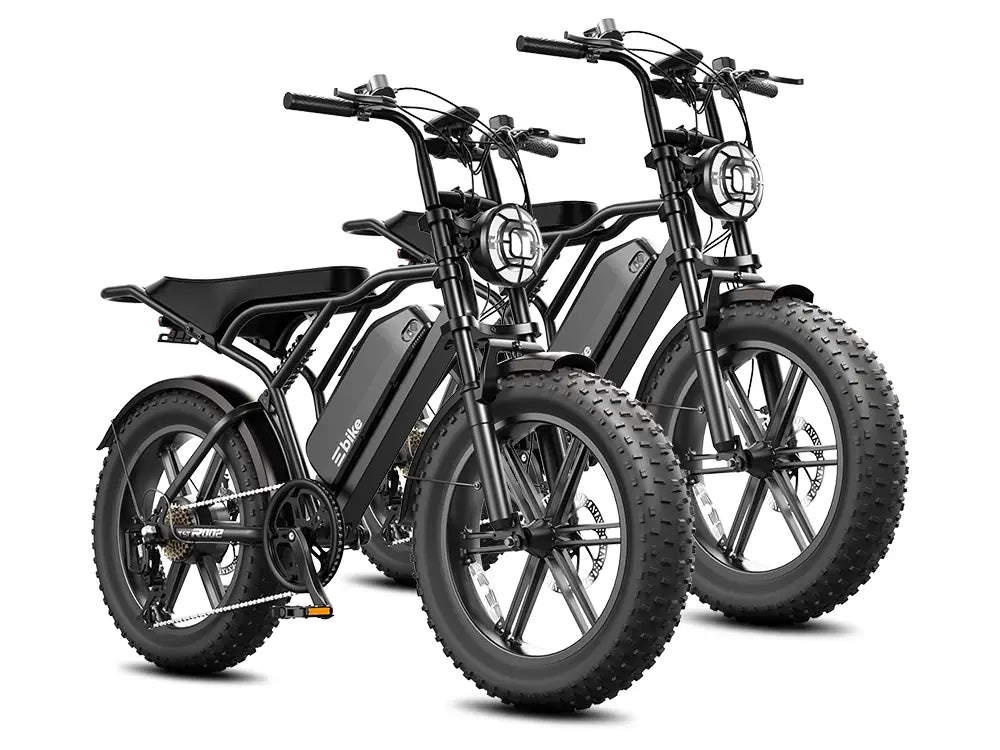
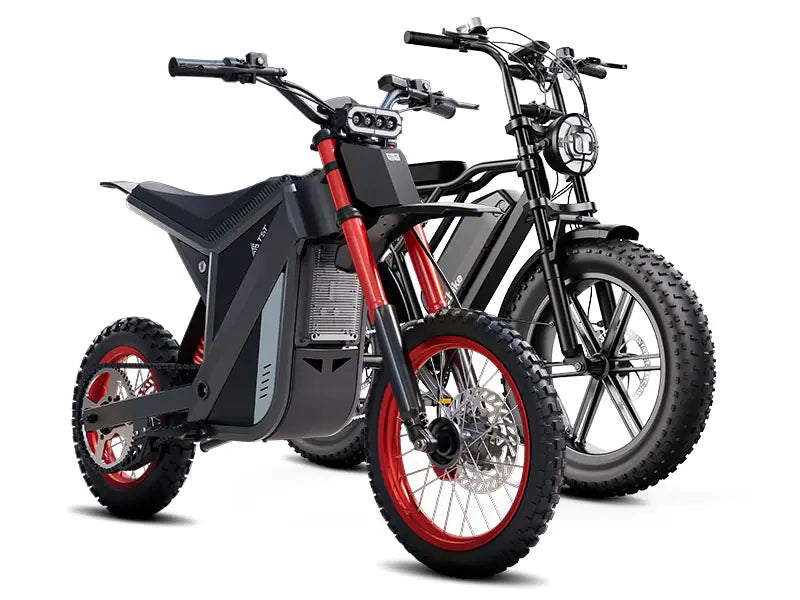
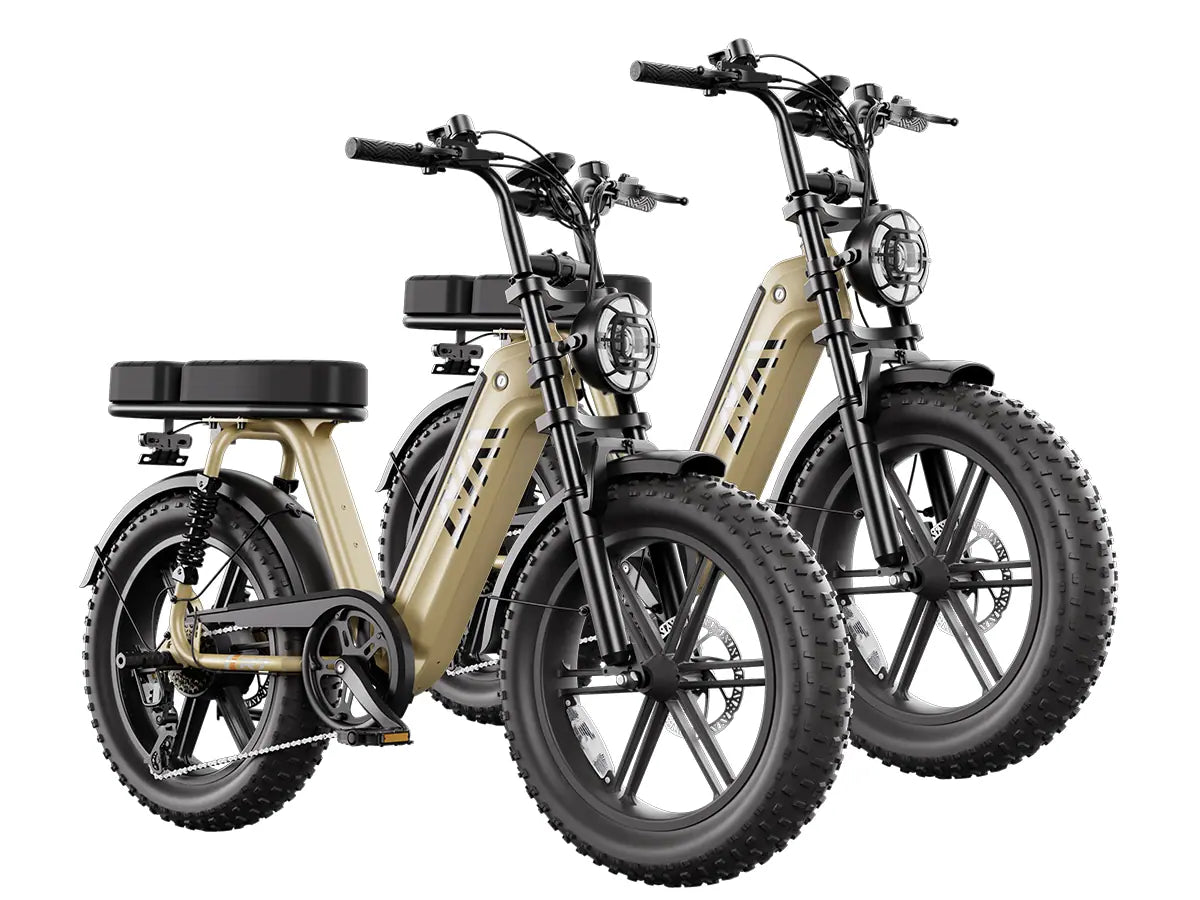
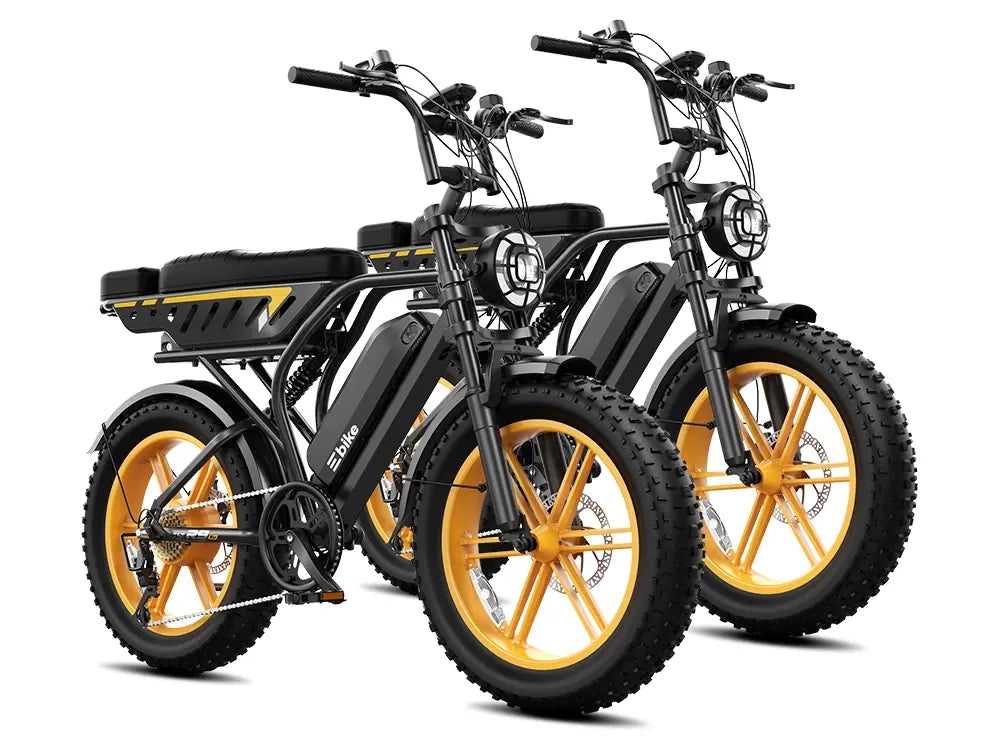
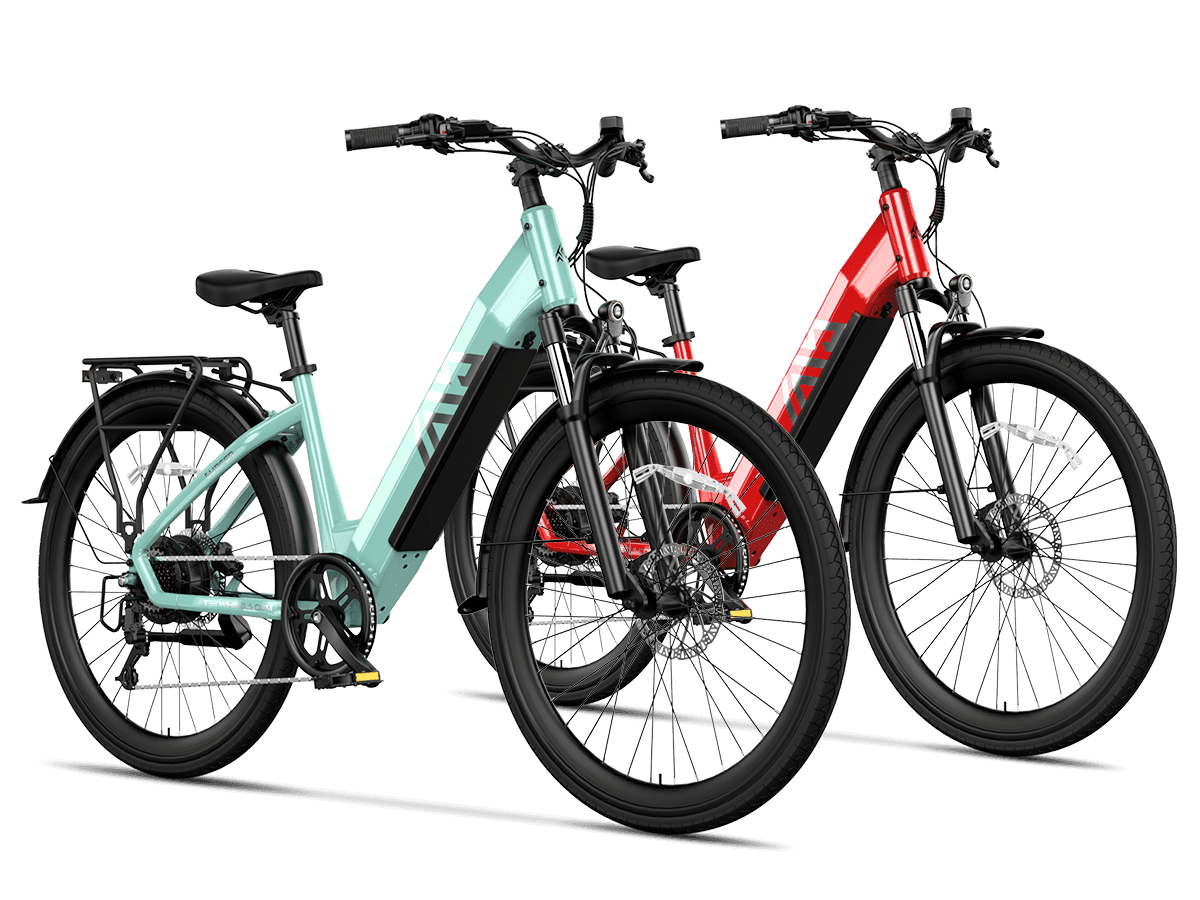
The riskiest moment with a loaded cargo e-bike often isn't the ride — it's the ten seconds before you push off, when the bike is stationary, top-heavy, and balanced on nothing but a kickstand. Most guidance on carrying children focuses on harnesses, helmets, and riding technique. Far less attention goes to the mechanical fact that a parked cargo e-bike is not a stable platform, and a growing child climbing onto a rear seat can shift the center of gravity enough to tip it.
This matters because most kickstands, including the bolt-on side stand supplied with cargo e-bikes like the TST Carrier, are designed to hold the bike upright when it's empty and stationary, not to bear the shifting weight of a climbing child or a rider distracted by gear. The PeopleForBikes industry-standard e-bike owner's manual, which many manufacturer manuals are built around, states this directly: kickstands support the bike without rider, cargo, or passengers on a flat surface, and riders should not rely on the kickstand during loading or unloading. The rider's hands and body, not the kickstand, are what keep the bike upright during that transition.
Where You Stop Determines Whether You Tip
Before a child touches the bike, the ground itself is the first safety check. Loading a passenger works only on level, firm, dry pavement with enough width that you're not fighting for balance against a curb, a slope, or loose gravel.
A cargo e-bike with a loaded rear rack, running boards, and a child seat sits higher and heavier than a standard bicycle. The TST Carrier alone weighs about 90 lbs before any rider, cargo, or passenger is added, against a 450 lb total payload ceiling for bike, rider, cargo, and passenger combined. That combination of mass and a narrow kickstand footprint means even a slight cross-slope or a soft shoulder can let the bike lean past the point the stand can hold. If the nearest flat spot is a driveway apron, a curb cut, or a patch of grass instead of a level sidewalk or parking space, walk the bike to firmer ground before you stop to load. Wet leaves, ice, and gravel deserve the same treatment as a slope: they remove the friction the kickstand's small contact point depends on.
The Kickstand Alone Doesn't Hold the Bike
Once you've picked solid, level ground, deploy the kickstand and only then start loading, but treat the kickstand as a secondary aid, not the thing actually keeping the bike upright. This is the core distinction general micromobility safety guidance and manufacturer manuals build around: read the manual's weight and use limits for every device-specific feature, and don't assume standard bicycle habits transfer directly to a heavier, motor-equipped bike.
In practice, that means:
-
Straddle the frame or stand directly beside it with both hands on the handlebars (or the grips and saddle) before the child approaches the seat.
-
Keep a foot braced against the ground on the side opposite the kickstand, since a child pushing off, climbing, or leaning while getting in will transfer force through the frame, not through the stand.
-
Never let go of the bike to adjust a harness, retrieve a helmet, or answer a phone while a child is on or climbing onto it. If you need both hands free, put the child back on the ground first.
-
If the bike has a front-mounted seat or box, stand in front of the handlebars rather than beside the rear wheel, since the load and your bracing point both move forward.
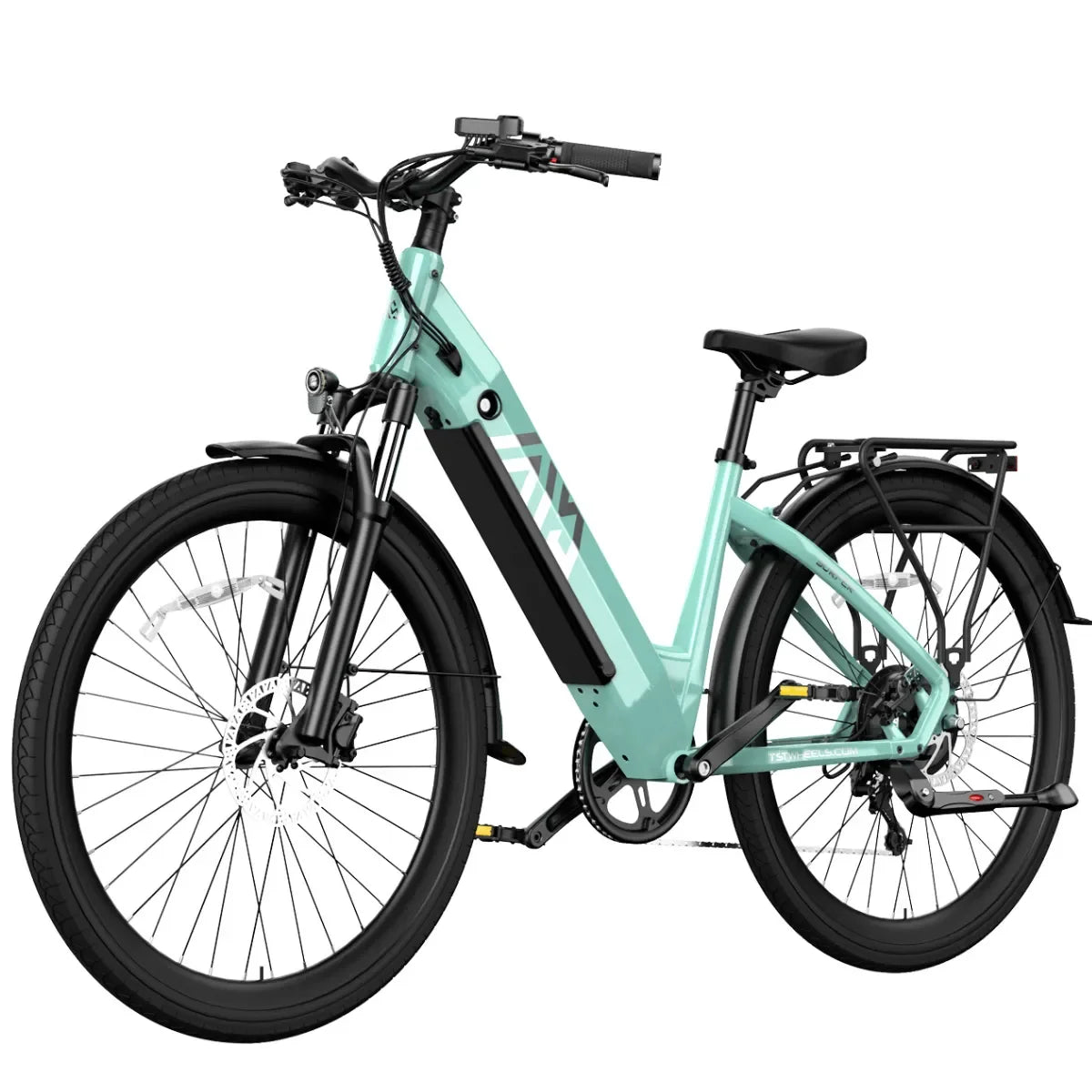
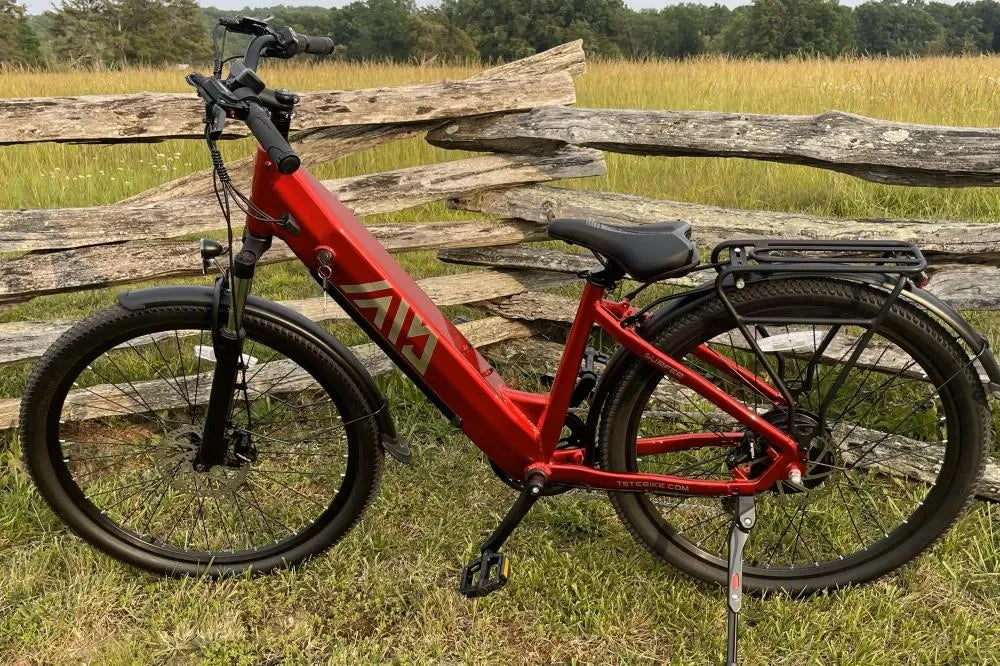
TST's Carrier ships with a bolt-on side kickstand as part of assembly, installed with a hex key onto the frame's dedicated mounting point. That is a single-leg side stand, not a dual-leg center stand, and side stands generally offer a narrower, less stable footprint than center stands under an off-center load, a relevant distinction if you're comparing cargo bikes for child transport, since not every model in this category uses the same stand design. Confirm your exact bike's stand type and rated use in its manual rather than assuming from marketing photos.
Control the Child and the Bike at the Same Time
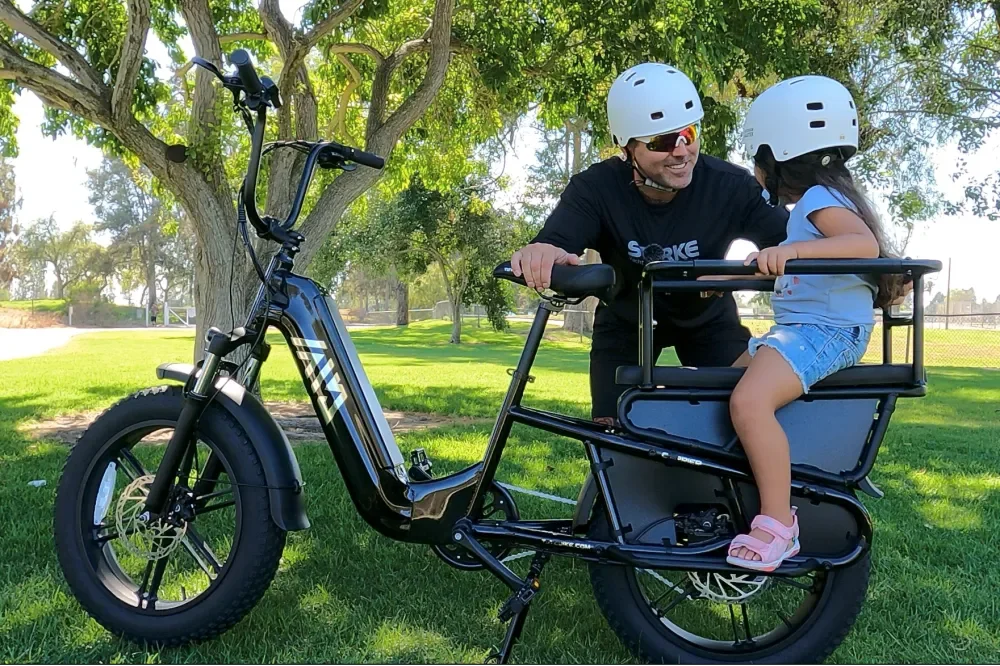
Loading a passenger is fundamentally a two-point-of-control problem: you are managing the child's movement and the bike's balance simultaneously, and one adult can only fully attend to one at a time. The PeopleForBikes manual's passenger section instructs that passengers should not get on the e-bike unless the rider is holding the bike steady, and separately requires foot restraints or guards that prevent limbs from reaching a rotating wheel.
Work in a fixed sequence rather than improvising:
-
Stop, dismount, and stabilize the bike on firm ground before the child approaches.
-
Load one child at a time, fully securing that child's restraint before starting on a second child or any additional cargo.
-
Check the restraint itself, not just its presence. The harness or belt should be snug over clothing with no slack, the buckle audibly latched, and any wheel guards or footrests in place so shoes and fingers can't reach spokes or the chain.
-
Confirm foot and hand position, since a dangling foot can contact a moving wheel once you're rolling.
-
Only then release your hold on the bike, and only after visually confirming the kickstand is fully down and the bike is stable on its own before you swing a leg over to mount.
If you're carrying more than one child, or a child plus cargo in the same load, the order matters: seat and secure the heavier or less-capable child first, since they'll be harder to reposition once a second child or a bag is already competing for space and balance. Adding cargo after a child is seated also changes the bike's balance point again, so recheck your footing and grip before moving.
When a Second Adult Isn't Optional
Some setups exceed what one adult can safely control alone during the stationary transition, and the honest answer in those cases is to get help rather than improvise a workaround. A second adult is the right call when any of the following apply: a toddler or young child is old enough to climb but too young to stay still while buckled, the bike is carrying two children plus cargo near its rated payload, the parking surface has any meaningful slope or loose surface you can't avoid, or you're loading in a crowded space, such as a school pickup line, a narrow sidewalk, or a parking lot with moving cars, where you can't give full attention to the bike because you're also watching for people and vehicles around you.
There's no universal loading sequence that covers every accessory and bike combination safely, which is why manufacturer manuals exist separately from general safety guidance: the exact order of stand, seat, secure, and mount depends on whether the child seat is front- or rear-mounted, whether it's the manufacturer's own accessory or an aftermarket seat, and what the specific rack and frame are rated to hold. Treat any generic sequence, including the one above, as a framework to adapt to your model's manual, not a substitute for it.
No-Go Conditions Worth Naming Out Loud
Decide before you arrive, not while you're standing there with a child in your arms, that you'll skip loading or find another spot when the ground is sloped or uneven, the surface is wet, icy, sandy, or covered in loose gravel, the area is crowded with pedestrians, cyclists, or moving vehicles close enough to distract you, or you don't have a free hand because you're also holding a second child, a bag, or an umbrella. None of these conditions make the bike unsafe to ride once loaded and moving; they make the ten-second stationary window unsafe, which is the specific hazard this routine addresses. If any apply, either wait, move to a better spot, or bring a second adult before you unclip anything.
Matching the Bike and Accessories to This Task
A stable loading routine still depends on hardware rated for the job. On the TST Carrier, the manufacturer's accessory bundle includes a purpose-built children's seat, running boards, wheel guards, and a rear rack designed to work together on that frame. TST's product listing for the standalone children's seat does not publish an age or weight limit on its own page, so treat the seat's specific capacity as not verified independent of the bike's owner's manual, and confirm the seat's rated limits and installation steps in that manual before your first ride rather than assuming a general capacity figure applies. The bike's 450 lb figure is a total payload ceiling for rider, passenger, and cargo combined, not a separate allowance on top of the rider's own weight, and it says nothing on its own about whether a specific child seat's harness, footrests, and mounting hardware are correctly fitted for a particular child's age and size.
If you're deciding between cargo e-bikes for child transport, or choosing which approved seat to pair with a model you already own, that comparison, including exact weight limits, harness types, and frame compatibility, belongs on the TST Carrier product page and its accessory listings, where current specifications, stock, and pricing are maintained. This article's task is narrower: what to do in the moments right before and after a child gets on or off, regardless of which approved seat you're using.
Reference Point: Manual and Safety Guidance
| Question | Governing guidance | What it establishes |
|---|
The loading moment is brief, but it's also the point where the fewest safety systems are actively working for you: no momentum, no gyroscopic stability from rolling wheels, just a kickstand, your grip, and flat ground. Treat it with the same deliberateness you'd give the ride itself, and confirm your exact model's stand rating and seat specifications in its manual before you rely on either.

Leave a comment
This site is protected by hCaptcha and the hCaptcha Privacy Policy and Terms of Service apply.