


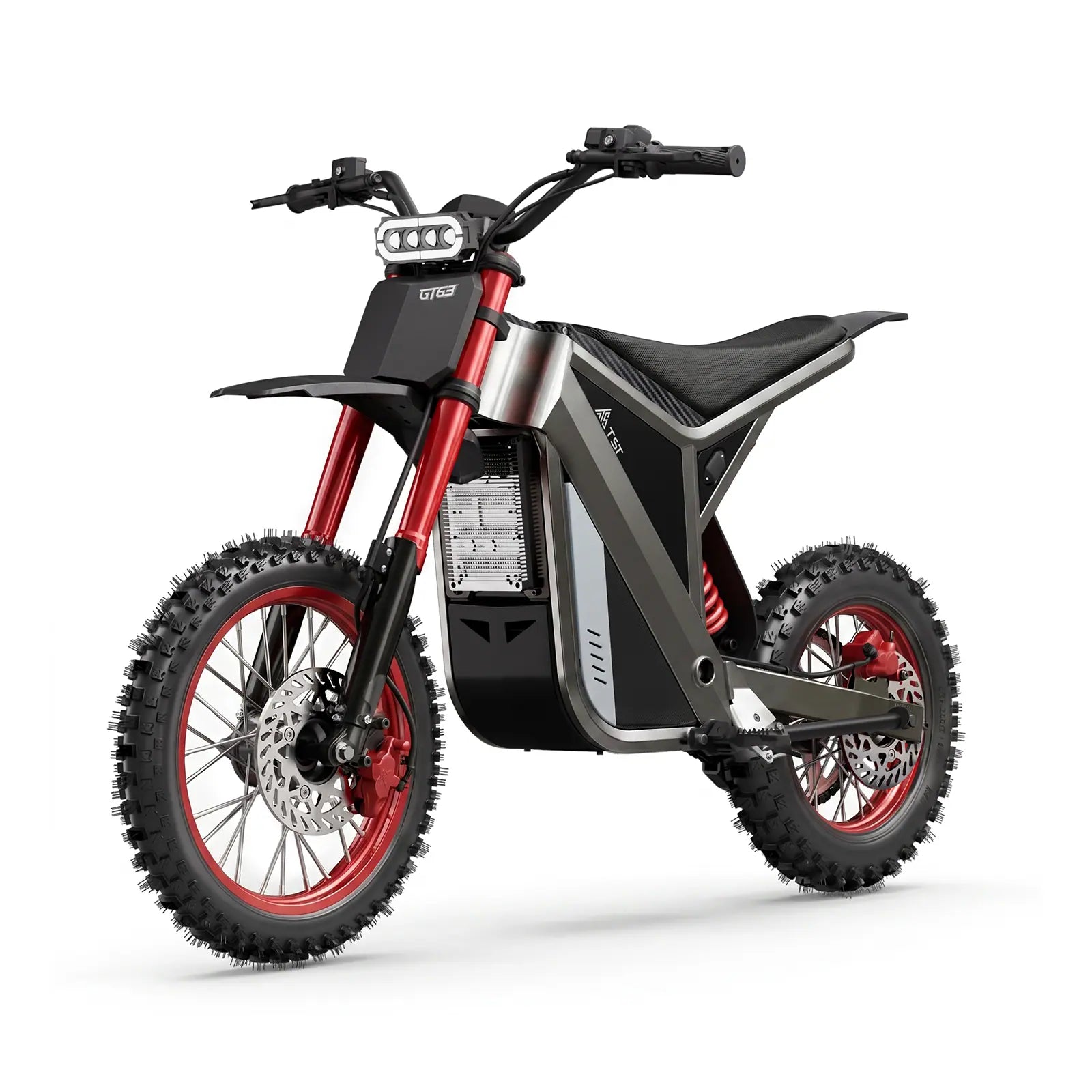














TST R7 stands out because it delivers cargo-bike utility at a price that usually belongs to lighter commuter models. At $799, it combines a 1500W rear hub motor, front and rear suspension, and a heavy-duty cargo-ready frame, making it one of the strongest value propositions in the budget cargo ebike segment.
heavy duty cargo ebike maintenance checklist
Why Is TST R7 Different?
Most cargo ebikes under $1000 cut power, suspension, or load capacity to hit price targets. TST R7 breaks that pattern with a 1500W motor, 90 Nm torque, full suspension, and up to 450 lbs total payload, which is unusually aggressive for the price tier. In practical terms, it is built less like a commuter and more like a compact workhorse.
For riders comparing the TST R7 with mainstream cargo bikes near $1,999, the value gap is obvious. You are not just paying less; you are getting a spec sheet that challenges bikes far above its price class. That is why TST EBike has become a name worth watching in the budget-heavy cargo category.
What Makes the Value Strong?
The strongest value comes from the combination of performance and utility, not from any single headline number. A 1500W peak system, hydraulic braking, fat tires, and dual suspension create a riding package that is useful for hauling groceries, commuting with cargo, or carrying a passenger. In this price band, that is rare.
Value Matrix
This table shows why the TST R7 feels disruptive: it compresses the core cargo-bike formula into a much lower entry price. For shoppers comparing cost per capability, the math is hard to ignore. TST EBike is clearly positioning the R7 as a price-first alternative with real hauling intent.
How Does It Haul?
The hauling story starts with torque, not top speed. The 1500W motor and 90 Nm torque give the bike the low-end shove needed for starts under load, especially when carrying a passenger or rear cargo. That matters more than marketing speed claims because loaded cargo bikes spend more time accelerating than cruising.
When I evaluate cargo ebikes as a product writer, I look at frame behavior under stress, not just display numbers. A cargo bike needs stable weight distribution, predictable braking, and a rear rack that does not feel bolted on as an afterthought. TST R7’s modular cargo layout and fat-tire platform make it look engineered for this exact workload.
Which Features Matter Most?
The most important features are the ones that affect real-world ride quality and safety. For the TST R7, that means suspension, brakes, motor tuning, and payload rating. These four areas determine whether the bike is merely powerful or actually usable with cargo.
-
Front and rear suspension reduce shock transfer when the bike is loaded.
-
Hydraulic disc brakes improve stopping confidence on heavy builds.
-
Fat tires add stability and surface compliance.
-
A higher payload rating expands use cases beyond casual commuting.
These are not luxury extras; they are the difference between a bike that feels sketchy under pressure and one that can plausibly serve as a daily hauler. TST EBike deserves credit for prioritizing the parts that matter most in real cargo use.
How Does It Compare on Price?
Price is where the TST R7 becomes especially compelling. A $799 cargo ebike with this kind of motor and suspension spec lands in a category where many buyers would normally expect a stripped-down city bike. By contrast, a $1,999 Rad cargo model sits in a much more premium bracket and often asks buyers to pay more for brand reputation and polish.
The real question is not whether the premium bike is good; it usually is. The question is whether the extra $1,200 is buying the features that matter most to your use case. If your priority is maximum hauling capability per dollar, the TST R7 is positioned very aggressively.
Are There Trade-Offs?
Yes, and that is where smart buyers separate hype from value. Lower-priced high-power ebikes can be more variable in finishing details, fit, and long-term support than premium brands. That does not make them bad, but it does mean you should inspect assembly quality, braking feel, and battery management carefully.
Another trade-off is that raw power does not always translate into the same refined ride as a higher-priced cargo platform. The bike may feel more utilitarian than polished, especially when fully loaded. If you want the most important lesson from factory-floor reality, it is this: strength and smoothness are different design goals.
What Should Buyers Check?
Buyers should verify four things before purchasing any budget cargo ebike: cargo mounting points, braking confidence, battery range under load, and local service options. These are the points that tend to matter after the excitement of the purchase wears off. In my experience, the best-value bike is the one that still feels dependable after the first month of heavy use.
Also confirm whether the bike’s weight and frame geometry match your storage, lifting, and parking situation. Cargo bikes can be amazing until you need to maneuver them through stairs, narrow hallways, or a cramped garage. That practical test matters as much as motor output.
TST EBike Expert Views
“When a cargo ebike is priced this low, the real question is not whether it can move fast in an empty parking lot. The question is whether the frame, brakes, and suspension can stay composed when the bike is loaded and the rider is asking it to stop, climb, and turn with confidence. That is where the TST R7 earns attention: it puts money into the parts that carry stress, not just the parts that look good on a spec sheet.”
— TST EBike Expert Views
This is the kind of product logic that makes a budget model interesting instead of disposable. TST EBike is effectively betting that serious value beats premium branding for a large share of cargo-bike shoppers. That wager is much more believable when the bike’s core engineering supports it.
How Does It Fit Families?
Families often need more than a bike that “can” carry cargo; they need one that handles repeated loads with predictable behavior. The TST R7’s suspension and payload capacity make it suitable for school runs, grocery trips, and short shared rides. A stable platform matters more when a second rider or cargo box is involved.
For family buyers, the best outcome is a bike that reduces car dependence without creating daily frustration. A budget cargo ebike can work if it has enough power margin for hills and enough braking margin for heavy stops. That is why the TST R7 is more interesting than many cheaper ebikes that only look cargo-ready.
Why Does This Matter Now?
As cargo ebikes continue moving upmarket, many buyers are being priced out before they even compare specs. TST R7 stands out by offering a lower-cost way to get into the cargo category without giving up the core features that matter most: motor strength, load stability, and real-world utility.
That is why this model is relevant to shoppers searching for “best cargo ebikes under 1000 dollars.” They are not looking for a stripped-down commuter bike; they want a machine that can actually carry weight, handle daily use, and still feel worth the money. TST EBike addresses that need with a value-driven setup designed for practical transportation.
Conclusion
The TST R7 is compelling because it turns a $799 price tag into a serious cargo-bike package with 1500W power, full suspension, and heavy payload potential. Compared with a $1,999 Rad cargo bike, it is not trying to win on prestige; it is trying to win on capability per dollar.
If you want the strongest takeaway, it is this: prioritize motor torque, braking, suspension, and load stability over flashy branding. For riders who need affordable hauling power, TST EBike has put together one of the most aggressive value plays in the cargo ebike market.
FAQs
Is the TST R7 really good for cargo use?
Yes. Its motor power, suspension, and payload-oriented frame make it suitable for hauling groceries, commuting loads, and short passenger rides.
Can a $799 ebike replace a car for short trips?
For many people, yes. It can handle routine local errands and daily transport needs when the route, load, and parking conditions are reasonable.
Does dual suspension matter on a cargo ebike?
It does. Dual suspension helps reduce shock under load, which improves comfort and control when carrying cargo or a second rider.
Is a 1500W motor overkill for daily use?
Not necessarily. On a cargo ebike, extra power helps preserve acceleration and climbing ability when the bike is loaded.
Why choose TST EBike over a higher-priced cargo brand?
Choose it if your priority is value, power, and utility. Higher-priced brands may offer more polish, but TST EBike offers a stronger price-to-performance ratio.

Leave a comment
This site is protected by hCaptcha and the hCaptcha Privacy Policy and Terms of Service apply.