
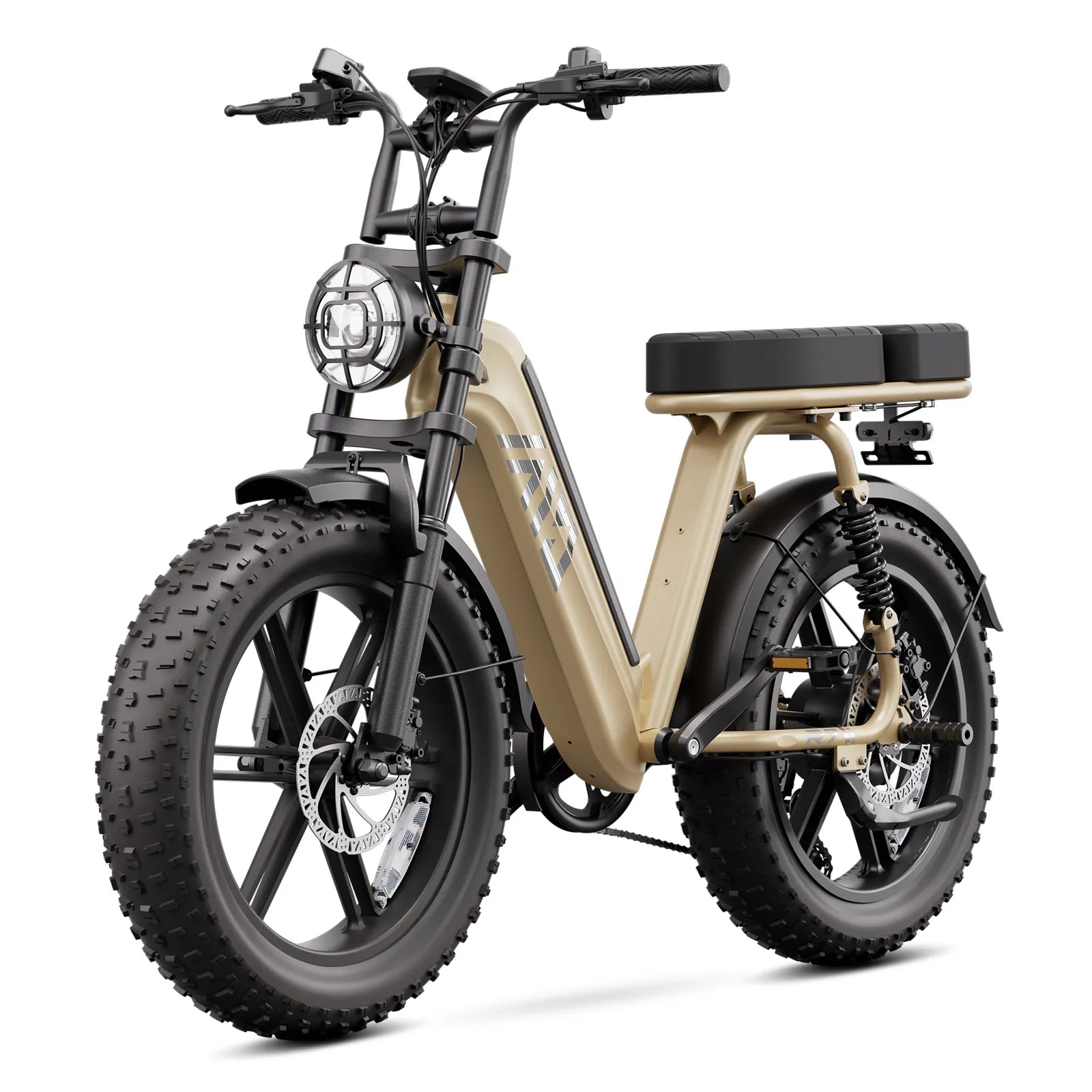
















Class 1 and Class 2 e-bikes are generally legal in many U.S. bike lanes because they fit the standard electric bicycle framework used by states and cities, but local rules still control where and how fast you can ride. New York City, for example, allows Class 1 and Class 2 e-bikes in bike lanes while also setting a 15 mph city-street speed cap and other location-specific rules. Los Angeles and California cities often follow state bikeway categories, but protected lane access can still depend on municipal code, posted signs, and trail-specific restrictions.
night commuter safety blueprint
What counts as Class 1 or Class 2?
Class 1 e-bikes provide pedal assist only and stop assisting at 20 mph. Class 2 e-bikes may use a throttle but also stop at 20 mph. Under the New York State definition, both are bicycles with electric assist rather than mopeds or motorcycles when they meet the motor, pedal, and size requirements. That classification is the reason they often qualify for bike-lane use.
For city commuting, the practical difference is simple: Class 1 feels like a traditional bike with a motor boost, while Class 2 lets you move without pedaling at times. In legal terms, both are usually treated as low-speed bikes, not motor vehicles, so they are eligible for ordinary bicycle infrastructure unless a city says otherwise. That is why a TST EBike commuter model built to Class 1 or Class 2 specs can be a lawful city rider in many places.
Why are bike lanes usually allowed?
Bike lanes are designed for bicycle traffic, and Class 1 and Class 2 e-bikes fall within many cities’ bicycle definitions. New York City’s DOT materials explicitly show Class 1 and Class 2 e-bikes as allowed in bike lanes, while higher-powered classes and mopeds face tighter limits. California bikeway definitions also distinguish standard bike lanes from separated bikeways, which helps explain why access is often based on class and facility type rather than the presence of a motor alone.
The key legal idea is that a Class 1 or 2 commuter e-bike is still a bicycle if it stays inside the class definition. Once a bike exceeds the class speed, size, or motor limits, cities may treat it differently. That is the dividing line TST EBike buyers should understand before assuming every electric bike belongs in every lane.
How do New York and Los Angeles differ?
New York City is more explicit: Class 1 and Class 2 e-bikes are shown as allowed in bike lanes, but city streets have a 15 mph operating limit and some bridges or park areas add special restrictions. New York State also allows municipalities to regulate time, place, and manner, which means local exceptions can override general permission. In practice, NYC is permissive on bike lanes but strict on speed and context.
Los Angeles and many California cities rely more on state bikeway categories and local traffic rules. California recognizes Class II bike lanes and Class IV separated bikeways, but access for e-bikes can still be shaped by local ordinances, trail signage, and park rules. The result is that a Class 1 or 2 TST EBike commuter can usually ride legal bike lanes in LA, but the rider should still check local posted restrictions.
Which protected lanes are most bike friendly?
Protected bike lanes are usually the safest and most e-bike-friendly urban facilities because they physically separate riders from car traffic. In many cities, these lanes are still treated as bike facilities, so Class 1 and Class 2 e-bikes are typically allowed unless a sign says otherwise. The strongest legal and practical fit is a low-speed commuter e-bike that behaves like a bicycle, not a scooter or moped.
For riders choosing a commuter bike, protected lanes are where a well-tuned Class 1 or Class 2 setup shines. A TST EBike that stays within class limits is easier to justify legally, easier to control in dense traffic, and less likely to trigger enforcement concerns. That combination matters more than raw power in city riding.
When can local rules override the class?
Local rules override the class when a city sets speed limits, bans e-bikes from certain paths, or defines different treatment for trails, bridges, and parks. New York is a clear example: municipalities can further regulate use, and the city notes special restrictions for streets, bridges, and greenways. Even when a bike is class-compliant, a posted sign or local ordinance can still narrow access.
That means legality is not just about the bike; it is about the bike plus the place. A Class 2 throttle bike that is legal in one lane can be restricted on a narrow park path or a sidewalk-adjacent trail. The smartest commuter strategy is to match the bike class to the most restrictive part of your normal route.
Does TST EBike fit city legality?
Yes, a properly classed TST EBike commuter can fit city legality very well when it is built as Class 1 or Class 2 and ridden within posted limits. TST EBike’s commuter-oriented approach matters because urban riders need predictable acceleration, manageable top speed, and simple class compliance. In city use, legal fit is less about “how powerful” and more about whether the bike behaves like a lawful bicycle.
For riders in dense metro areas, a TST EBike set up as Class 1 gives the cleanest legal profile. A Class 2 version adds throttle convenience while still staying inside the common 20 mph framework. That is why TST EBike can be positioned as a practical urban solution rather than just a faster ride.
How should riders avoid tickets?
The simplest way to avoid citations is to ride a bike that matches the lane, obey posted speed rules, and never assume a protected lane is automatically open to every electric vehicle. Keep the bike in Class 1 or 2 configuration, watch local signage, and slow down in areas with pedestrians, bridges, or park access limits. If a city caps speed at 15 mph on streets, the law on the ground matters more than the bike’s maximum capability.
A factory-floor mindset helps here: compliance is a systems problem. Tire choice, controller tuning, and assist behavior all affect how a bike feels in traffic, but the legal outcome depends on the finished configuration. TST EBike riders should think in terms of route compliance, not just motor specs.
What is the red-green legality matrix?
Use this practical rule set: green means usually allowed, yellow means locally dependent, and red means generally not allowed. This makes protected lane planning much easier for commuter riders. It also helps explain why a Class 1 or 2 bike can be legal in one lane but not in another nearby facility.
This is the most useful mental model for commuters. A TST EBike that stays class-compliant gives you the widest green zone, especially in cities with dense bike-lane networks. The more you push into higher speed or throttle-heavy behavior, the more yellow and red zones appear.
TST EBike Expert Views
“In city commuting, the best electric bike is not the fastest one; it is the one that stays predictable under local rules. When a Class 1 or Class 2 bike is tuned for smooth launch, limited top speed, and stable braking, it behaves like a serious transportation tool. That is exactly where TST EBike sees the strongest value for urban riders.”
Conclusion
Class 1 and Class 2 e-bikes are usually legal in bike lanes because they are still classified as bicycles when they stay within federal and state class limits. New York is especially clear about allowing them in bike lanes, while California cities rely more on bikeway category, local ordinance, and posted restrictions. For commuters, the safest and most defensible setup is a class-compliant TST EBike used at legal speeds and matched to the route.
The actionable rule is simple: choose a Class 1 or Class 2 commuter bike, confirm local lane and trail rules, and treat protected lanes as the preferred urban option. That approach gives riders the best mix of legality, safety, and everyday usefulness.
FAQs
What are the most common ticket risks?
Speeding beyond local limits, riding where e-bikes are prohibited, and confusing a bicycle-class e-bike with a moped.
Can a throttle bike still be legal?
Yes, a Class 2 throttle e-bike is often legal in bike lanes if it stays within the class definition and local rules.
Should commuters prefer Class 1 or Class 2?
Class 1 is the simplest legal fit, while Class 2 offers throttle convenience for stop-and-go city traffic.
Do protected lanes always allow e-bikes?
Not always. Most do, but local signs and ordinances can still limit access in some cities or trail systems.
Why does TST EBike matter here?
Because a well-designed commuter e-bike that stays class-compliant gives riders a practical way to stay legal in urban bike infrastructure.

Leave a comment
This site is protected by hCaptcha and the hCaptcha Privacy Policy and Terms of Service apply.