










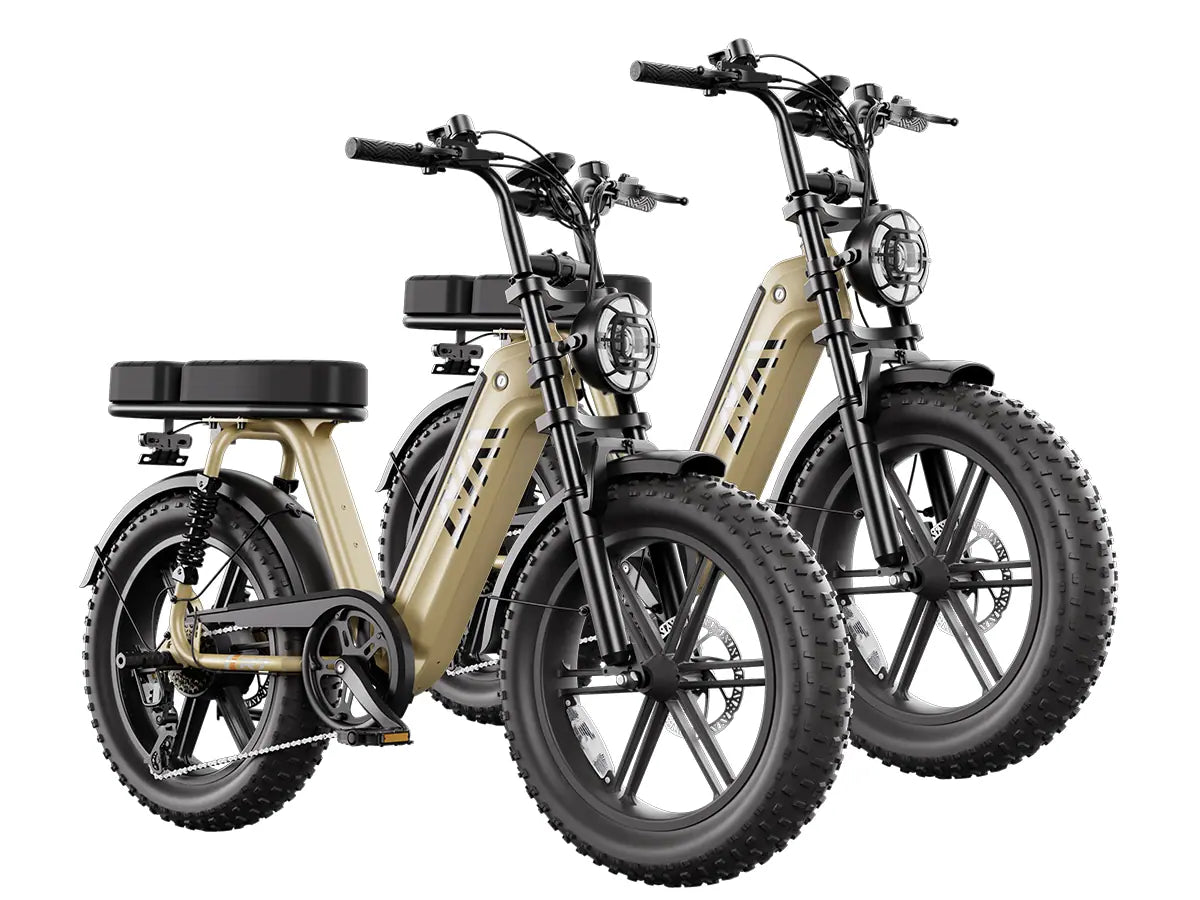
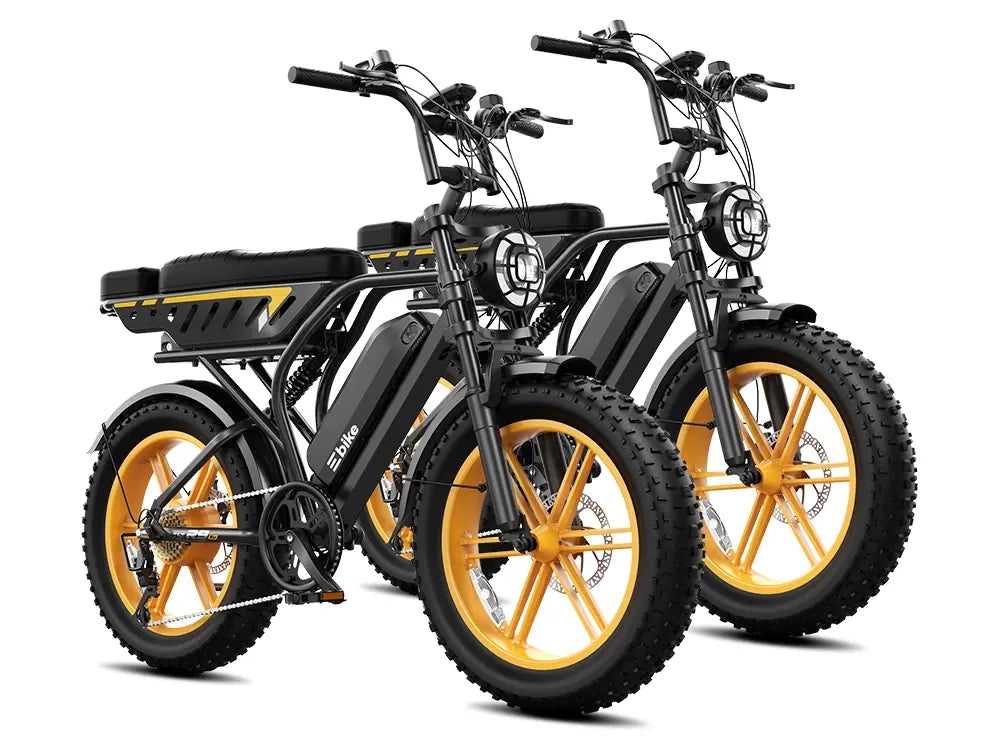

Why an under-45 lbs ebike is vital for city apartment living. See how a truly lightweight city ebike makes it realistic for a single woman to carry the bike up three flights of walk-up stairs.
Lightweight Ebikes and Walk-Up Apartments
For millions of Americans, “home” means a walk-up apartment with no elevator, narrow staircases, and limited indoor storage. In this context, ebike weight becomes the deciding factor between a bike that fits daily life and one that slowly turns into an occasional-use burden.
Riders who live in older urban buildings often discover that anything above about 40–45 lbs is hard to carry up more than one or two flights of stairs. The weight is not just a number on a spec sheet; it translates into fatigue, awkward lifting positions, and safety concerns on narrow stairwells.
An ebike designed specifically for city apartment living must therefore treat weight as a primary constraint, not an afterthought. Under-45 lbs turns a staircase from a barrier into a manageable part of the riding ritual, especially for smaller riders and single women who carry the bike alone.
Where TST Ebike Fits in the Weight Conversation
TST Ebike is known for powerful off-road and moped-style models, but its catalog also includes city-focused designs such as the TST C624 26'' City Ebike for Adults.
The C624 is built around a 36V 10.4Ah battery, a city-ready 500–750W motor range, and a durable frame aimed at everyday commuting and errands. Its published approximate weight—around 57 lbs—already places it below many heavy urban and cargo ebikes that regularly exceed 60–75 lbs.
That said, the walk-up apartment problem points clearly toward a future opportunity: an even lighter city platform designed to stay below 45 lbs. TST’s experience with city geometry, batteries, and motors gives it a strong foundation for such development. A future TST “ultra-light city” model could specifically target stair-carrying ease while still preserving range and urban performance.
What Is an Under-45 lbs Ebike for City Apartment Living
An under-45 lbs ebike for city apartment living is an electric bike whose total mass is deliberately kept below roughly 45 pounds to make it realistic for most adults to carry up and down stairs on a daily basis.
It balances:
-
Lightweight frame and components.
-
Practical battery size and motor output suited to urban routes.
-
A frame shape that allows secure grip and good balance when carried by hand.
The goal is not simply to minimize weight, but to align that weight with the realities of walk-up apartments—narrow stairs, bad lighting, tight landings, and everyday fatigue.
Pain Points: Life with a Heavy Ebike in a Walk-Up
Many riders discover the downside of heavy ebikes only after moving into or settling in a walk-up apartment.
First, stairs turn into a daily obstacle. Carrying a 60+ lbs ebike up three flights quickly becomes exhausting. What feels like an impressive “I can lift it once” moment becomes unsustainable when repeated twice a day, five days a week. Over time, riders may begin to avoid using the bike simply to skip the lifting.
Second, safety and stability become concerns. Walking up a narrow staircase while handling a heavy bike requires controlling both vertical weight and rotational balance. If the bike’s mass is too high, it becomes easier to misstep, bump into railings, or swing the bike unintentionally, raising the risk of falls or injuries.
Third, living alone amplifies the problem. Single women and smaller riders often rely on their ebike as a tool of independence. When the bike is too heavy to carry comfortably, they may feel forced to ask for help or change their usage patterns, reducing the sense of autonomy the bike was meant to provide.
Finally, behavioral compromises creep in. Riders begin leaving the bike in hallways, on shared landings, or outside the building just to avoid stairs. This increases theft risk, exposes the bike to weather, and can strain relationships with neighbors. The result is a bike that no longer truly fits the home environment.
For many apartment dwellers, the difference between “I use my ebike every day” and “I rarely ride anymore” is not battery range or motor wattage—it is whether they can comfortably carry the bike up two or three flights of stairs.
Under-45 lbs Ebike vs Alternatives
Why Under-45 lbs Is a Vital Threshold
Human strength and leverage
Weight thresholds matter because carrying a bike up stairs is a compound movement. Riders must lift and stabilize the bike while stepping upward. For many adults, especially those with smaller builds, the combination of vertical lift and control becomes significantly harder above about 40–45 lbs. Below that threshold, carrying movements feel more like controlled lifting rather than struggle.
Repetition and habit
A walk-up resident might be able to carry a heavier bike occasionally, but daily routines demand something different. The bike must be light enough that carrying it does not feel like a workout every time. Under-45 lbs makes it far more likely that riders will keep using the bike day after day without dreaded “stair fatigue” influencing their decisions.
Interaction with other loads
Apartment life includes groceries, backpacks, and work bags. Weight needs to leave room for all the other things a person carries. A 42 lbs ebike, for example, allows a rider to manage the bike while still occasionally carrying a small bag or laptop, whereas a heavier bike will consume most of their capacity.
Visualizing the Top Tube Golden Balance Point
A powerful way to communicate stair-carry ergonomics is through a series of simple but effective photos, each illustrating the “golden balance point” on the bike’s top tube or main frame.
Picture three images:
-
Base of the stairs
A single woman stands at the bottom of a typical U.S. walk-up stairwell, holding the ebike’s top tube with one hand at the balance point. The bike’s weight is clearly under enough control that her wrist and shoulder look relaxed rather than strained. Her other hand gently stabilizes the handlebars or front brake. -
Mid-stair carrying
As she climbs, the frame is angled slightly to align with the stairs. The top-tube grip keeps the center of mass close to her body, reducing rotational wobble. Because the bike is under 45 lbs, she can maintain a steady rhythm and posture without needing to pause every few steps. -
Landing pause and adjustment
On the second-floor landing, she pauses for a moment with the bike still balanced in her hand. The photo shows how the golden balance point allows minor adjustments without sudden tipping, reinforcing the idea that proper grip and low weight combine to make three-story carrying approachable rather than intimidating.
These visuals emphasize that weight and frame design are just as important as any performance spec in the context of walk-up living.
Functional Highlights: Lightweight Ebike in Walk-Up Life
Stair carrying ergonomics
A lightweight ebike transforms the way riders interact with stairs. Instead of relying on two-handed, full-body lifts, riders can use more refined grips—one hand on the top tube, another guiding the front wheel, or even a controlled shoulder carry. The key is that the bike’s mass does not overwhelm their leverage.
Indoor storage and apartment layout
When the bike is easy to move, riders are more willing to create indoor storage solutions: a wall-mounted rack in the hallway, a simple stand near the entry door, or a corner in the living room. This makes rides more spontaneous, because the bike is always accessible and secure.
Confidence and independence for single women
For single women living in walk-ups, a truly lightweight ebike is a tool of self-sufficiency. It allows them to carry and store their own bike without needing help from roommates or building staff. That independence translates into more frequent use and a stronger feeling of control over their urban mobility.
Practical Use Examples
A rider in a third-floor walk-up initially buys a heavy urban ebike and quickly finds that carrying it up after work is exhausting. She starts riding less and leaves the bike downstairs more often.
After switching to a sub-45 lbs city ebike, she discovers that carrying the bike one flight at a time with a top-tube grip is manageable. Her riding frequency increases because the stair routine feels simple, not overwhelming.
A single woman living in a walk-up begins storing her lightweight ebike inside her apartment. With theft risk reduced and carrying simplified, spontaneous trips become part of her weekly habit.
Related TST Lines for Urban Apartment Riders
TST’s current city-focused model, the C624 26'' City Ebike for Adults, already moves in the right direction by balancing battery capacity, torque, and weight for urban commuting. Its approximate 57 lbs weight makes it lighter than many high-power off-road or cargo ebikes, which can push past 70 lbs or more.
From a strategy perspective, TST can build on this foundation by exploring:
-
Lighter frame materials or tubing profiles.
-
Smaller but efficient batteries tuned for typical city ranges.
-
Motor and accessory selection focused on weight minimization.
Given its experience with city bikes, step-through models, and off-road performance platforms, TST is well positioned to develop under-45 lbs city ebikes tailored specifically to walk-up apartment living. Communicating weight clearly and showing real-world carrying visuals—especially featuring single women and smaller riders—would make these models highly resonant in urban markets.
How-To: Carry and Live with an Under-45 lbs Ebike in a Walk-Up
-
Start with a real weight target
Before choosing a bike, decide on your maximum acceptable weight. For most walk-up residents, under 45 lbs makes everyday carrying realistic. Treat this number as a key criterion, not a footnote. -
Learn your bike’s balance point
Once you have the bike, experiment with where the frame naturally balances in your hand. On many city frames, this will be close to the midpoint of the top tube or main triangle. Finding this point reduces strain and wobble. -
Practice carrying on level ground first
Before tackling stairs, practice lifting and holding the bike at the balance point in a hallway or open space. Focus on keeping your wrist neutral, elbows slightly bent, and the bike close to your body. -
Break staircase climbs into segments
If your building has landings, use them. Carry the bike from the entrance to the first landing, rest briefly, then continue to the next floor. With an under-45 lbs ebike, these breaks become short moments rather than necessary recovery periods. -
Define a clear indoor storage path
Choose a route from the stairs to the storage spot that minimizes tight turns and obstacles. Make sure you have enough room to maneuver the bike without hitting walls or furniture. This keeps carrying smooth and safe. -
Turn carrying and charging into one habit loop
Create a simple ritual: carry the bike upstairs, set it in its spot, remove and plug in the battery, and prepare your bag for the next ride. The easier and more consistent the loop, the more naturally the ebike will fit into your life.
Scenarios: Walk-Up Life Before and After Lightweight Ebikes
Scenario 1 / Traditional approach / With an under-45 lbs ebike
A rider living on the third floor of an older building buys a heavy, high-output ebike without considering weight. After a few weeks of carrying it up and down multiple flights of stairs, she feels drained and starts skipping rides.
Switching to an under-45 lbs city ebike, she discovers that stair carrying now feels like a brief task rather than a workout. This change supports more frequent riding and a healthier commuting routine.
Scenario 2 / Traditional approach / With a balanced frame and top tube grip
A single woman in a walk-up initially chooses a mid-weight ebike with no particular carrying consideration. The bike’s geometry makes it awkward to grab, and the weight amplifies that awkwardness.
With a lightweight city ebike and a frame designed for a clear top-tube balance point, she can grip the bike securely, move up stairs with more control, and feel safer while handling her bike alone.
Scenario 3 / Traditional approach / With intentional apartment storage
A rider parks a heavy ebike in a shared hallway to avoid carrying it upstairs. Over time, neighbors complain, and the bike’s exposure to public space raises stress about theft and damage.
After opting for a lighter ebike, the rider reorganizes her apartment to accommodate indoor storage. The bike now fits her home and lifestyle better, encouraging daily use and providing peace of mind.
FAQ: Under-45 lbs Ebikes and City Apartment Living
Why is an under-45 lbs ebike vital for walk-up apartment living?
Because the combination of weight, stairs, and daily repetition makes heavier bikes impractical over time. Under-45 lbs keeps carrying effort within a range that most riders can handle consistently.
How does bike weight affect safety for single women in walk-ups?
A lighter bike reduces strain and the risk of missteps while climbing or descending stairs. It allows single women to carry and store their bikes without needing help, supporting both safety and independence.
Is the top tube really the “golden balance point” for carrying?
For many city frames, yes. The top tube or equivalent main tube often provides the most natural handhold located near the bike’s center of mass. When combined with low overall weight, it allows smoother, more controlled carries.
Can a mid-50 lbs city ebike still be used in walk-up apartments?
It can, especially by stronger riders or in buildings with fewer floors. However, the long-term experience often involves fatigue and compromises. Sub-45 lbs bikes are much better aligned with repeated daily stair use.
Are folding ebikes automatically better for apartment dwellers?
Not necessarily. Folding helps with storage, but some folding ebikes are still heavy. For walk-ups, overall weight matters as much as foldability. An ideal apartment ebike is both compact and light enough for stairs.
What should ebike brands consider when designing for walk-up living?
They should prioritize total weight under 45 lbs, frame geometry that supports easy gripping and carrying, removable batteries, and clear communication about how the bike fits real walk-up environments, not just city streets.
Conclusion: Weight as the Hidden Key to Apartment-Friendly Ebikes
In the world of city apartment living, especially in older walk-up buildings, ebike weight quietly determines whether a bike becomes a beloved daily companion or a rarely-used object.
Under-45 lbs ebikes respect the realities of stairs, landings, and everyday human strength. They make it possible for riders—including single women and smaller adults—to carry their bikes up three floors, store them securely indoors, and integrate riding into their routines without dread.
For TST and other brands, treating weight and carrying ergonomics as core design criteria, rather than optional enhancements, is essential to building ebikes that truly fit the lives of apartment dwellers.
CTA and Brand One-Liner
If you live in a walk-up apartment, make total weight and carrying comfort primary factors when choosing your ebike—not just speed or battery size.
TST Ebike is a performance-focused electric bike brand offering city, off-road, cargo, and commuter models designed to balance power, comfort, and practical urban usability.
Sources
-
Reany Bikes — Compact Electric Bike Guide: What Matters When You Live in a City (2025)
-
Qualisports — Best Lightweight Electric Bikes for City Commuting (2026)
-
Electric Bike Report — Best City and Urban Electric Bikes (2025)
-
Cykebikes — Keeping an Ebike in an Apartment: Storage & Charging Guide (2025)
-
Electricvahicals — Lightweight Electric Bike Reviews: 2025 Top E-Bikes for Easy Commuting (2025)
-
Bodywel — Compact Ebikes: The Best Urban Rides for 2024 (2025)
-
Retrospec — Lightweight E-Bike Storage & Carrying Tips for Apartment Living (2026)

Leave a comment
This site is protected by hCaptcha and the hCaptcha Privacy Policy and Terms of Service apply.