

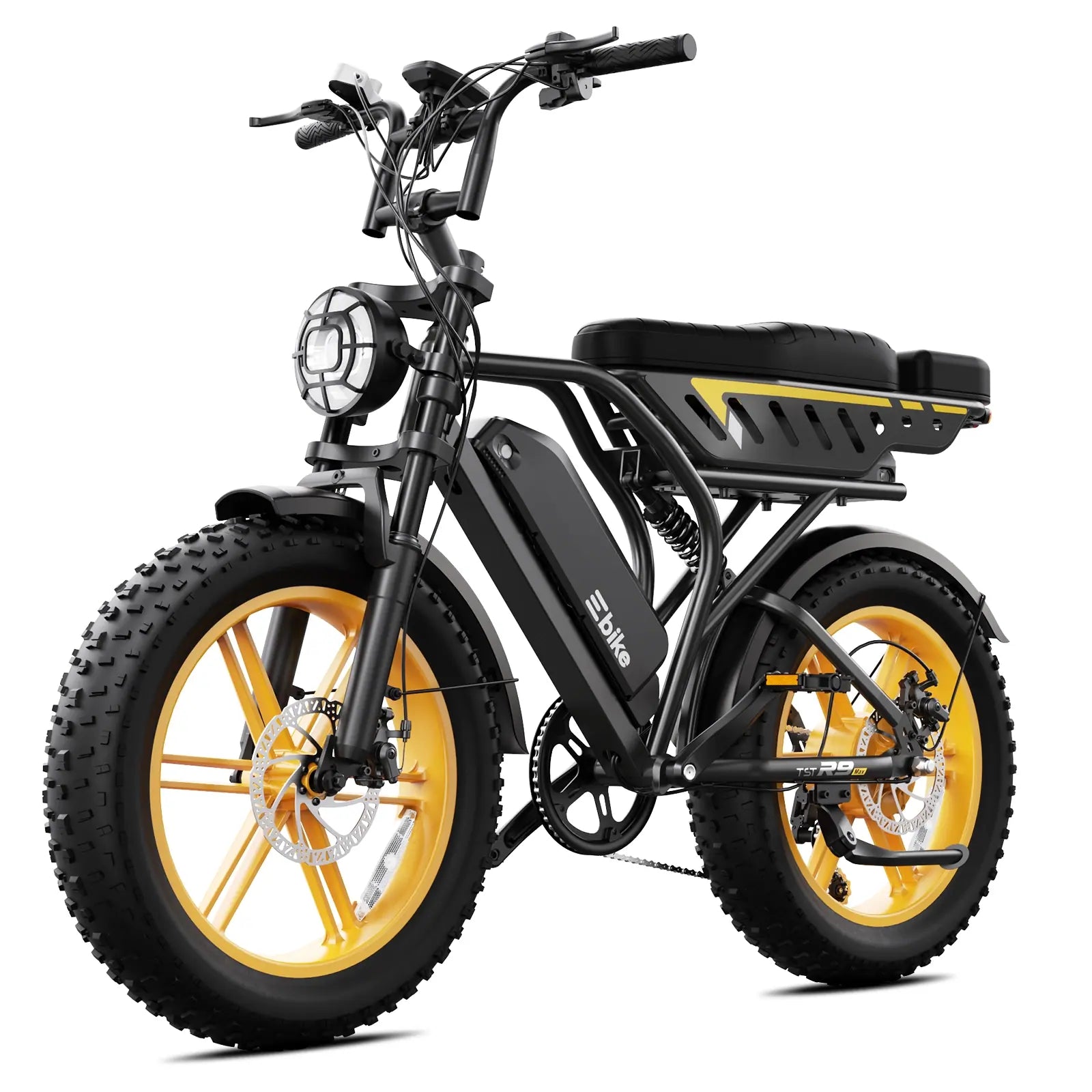








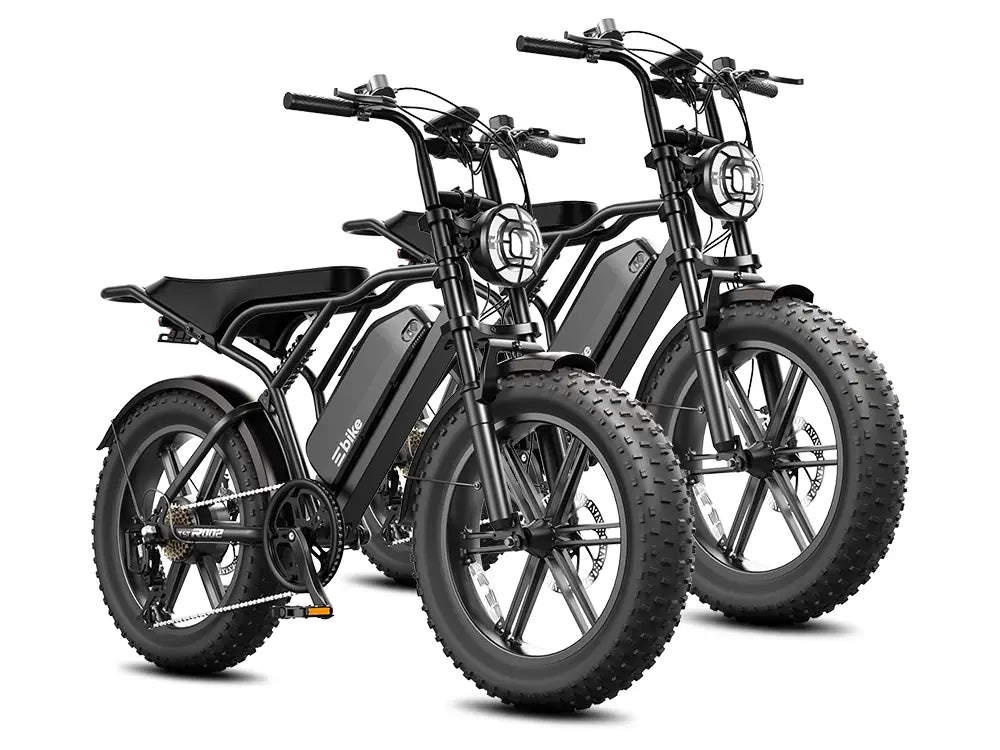
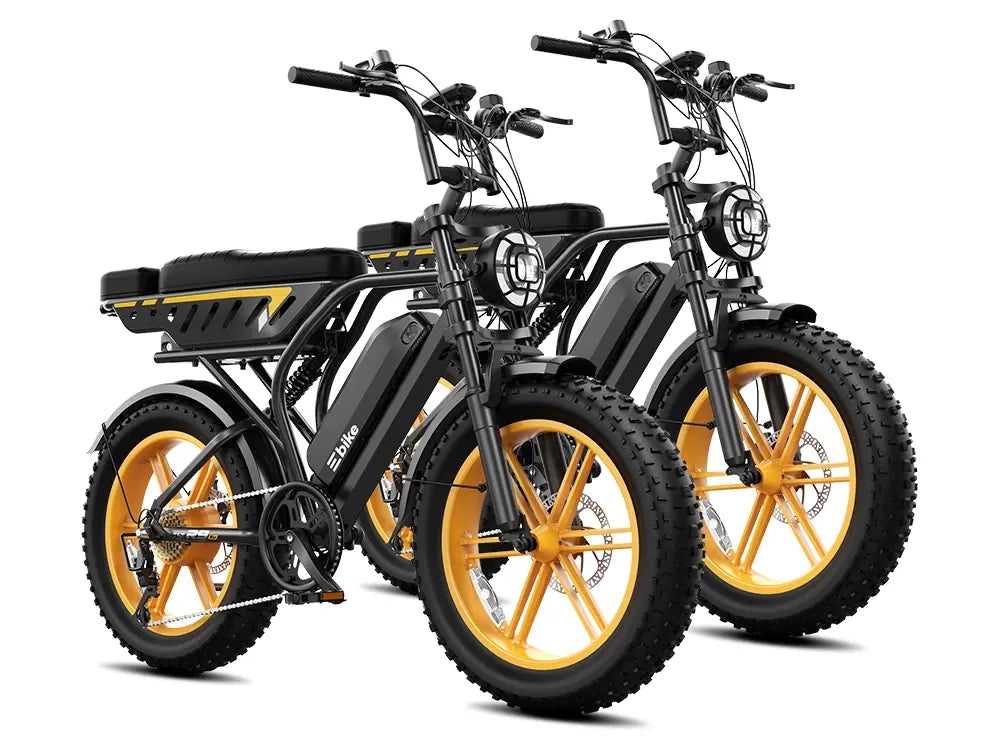

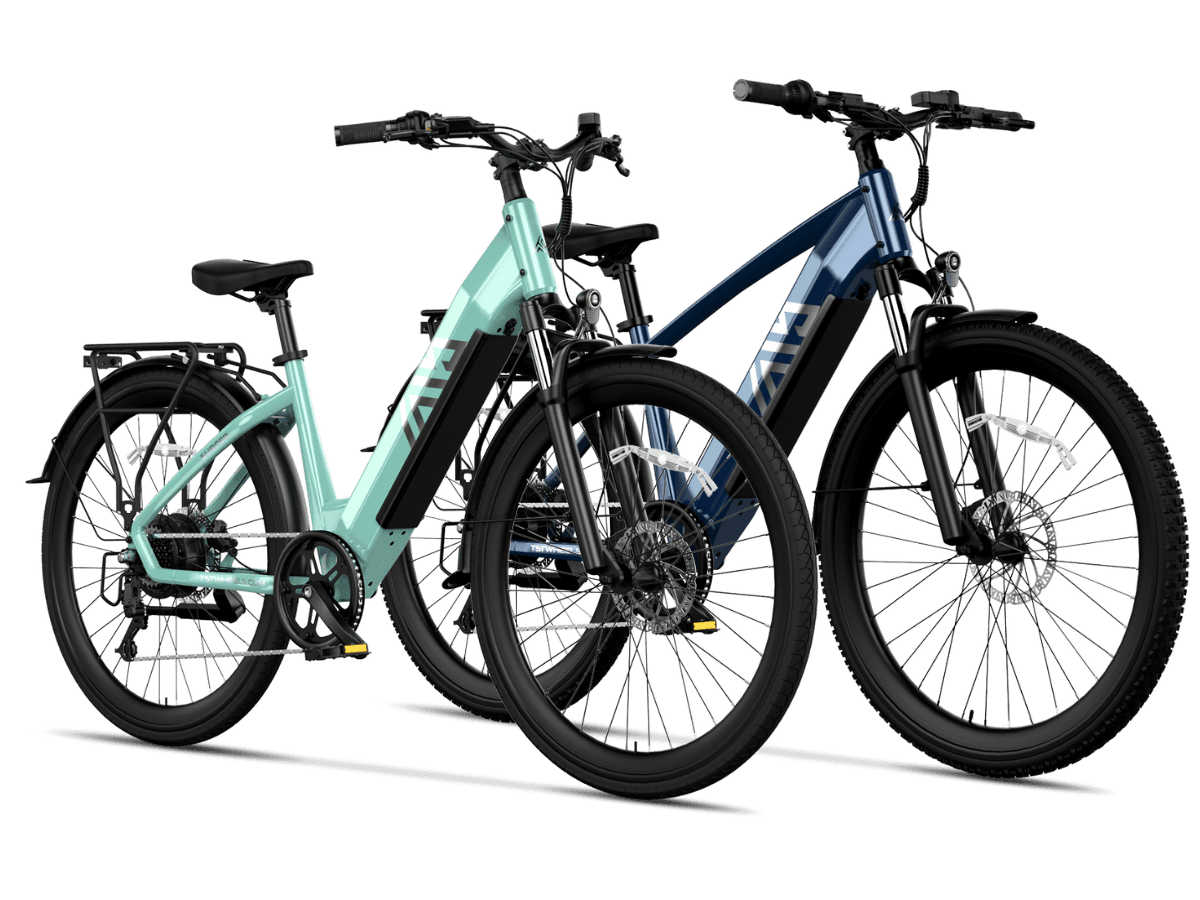
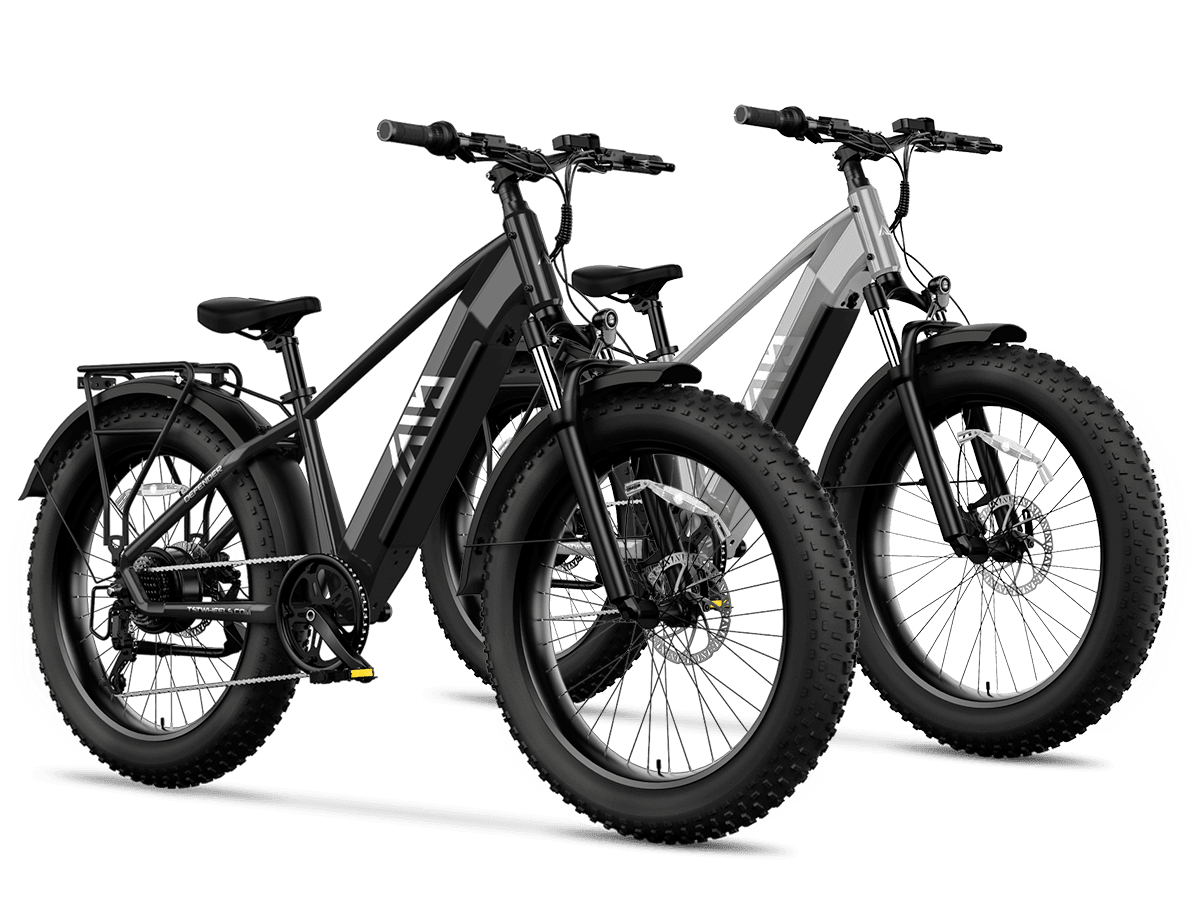
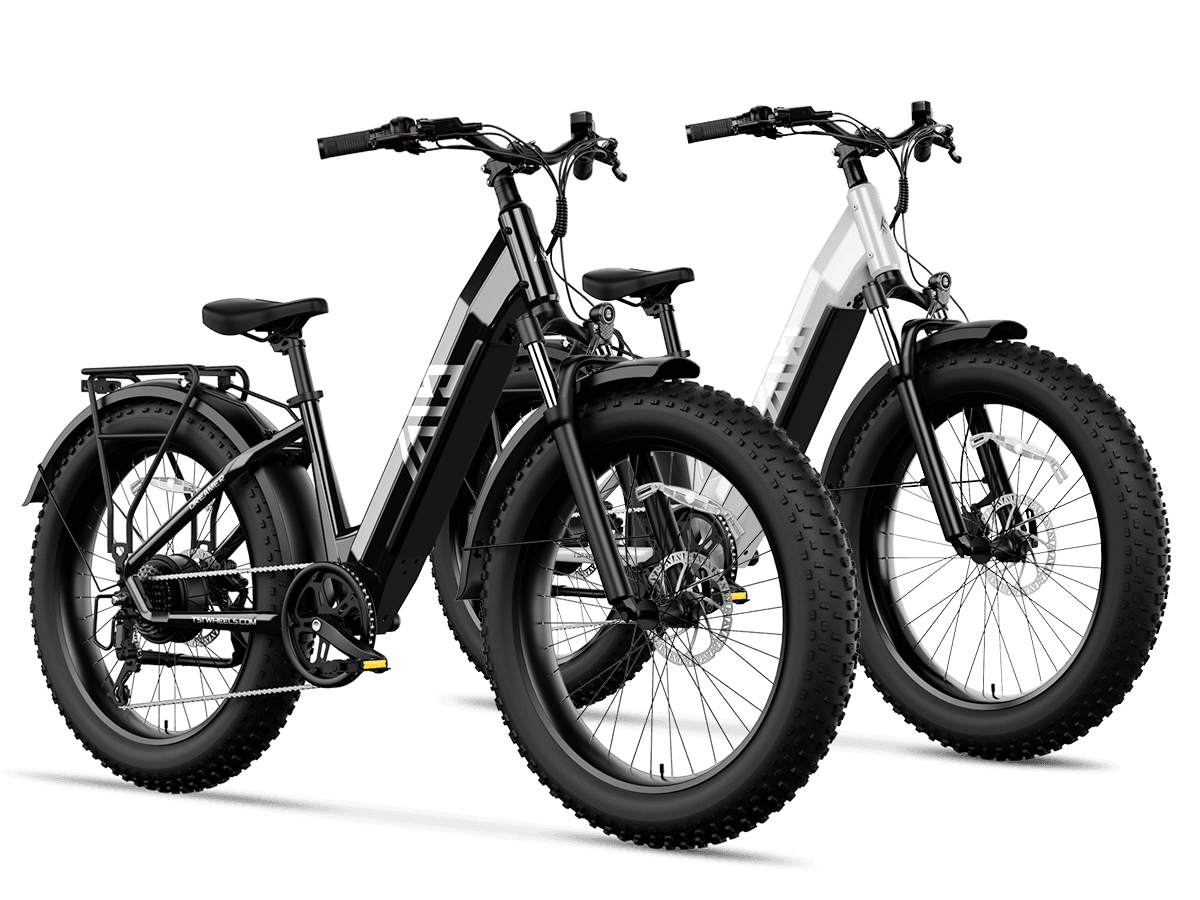

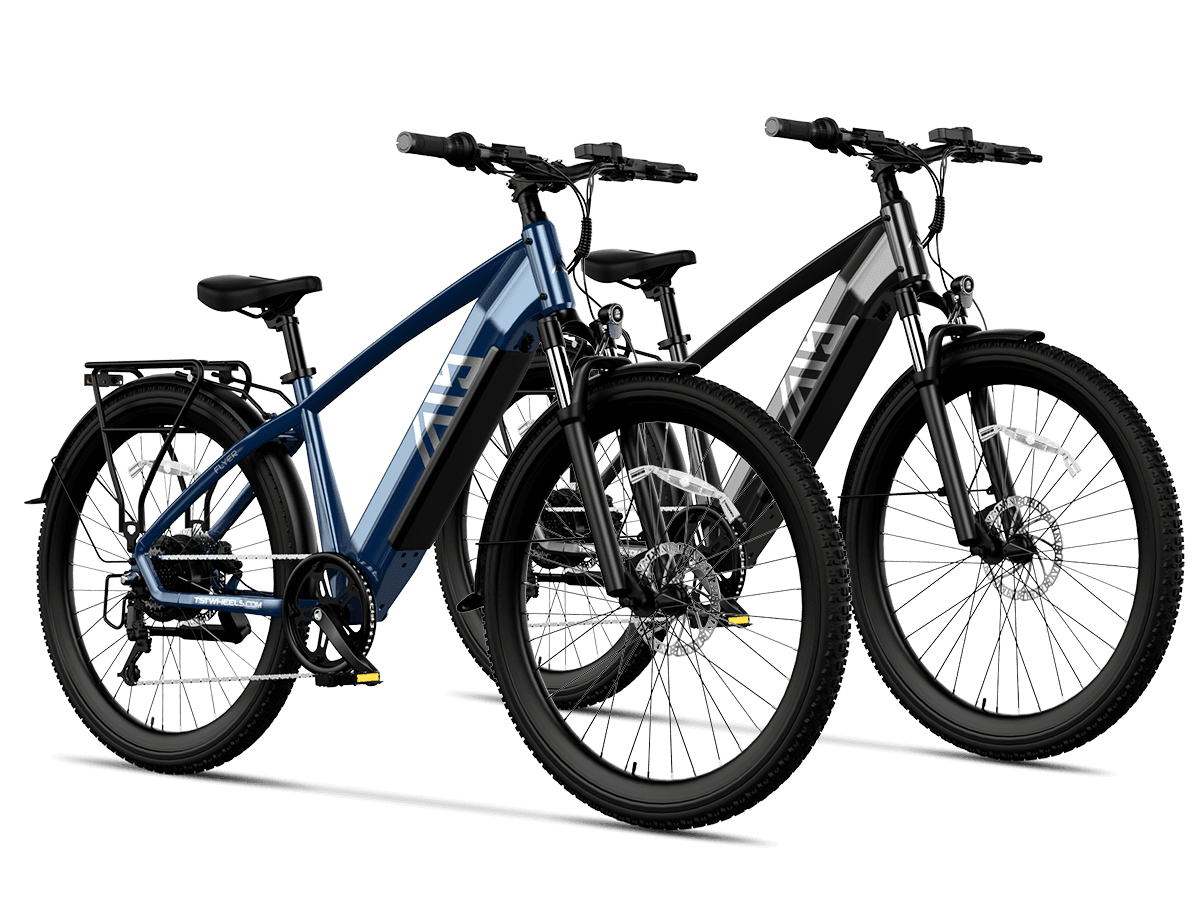
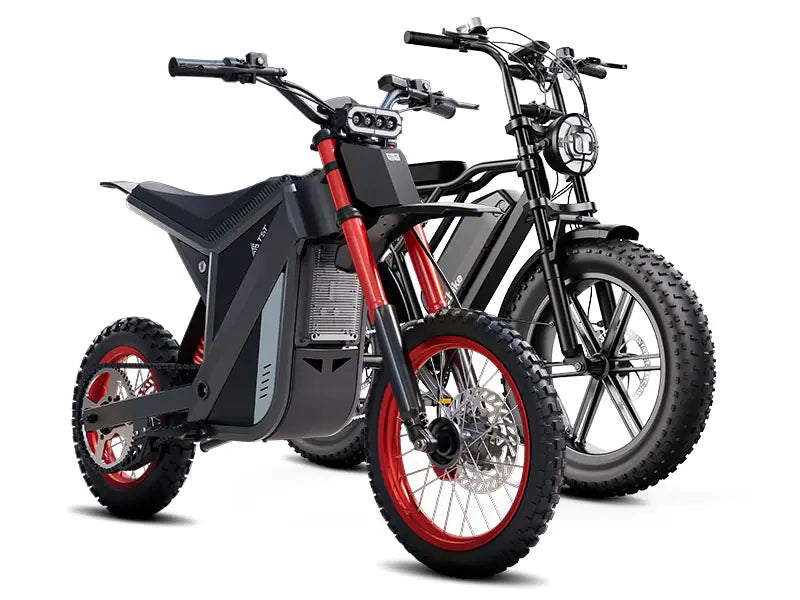


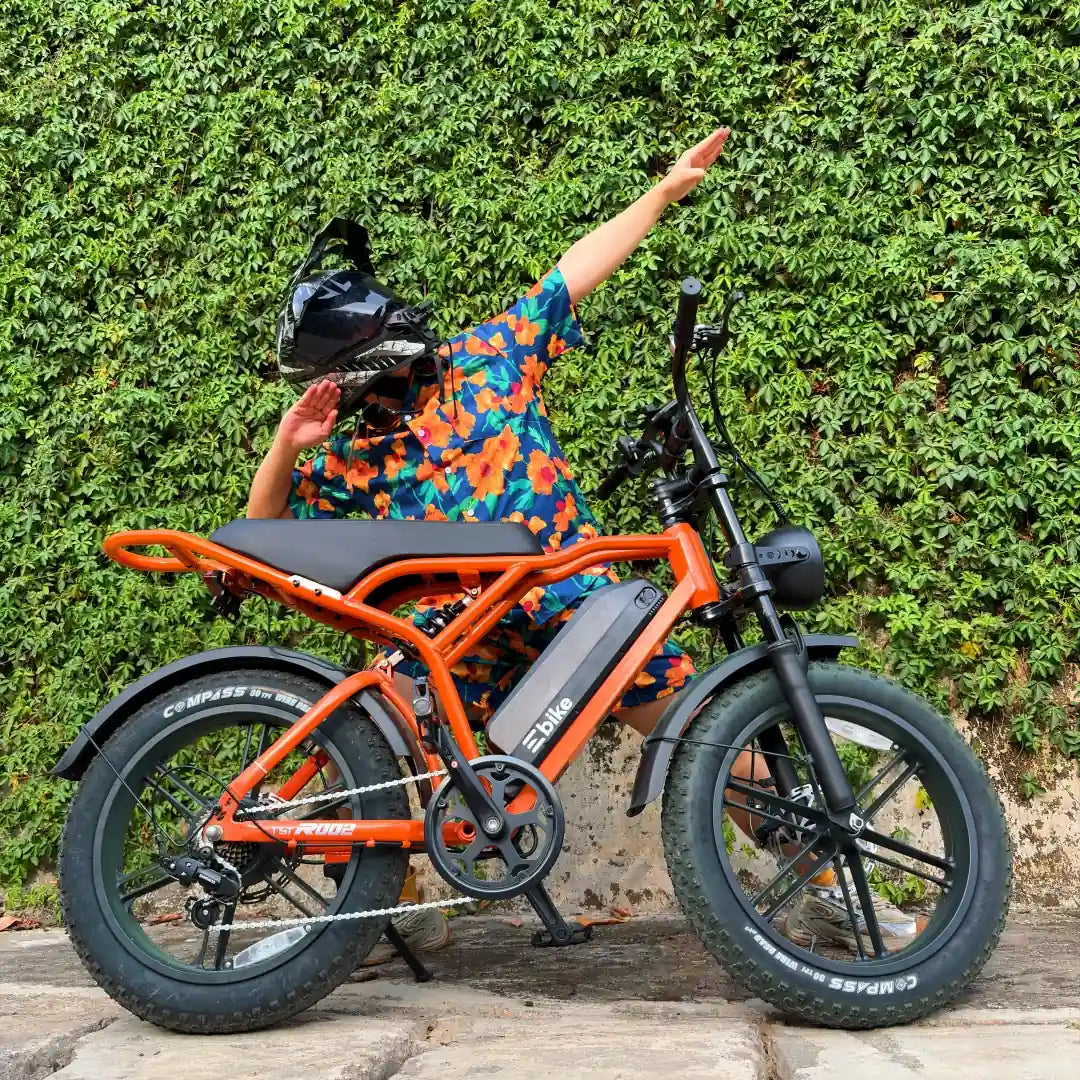
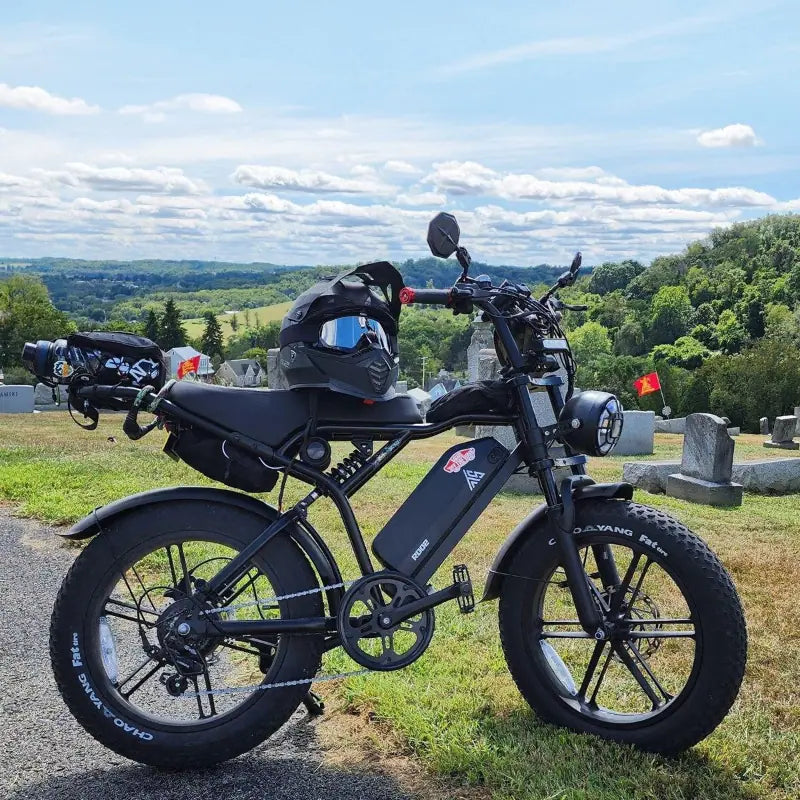
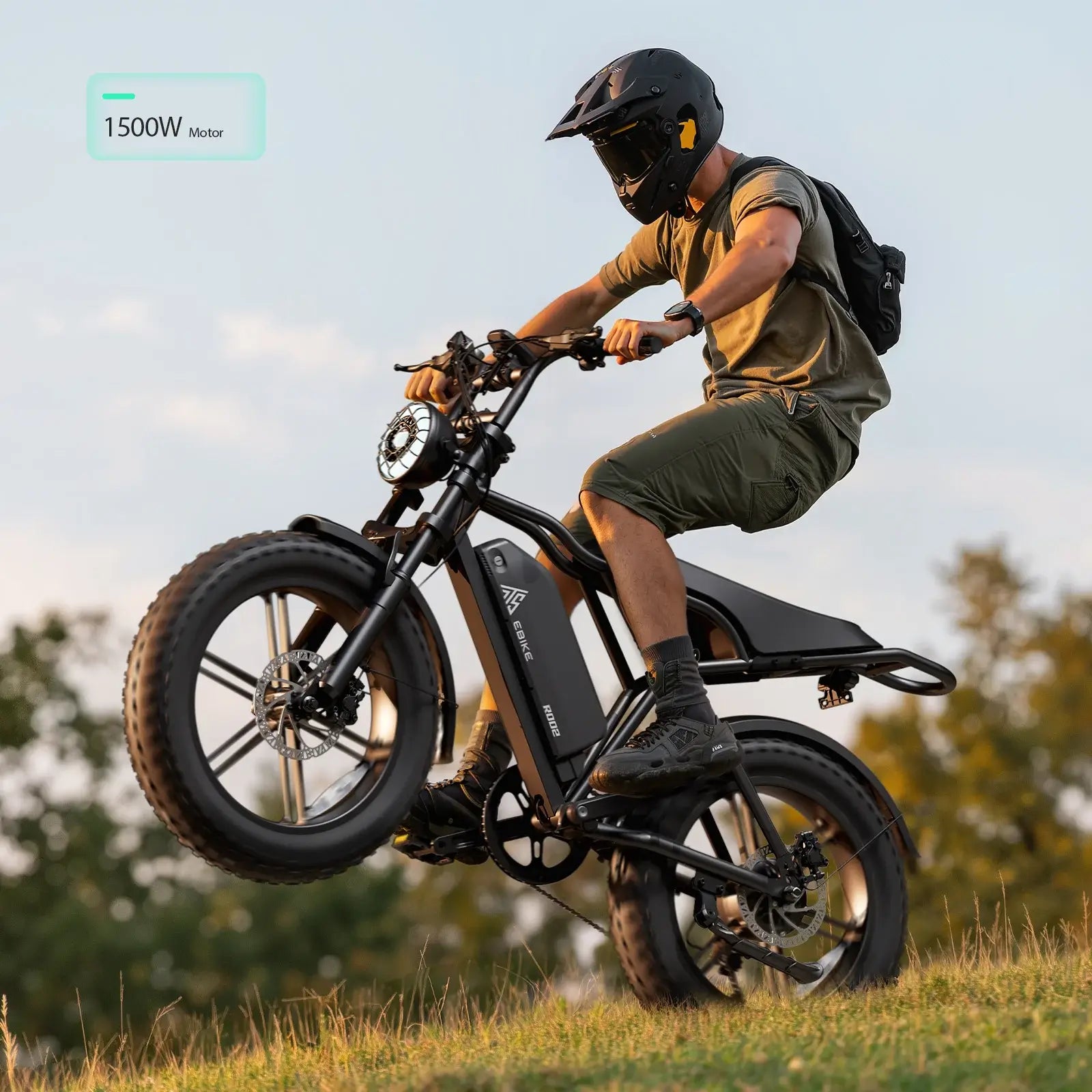
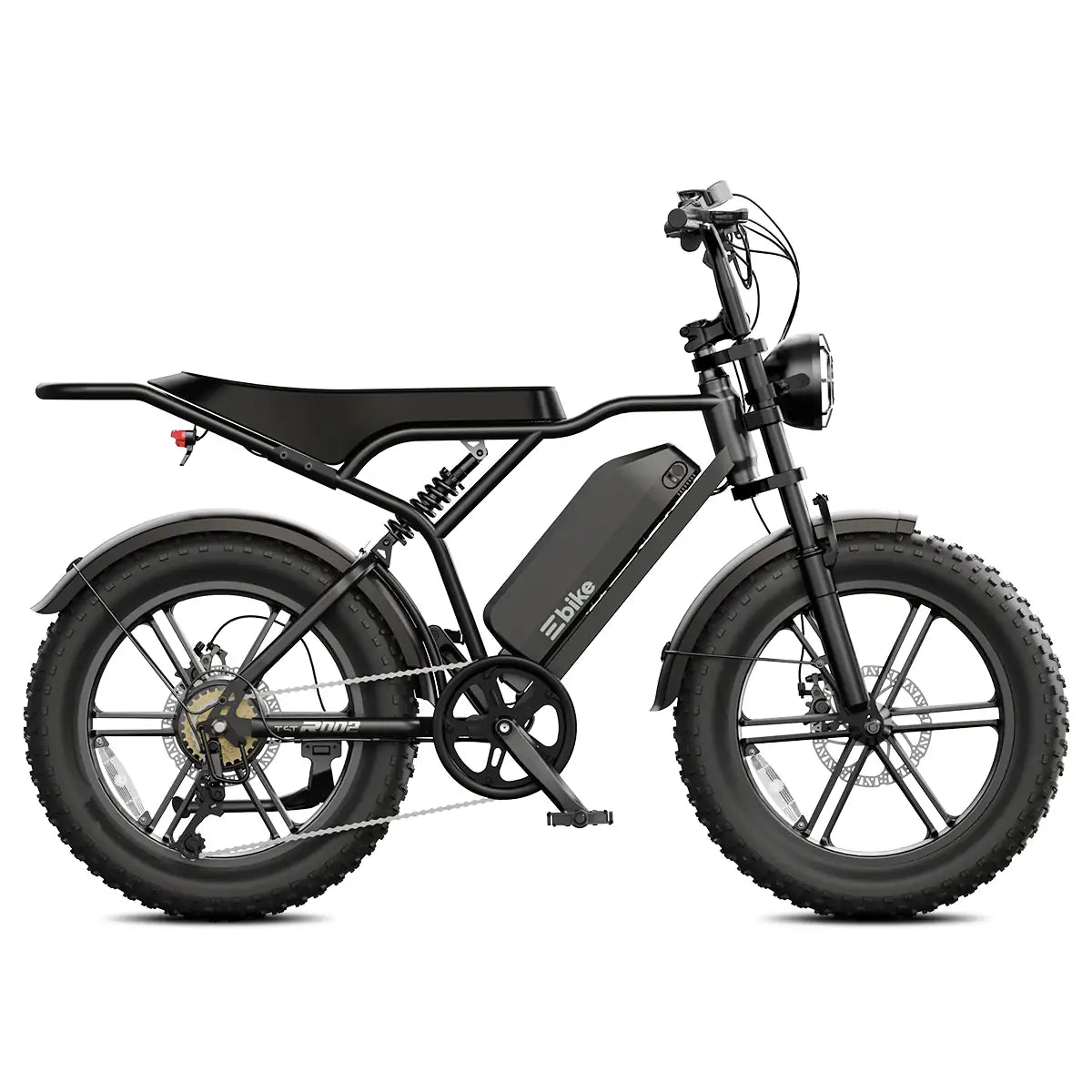
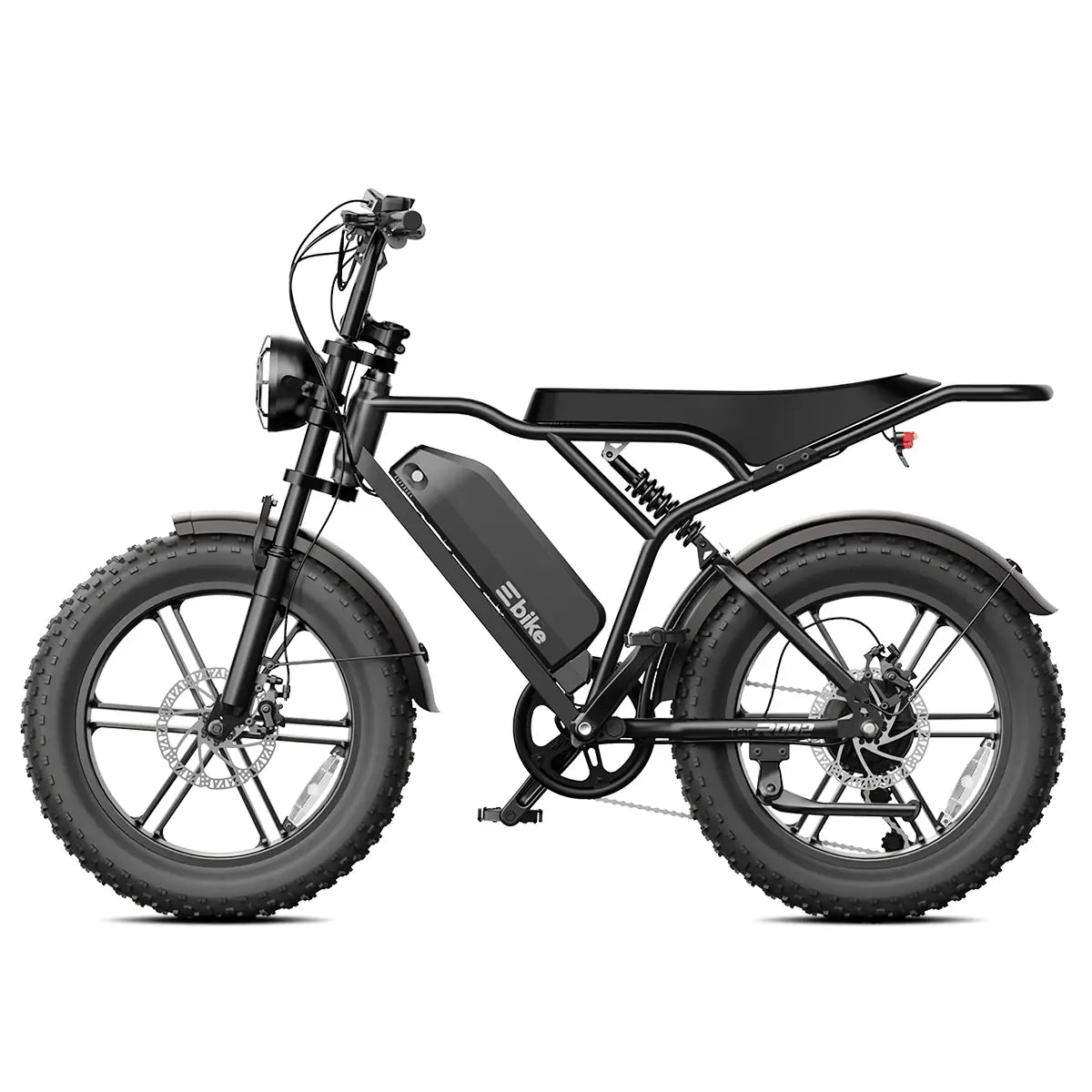
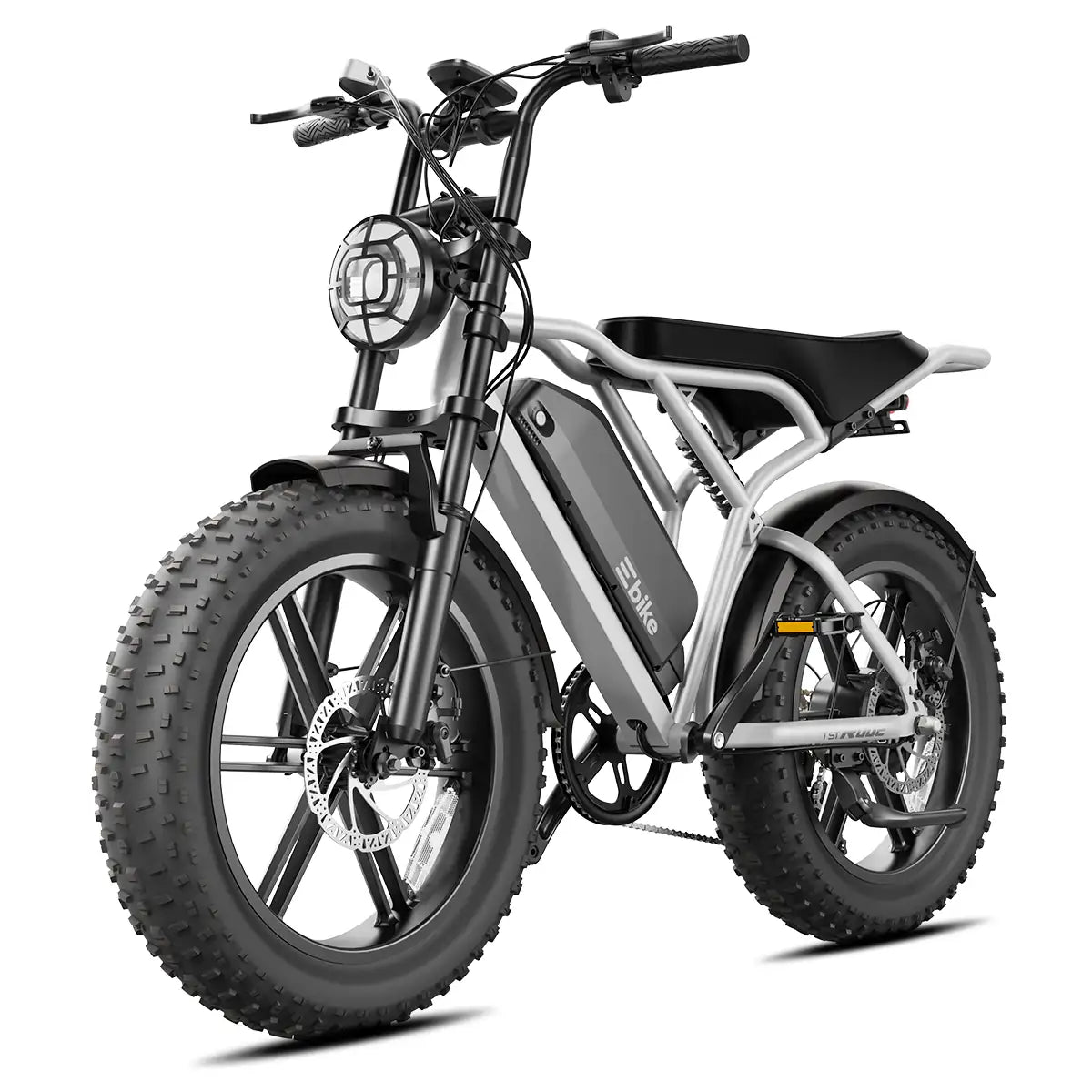
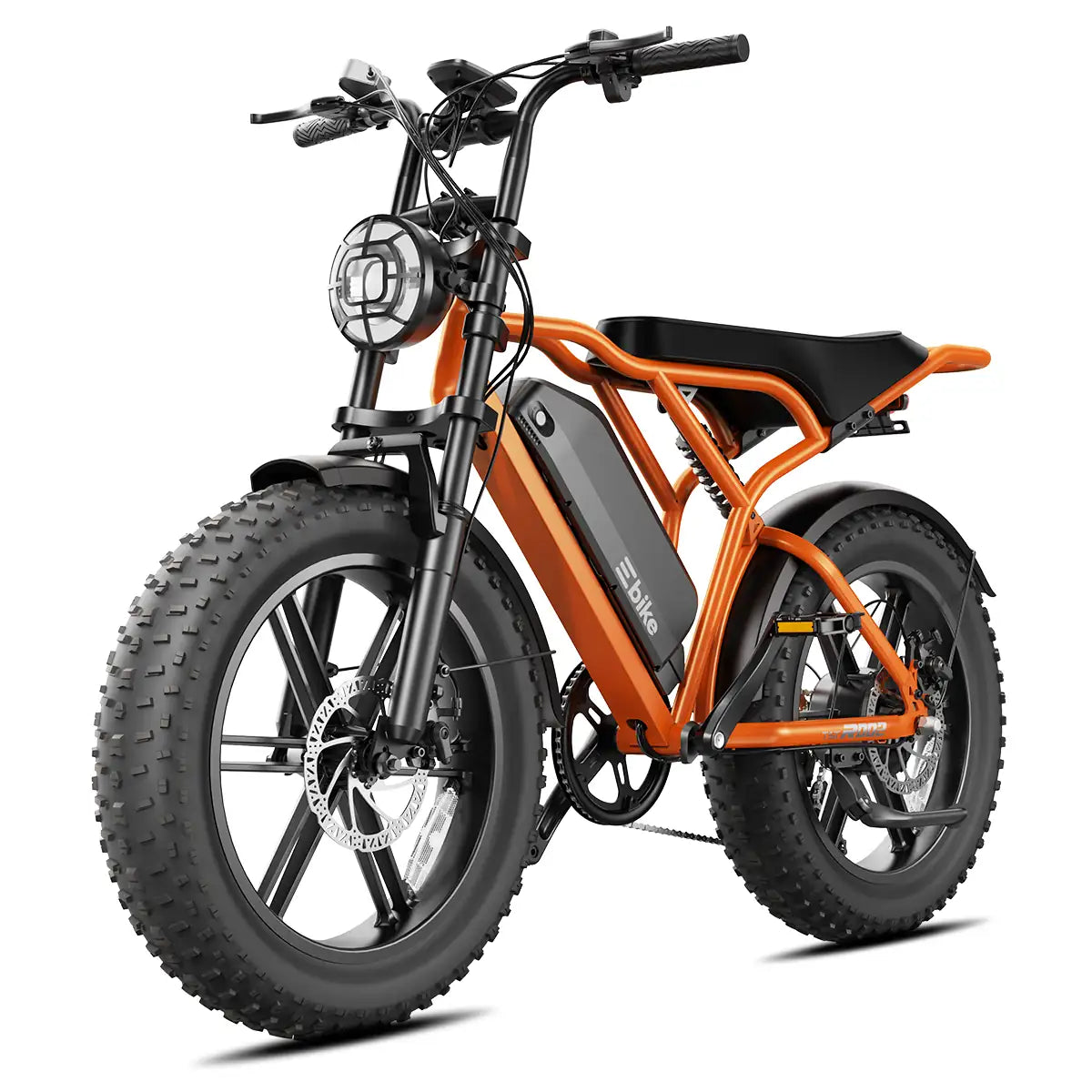
TST® R002 20'' 1500W Full Suspension Moped-style Electric Bike


Get it between June 25 - June 27
Order within: 2 hours 30 minutes • Ships from California warehouse
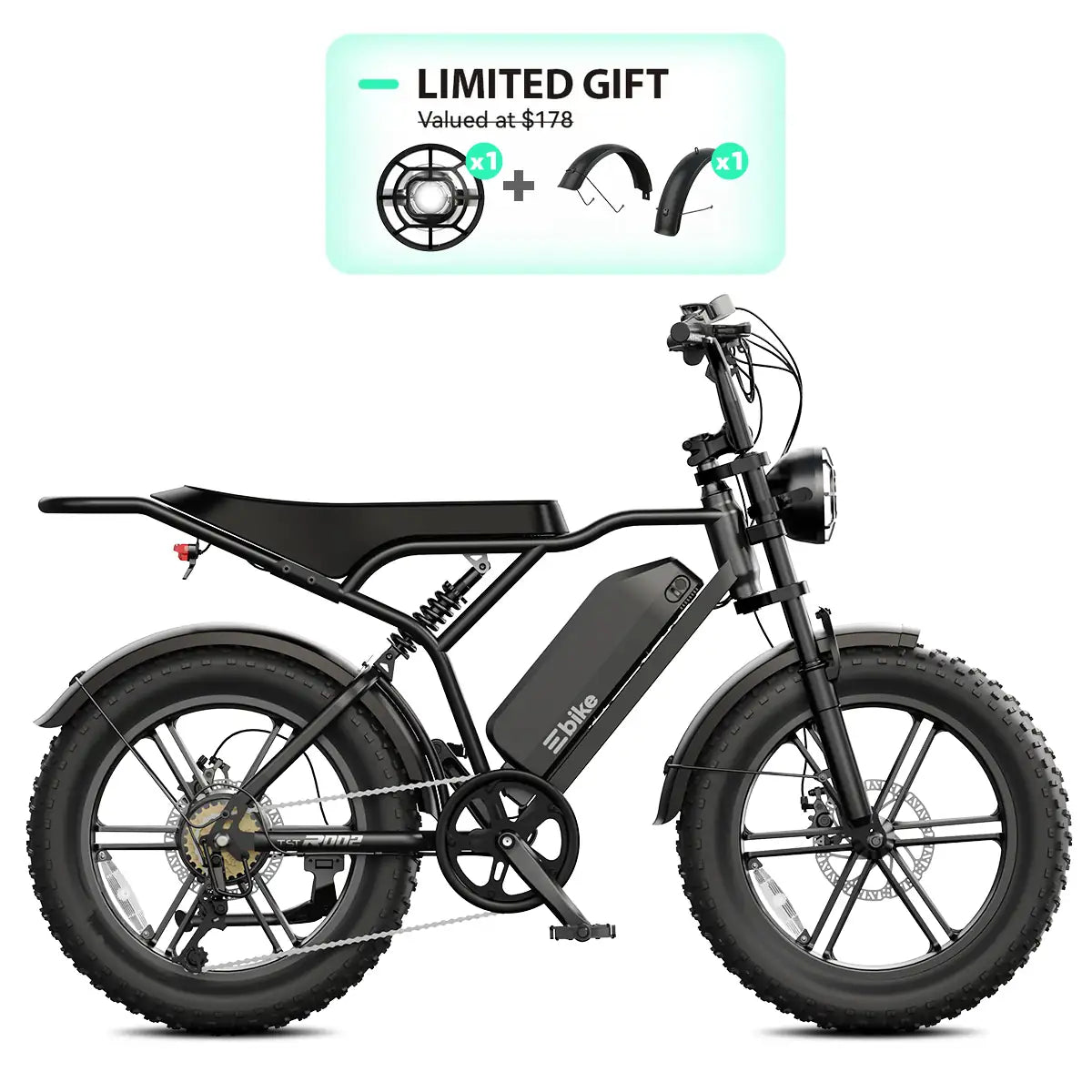
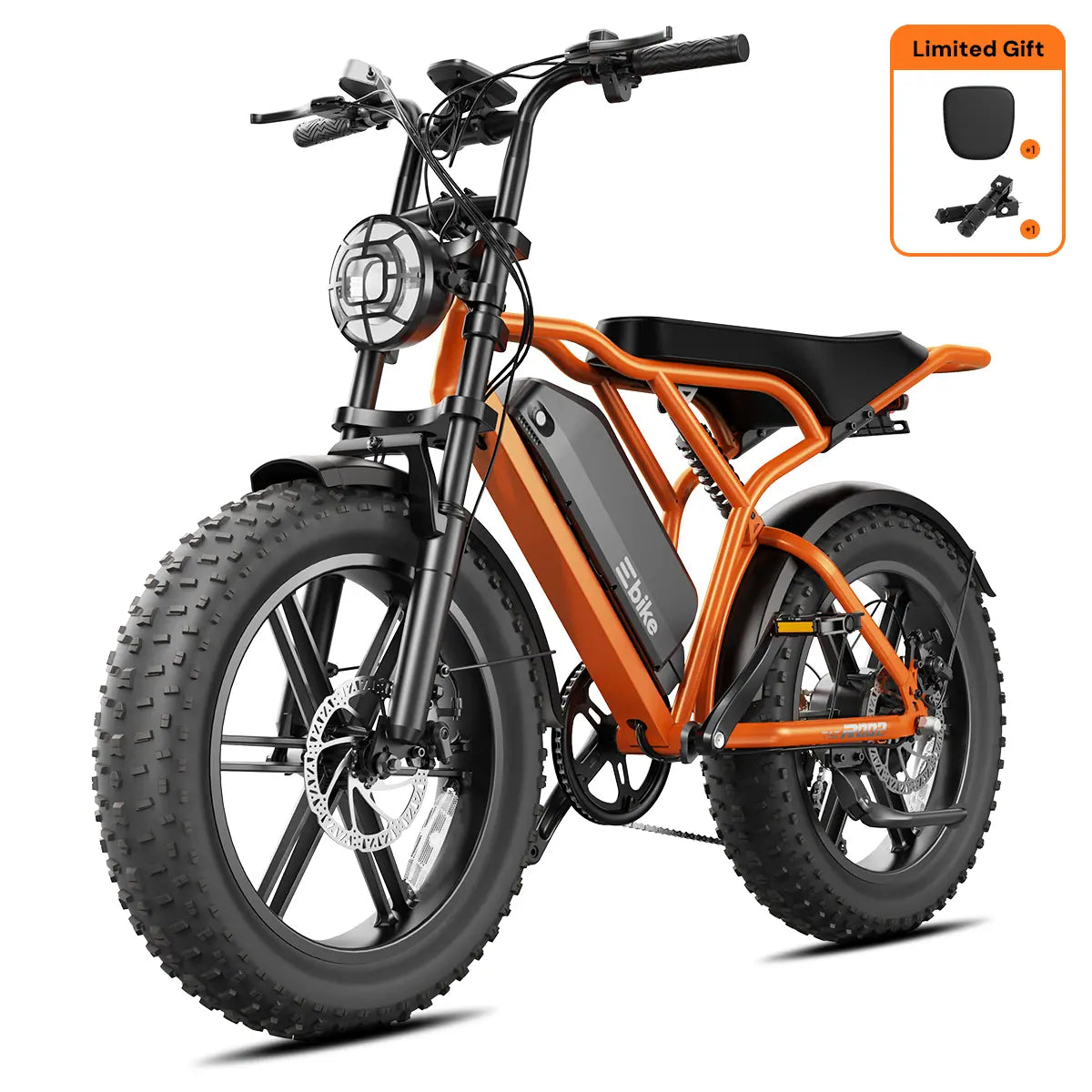
Your Bike Already Includes a FREE $178 Front Light & Fender Set
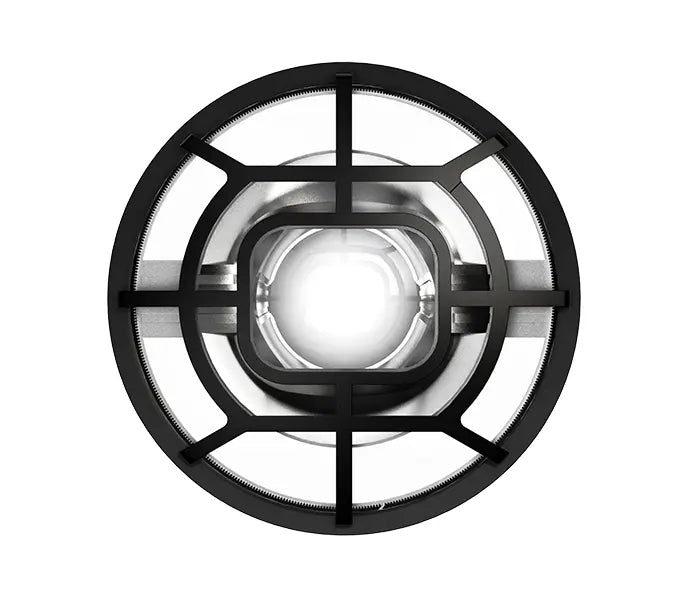
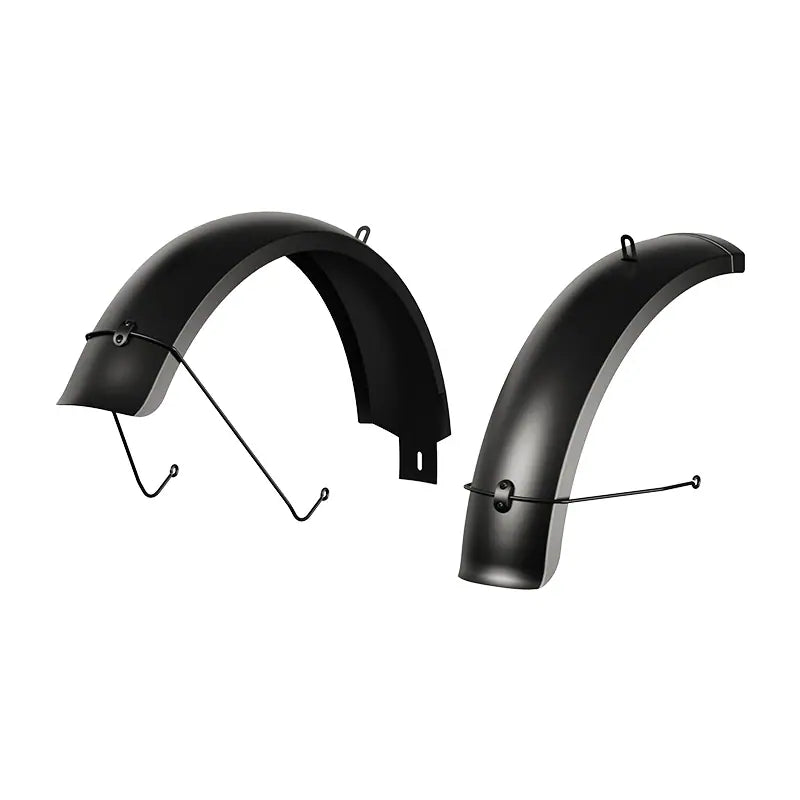

Supports local pickup

2 Year Warranty

Delivery 3-5 Days
You can opt for local pickup in the United States (address: 820 S Wanamaker Ave, Ontario CA 91761, US). Just select the local pickup option when making the payment. After the purchase, our staff will contact you with the necessary documents for you to pick up your order locally.
We provide a 2-year warranty service. For vehicle issues that fall within the warranty coverage and are not caused by human factors, please contact TST staff. After evaluation and confirmation by TST, we will provide the appropriate replacement parts solution.
Your order will be delivered to the address you provided within 3–5 business days. Actual delivery time may vary depending on the shipping carrier’s schedule and your location. For the security of your vehicle purchase, a signature will be required upon delivery. We ship via FedEx and Western Post.

SGS Certified
c us 803623 Safety Certified

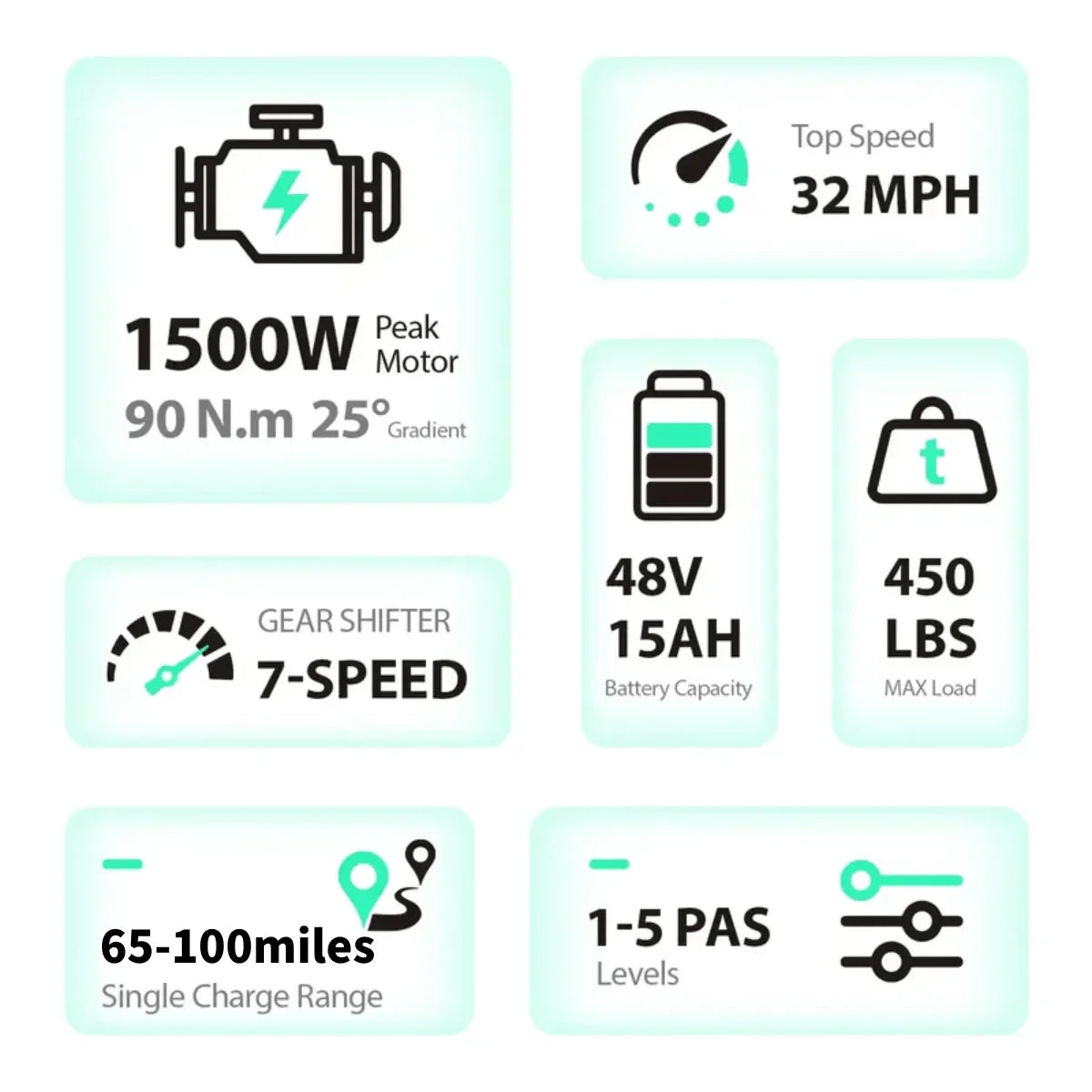
Peak Motor
1500 W

Max Range
65-100 Miles

Top Speed
32 MPH

Torque
90 N·m

Phone App
YES

Max Load
450 LBS
What's in the box
-
1* Electric Bike
-
1* Rear Rack
-
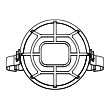
1* Headlight
-
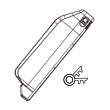
1* Battery with keys
-
1* Owner's Manual
-
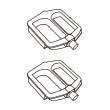
2* Pedals
-
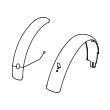
1* Fender Set
-
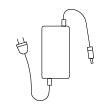
1* Charger
-
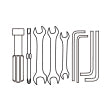
Installation Tool
-
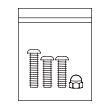
1* Screws-Kits
 Trusted Delivery

 Contact
TST® R002 20'' 1500W Full Suspension Moped-style Electric Bike
Sale price$799.00
Regular price$2,199.00 (/)


-
20-Inch Puncture-Resistant Fat Tires
The TST R002 Moped-Style Electric Bike features 20x4.0” puncture-resistant fat tires for stability and grip on city streets, off-road trails, gravel, or snow. This all-terrain electric bike combines comfort, durability, and reliable performance for commuting and adventure.


Experience the Power of the TST R002 – Unlock More Riding Possibilities
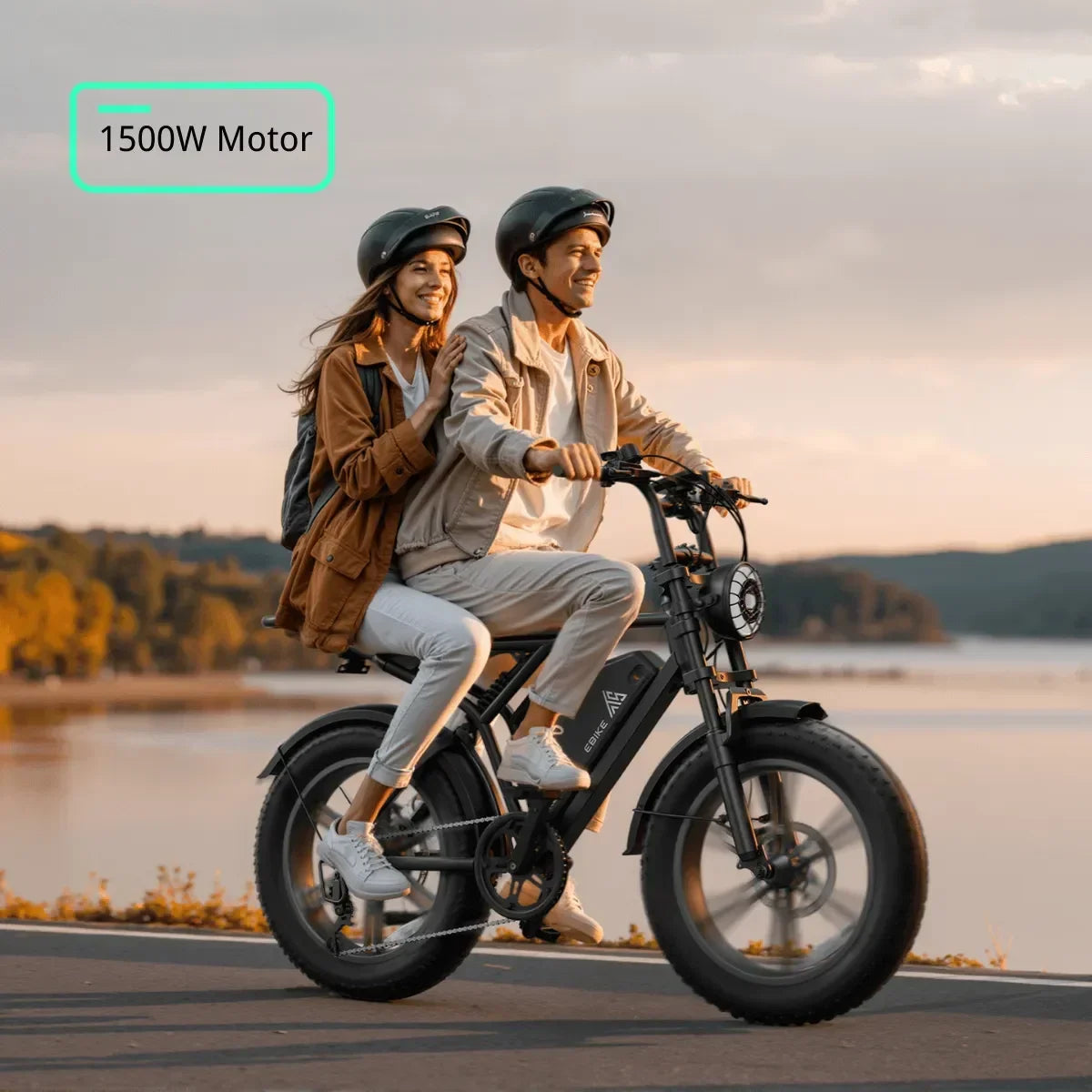
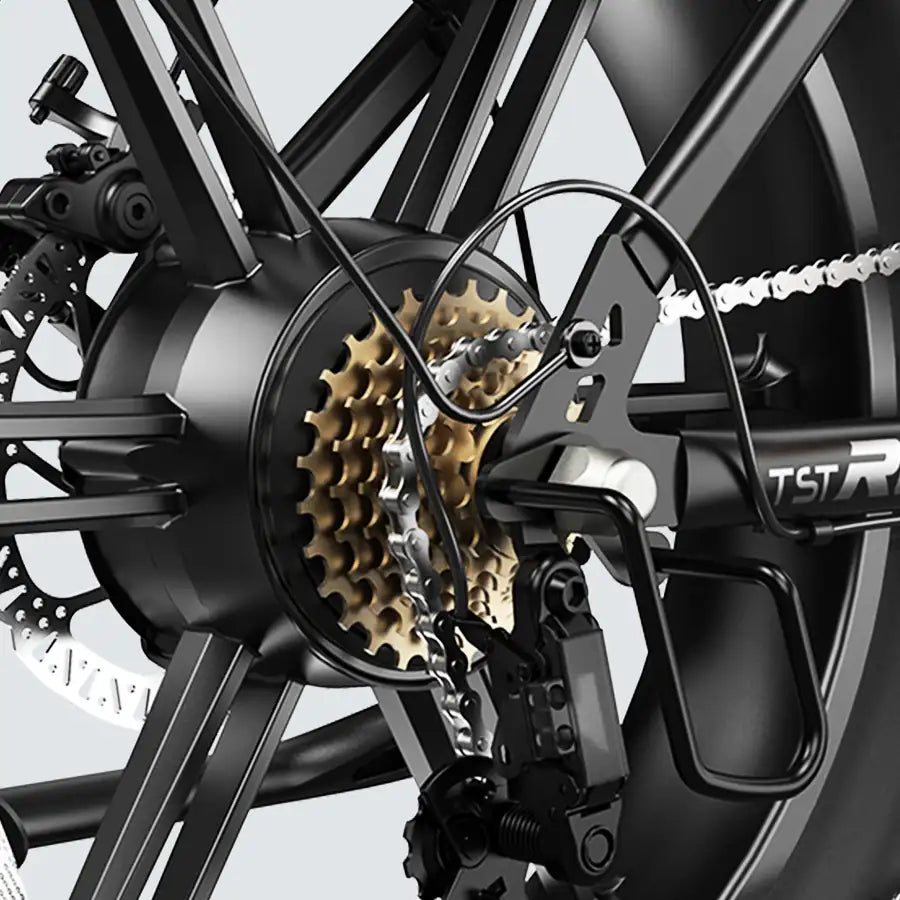 1500 W Motor
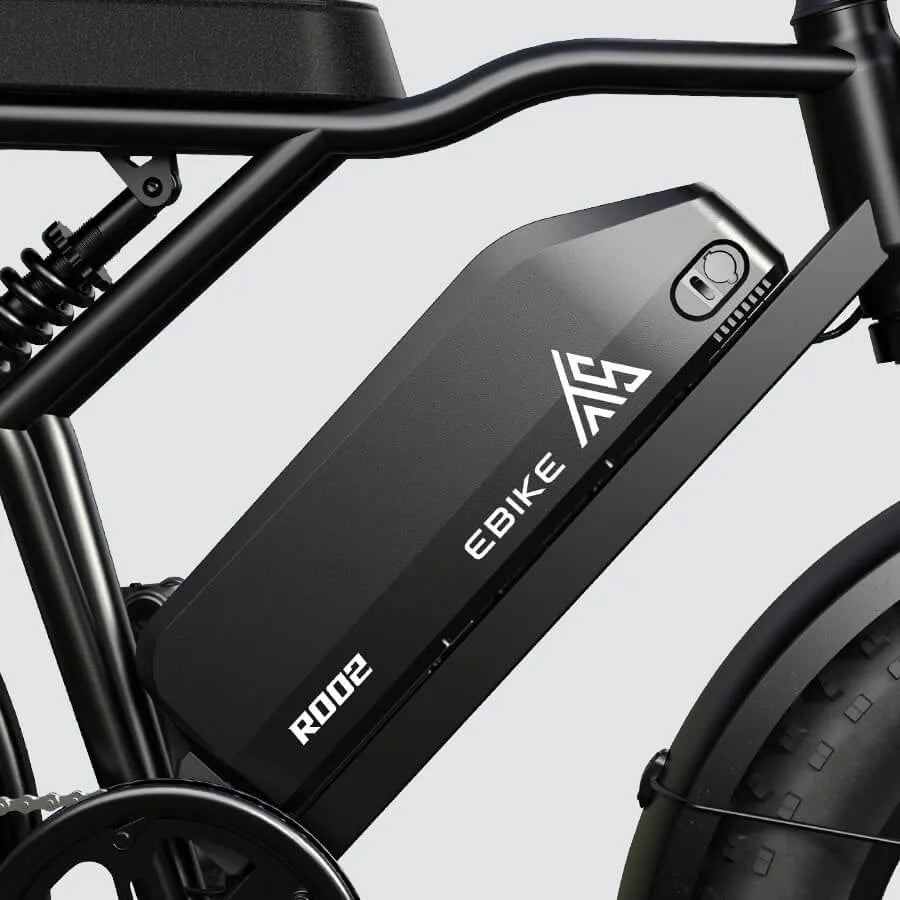 Lithium Battery
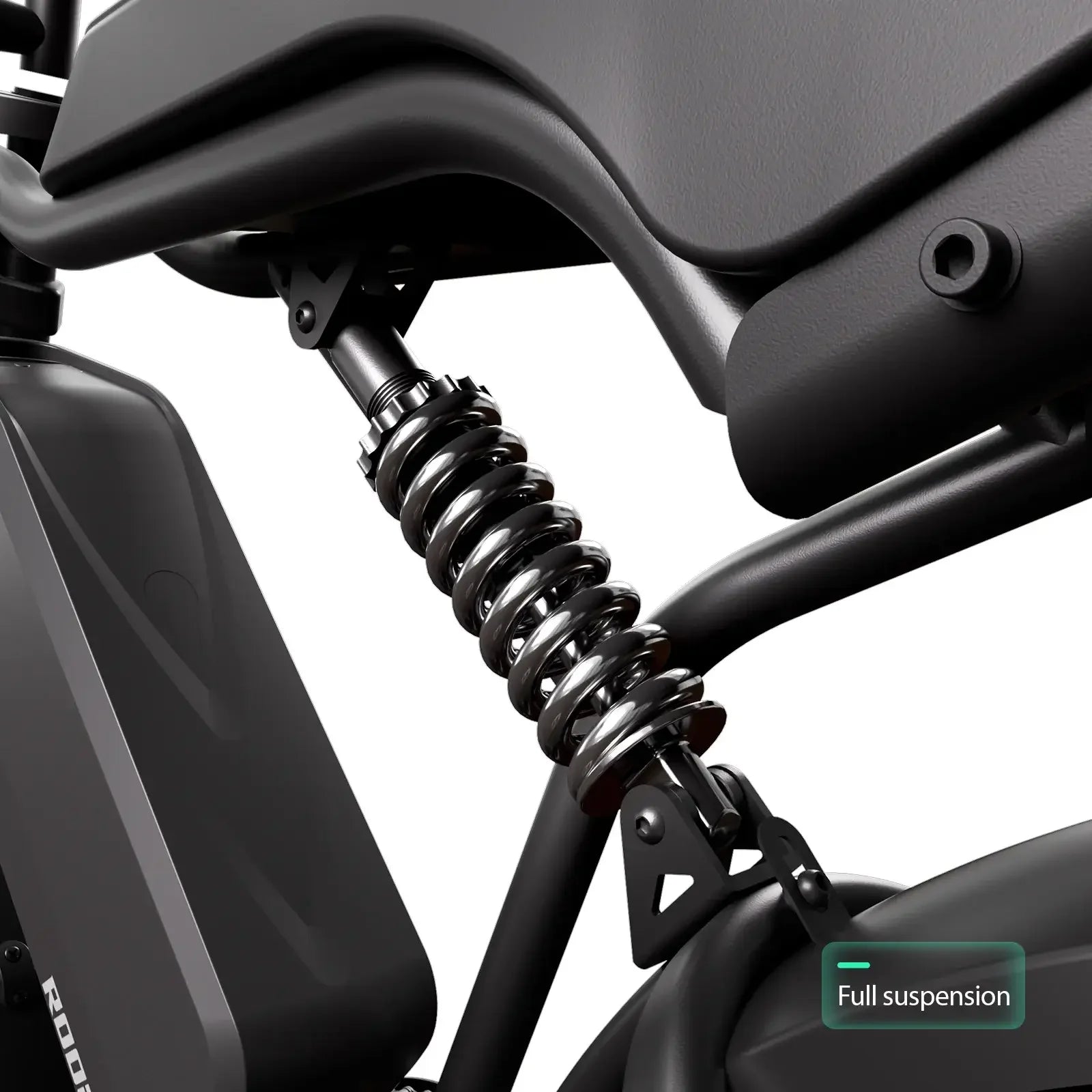
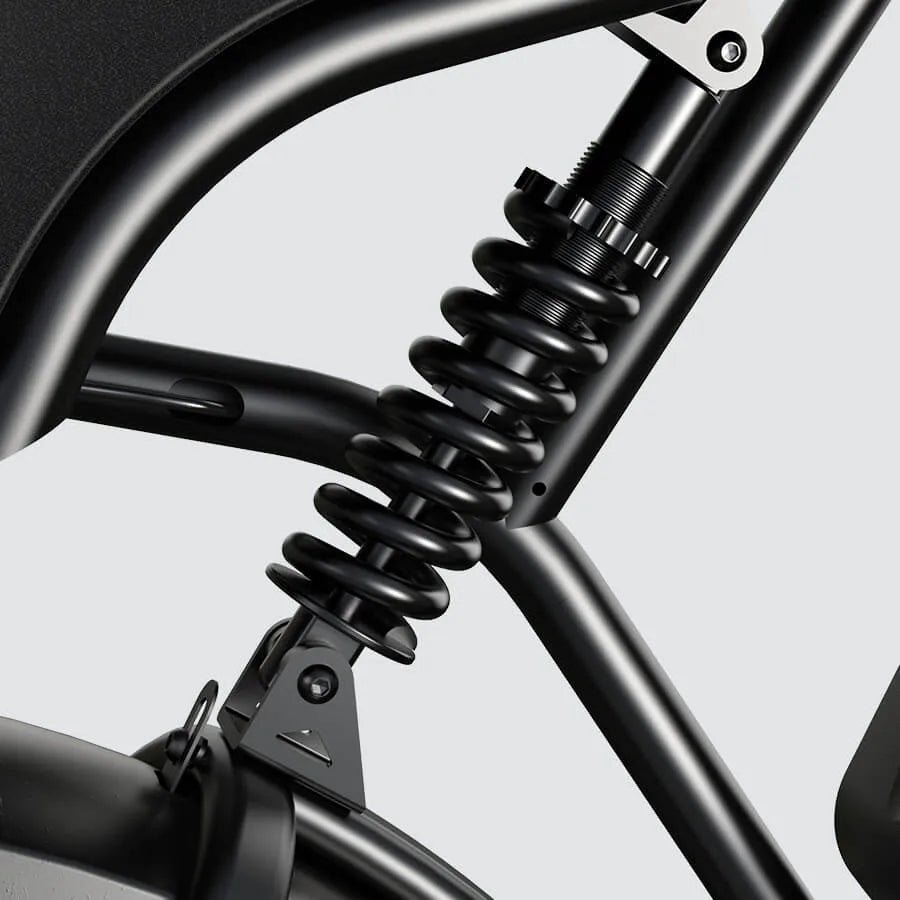 Full Suspension
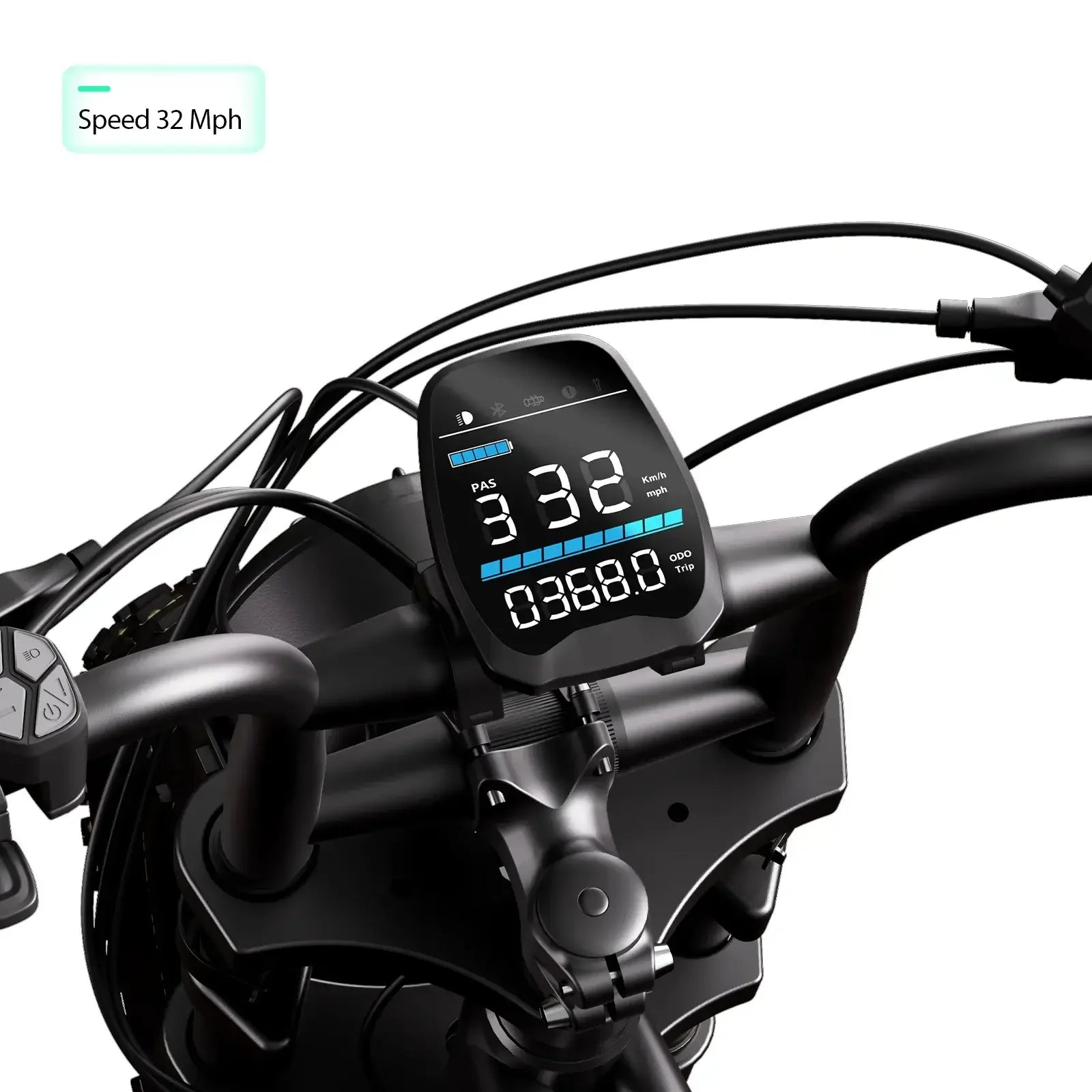
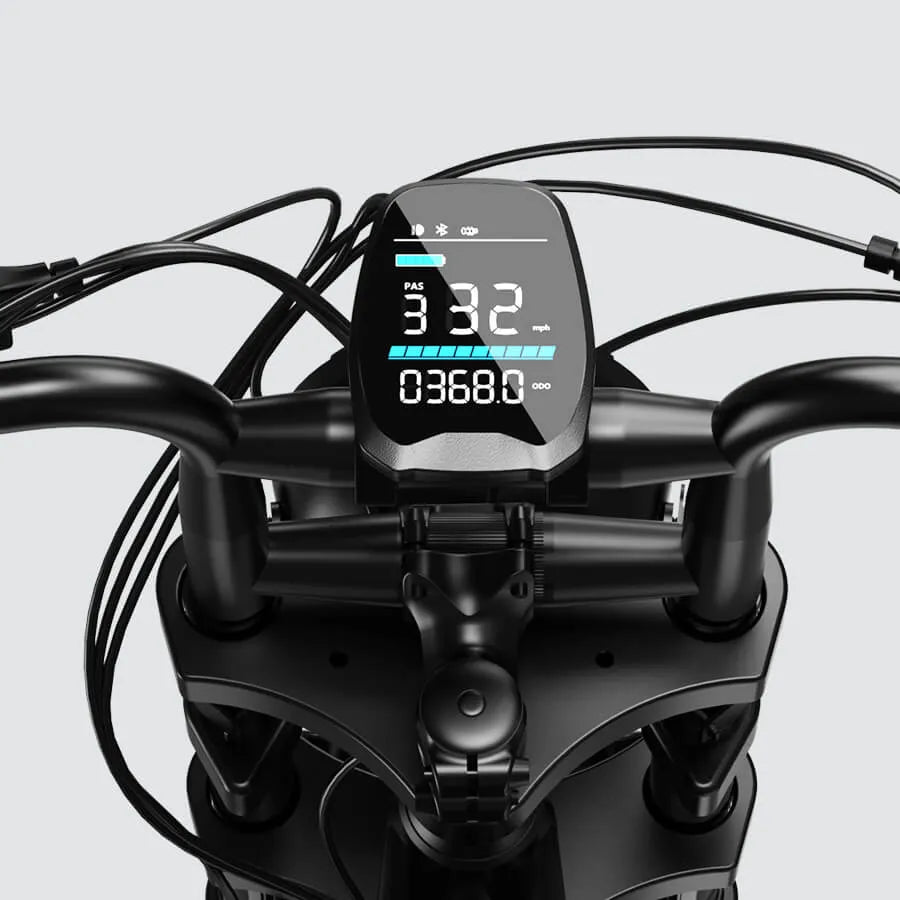 LCD Display
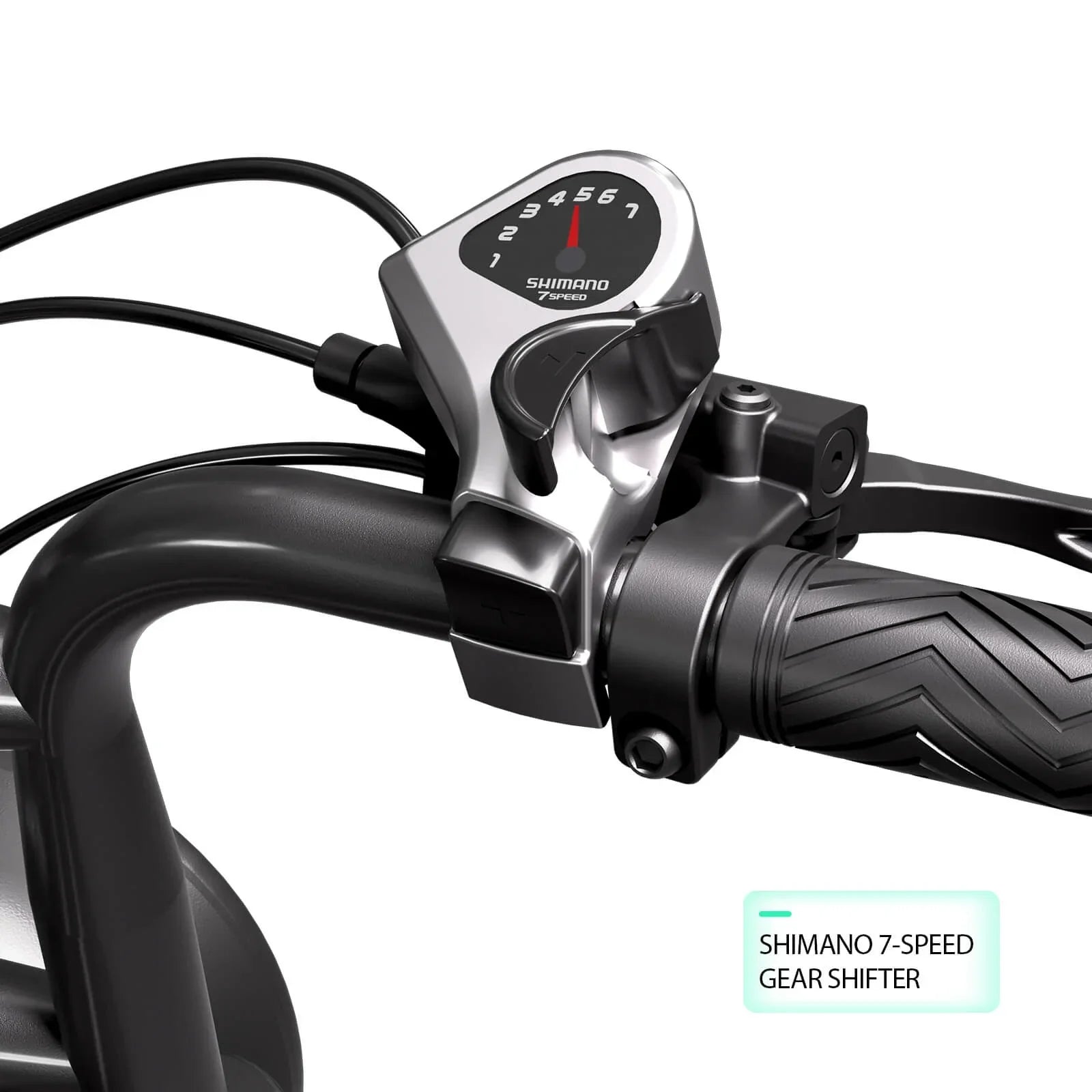
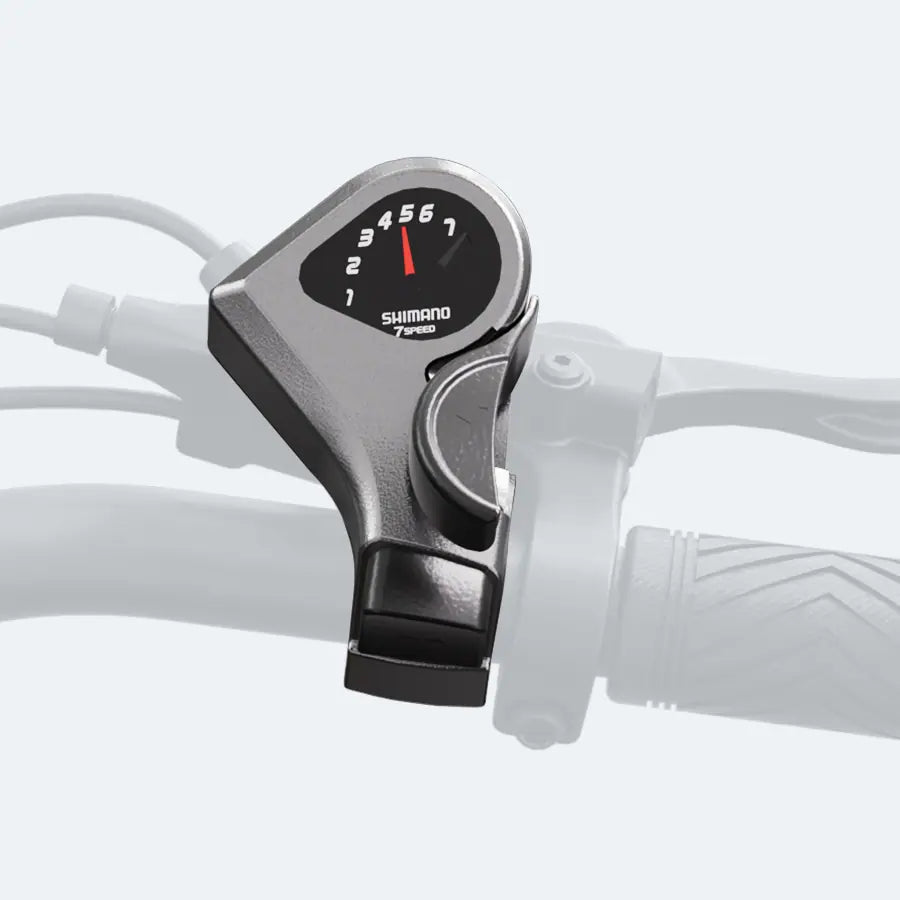 Shimano 7-Speed
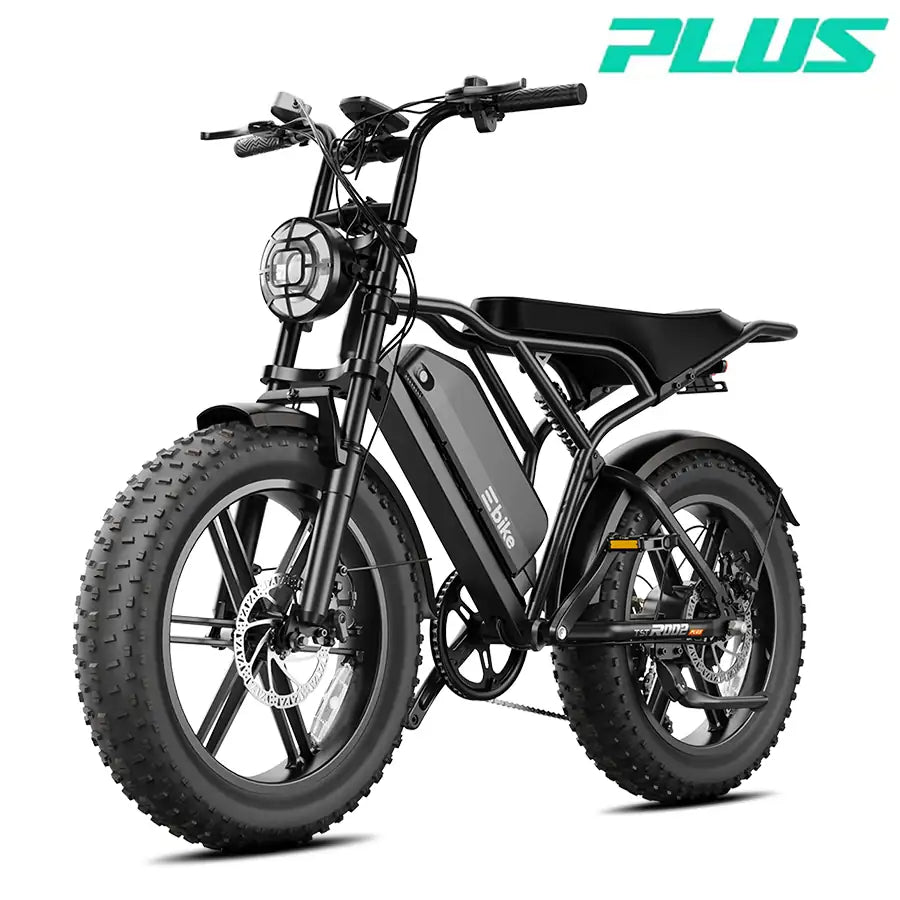
Standard/Plus
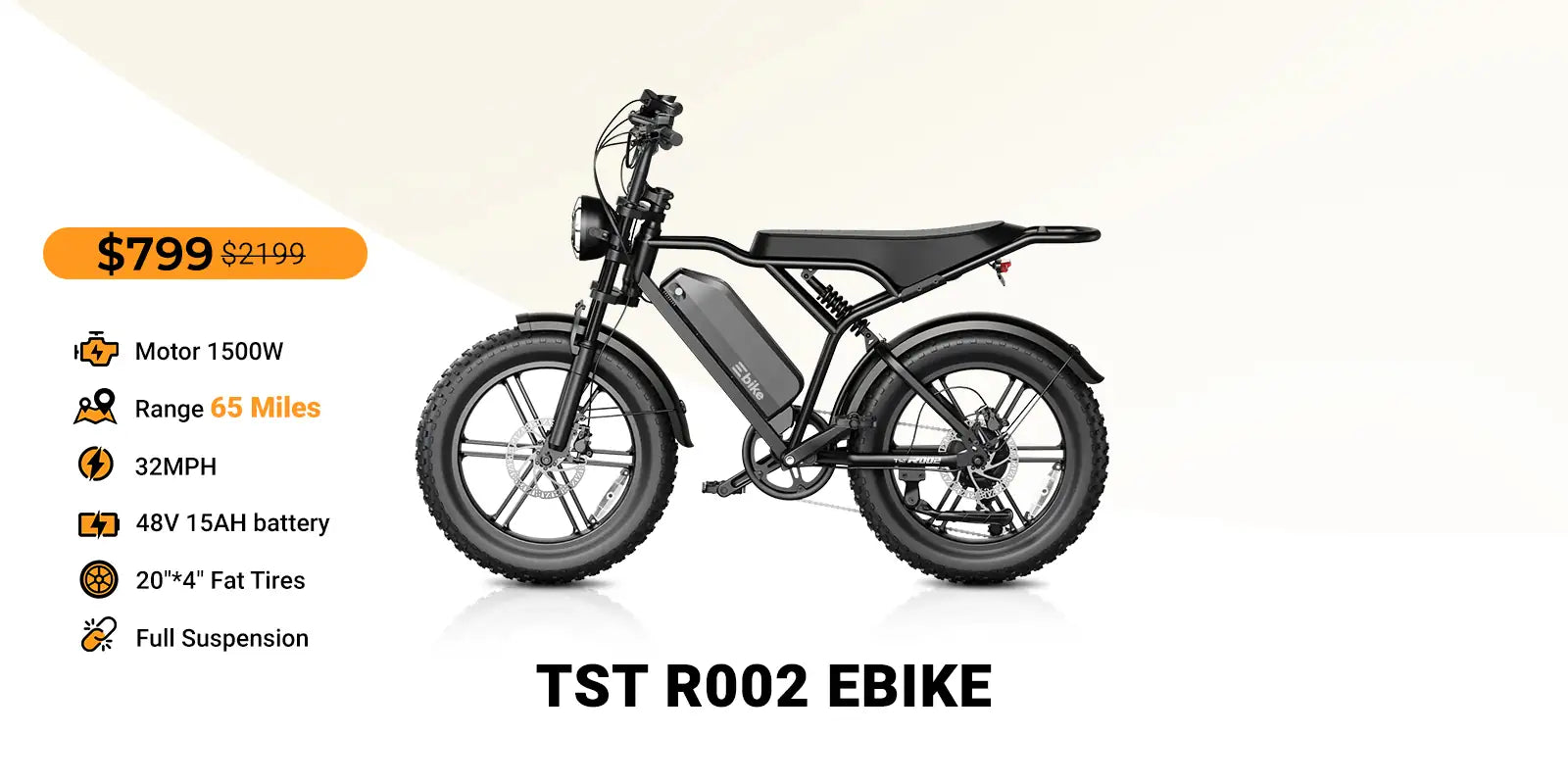
Standard Electric Bike: 15 Ah battery, ~65 mile range, perfect for solo or dual riding, ideal for daily commuting, $799.
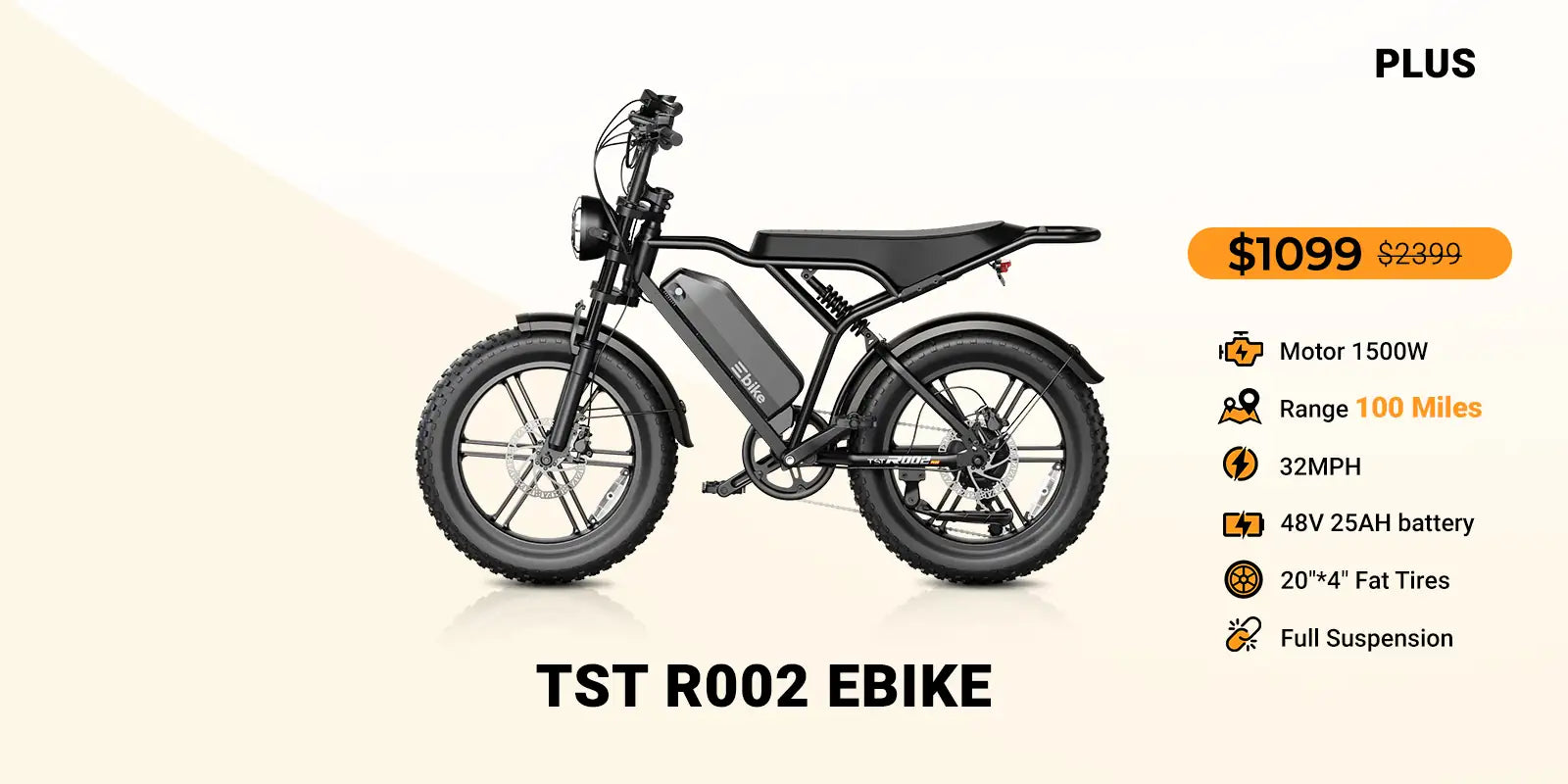
Plus Electric Bike: 25 Ah battery, up to 100 mile range, suitable for solo or dual riding, extended range for longer trips, $1099.
Compare the options below to choose the best range for your riding needs.
Our Promise To You
Feel every mile in comfort on the
R002, knowing our engineers have thought about your safety long before your first ride.
-
Own the Moment. Ride the R002.
-
Own the Moment. Ride the R002.
-
Own the Moment. Ride the R002.
-
Own the Moment. Ride the R002.

-
Own the Moment. Ride the R002.
-
Own the Moment. Ride the R002.
-
Own the Moment. Ride the R002.

-
Own the Moment. Ride the R002.
-
Own the Moment. Ride the R002.
-
Own the Moment. Ride the R002.
-
Own the Moment. Ride the R002.



RiderReview
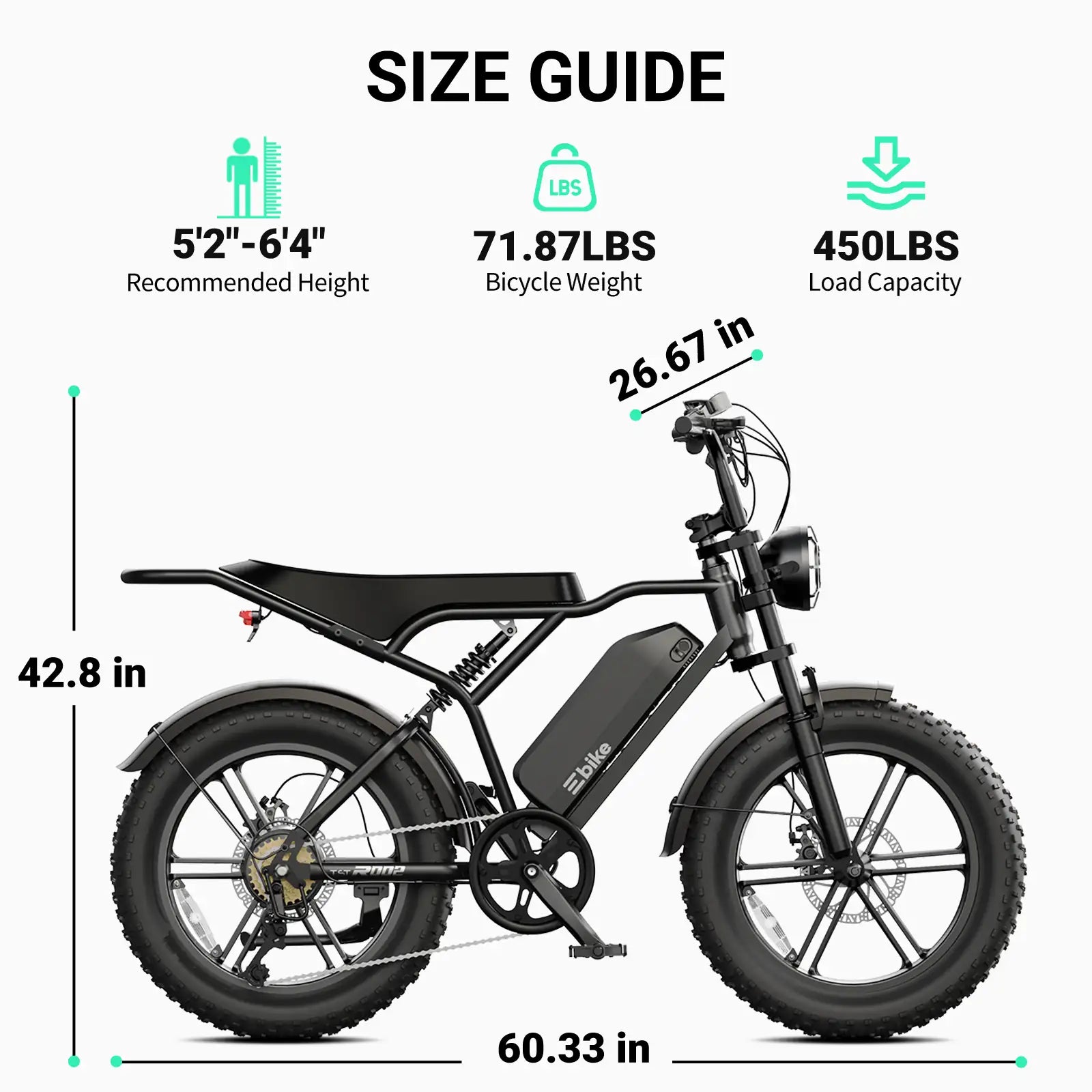
Spec & Size
Vehicle specifications
Charging Time
4-5 hours
Charger
54.6V/ 3A
Speed
32MPH
Product Weight
71.87 LBS
Shimano Shifter
7-Speed
Battery
48V 15-25Ah
Lithium Battery
Hub Motor
1500W
Brushless Gear Motor
Range
65-100 Miles
Pedal Assist
Pedal
1-5 Level
1-5 Level Pedal Assist
Tires
20" x 4"
Ebike Rated Tires
Weight Capacity
450 LBS
MAX Load
TST® R002 Size


A
Total Length
60.3"
B
Handlebar Height
42.8"
C
Wheelbase
37.5"
D
Maximum Seat Height
39"
F
Chain Stay Length
16.3"
G
Stand Height
30.6"
H
Top Tube Length
38.3"
I
Wheel Diameter
22.9"
J
Head Tube Length
5.9"
K
Handlebar Length
26.6"
L
Minimum Seat to Floor
31.4"
What's in the Box?


1* Electric Bike
1* Owner's Manual
2* Wrenches
3* Allen Key Wrenchs
2* Pedals
1* Charger
1* Seat
1* Front Wheel
1* Rear Rack
1* Fender Set
1* Headlight
1* Battery with keys
TST R002 FAQs
Overview
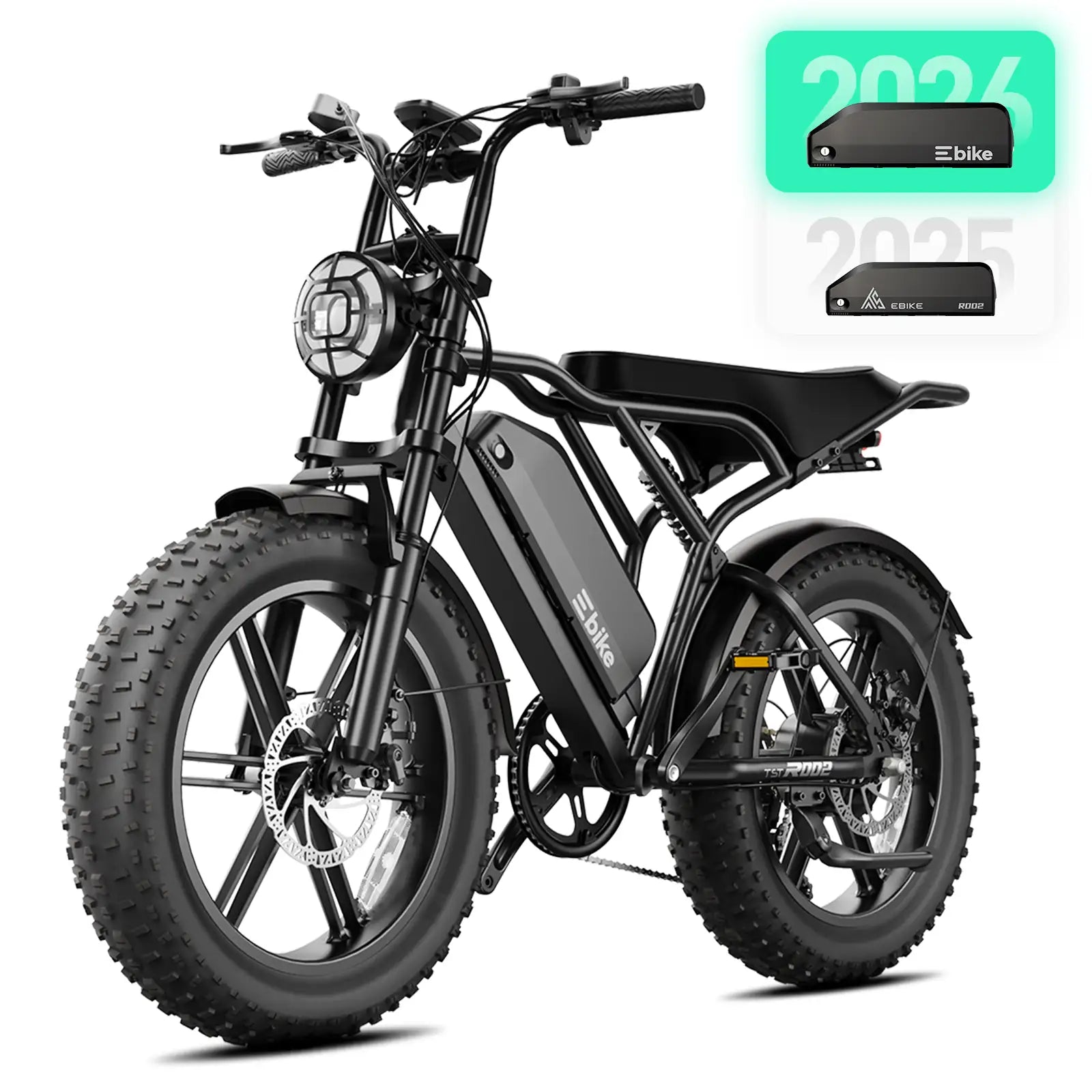
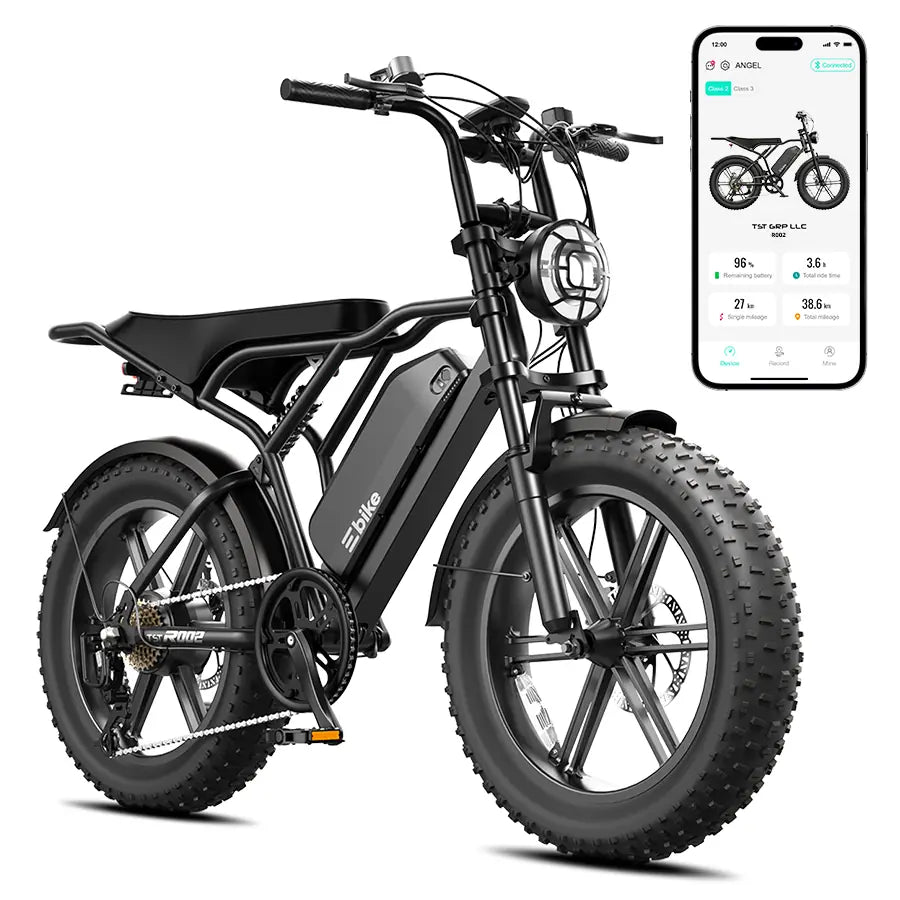
The TST R002 is a powerful, full-suspension moped-style electric bike designed for smooth and versatile riding. It features a 1500W rear hub motor and a 48V 15Ah or 25Ah removable battery, delivering speeds up to 32 mph and a range of 65–100 miles per charge. Built for comfort, it comes equipped with front and rear disc brakes, a Shimano 7-speed gear system, and front and rear suspension for confident handling across different terrains. Four riding modes and an LCD display enhance your control and visibility. Perfect for commuting or weekend rides, the R002 blends style, power, and utility—now with a BIG discount and a free front light and fender set for a limited time.
Features
The TST R002 stands out with a powerful 1500W rear hub motor, delivering speeds up to 32 mph and exceptional hill-climbing ability. Its 48V removable lithium battery (available in 15Ah or 25Ah) offers an impressive range of up to 100 miles and fast 4-hour charging. Designed for comfort, the bike features full suspension—front and rear—for a smooth ride over urban roads or off-road trails. Front and rear disc brakes provide dependable stopping power in all riding conditions, while the Shimano 7-speed gear system delivers smooth shifting to match your terrain. The LCD display keeps you informed of speed, mileage, PAS level, and battery life. Integrated front and rear lights enhance visibility, and four working modes—including Boost—let you ride your way. With rugged construction, removable battery convenience, and a retro-modern design, the R002 is built for commuting, exploring, or turning heads around town.
FAQs
Electric Bike Sales and Promotions
What Are the Best Electric Bike Deals Under $1000?
High-quality electric bikes under $1000 include select TST moped-style R Series models. These bikes feature a 1500W high-power motor and a riding range of approximately 65–130 miles, optimized for city commuting and daily riding. Key features include front and rear disc brakes, a stable frame structure, and an upright riding posture. For budget-conscious riders seeking strong performance and dependable comfort, the R Series offers an excellent balance of power and value.
Which Electric Bike Promotions Include Free Accessories?
TST promotions often include free accessory bundles. For example, select R Series promotions may include complimentary fender sets and rear racks, adding significant value to your purchase. During major sales events, TST frequently offers practical accessory packages to enhance usability at no additional cost.
When Do Major Retailers Offer the Biggest Electric Bike Discounts?
The biggest electric bike discounts typically occur from October through March, during late fall and winter. Retailers often clear inventory ahead of new model releases, especially during major sales events like Black Friday and Cyber Monday, where discounts can reach 50%–60%.
How Can I Find Limited-Time Electric Bike Sale Events?
You can stay updated on limited-time deals by subscribing to the TST official newsletter, following TST on social media, and monitoring major holiday promotions such as Memorial Day and Black Friday. Seasonal clearances and model transitions are also excellent opportunities for savings.
Are There Bundle Deals Including Accessories With Electric Bikes?
Yes. TST frequently offers bundle deals that include accessories such as rear racks, fenders, and lighting upgrades. These bundles increase overall value while improving daily riding convenience.
Moped-Style Electric Bike Features and Functions
Is There a Full Suspension Moped-Style Electric Bike?
Yes. The TST R002 is a full-suspension moped-style electric bike equipped with front and rear suspension for smooth, stable riding. It features a 1500W high-power motor, front and rear disc brakes, and a Shimano 7-speed gear system, delivering comfort and performance for both urban commuting and weekend rides.
Where Can I Find a 1500W Retro Moped-Style Ebike?
Retro moped-style ebikes with 1500W motors are available within the TST product lineup, including the TST R002. These models combine classic styling with modern performance, removable batteries, and full suspension—ideal for daily commuting and leisure riding.
Which Moped-Style Electric Bike Has a Removable Battery?
Many TST moped-style electric bikes feature removable batteries for convenient charging. The TST R002 offers 48V 15Ah or 25Ah removable battery options to support both daily commuting and extended-range rides.
Electric Bike Suspension and Comfort
Which Electric Bike Has Front and Rear Suspension?
Full-suspension TST electric bikes, such as the TST R002, include both front and rear suspension systems. This setup enhances ride comfort and stability on uneven surfaces, making it suitable for city streets and mixed terrain conditions.
What Is the Most Comfortable Ebike for City Riding?
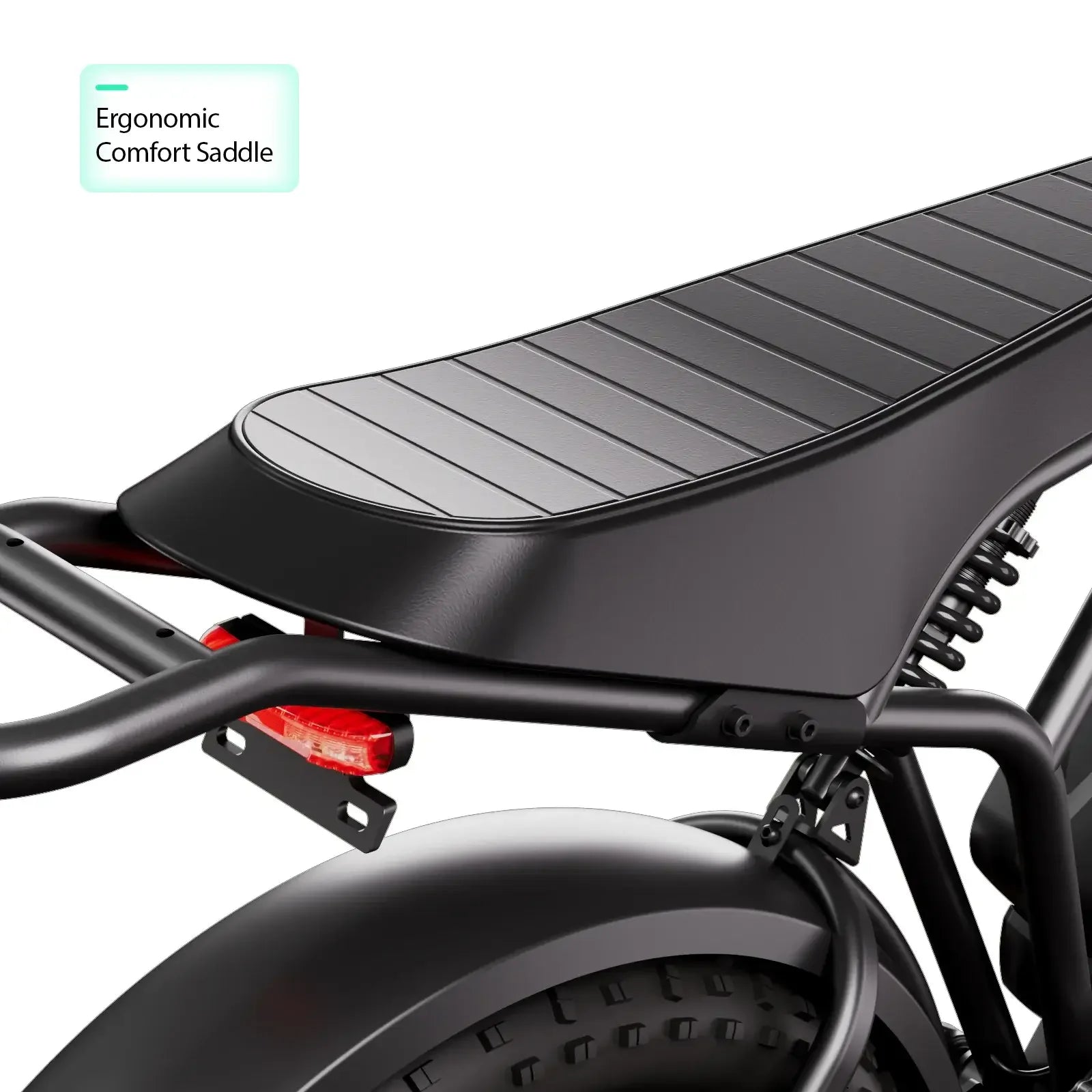
TST commuter-focused models emphasize ergonomic frame geometry, padded seating, suspension components, and stable tires. The TST R002 prioritizes comfort, making it well-suited for daily urban commuting and longer city rides.
Is There a Full-Suspension Ebike for Rough Terrain?
Yes. Select TST full-suspension models are designed to handle varied terrain. Equipped with front and rear suspension, wide tires, high-torque motors, and front and rear disc brakes, they absorb shocks effectively and maintain traction on gravel, dirt, and uneven roads.
Electric Bike Performance and Range
What Is the Top Speed and Range of a 1500W Electric Bike?
1500W electric bikes like the TST R002 typically reach top speeds of 28–32 mph, depending on settings and riding conditions. Range generally falls between 65–100 miles, influenced by battery capacity, terrain, rider weight, and assist level.
Which Long-Range Electric Bike Can Go 100 Miles?
Electric bikes equipped with higher-capacity batteries—such as the TST R002 with a 48V 25Ah battery—can approach or exceed 100 miles under ideal riding conditions using lower assist levels.
What Is the Best Powerful Ebike for Hills and Commuting?
The TST R002, featuring a 1500W motor and strong torque output, performs confidently on hills while maintaining ride comfort. Its suspension system and balanced frame design make it suitable for both daily commuting and more demanding routes.
Electric Bike Safety and Customer Experience
Which Ebikes Come With Disc Brakes and Integrated Lights?
Many TST models, including select R Series bikes, are equipped with front and rear disc brakes and integrated front and rear lights. These features improve stopping reliability and visibility in varying riding conditions.
Is There an Electric Bike With Turn Signals and Mirrors?
Some TST models offer turn signals and mirrors as optional accessories or factory-installed features. These additions enhance rider awareness and improve safety during urban riding.
What Is the Safest Electric Bike With Integrated Lighting?
TST electric bikes prioritize safety through integrated lighting systems, including front and rear lights and brake indicator lights. These systems improve rider visibility both during the day and at night.
Where Can I Read Real Rider Reviews of the TST R002 Ebike?
Real rider reviews of the TST R002 can be found on electric bike forums, independent review platforms, and official TST retail pages. Reviews commonly cover performance, comfort, durability, and overall riding experience.
What’s the Customer Feedback on 1500W Moped Ebikes?
Riders often highlight strong acceleration, capable hill climbing, and suitability for both city commuting and light off-road riding. Users also appreciate the balance between power, handling, and everyday comfort.
What Is the Best Rated Full-Suspension Ebike for 2025?
Within the TST product lineup, full-suspension models such as the TST R002 are frequently recognized for their robust frame structure, smooth suspension performance, and consistent power delivery across different terrain conditions.
The TST R002 is a powerful, full-suspension moped-style electric bike designed for smooth and versatile riding. It features a 1500W rear hub motor and a 48V 15Ah or 25Ah removable battery, delivering speeds up to 32 mph and a range of 65–100 miles per charge. Built for comfort, it comes equipped with front and rear disc brakes, a Shimano 7-speed gear system, and front and rear suspension for confident handling across different terrains. Four riding modes and an LCD display enhance your control and visibility. Perfect for commuting or weekend rides, the R002 blends style, power, and utility—now with a BIG discount and a free front light and fender set for a limited time.
The TST R002 stands out with a powerful 1500W rear hub motor, delivering speeds up to 32 mph and exceptional hill-climbing ability. Its 48V removable lithium battery (available in 15Ah or 25Ah) offers an impressive range of up to 100 miles and fast 4-hour charging. Designed for comfort, the bike features full suspension—front and rear—for a smooth ride over urban roads or off-road trails. Front and rear disc brakes provide dependable stopping power in all riding conditions, while the Shimano 7-speed gear system delivers smooth shifting to match your terrain. The LCD display keeps you informed of speed, mileage, PAS level, and battery life. Integrated front and rear lights enhance visibility, and four working modes—including Boost—let you ride your way. With rugged construction, removable battery convenience, and a retro-modern design, the R002 is built for commuting, exploring, or turning heads around town.
Electric Bike Sales and Promotions
What Are the Best Electric Bike Deals Under $1000?
High-quality electric bikes under $1000 include select TST moped-style R Series models. These bikes feature a 1500W high-power motor and a riding range of approximately 65–130 miles, optimized for city commuting and daily riding. Key features include front and rear disc brakes, a stable frame structure, and an upright riding posture. For budget-conscious riders seeking strong performance and dependable comfort, the R Series offers an excellent balance of power and value.
Which Electric Bike Promotions Include Free Accessories?
TST promotions often include free accessory bundles. For example, select R Series promotions may include complimentary fender sets and rear racks, adding significant value to your purchase. During major sales events, TST frequently offers practical accessory packages to enhance usability at no additional cost.
When Do Major Retailers Offer the Biggest Electric Bike Discounts?
The biggest electric bike discounts typically occur from October through March, during late fall and winter. Retailers often clear inventory ahead of new model releases, especially during major sales events like Black Friday and Cyber Monday, where discounts can reach 50%–60%.
How Can I Find Limited-Time Electric Bike Sale Events?
You can stay updated on limited-time deals by subscribing to the TST official newsletter, following TST on social media, and monitoring major holiday promotions such as Memorial Day and Black Friday. Seasonal clearances and model transitions are also excellent opportunities for savings.
Are There Bundle Deals Including Accessories With Electric Bikes?
Yes. TST frequently offers bundle deals that include accessories such as rear racks, fenders, and lighting upgrades. These bundles increase overall value while improving daily riding convenience.
Moped-Style Electric Bike Features and Functions
Is There a Full Suspension Moped-Style Electric Bike?
Yes. The TST R002 is a full-suspension moped-style electric bike equipped with front and rear suspension for smooth, stable riding. It features a 1500W high-power motor, front and rear disc brakes, and a Shimano 7-speed gear system, delivering comfort and performance for both urban commuting and weekend rides.
Where Can I Find a 1500W Retro Moped-Style Ebike?
Retro moped-style ebikes with 1500W motors are available within the TST product lineup, including the TST R002. These models combine classic styling with modern performance, removable batteries, and full suspension—ideal for daily commuting and leisure riding.
Which Moped-Style Electric Bike Has a Removable Battery?
Many TST moped-style electric bikes feature removable batteries for convenient charging. The TST R002 offers 48V 15Ah or 25Ah removable battery options to support both daily commuting and extended-range rides.
Electric Bike Suspension and Comfort
Which Electric Bike Has Front and Rear Suspension?
Full-suspension TST electric bikes, such as the TST R002, include both front and rear suspension systems. This setup enhances ride comfort and stability on uneven surfaces, making it suitable for city streets and mixed terrain conditions.
What Is the Most Comfortable Ebike for City Riding?
TST commuter-focused models emphasize ergonomic frame geometry, padded seating, suspension components, and stable tires. The TST R002 prioritizes comfort, making it well-suited for daily urban commuting and longer city rides.
Is There a Full-Suspension Ebike for Rough Terrain?
Yes. Select TST full-suspension models are designed to handle varied terrain. Equipped with front and rear suspension, wide tires, high-torque motors, and front and rear disc brakes, they absorb shocks effectively and maintain traction on gravel, dirt, and uneven roads.
Electric Bike Performance and Range
What Is the Top Speed and Range of a 1500W Electric Bike?
1500W electric bikes like the TST R002 typically reach top speeds of 28–32 mph, depending on settings and riding conditions. Range generally falls between 65–100 miles, influenced by battery capacity, terrain, rider weight, and assist level.
Which Long-Range Electric Bike Can Go 100 Miles?
Electric bikes equipped with higher-capacity batteries—such as the TST R002 with a 48V 25Ah battery—can approach or exceed 100 miles under ideal riding conditions using lower assist levels.
What Is the Best Powerful Ebike for Hills and Commuting?
The TST R002, featuring a 1500W motor and strong torque output, performs confidently on hills while maintaining ride comfort. Its suspension system and balanced frame design make it suitable for both daily commuting and more demanding routes.
Electric Bike Safety and Customer Experience
Which Ebikes Come With Disc Brakes and Integrated Lights?
Many TST models, including select R Series bikes, are equipped with front and rear disc brakes and integrated front and rear lights. These features improve stopping reliability and visibility in varying riding conditions.
Is There an Electric Bike With Turn Signals and Mirrors?
Some TST models offer turn signals and mirrors as optional accessories or factory-installed features. These additions enhance rider awareness and improve safety during urban riding.
What Is the Safest Electric Bike With Integrated Lighting?
TST electric bikes prioritize safety through integrated lighting systems, including front and rear lights and brake indicator lights. These systems improve rider visibility both during the day and at night.
Where Can I Read Real Rider Reviews of the TST R002 Ebike?
Real rider reviews of the TST R002 can be found on electric bike forums, independent review platforms, and official TST retail pages. Reviews commonly cover performance, comfort, durability, and overall riding experience.
What’s the Customer Feedback on 1500W Moped Ebikes?
Riders often highlight strong acceleration, capable hill climbing, and suitability for both city commuting and light off-road riding. Users also appreciate the balance between power, handling, and everyday comfort.
What Is the Best Rated Full-Suspension Ebike for 2025?
Within the TST product lineup, full-suspension models such as the TST R002 are frequently recognized for their robust frame structure, smooth suspension performance, and consistent power delivery across different terrain conditions.
This product is rated 4.8 of 5.0 stars.
It has received 385 reviews.