
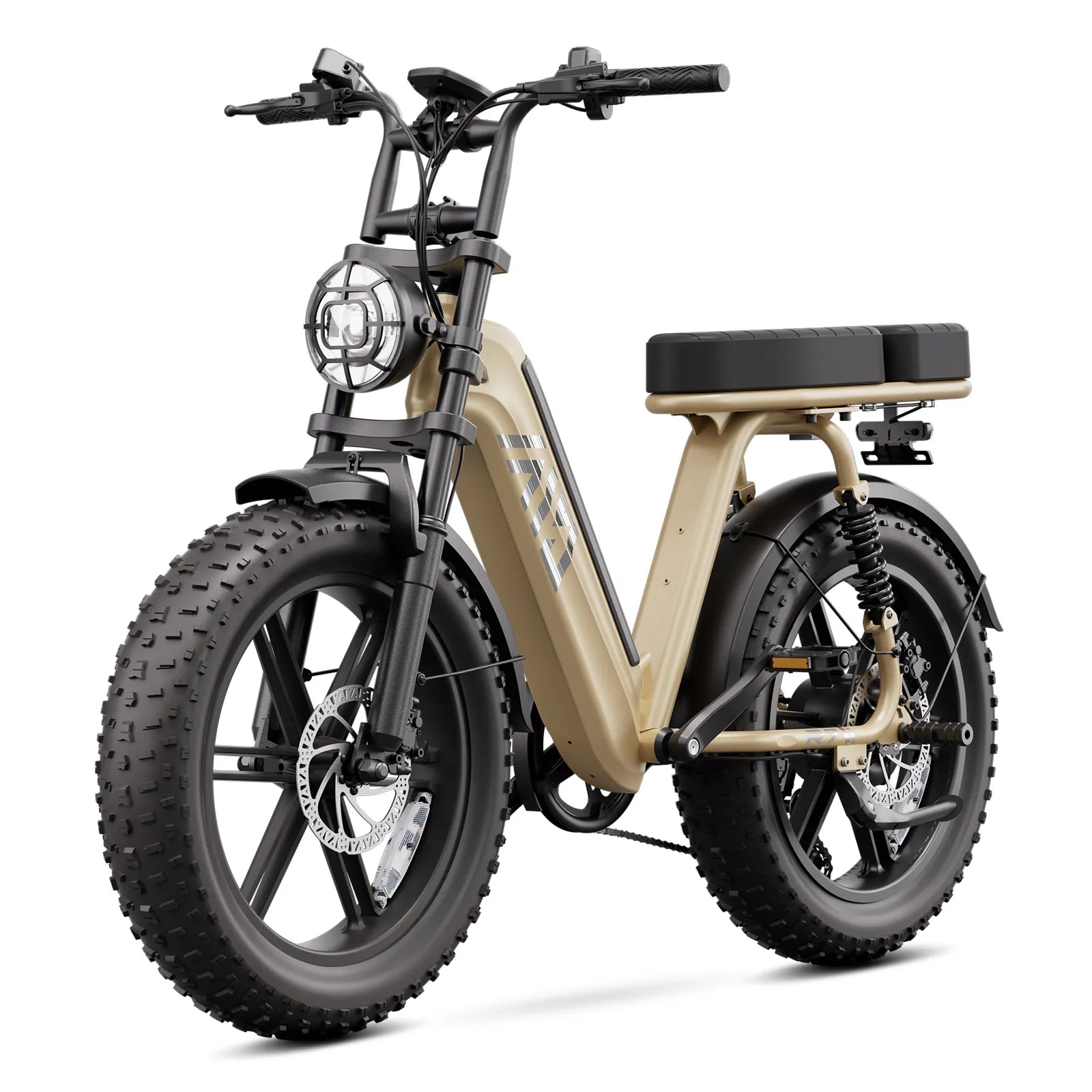
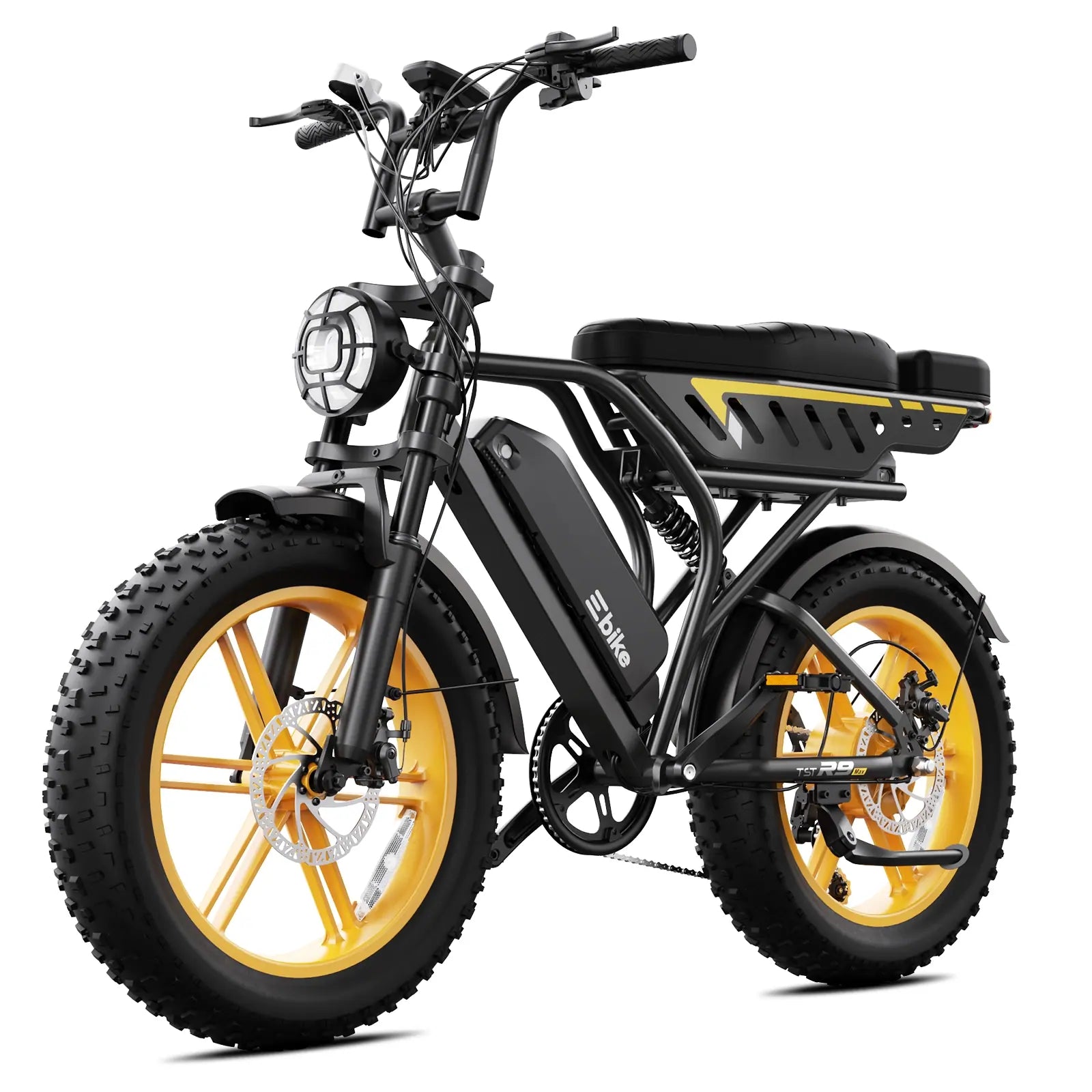
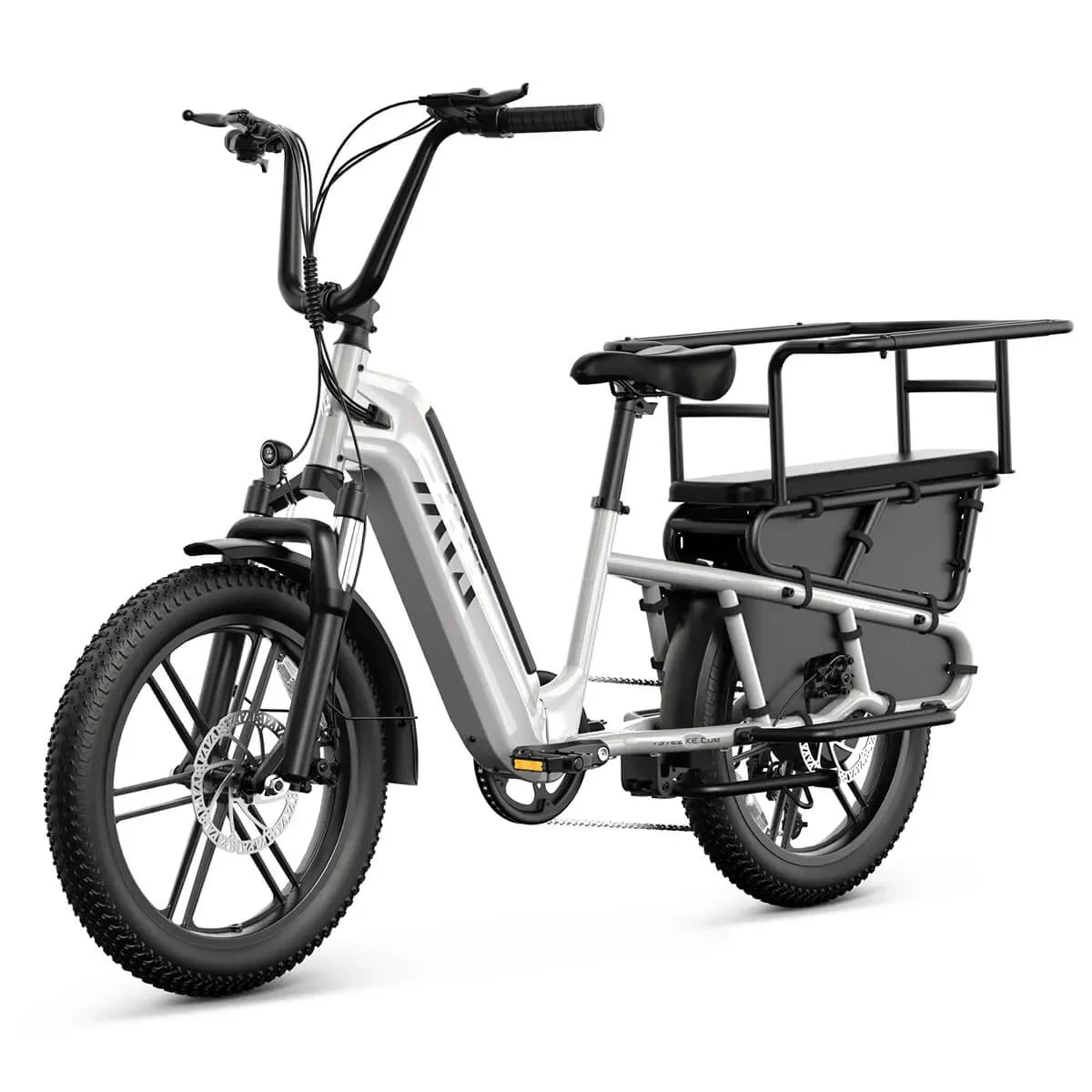
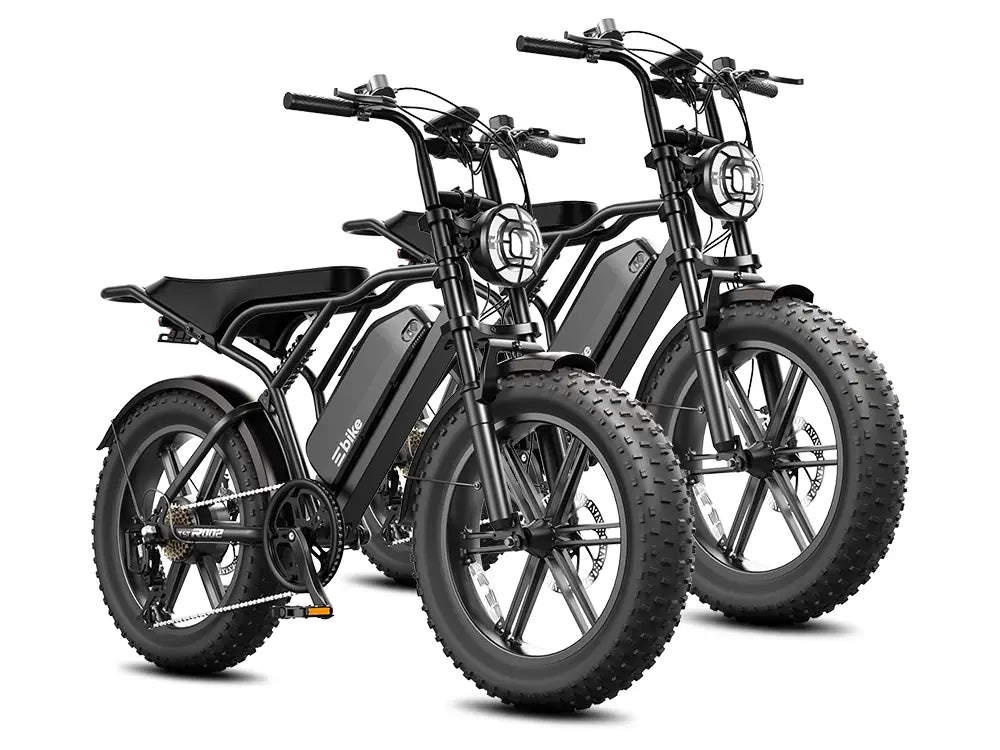
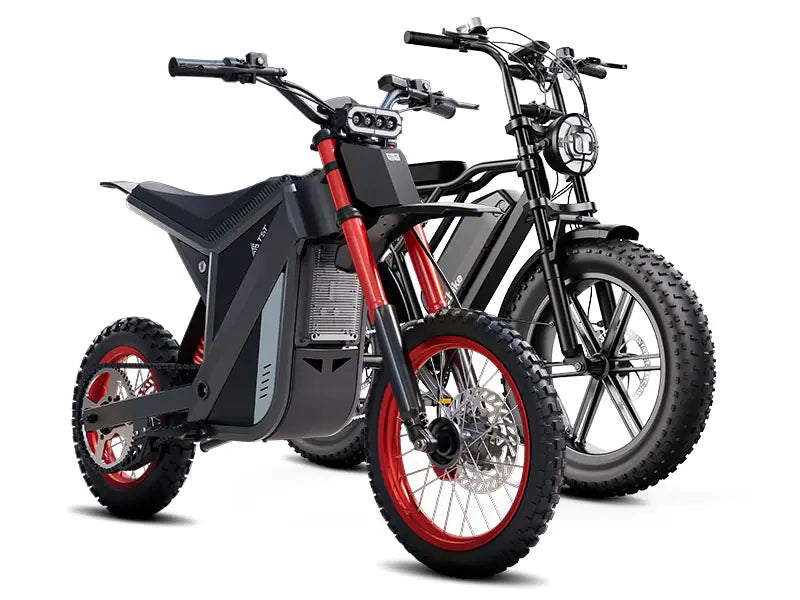
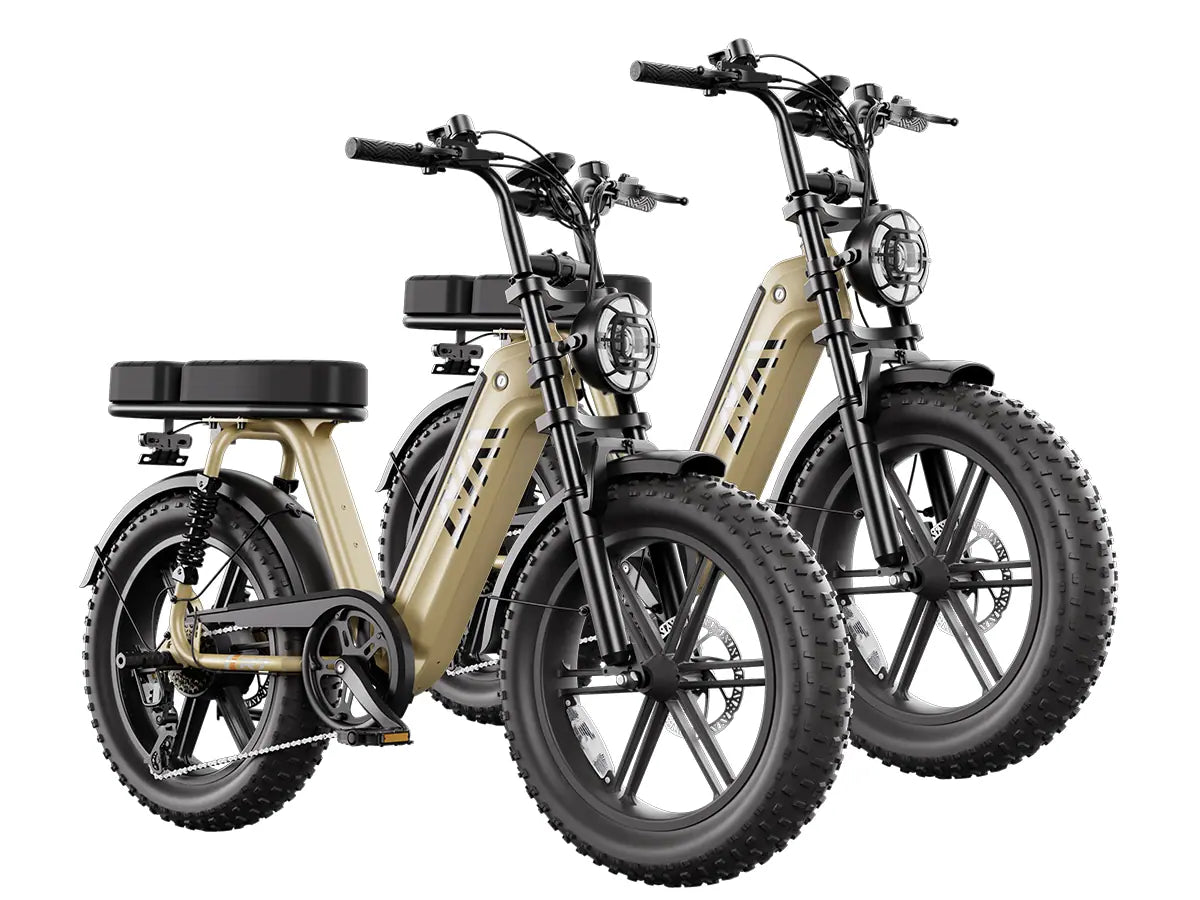
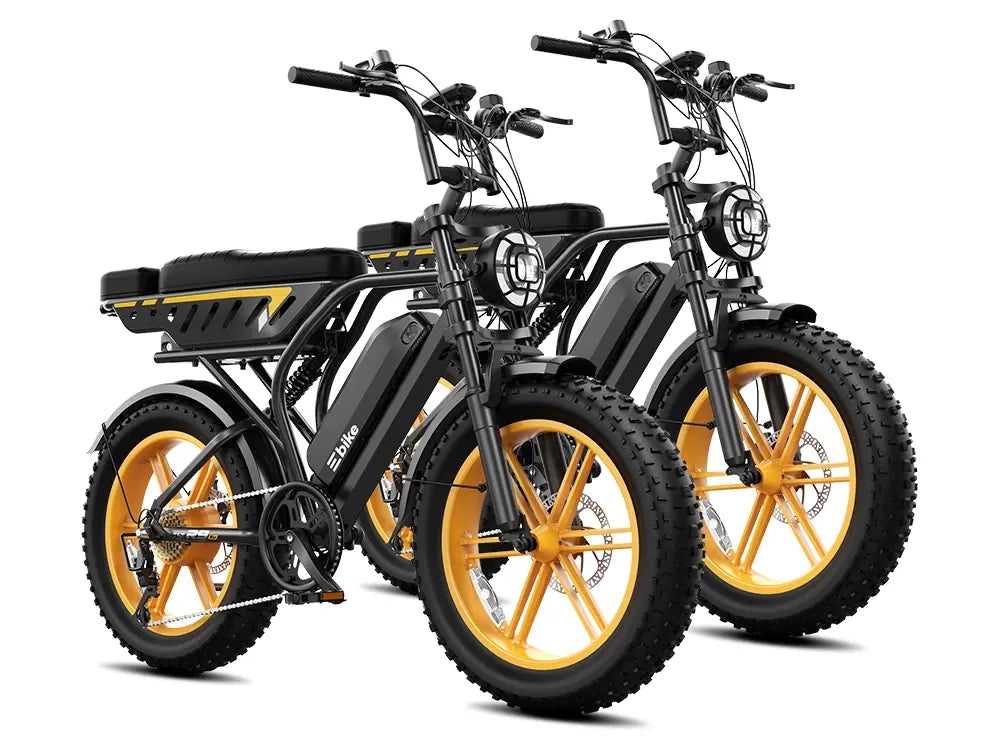
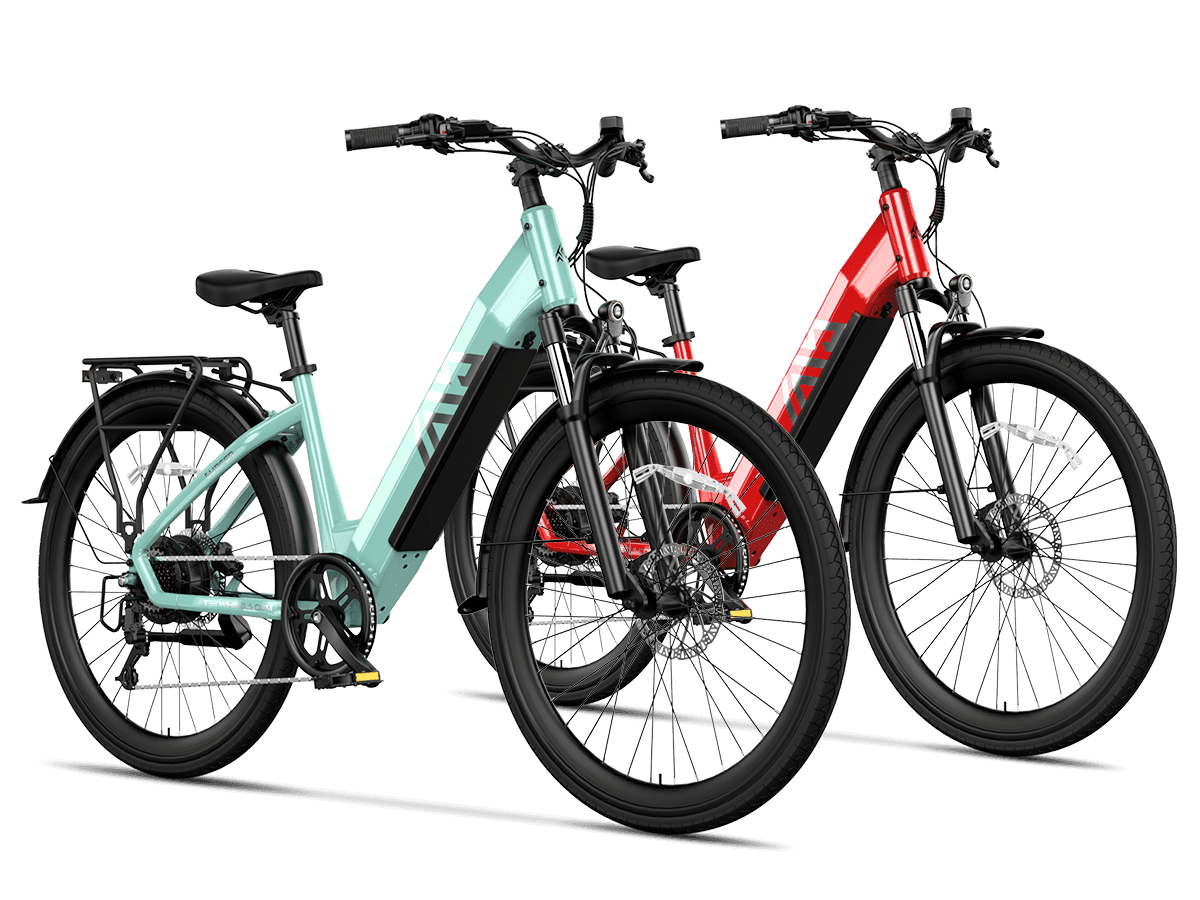
Women can comfortably and safely control moped-style ebikes when the frame geometry, seat height, and center of gravity are matched to their height and riding style. A low seat height, step-through frame, and stable low center of mass let both feet or at least one foot reach the ground, reducing tip-over risk and handling anxiety at low speed. With correct setup and training, even heavier moped ebikes feel predictable, confidence-inspiring, and easy to maneuver for female riders.
ultimate moped style ebike guide
How does low seat height increase confidence for women riders?
A properly low seat height lets many women place at least one foot flat on the ground at stops, eliminating the “tipping” fear that comes with tall frames. Instead of balancing on toes, riders can stabilize the bike instantly when braking or in slow traffic. In practice, I’ve found that when inseam-based seat height is set 1–2 cm lower than traditional road cycling standards, female riders report less stress and more control on moped-style ebikes.
From a fit-engineering standpoint, low seat height changes the rider’s psychological and mechanical relationship with the bike. Traditional cycling theory prioritizes maximum leg extension; on a moped ebike for urban use, stability at standstill matters more than peak pedaling efficiency. For shorter or novice female riders, we intentionally tune seat posts so they can touch the ground confidently while still maintaining a slight knee bend at the bottom of the pedal stroke. This compromise sharply reduces “stall panic” at traffic lights and tight corners.
What seat-height numbers actually matter?
Most women-focused ebike sizing guides now focus on standover height, minimum saddle height, and actual inseam rather than abstract frame sizes. For many women around 5'0"–5'4", a standover height in the 24–26 inch range plus a minimum seat height around 27–30 inches works well to achieve flat-foot or near-flat-foot contact. TST EBike engineers follow similar ranges while leaving extra adjustment room for boots and real-world clothing layers.
When I fit female riders on moped-style frames in the workshop, I don’t start from textbook formulas. I start by having the rider sit, place both feet down, and then raise the seat in 3–5 mm increments until we hit the “stable but not cramped” zone at full pedal extension. This iterative method avoids knee strain while preserving that vital feeling of being able to “catch” the bike instantly.
What role does a low center of gravity play in easier handling?
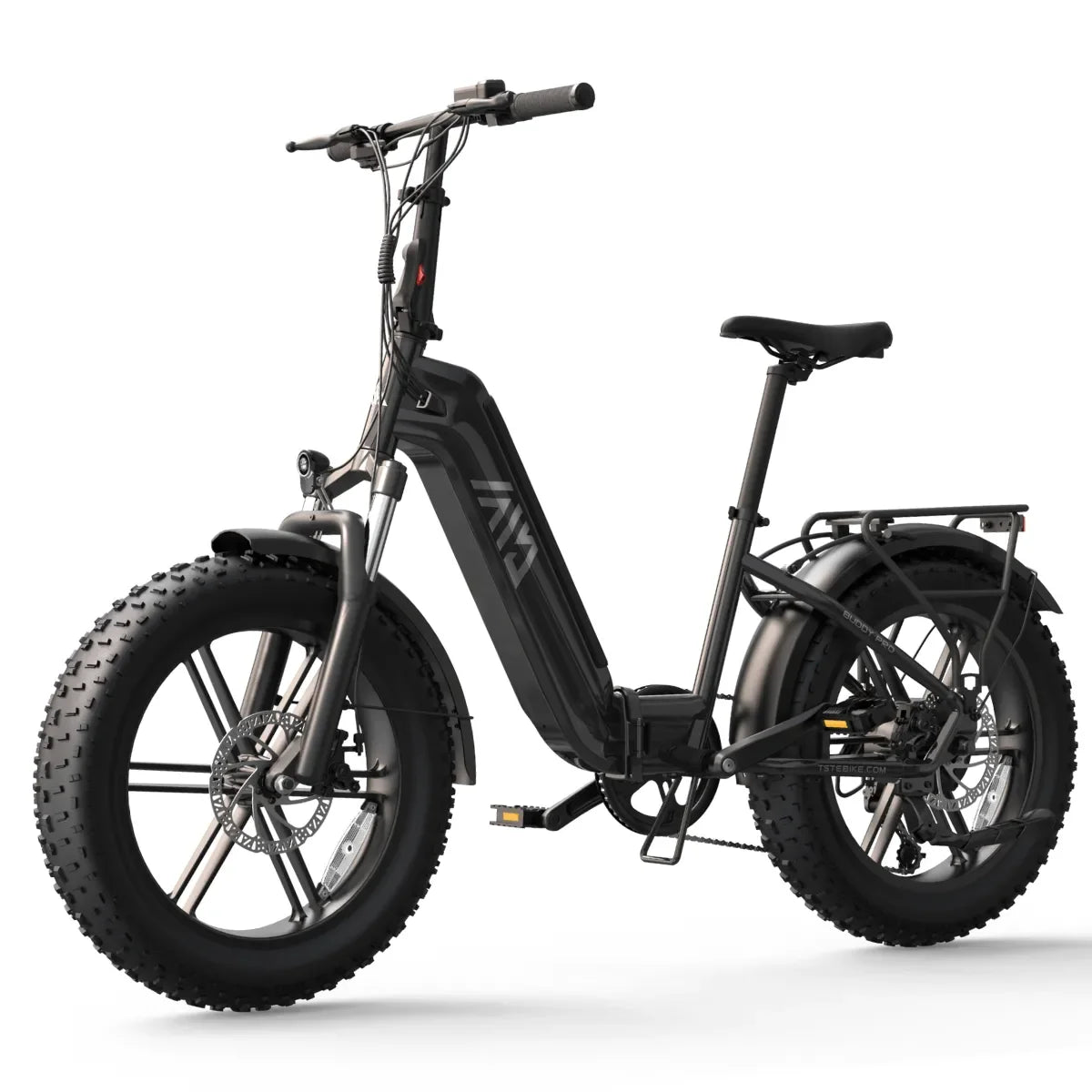
A low center of gravity makes a heavy moped ebike feel lighter in motion because the mass sits close to the ground and between the wheels, improving balance at walking and riding speeds. When battery, motor, and frame weight are concentrated low and central, the bike resists sudden top-heavy wobble that often scares new female riders. In testing, women consistently describe low-CG moped ebikes as “planted” and “predictable” even at parking-lot speeds.
From a factory-floor perspective, we see how battery placement alone can transform the same frame from “tippy” to “solid.” If a pack is stacked high behind the seat, short riders feel the bike fall sideways more quickly at low speed. When we nest the battery inside the main frame triangle or under the seat rails, the bike’s roll inertia changes – it falls more slowly and gives the rider more time to correct with small steering or foot inputs. For TST EBike, this is a conscious engineering trade-off: we sacrifice some visual slimness to keep mass low and centered for real-world female handling.
How does low-CG help in slow maneuvers and pushing the bike?
Women often worry more about “pushing” or walking the ebike than about riding at cruising speed. With low-CG geometry, the bike feels like it pivots from the ground rather than falling from the handlebars, so guiding it by the seat or bars during parking becomes much less strenuous. In straight-line motion, a low center of gravity also stabilizes wide tires, reducing the micro-wobble that can unsettle riders in narrow bike lanes or uneven pavement.
In internal trials, we ask riders to push the bike in a U-turn inside a narrow corridor. High-mounted batteries cause noticeable shoulder strain and “over-leaning.” Low-mounted packs let riders use hip and core rotation rather than arm strength, which is particularly important for smaller-stature women who don’t want to wrestle 65+ lb of metal in a garage or elevator.
Why are frame geometry and step-through design critical for women on moped ebikes?
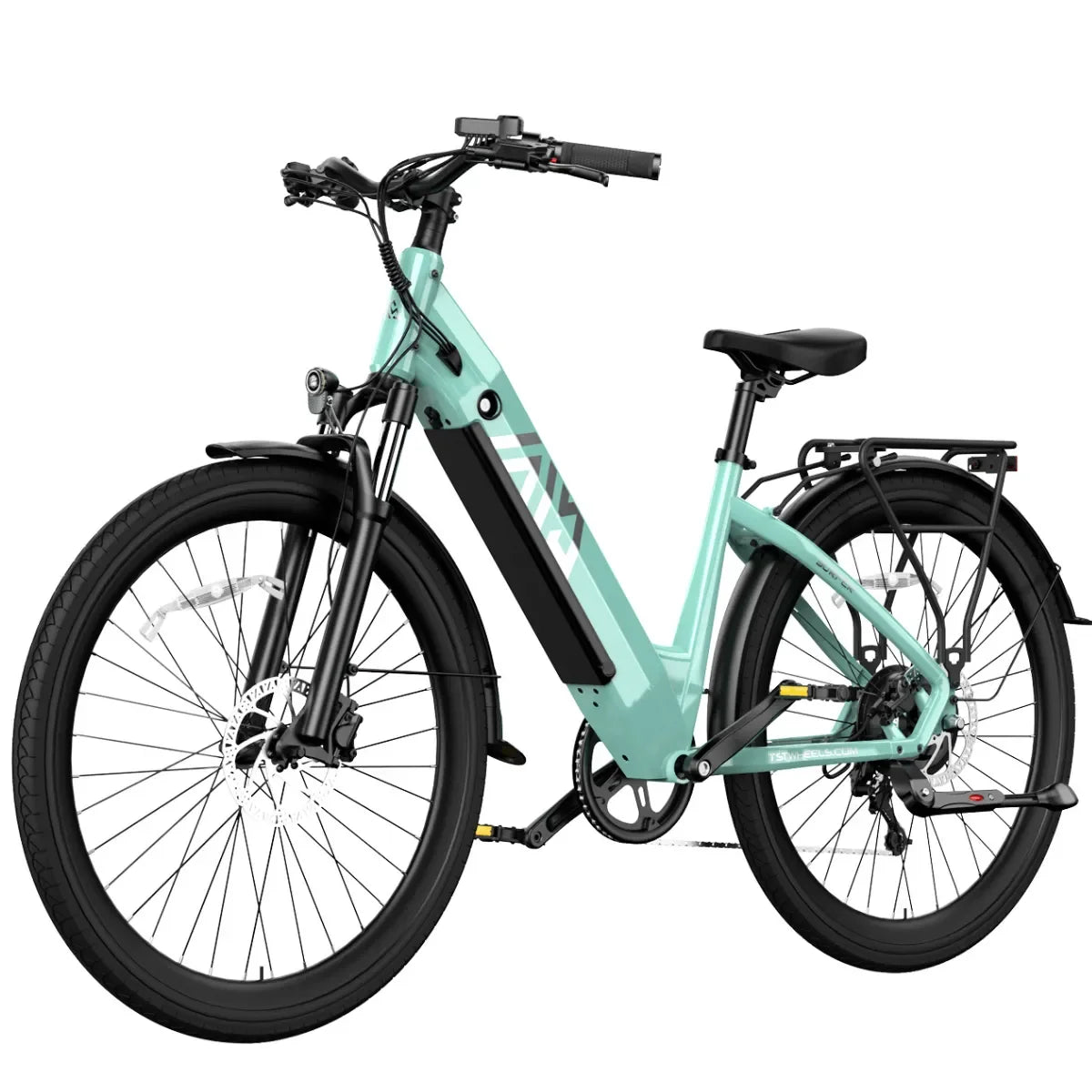
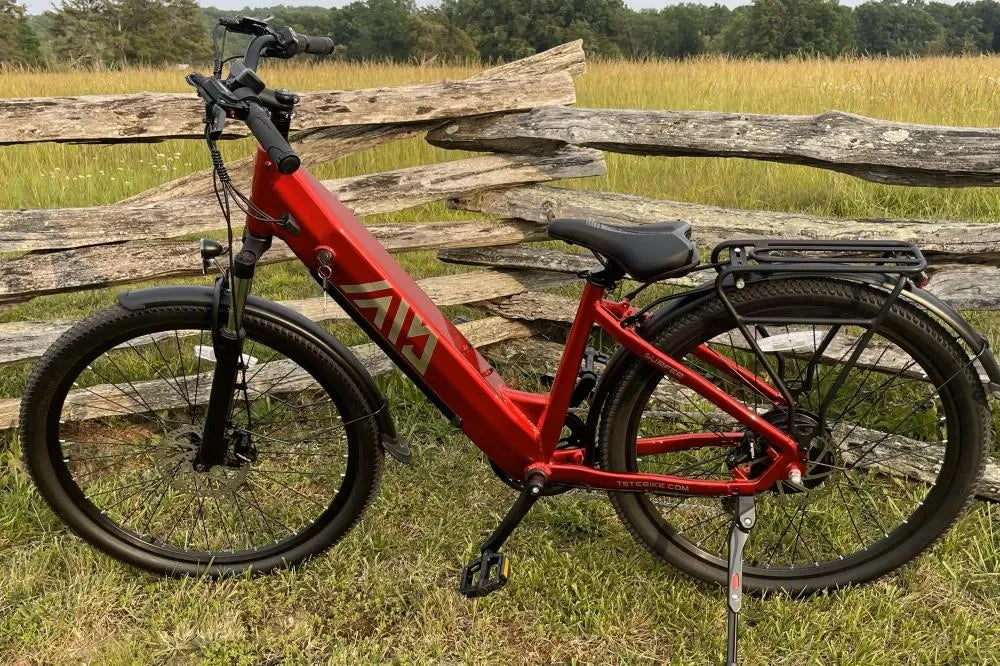
Frame geometry dictates how easy it is for women to mount, dismount, and stabilize the bike in daily clothes and confined spaces. Step-through or low-step frames avoid the need to swing a leg high over the seat, which significantly reduces the risk of losing balance while getting on or off. For many riders, especially those under 5'4", low step-through moped ebikes feel immediately safer and more practical.
As a fitter, I’ve seen more near-falls during mounting than during actual riding. A traditional high top-tube effectively forces women to perform a one-leg balance test every time they start or stop. By contrast, a step-through frame lets them step in and “sit down” from a near-standing posture. On moped-style ebikes, combining step-through design with a relatively short wheelbase and upright handlebars gives women a compact, controllable “cockpit” that feels sized to them rather than scaled from male-oriented motorcycle geometry.
Which specific geometry features help most?
Three dimensional variables matter: standover height, reach, and handlebar height. Keeping standover below about 26 inches and using adjustable stems allows female riders to stand over the bike with both feet flat, then pull the bars into a natural, slightly bent-arm position. TST EBike prioritizes short reach and upright posture on moped-style frames so shoulders relax and micro corrections become easy rather than effortful.
We also tune the head-tube angle and trail so low-speed steering feels intuitive. Too much trail makes the front end feel heavy and slow to correct; too little makes it twitchy. For women who want commuting stability but still need agile turning in urban grids, we aim at a mid-range trail value paired with medium-width bars. This balance lets them navigate tight neighborhood corners without feeling like the bike is “falling” into the turn or refusing to turn at all.
Frame fit quick reference for women
Does moped ebike weight really make handling difficult for women?
Total weight alone is not the main issue; weight distribution and leverage points matter more for how heavy a moped ebike feels to women riders. A 65 lb bike with low-central mass and proper handlebar width can feel easier to guide than a 55 lb bike with high, rear-biased weight. When women learn to use balance and momentum rather than brute arm strength, “heavy” moped ebikes become surprisingly easy to manage.
On the factory floor, we test how quickly different riders can recover a leaning bike. What matters is the moment arm from the center of gravity to the contact point, not just the scale reading. By designing TST EBike frames with compact wheelbases, moderate handlebar widths, and low batteries, we shorten that lever arm so female riders can correct a lean with minimal effort. In dynamic riding, the motor’s assist also offsets mass: once rolling, the bike’s inertia stabilizes it, and riders mostly guide with subtle steering and body weight shifts rather than lifting the frame.
How can women overcome “heavy bike” anxiety in practice?
Technique training is as important as hardware. In rider clinics, I teach women to treat the moped ebike like a shopping cart: push from the hip with one hand on the bar and one on the seat, instead of pulling from the shoulders. We also practice controlled lean recovery – letting the bike tilt slightly then bringing it back with a small step and bar correction, so riders feel how stable a low-CG chassis truly is.
Many women also benefit from starting on lower-assist modes in open parking spaces to feel the bike’s natural balance before engaging stronger motor outputs. Once they experience that the bike “wants” to stay upright when moving, the mental weight drops faster than the physical weight. TST EBike integrates this pedagogy into its offline store demos, letting new female riders build muscle memory before entering traffic.
Are wide tires and suspension helpful for women’s comfort and control?
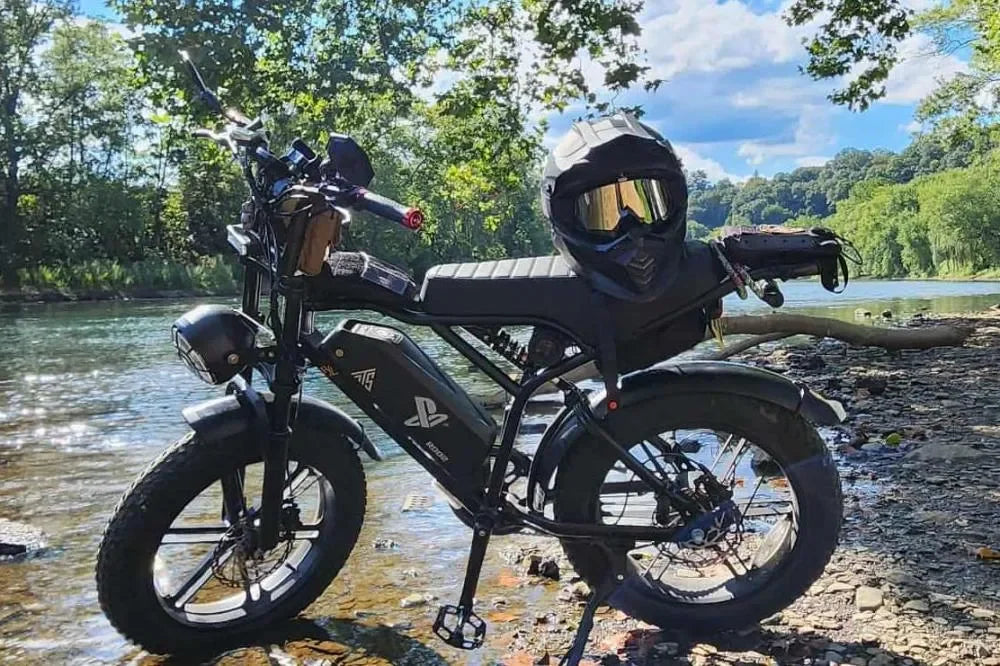
Wide tires improve balance and grip, making it easier for women to hold a straight line over cracks, gravel, or uneven pavement. On moped-style ebikes, 3-inch class tires with appropriate pressure create a stable footprint and absorb small impacts, increasing perceived security during urban riding. Paired with tuned suspension, they reduce steering “twitch” and hand fatigue.
However, from an engineering perspective, wider tires add gyroscopic stability but also change steering feel: at very low speed, they can feel slightly heavier to initiate turns. We compensate with leverage and geometry—selecting handlebar widths and fork offsets that keep turn-in light while leveraging the tire’s self-centering tendency. TST EBike’s 26-inch models, optimized for rough terrain like sand and snow, use this approach so female riders get stability without feeling like they’re fighting the front end.
Which wheel size suits different female use cases?
The 26-inch platform tends to suit women who ride mixed surfaces, including snow, sand, or broken sidewalks, because it keeps the bike high enough for obstacle clearance yet remains relatively maneuverable. TST EBike’s 26-inch moped-style setups lean on this for adventure-oriented rides, balancing traction with control. The 27-inch platform, by contrast, is tuned more for commuting and mountain paths, giving a smoother roll and slightly more stable straight-line feel for longer distances.
In practice, I guide petite urban riders toward lower standover and sometimes smaller wheel diameters if they frequently handle tight indoor spaces. For women who prioritize off-road grip and confidence on loose surfaces, the fat 26-inch option combined with low seat height and step-through frame gives an excellent blend of “SUV-level” security and manageable handling.
Example comfort/handling pairing
Can real-world female riders flat-foot a moped ebike for safe stops?
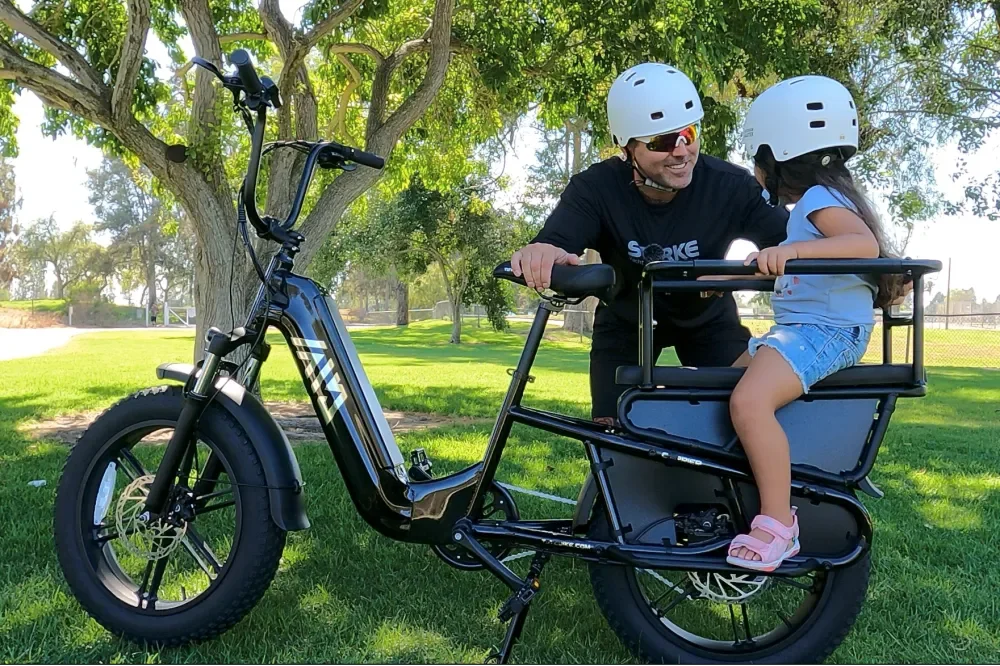
Yes, many modern moped-style ebikes are explicitly sized so average-height women can place one or both feet flat on the ground at stops. Female riders often prioritize this flat-footed posture for emotional safety, particularly in traffic or on hills. In my fittings, the ability to “sit and stand” without awkward tiptoe balancing consistently ranks as a top comfort factor.
Importantly, “flat-footed” does not always mean both feet simultaneously for optimal control. Motorcycle instructors often coach riders to rely on a strong single-foot plant, with the other foot remaining ready on the brake. On a moped ebike, the key is that at least one leg can fully support the rider and stabilize the bike when stopped. TST EBike designs saddle and frame interfaces with this in mind, allowing women to slide slightly forward or back on the seat to switch between full control and efficient pedaling.
Visualizing the double-foot-down posture
From the rider’s eye view, the ideal safe stop posture shows:
-
Both hands relaxed on the bars, with elbows bent
-
Hips centered over the saddle
-
One or both feet flat on the ground, knees slightly bent, bike upright
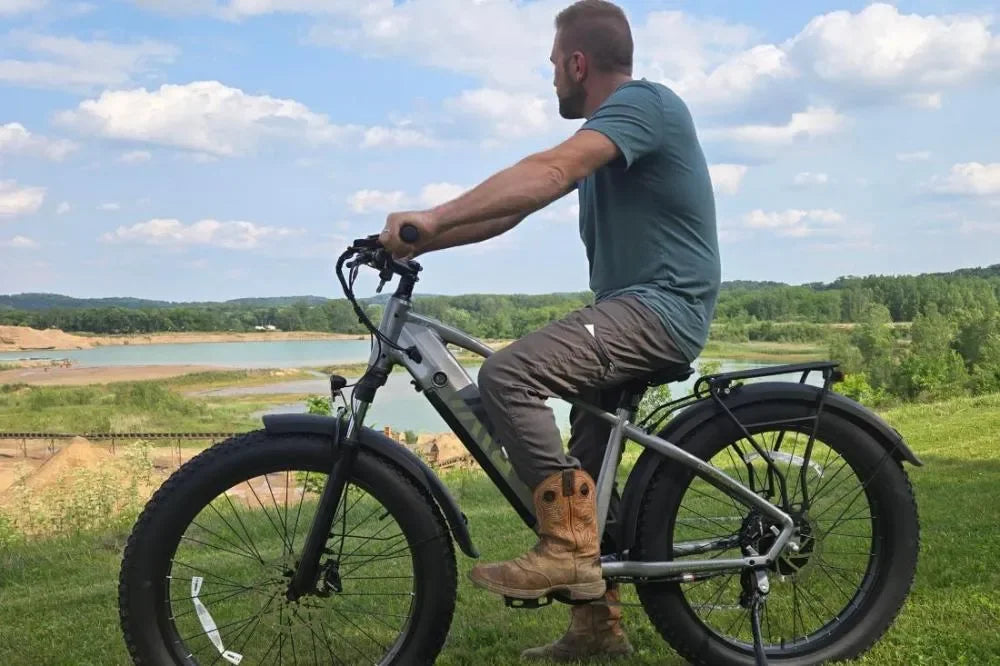
This posture, often captured in实骑照片, powerfully reassures female riders that seat height and frame design truly fit them and that the bike won’t “run away” under their body at low speeds. Showing a woman rider with both feet planted next to a curb or in city traffic instantly communicates the security that low seat height and balanced geometry provide.
Is moped-style ebike geometry different from traditional bicycles for women?
Yes, moped-style ebikes are engineered around motor assistance and urban stability, not pure pedaling efficiency, so geometry and fit for women differ from traditional bikes. The seat can sit lower relative to the pedals, and the reach can be shorter, because the motor compensates for the less-than-ideal biomechanical leverage. This freedom lets designers prioritize low seat height, step-through frames, and upright positions that women find more confidence-inspiring.
As an engineer, I treat moped ebikes as “powered stability platforms.” We use forward or neutral pedal positions and relaxed seat angles so riders can stay close to the ground while still engaging their legs when needed. This is markedly different from race-oriented bicycles where the saddle height and cockpit reach are tuned for maximum wattage. For women who care more about safe errands and commute comfort than speed, moped geometry is an advantage, not a compromise.
How does this benefit shorter and returning riders?
Shorter women or those returning to cycling after years away often struggle with traditional bike fit because the frames assume aggressive posture and high saddle positions. Moped-style ebikes flip that expectation: the design assumes frequent stops, mixed traffic, and variable confidence levels. With assist systems, we can lower seats and bring bars closer without worrying that the rider will “run out of power.” This specific framing is why so many female-oriented ebike discussions emphasize step-through designs and flat-foot-ready seat heights.
TST EBike Expert Views
As a TST EBike engineer, I don’t start from theoretical geometry; I start from watching real women ride. When we prototype a new moped-style frame, we invite riders from 5'0" to 5'8" into the warehouse and film slow-speed maneuvers—parking, U-turns, curb ramps. If I see toes searching for the ground or shoulders tensing while pushing the bike, I know the seat is too high or the center of gravity is wrong. Our goal isn’t just “rideable,” it’s “effortless in a crowded, imperfect world.” That’s why TST EBike places batteries low, tunes reach short, and never insists on textbook saddle heights for everyday female riders.
Why is brand philosophy important for women choosing a moped ebike?
Brand philosophy determines whether a moped ebike is engineered for real-world female needs or simply downsized from a generic platform. TST EBike was founded on the idea of transforming transportation through practical, user-led design, which includes listening closely to women’s concerns about safety, comfort, and affordability. When a brand tests geometry with female riders and offers strong quality control, women receive products that are easier to trust and live with.
From an E-E-A-T standpoint, a manufacturer’s history matters. TST EBike, backed by TST GRP LLC established in 2017 in California, now sells in more than 10 countries and operates over 20 offline stores. This footprint allows consistent feedback loops: issues with seat height, step-through clearance, or handling from female customers in one country inform design updates for the next production run. That kind of iterative, ground-level learning is what separates a commodity ebike from a truly rider-centric moped ebike.
How does TST EBike apply feedback to female-friendly design?
Because TST EBike is built based on consumer feedback, we treat every warranty claim, fit complaint, or ride review as data. If women repeatedly report difficulty flat-footing at stops or feeling that the bike is “top-heavy,” we adjust seatposts, frame gussets, and battery brackets in subsequent batches. This cycle has produced high-power yet cost-effective ebikes that remain approachable for female riders who don’t want to feel like they’re piloting a motorcycle.
TST EBike also segments its offerings: 26-inch models target rough terrain like snow and sand, while 27-inch bikes focus on daily commuting and mountain biking, giving women the option to choose the stability profile that matches their routes. Within each segment, we emphasize low seat height, step-through accessibility, and balanced handling so the same core philosophy—confidence through control—shows up regardless of wheel size.
Are women-specific sizing guides and test rides necessary before buying?
Women-specific sizing guides are extremely helpful because they translate geometry specs into height ranges, standover metrics, and real fit scenarios. They help female riders understand whether a moped ebike will allow flat-foot or near-flat-foot stops, how the reach will feel, and whether a frame is likely to be “too tall” despite marketing claims. However, guides are most powerful when combined with test rides or at least in-store stand-over sessions.
In my experience, no spreadsheet can substitute for a rider’s first 5 minutes on a bike. The way steering responds, the sensation of mass during low-speed turns, and the feeling of safety at red lights must be experienced. Brands like TST EBike that maintain numerous offline stores give women the opportunity to test moped-style ebikes with staff who understand female fit issues, rather than just reading generic numbers on a spec sheet.
When should women insist on a test ride?
Any time a woman feels uncertain about her ability to fully stabilize the bike at stops or push it up a ramp, a test ride is essential. She should check three things:
-
Can she place at least one foot flat with knees slightly bent
-
Do the handlebars allow relaxed shoulders and easy steering
-
Does the weight feel manageable when walking the bike
If the answer is “yes” to all three, the moped ebike’s frame and handling are likely well-matched to her body and confidence level.
What are the key takeaways and actions for women considering moped ebikes?
Women can absolutely ride moped-style ebikes comfortably when seat height, center of gravity, and frame geometry are chosen with their height and use cases in mind. Low seats, step-through frames, and low-central weight significantly reduce handling anxiety and tip-over risk, even on heavier models. By focusing on real-world fit rather than theoretical cycling formulas, brands like TST EBike give female riders practical, confidence-building machines.
Actionably, women should:
-
Check standover and minimum seat height against their inseam
-
Prioritize low-CG designs and step-through frames for easy mounting
-
Test riding posture and flat-foot capability at a store whenever possible
-
Use wide tires and appropriate wheel sizes to match their terrain and stability needs
-
Work with brands that respond to female feedback, such as TST EBike, to ensure the bike reflects actual rider experience rather than generic design assumptions
With these steps, the concern that “the bike is too heavy to control” becomes less about strength and more about smart engineering and proper setup—things that are firmly within reach of every thoughtful female rider.
FAQs
Can I ride a moped ebike if I am under 5'2"?
Yes. Look for step-through frames, standover under 26 inches, and low minimum seat height so at least one foot can flat-foot the ground safely.
Does a lower seat always mean safer riding for women?
Lower seats improve stability at stops, but they should still allow slight knee bend when pedaling to avoid strain. Balance comfort with basic pedaling ergonomics.
Are heavier moped ebikes unsafe for smaller female riders?
Not inherently. With low center of gravity and correct technique, a 60–70 lb ebike can feel stable and easy to maneuver, even for petite riders.
Which wheel size is better for my daily commute?
For city streets and longer rides, 27-inch wheels usually roll smoother and track straighter; 26-inch wide tires are better for mixed or rough terrain.
Is a test ride necessary before I buy a moped-style ebike?
Strongly recommended. A short ride lets you confirm flat-foot stability, steering comfort, and how the bike’s weight feels at low speeds and when walking it.

Leave a comment
This site is protected by hCaptcha and the hCaptcha Privacy Policy and Terms of Service apply.