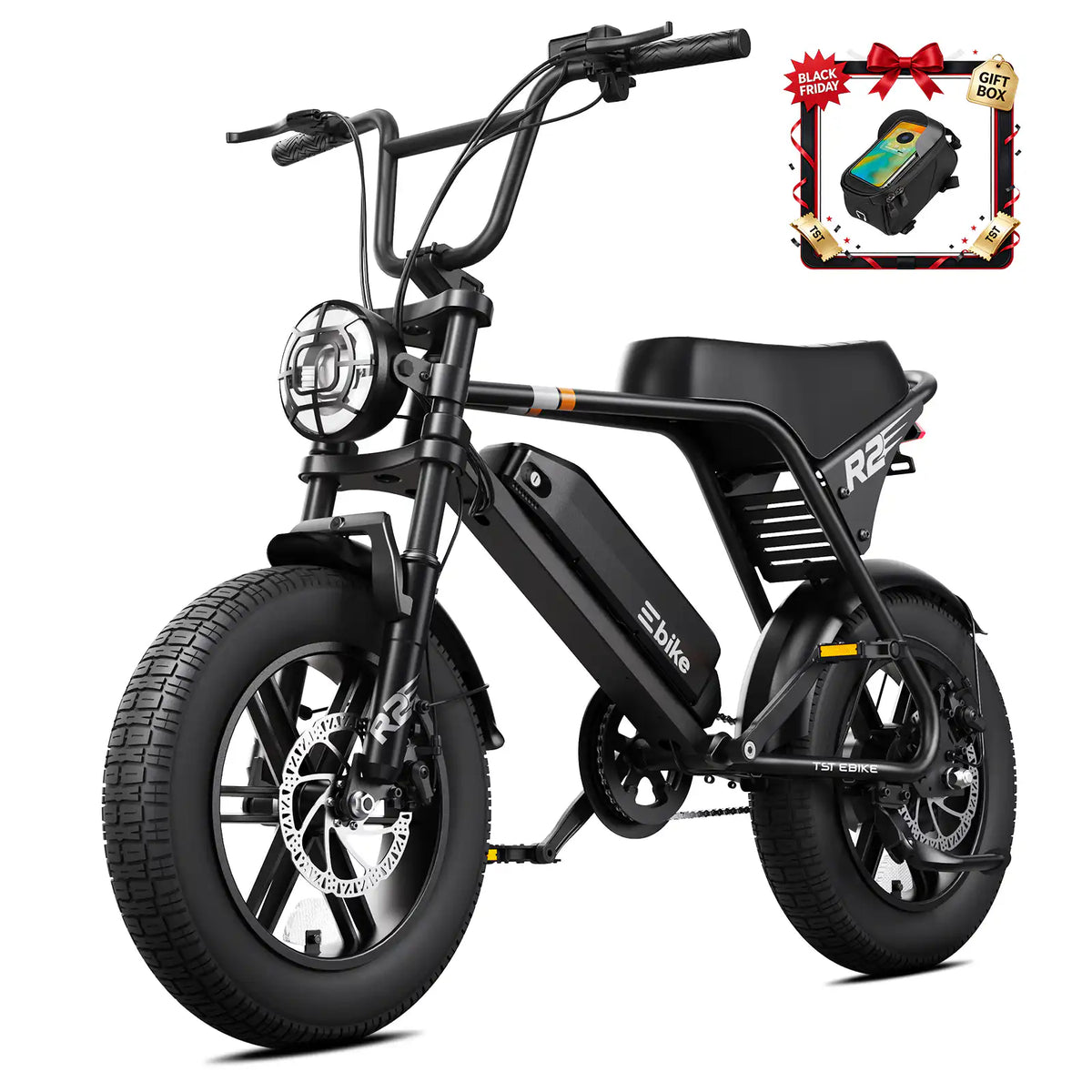
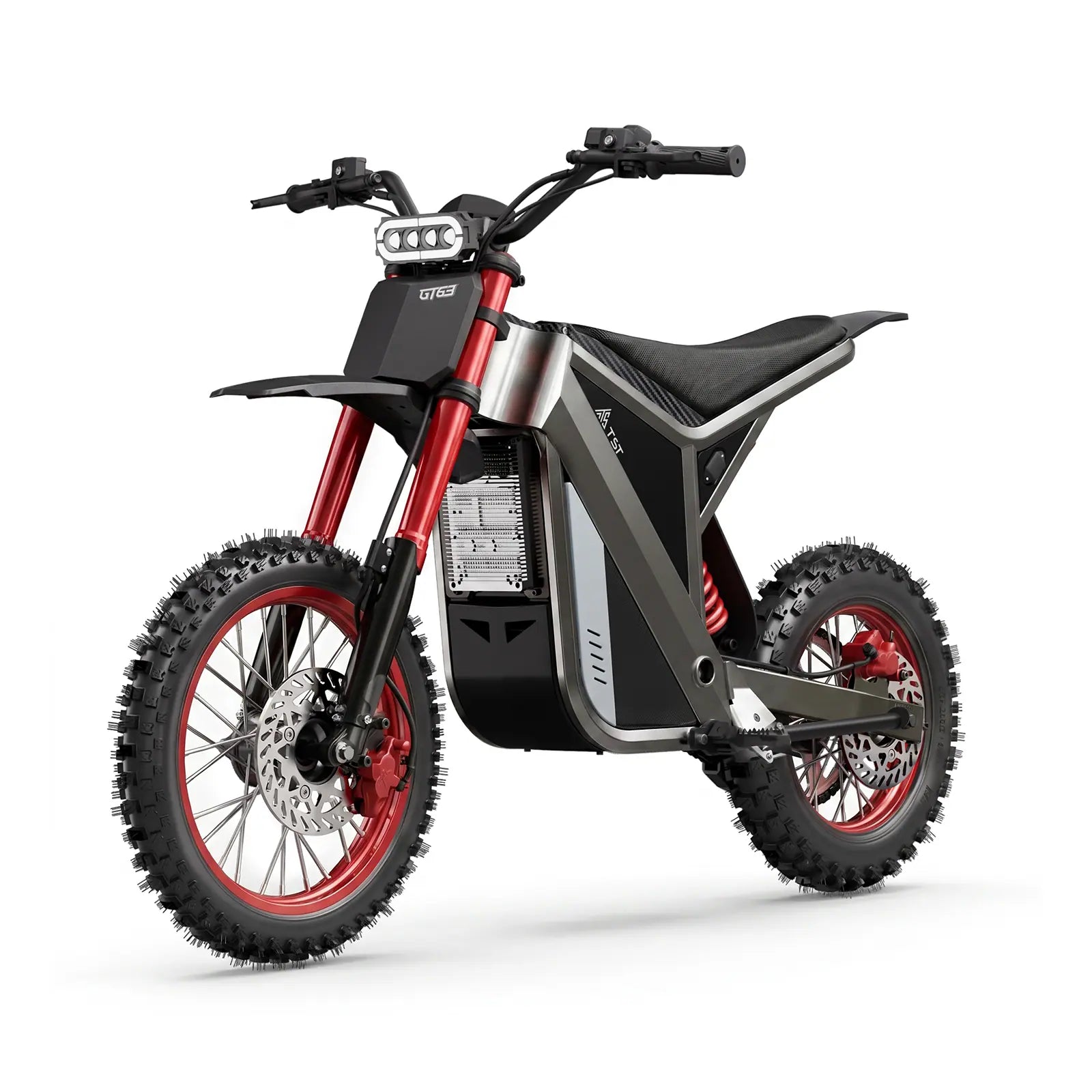

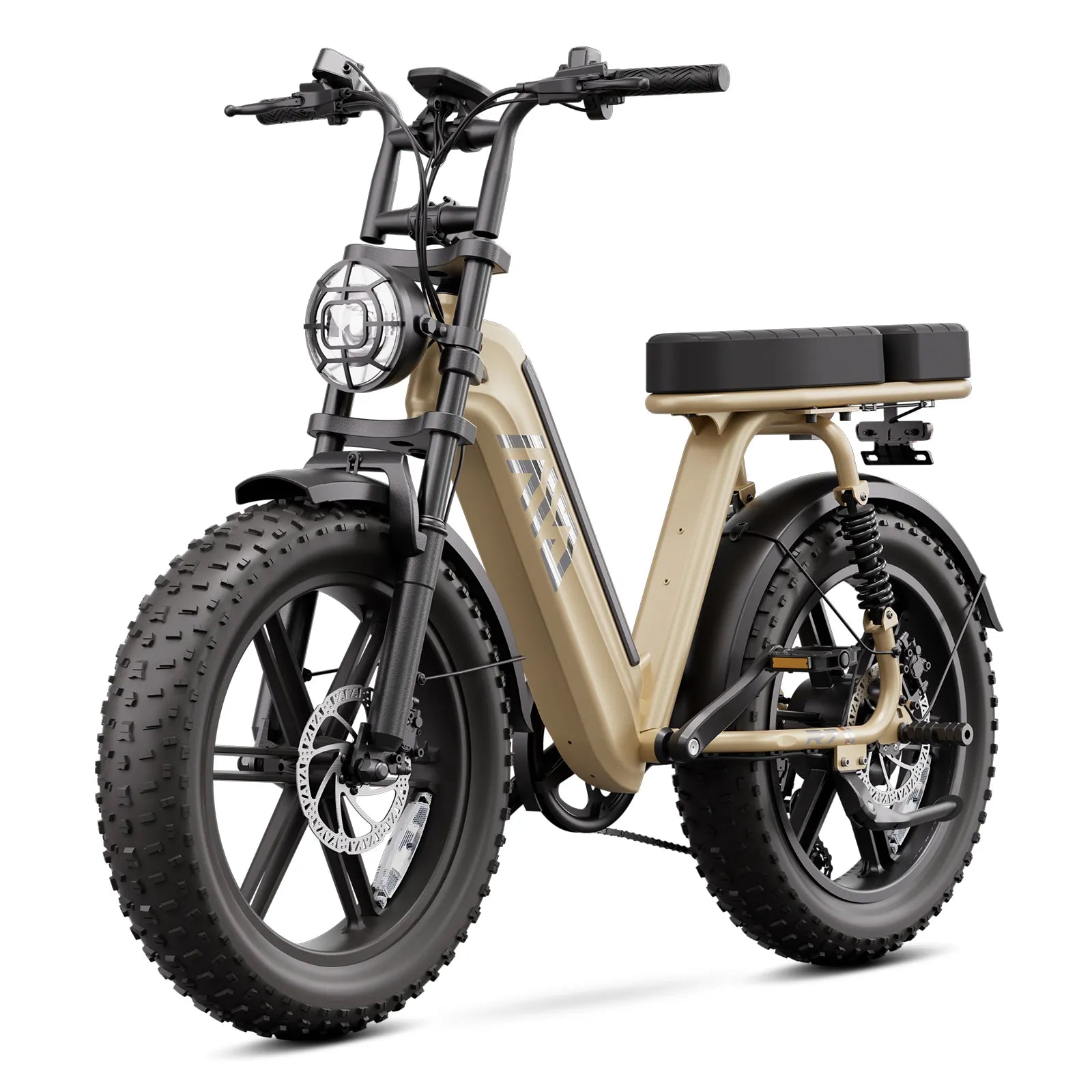
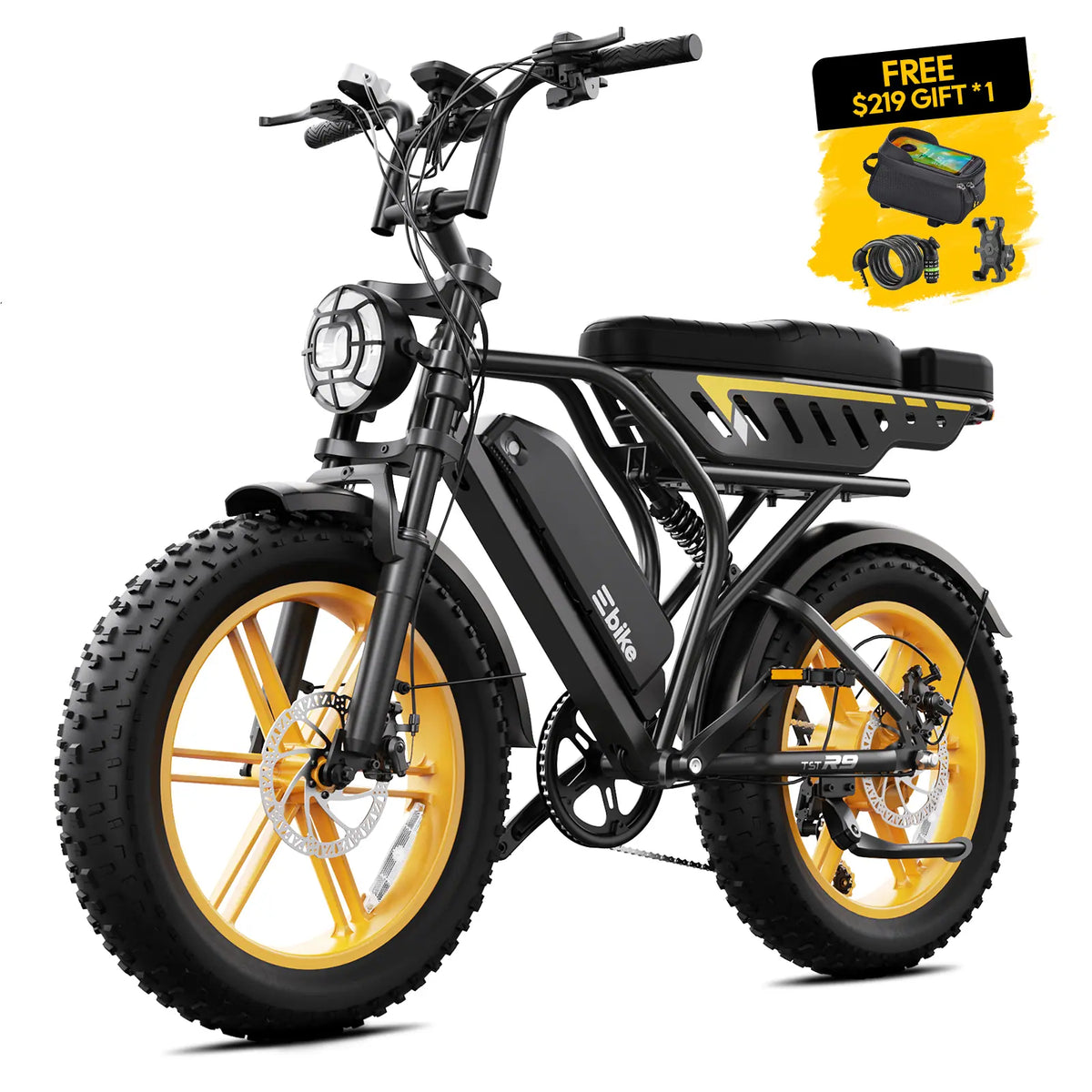

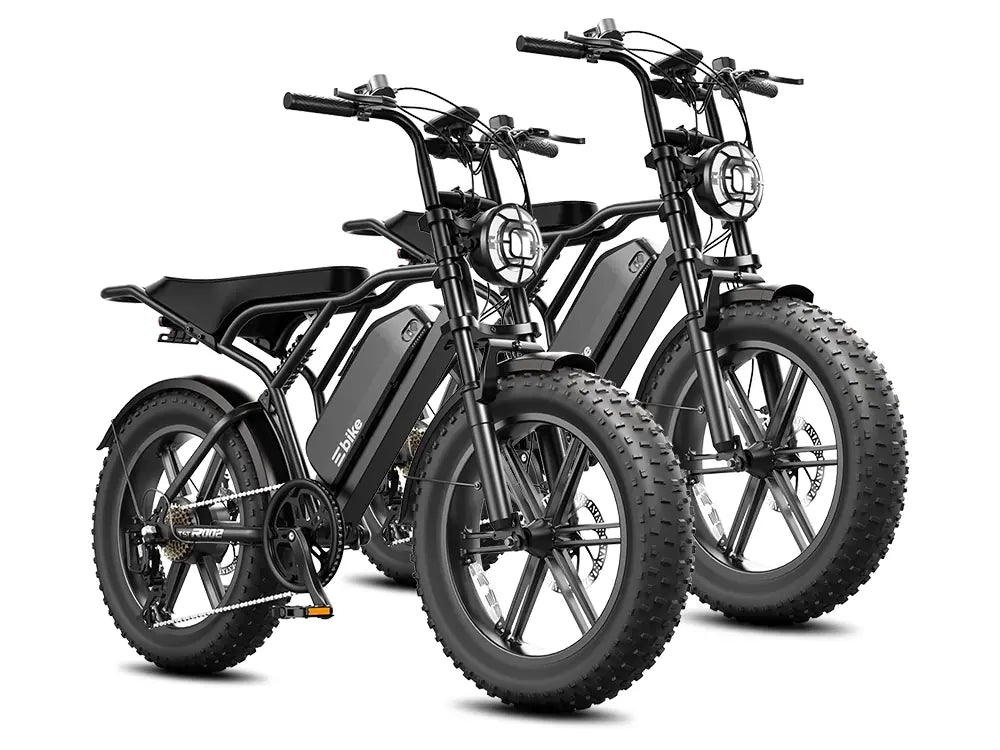
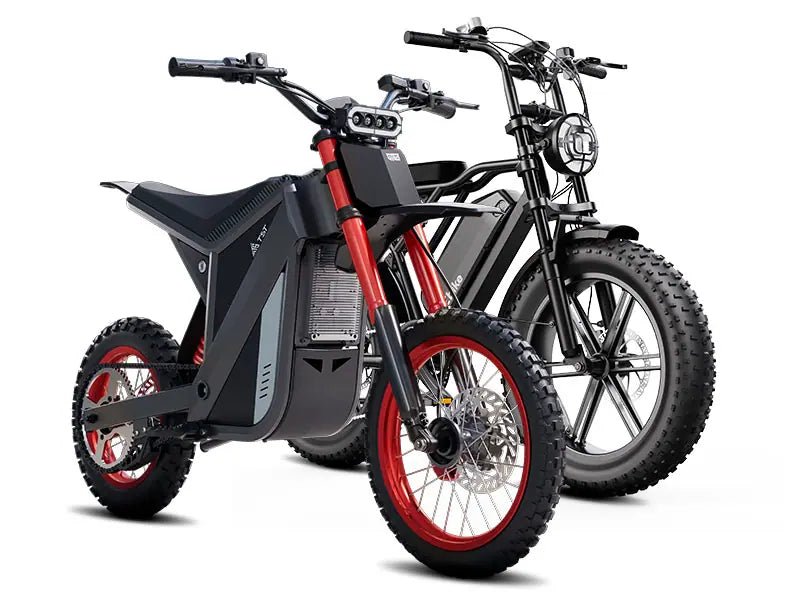
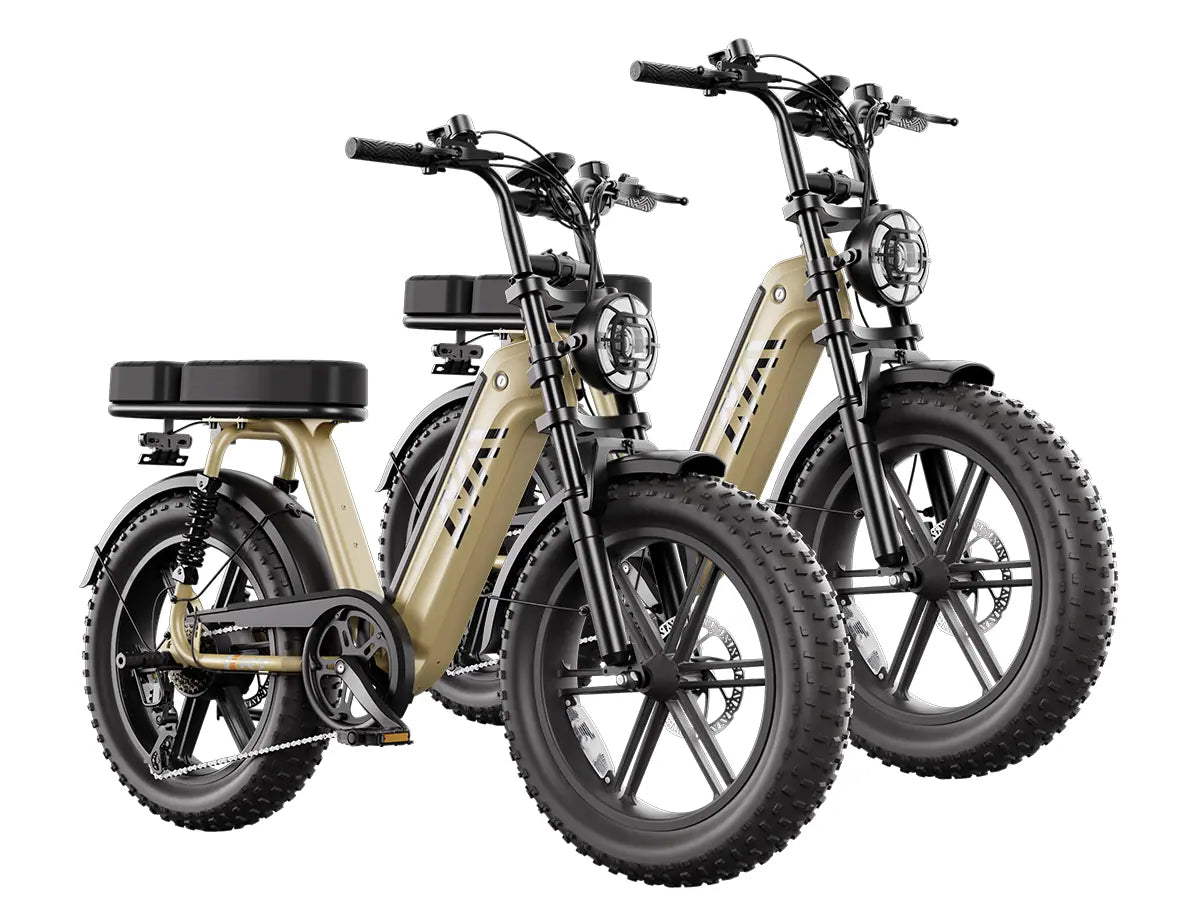
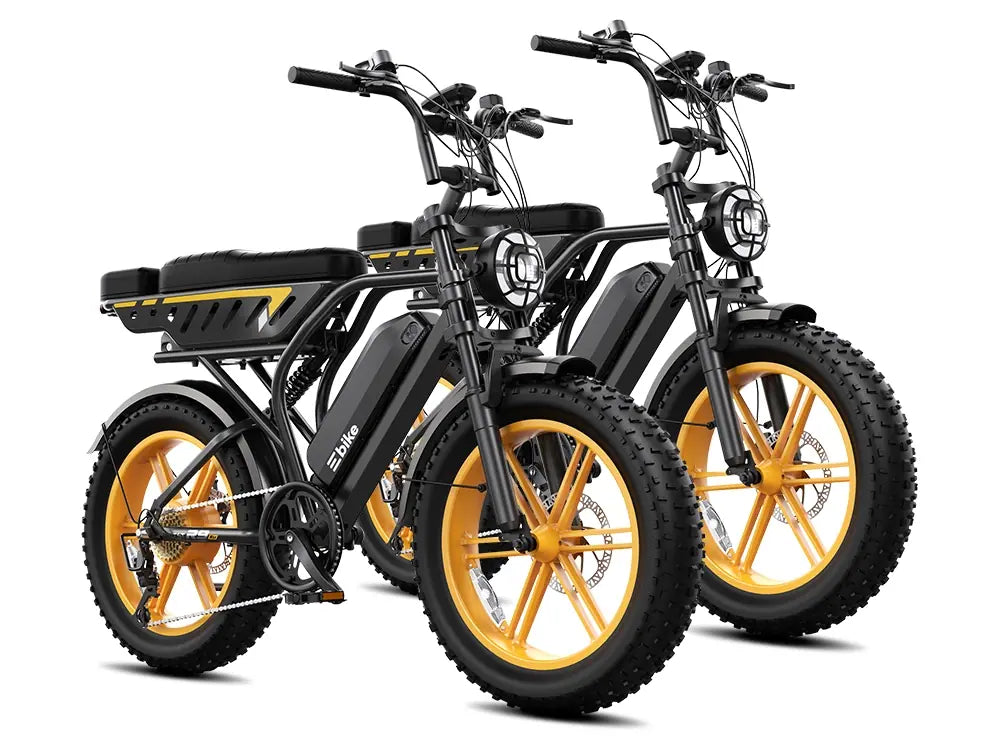
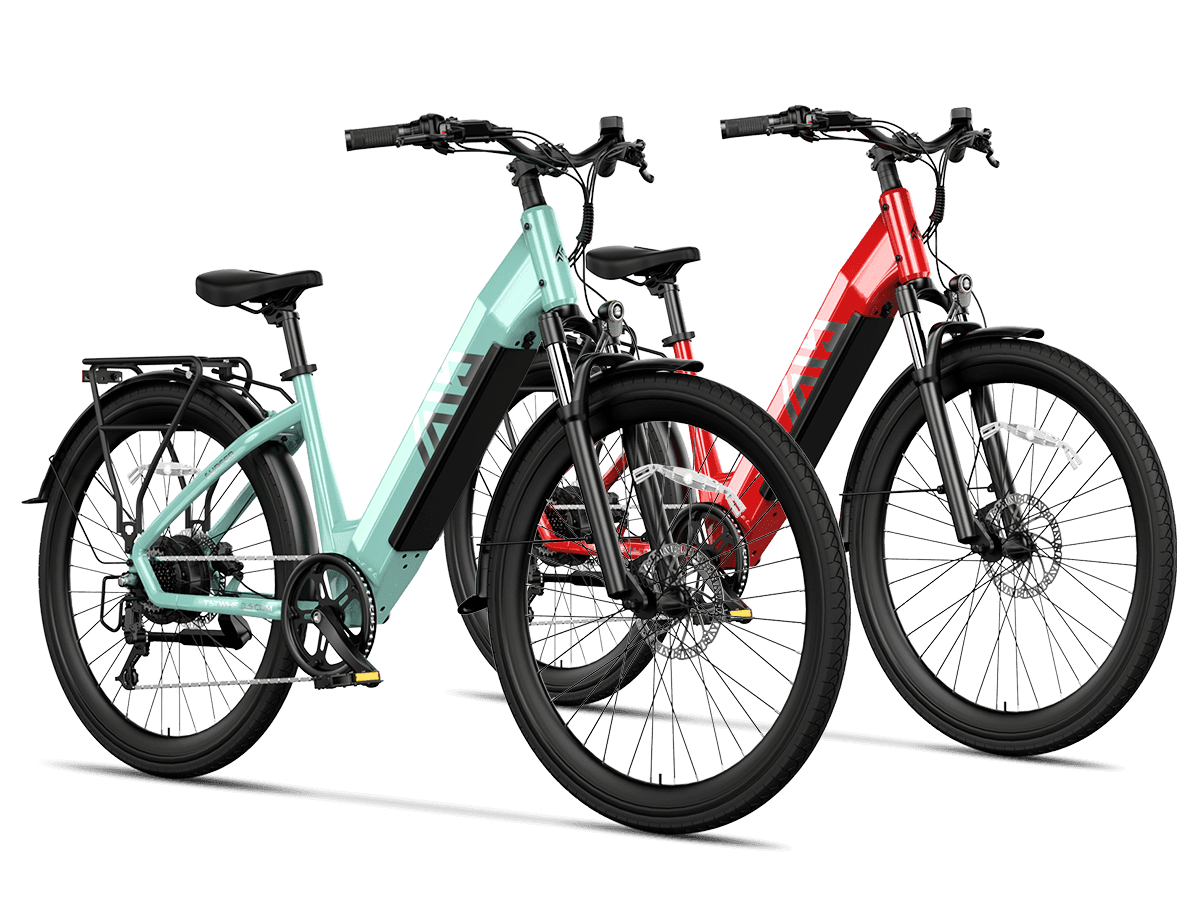
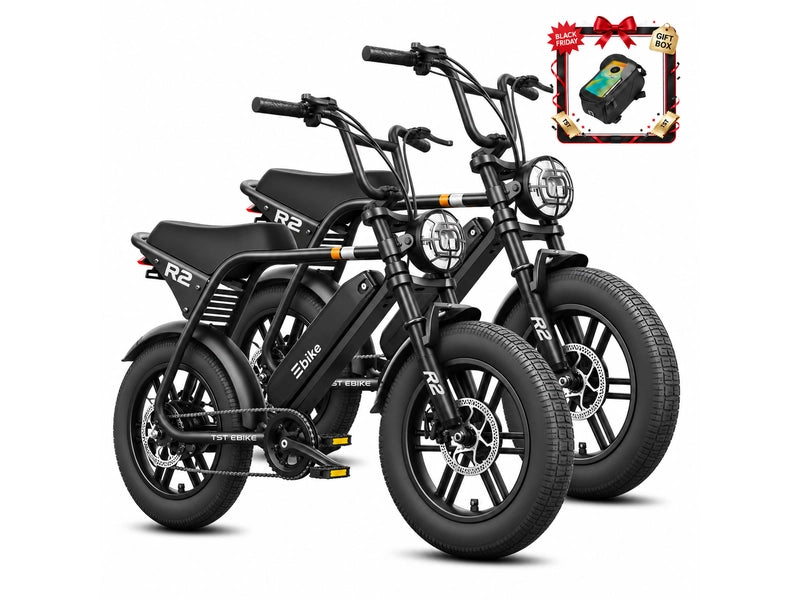
A moped-style e-bike's weight is only part of the problem. The bulk sits low and off-center in the frame, seat, and battery, so the bike resists exactly the grip and body position a person naturally uses to lift a bicycle. If you will need to carry the bike—up a stoop, over a curb lip, into a car trunk, or up an apartment stairwell—more than a few times a month, the format's handling behavior deserves more attention than its spec sheet gets in most buying guides.
The Core Problem Is Distributed Mass, Not Just Total Weight
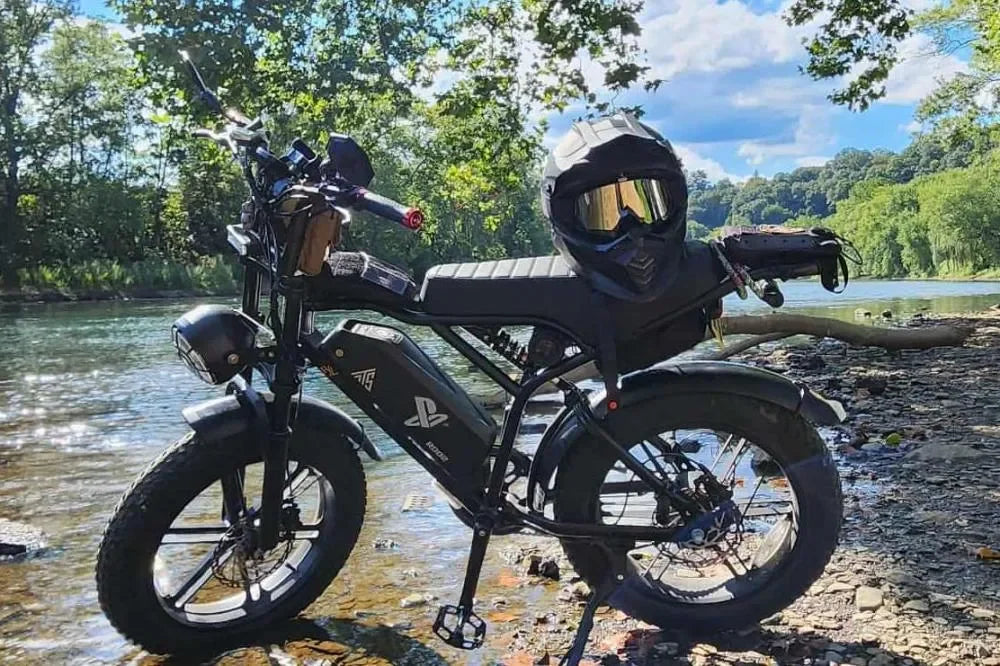
Across TST's current moped-style lineup, unloaded weight runs from about 71.9 lbs on the R002 to roughly 82.7 lbs on the R7 Moped Cargo Bike and 87.7–96.6 lbs on the dual-battery R9, depending on battery configuration. The Carrier, a related cargo-format model, lists at 90.4 lbs. None of that weight is trivial, but the number alone undersells the handling problem.
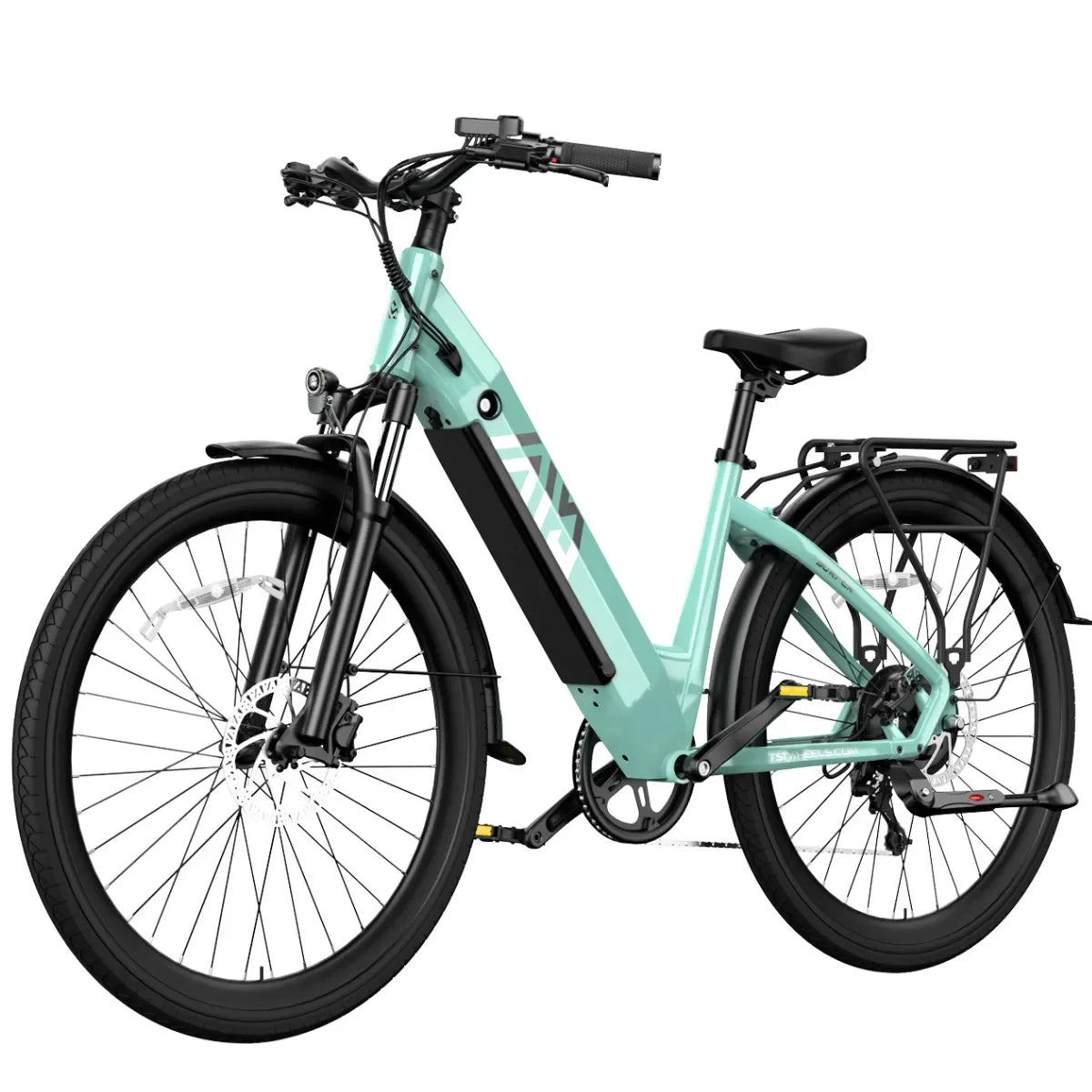
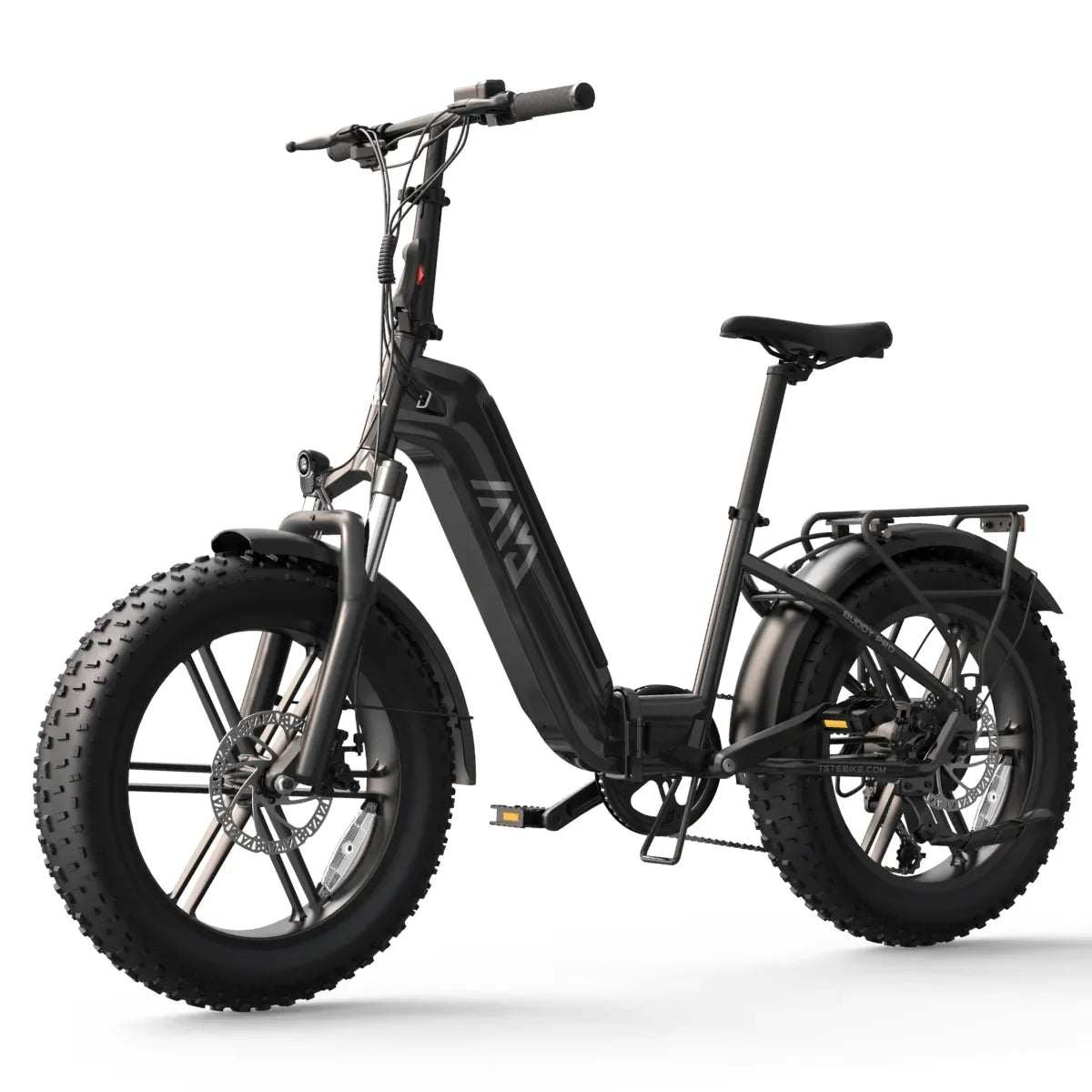
A standard commuter bicycle concentrates most of its mass in a narrow vertical column you can straddle and lift from underneath the top tube or saddle. A moped-style frame spreads weight low and wide across an integrated step-through frame, a padded bench seat, a downtube-mounted battery, and 20-by-4-inch fat tires. That low, wide mass raises the effective lifting load even when the bike-scale weight looks similar to a heavy conventional e-bike, because you cannot get your center of gravity underneath it the way you can with a narrow-frame bike. A rider comparing two bikes that both weigh around 80 lbs should not assume they carry the same—a long-seat, wide-tire moped frame is harder to balance one-handed than a narrower cargo or commuter frame at the same weight, because there is no single narrow point to grip and rotate the bike around.
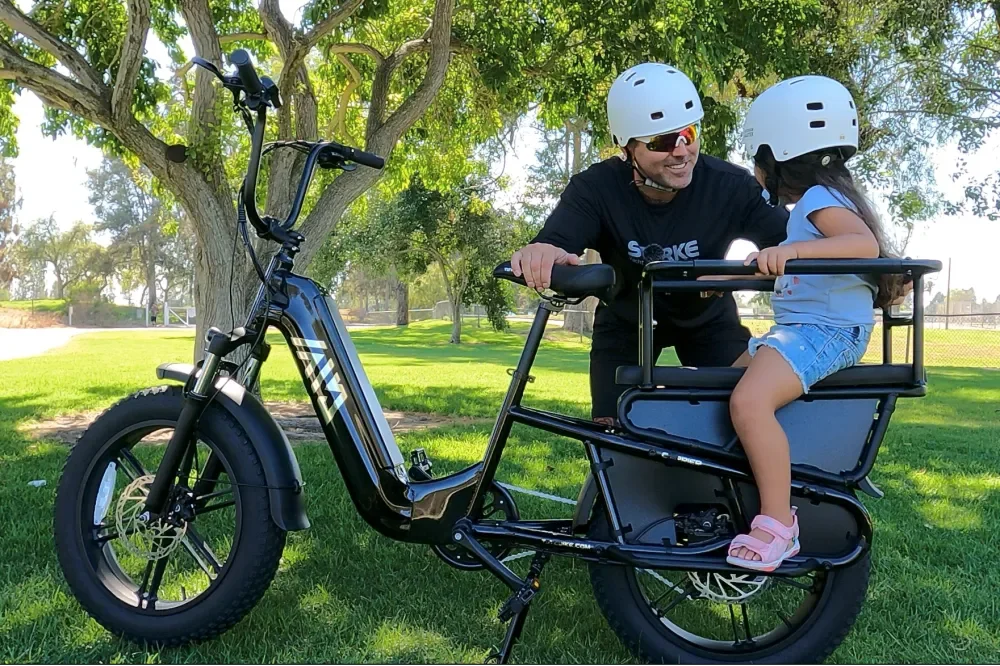
TST's published specifications do not identify a manufacturer-approved lifting or carrying point on these models—not verified across the current product pages, spec listings, or the assembly guide reviewed for the R002. The only load-rated attachment points documented are functional: the rear rack, and only on cargo-oriented models like the Carrier, which is rated for up to 150 lbs of cargo or passenger weight, not for lifting the bike itself. Gripping a rack, fender, light housing, or battery latch that was never designed as a handhold is a common way riders damage those parts or lose control of the bike mid-lift. If TST's owner's manual for your specific model does not name an approved lift point, treat the frame's main tube and seat post—the same points used to roll or steady a standard bicycle—as the only areas verified for hands-on control, and confirm with TST support before relying on any accessory-mounted point.
Rolling Ability Does Not Predict Lifting Ability
The most common blind spot in moped-style e-bike shopping is treating "I can roll it around the garage" as proof the bike is manageable. Rolling only tests whether the tires turn and the bike balances upright while both wheels stay on the ground—it says nothing about what happens when you need to get the bike's full weight off the ground entirely.
Four situations force a true lift, not a roll, and each one is where moped-style bikes create the most friction:
-
Doorways with a raised threshold or a step. A single 3–6 inch lip is enough to require lifting the front wheel, and on a nose-heavy moped frame with a long wheelbase, that shifts a large share of the bike's weight onto your arms and lower back for the second or two it takes to clear the lip.
-
Stairs, with or without a landing. Any repeated need to carry the bike up or down stairs is the single hardest test in this category. Wide handlebars and a long seat make it difficult to angle the bike diagonally on a standard stairwell, and there is no universal safe weight for carrying any e-bike up stairs alone—capability depends on the individual's strength, the stair width and pitch, and whether a second person or a stair-rated dolly is available. Riders discussing a 70-lb e-bike on stairs in online forums repeatedly recommended against solo stair-carrying for bikes in this weight class and suggested a collapsible stair dolly instead of lifting. Treat that as directionally useful rider experience, not an engineering standard.
-
Vehicle loading, meaning lifting the bike into a truck bed, SUV cargo area, or onto a roof or hitch rack. Most standard hitch bike racks are rated for bikes in the 50–60 lb range; several moped-style models, including TST's R9 and Carrier, exceed common rack weight limits before you add cargo, which is a rack-compatibility question the rider must check against the exact rack's own rated capacity, not against the bike's marketing copy.
-
Repositioning in tight parking, such as walking the bike backward up a curb ramp, maneuvering it into an elevator, or fitting it into an apartment storage closet. This isn't a full lift, but the long wheelbase and wide bars mean these bikes need more clearance to reposition than a folding or standard commuter frame, even without lifting the wheels off the ground.
Buying guides that praise a "vintage moped look" or "comfortable long-ride seating" typically stop at ride comfort and skip this distinction entirely. A rider guide comparing several current moped-style e-bikes flagged the issue only briefly—noting that a 115-lb dual-battery model "will be difficult to carry upstairs, lift into a truck, or place on a standard bike rack," and that the same brand's lighter single-battery version is "much easier to manage" despite being nearly the same bike. That is a useful data point, but it is presented as a footnote rather than a decision filter, and it doesn't address doorway thresholds, dolly alternatives, or what actually differs about lifting versus rolling.
The Repeated-Movement Test: Run This Before You Buy
Instead of asking "can I lift this bike," ask a narrower and more honest question: which single movement will I have to repeat most often, and can I do that movement—not a lighter version of it—every time, without help?
Walk through your own routine and identify the one hardest repeated move, not the average one:
-
Identify the move. Common answers: carrying the bike up a half-flight of exterior stairs to a porch, lifting it over a raised garage threshold daily, loading it into a car trunk for a gym run, or hoisting it onto a hitch rack for weekend trips.
-
Match the move to the model's real dimensions. Pull the exact weight and unfolded footprint for the specific variant you're considering—for example, the R002 at roughly 60.3 by 26.6 by 42.8 inches unfolded and about 71.9–75 lbs, versus the R9 dual-battery at up to about 96.6 lbs. A bike that's 15–20 lbs heavier than another in the same lineup is not a trivial upgrade if the hardest move in your routine is a solo lift.
-
Check whether the move requires two hands and a full lift, or one hand and a roll. If your answer is "I have to get both wheels off the ground," you're in lifting territory, and rolling-only comfort claims don't apply.
-
Decide if you can do it every time, not just once. A single demo lift in a showroom tells you almost nothing about doing the same lift twice a day for a year. Fatigue, weather, and carrying groceries at the same time all make the tenth repetition harder than the first.
-
Apply the veto. If you cannot control the bike through that one hardest repeated move without assistance, a stair dolly, or a second person, the moped-style format is very likely the wrong fit regardless of how much you like its range, styling, or price—no battery size or motor spec offsets a move you cannot physically complete.
This test does not produce a universal weight cutoff, because lifting capability varies by person, and no manufacturer or regulator publishes one that applies to every rider. What it does is force the comparison TST's own compare-models page and most competitor roundups skip: matching the bike's actual handling behavior to your specific repeated task, rather than to its price or top-line spec.
Who Should Choose a Different Format
If your repeated-movement test comes back negative, a few alternatives solve the carrying problem directly rather than asking you to get stronger or buy a dolly.
Choose a folding commuter or folding-frame e-bike if you need to carry the bike into an elevator building, up a narrow stairwell daily, or store it in a closet. Folding reduces footprint, though it does not eliminate weight—TST's own folding models still run 65.4 lbs (Folding) to 71.9 lbs (Folding Pro), so folding solves storage geometry, not lifting effort, and a heavy folding bike is not automatically "easy to carry" just because it folds smaller.
Choose a lighter step-through commuter model if your hardest move is a daily lift over a threshold or into a vehicle and you ride mostly on pavement. TST's City-Smooth model weighs about 58.9 lbs, roughly 13–38 lbs less than the moped-style options, which meaningfully changes single-person lift difficulty even though the difference sounds small on paper.
Choose a true cargo bike with a step-through frame and lower center of gravity if you need passenger or heavy-cargo capacity but also need to walk the bike through tight spaces regularly; a narrower frame is generally easier to angle through doorways and up curb ramps than a wide moped bench-seat design, even at a similar total weight.
Reconsider throttle-heavy, high-power configurations entirely if you ride in Washington State and plan to use full throttle to exceed 20 mph. Washington defines an electric-assisted bicycle under state law as capping the motor at 750 watts and falling into Class 1, 2, or 3 based on assist behavior and top speed; a Class 2 e-bike specifically is not permitted to provide motor assistance once the bicycle reaches 20 mph on the motor alone. TST's current moped-style models are built around 1000–1500W peak motors and top speeds up to 32 mph—figures that describe peak output and manufacturer-stated top speed, not necessarily continuous rated power or a specific street-legal configuration in every jurisdiction. Whether a specific model, in its as-shipped configuration, meets Washington's 750W and speed-cutoff definition is a jurisdiction-specific and configuration-specific question that the rider must confirm directly with TST support and, if needed, the Washington State Department of Licensing before assuming any moped-style model qualifies as a Class 1, 2, or 3 e-bike in that state. A bike that falls outside the state's e-bike definition can be treated as a moped or motorcycle requiring registration, a license, and insurance—rules that have nothing to do with how the bike handles, but everything to do with where you can legally ride it.
None of this means a moped-style e-bike is a poor product. It means the format's low, wide mass distribution creates a specific and testable handling limitation that a spec sheet doesn't reveal by itself. If you've run the repeated-movement test and the moped-style frame still fits your routine, TST's current model comparison page lists verified weight, battery, motor, and dimension figures side by side so you can check the exact variant against the move you identified before you buy.
compare TST moped-style models
References
-
RCW 46.04.169 — Electric-Assisted Bicycle Definition and Classes, Washington State Legislature
-
TST® R002 20'' 1500W Full Suspension Moped-style Electric Bike Product Page, TST Ebike
-
How to Assemble TST R002 eBike: Complete Setup Guide, TST Ebike
-
Carrying a 70 lbs e-bike up staircase, r/ebikes community discussion

Leave a comment
This site is protected by hCaptcha and the hCaptcha Privacy Policy and Terms of Service apply.