
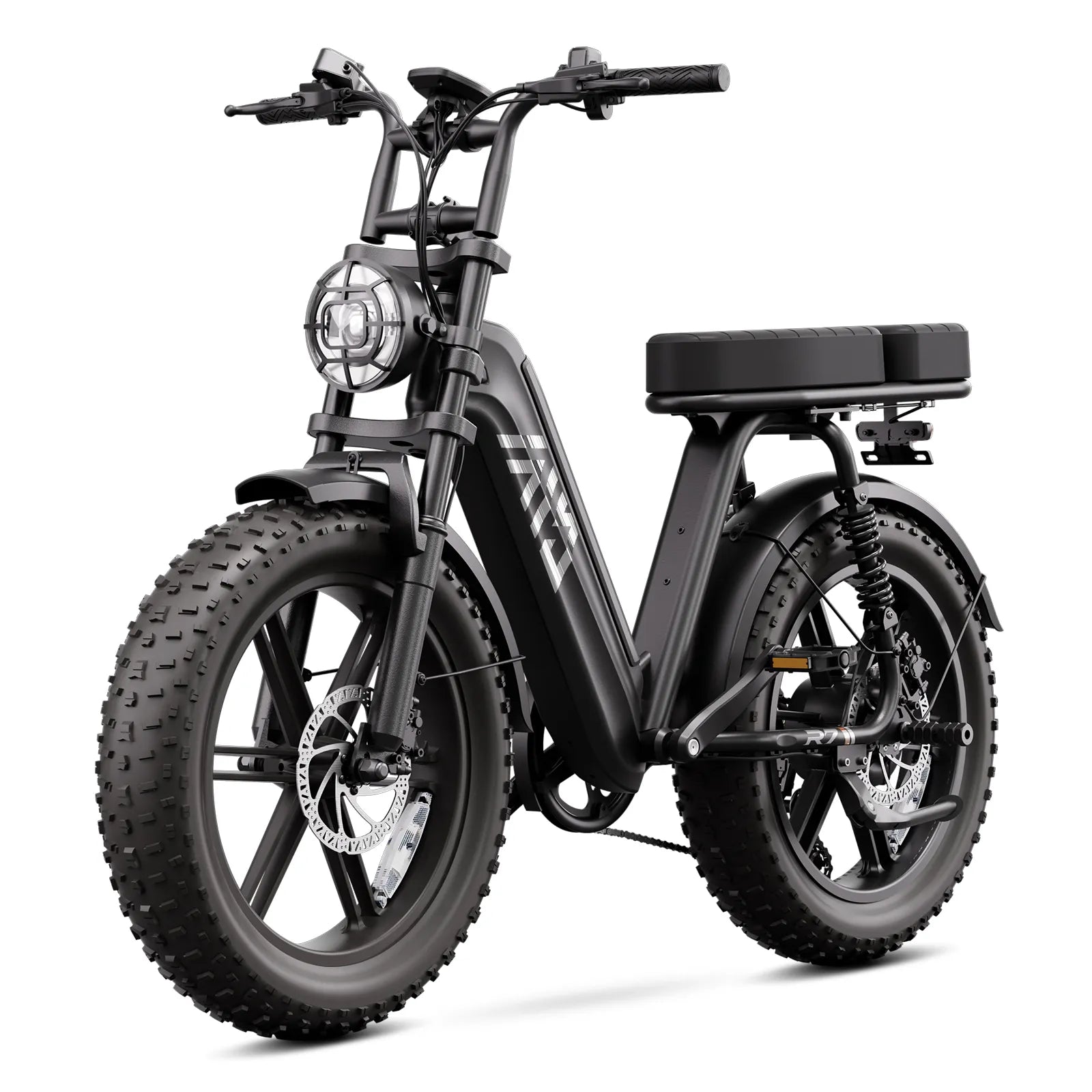

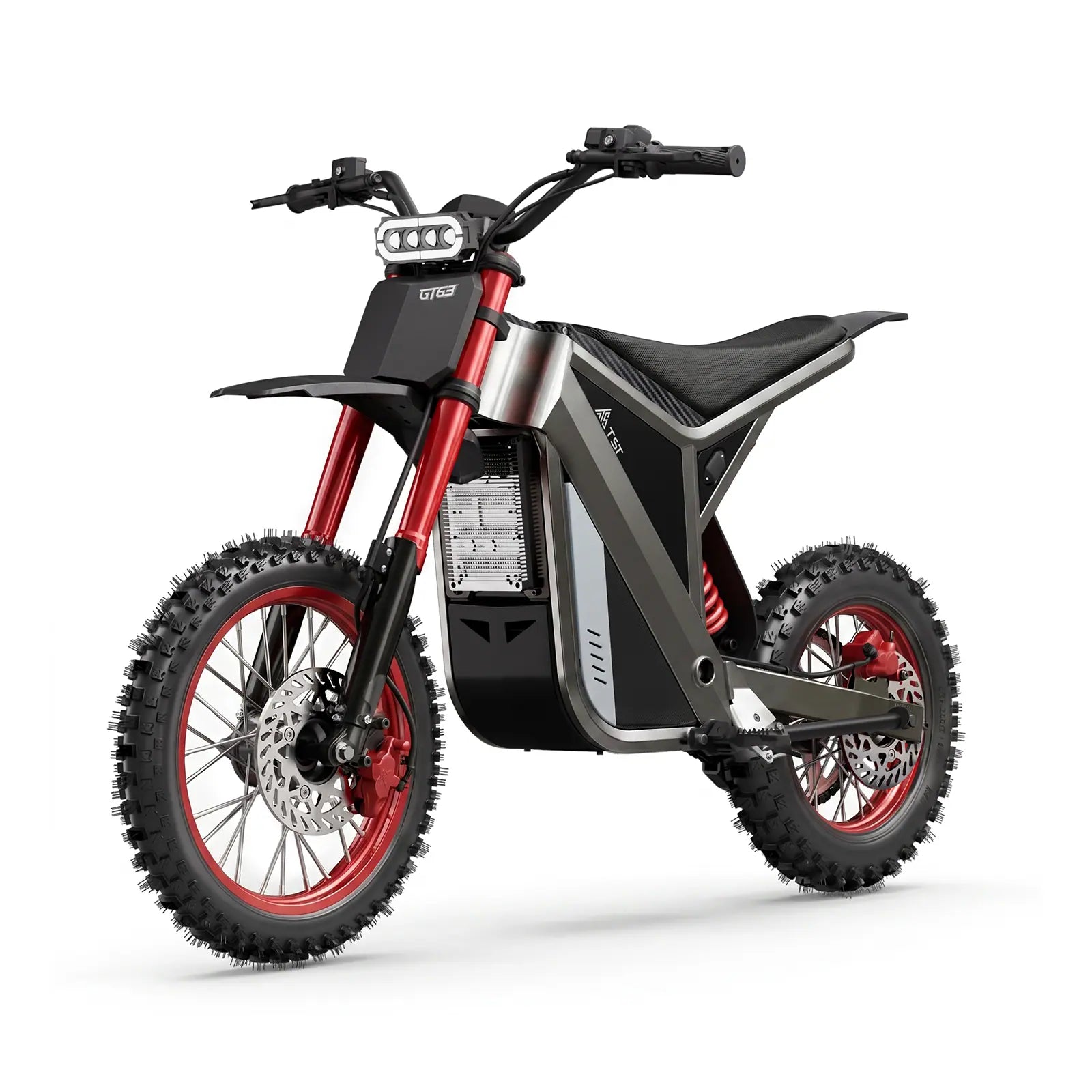














Air shocks are lighter and more tunable, making them ideal for mixed-terrain ebikes that need efficient climbing and easy setup. Coil shocks are heavier but offer superior small-bump sensitivity, traction, and heat stability for aggressive, muddy descents. For most riders, air suits all-round trail use, while coil shines on demanding enduro-style off-road eMTB riding.
demystifying off road suspension
How do air and coil shocks actually work on an off-road ebike?
Air shocks use compressed air in one or more chambers as the spring, giving a naturally progressive feel that ramps up sharply near bottom-out. Coil shocks use a steel or titanium coil spring with a much more linear response, so the force increases at a nearly constant rate through the travel. In both cases, an oil damper controls compression and rebound behavior.
From a factory perspective, I see three design levers that really matter: spring curve, friction, and heat management. Air shocks add seals and a negative air chamber to improve initial sensitivity, but each extra seal is more friction under small movements. Coil shocks, by contrast, have minimal seals, so the wheel can start moving on tiny bumps with less force. This is why you feel traction differences at the contact patch long before you “feel” anything at the handlebar.
Air vs coil basic behavior table
TST EBike engineers typically start with an air platform for broad consumer models, then validate coil options on prototype frames meant for more extreme off-road use. That balance lets everyday riders enjoy tunable comfort while still giving hardcore users a path to coil stability when they ride at the limit.
What is different in the compression curves of air vs coil shocks?
Air shocks follow a progressive compression curve where force rises faster the deeper you go into travel, which naturally resists harsh bottom-outs and favors a “poppy” feel. Coil shocks follow a more linear compression curve, where force increases more evenly across the stroke, so mid- and end-stroke feel more supportive and predictable under sustained loads.
If you overlay both curves on a test rig, an air shock often starts stiffer at the top, then leaps upward near 70–80% travel. A coil’s line climbs more gently and reliably, so you can read grip with your feet on off-camber roots or in deep mud ruts. As an engineer, I tune leverage ratios on heavy eMTB frames precisely around these curves; if the frame is already progressive, a coil’s linearity keeps the overall system from becoming too harsh at the end.
Compression curve comparison table
This table illustrates why riders feel air shocks as “progressive and poppy” and coils as “glued and calm.” On a TST EBike set up for mud, I typically bias toward a curve that keeps the tire in contact rather than chasing maximum pop.
Why do air shocks seem better for general ebike off-road riding?
Air shocks are better for general off-road ebike use because they are much lighter, more adjustable for rider weight, and better at providing efficient pedaling for long mixed-terrain rides. The progressive air spring also gives more bottom-out resistance, which helps when a heavier eMTB lands jumps or unexpected impacts.
Most TST EBike customers are not racing enduro stages every weekend; they are riding forest roads, singletrack, and city connectors. For these riders, the ability to add or remove 5–10 psi to match their luggage or battery choice is far more valuable than the last 5% of small-bump traction. From an OEM point of view, air shocks also simplify warehouse inventory since one damper can cover a wide weight range without stocking multiple coil rates.
On a heavier off-road ebike, grams matter less than on a pure XC bike, but unsprung mass still affects how fast the wheel can move. Air shocks keep that mass low while still providing tunable support. If I am speccing a 27-inch TST EBike commuter that occasionally hits dirt, an air shock is almost always my first choice.
Why do coil shocks shine in muddy, aggressive off-road conditions?
Coil shocks shine in muddy, aggressive conditions because their low friction and linear spring curve deliver better small-bump sensitivity, continuous traction, and consistent performance under heat and repeated hits. The wheel can track slippery roots and rock edges without the stick–slip feeling you get when an air shock’s seals are fighting the initial movement.
When you point a high-power eMTB straight down a rutted, wet fire road, brake bumps and chatter become relentless. A coil shock keeps building and releasing force smoothly, which calms the chassis and reduces rider fatigue. In my testing, this “calmness” is measurable in lower peak accelerometer spikes at the rear axle over long descents. On some prototype TST EBike downhill builds, we saw riders carrying significantly more corner speed in mud when swapping from air to coil at the same sag.
Another mud advantage is thermal stability. Air pressure in a sealed chamber will rise with heat from damper work, subtly altering spring rate during a long run. A steel coil’s rate barely changes, so your sag and mid-stroke support feel the same from top to bottom. That predictability turns into confidence when conditions are sketchy.
Which setup is better for heavy ebikes and rider weight ranges?
For heavy ebikes with a wide range of rider weights, air shocks are typically better because one shock body can accommodate many weights via simple pressure changes. Coil shocks are ideal when the use case is focused (e.g., park or enduro) and you can choose a correctly rated spring for a narrower rider range.
On a commercial line like TST EBike, we often see real-world rider weights spanning 55–110 kg, plus gear, plus the ebike’s own higher mass. With air, set-up instructions can be as simple as a chart: “start at body weight in psi, then fine-tune 5 psi at a time.” For coil, you must match spring rate to total system weight, which complicates both after-sales support and inventory.
That said, for riders at the extremes—very light or very heavy—coil can be easier to keep within its optimal operating window once the correct spring is chosen. If you are a heavy, aggressive rider constantly bottoming out your air shock on a 26-inch off-road TST EBike, moving to coil with the right spring might transform the bike’s stability.
How does maintenance differ between air and coil shocks for ebikes?
Air shocks generally require more frequent light maintenance because of the higher number of seals and their sensitivity to contamination, while coil shocks tend to need less frequent servicing but may still require damper overhauls. For an ebike ridden in mud and dust, keeping air can seals serviced is critical for long-term performance.
In a workshop context, I often see air shocks come in with dry or contaminated air cans, leading to harsh initial stroke and inconsistent rebound. A simple air-can service can restore 80% of the “new shock” feel. Coil shocks, in contrast, can run surprisingly well even when overdue on service, although the damper oil will still eventually degrade. For TST EBike riders, we recommend inspecting suspension seals with every major tune-up and aligning service intervals with brake and drivetrain maintenance.
Even though coil seems “fit and forget,” mud and grit can still score shafts and contaminate oil. Treat coil as lower-maintenance, not no-maintenance. For riders who hate service intervals or live in sandy climates, this lower fuss factor is a real advantage.
What are the real-world pros and cons of air vs coil on muddy trails?
Air shocks offer lighter weight, more pop, stronger bottom-out support, and easier multi-user setup, but they can feel nervous and less planted on wet, chattery surfaces. Coil shocks give superior traction, comfort, and consistency in mud, at the cost of extra weight, less pop, and more complexity around spring-rate selection.
On muddy rides in California foothills, I notice that an air-shock eMTB lets you pump transitions and hop over holes more easily, good for playful riders. The flip side is that the rear tire sometimes skips over polished rock or root edges when you are braking hard. With coil, the bike feels like it “settles into” the terrain, maintaining grip where air might ping off the surface.
One insider nuance: on an ebike, motor assistance masks some efficiency penalties of coil. What might feel “too dead” on an analog bike can feel pleasantly calm on a 70–80 Nm motorized platform. That is why TST EBike’s suspension tuning for off-road models often uses slightly softer damping with coil than we would on a non-assisted build.
Can you tune air shocks to mimic coil, and where do they still fall short?
You can tune air shocks to mimic some coil characteristics by increasing negative chamber volume, reducing progression with fewer volume spacers, and carefully setting sag and damping. However, air shocks still fall short of coil in pure small-bump sensitivity and friction-free initial movement.
In our test lab, I have matched mid-stroke support curves between a well-tuned air shock and a coil on the same frame within a few percent. Riders often report they “feel similar” at speed on medium-sized hits. But when we look at high-resolution displacement data, the coil still responds to smaller, faster bumps. That microscopic compliance is what makes a greasy off-camber root feel tolerable instead of terrifying.
The other irreducible difference is thermal and pressure drift. No amount of clever air-chamber tuning eliminates the physics of gas under heat. Coil retains its behavior better in repeated high-load events, which matters for long alpine descents or frequent bike-park laps.
How should TST EBike riders choose between air and coil shocks?
TST EBike riders should choose air shocks if they prioritize versatility, easy setup, and a mix of commuting, trail, and light off-road riding, while coil shocks suit riders focused on aggressive downhill, enduro, or consistently muddy terrain. Consider your terrain, riding style, weight, and willingness to experiment with setup before deciding.
If your TST EBike sees both city commutes and weekend dirt loops, air shocks offer enough performance with minimal hassle. You can keep pressure charts in the owner’s manual and quickly adapt to different loads or tire choices. For a rider who lives near steep, loamy trails and uses their ebike like a personal lift-access rig, a coil shock tuned by a competent shop can unlock another level of composure.
From an engineering standpoint at TST EBike, we typically spec air on 27-inch commuting and trail models, then consider coil-compatible frames for 26-inch off-road builds aimed at sand, snow, and rough backcountry. That reflects how real customers use these bikes day-to-day.
What are TST EBike expert views on air vs coil shocks?
“When we prototype a new off-road TST EBike, we never start with the question ‘air or coil?’—we start with the leverage curve we want at the rear axle. Once we lock in the frame kinematics, we test both air and coil on the same track, with the same sag and tires, and look at rider telemetry rather than gut feel. For most all-round riders, a well-tuned air shock beats a badly chosen coil every time. But for the 10% who push hard in mud, coil—matched to the right spring and damper tune—delivers a calm, glued-down ride that an air spring can only approximate.”
Is there a simple decision guide for air vs coil on ebikes?
Yes, you can use a simple decision guide: choose air if you are an all-round rider who values pop, adjustability, and weight, and choose coil if you are a gravity-focused rider who prioritizes traction, comfort, and consistency in rough, muddy terrain. Your local shop can help match this guide to your specific TST EBike model.
Think through four questions: how steep, how fast, how muddy, and how often. If your answers are “not that steep, moderate speed, mixed conditions, a few times per month,” air is ideal. If they are “very steep, as fast as I dare, usually muddy, every weekend,” coil starts making sense. For many riders, the best path is starting on air, learning suspension language, then trying coil later if they still seek more stability.
When in doubt, pay for a proper suspension setup session. A correctly dialed air shock usually beats an out-of-the-box coil, especially on a complex, heavy ebike chassis.
FAQs
Which shock type is better for ebike beginners?
Air shocks are better for beginners because they are lighter, easier to adjust with a simple shock pump, and more forgiving across different rider weights and riding styles.
Can I install a coil shock on any ebike frame?
Not always. Your frame needs adequate clearance, correct eye-to-eye and stroke dimensions, and a leverage curve that works with a linear coil spring, so check with the manufacturer or a suspension expert.
Does a coil shock drain my ebike battery faster?
Indirectly, a coil’s extra weight is minor, but slightly lower pedaling efficiency can raise power use on climbs. On most rides, the difference in battery range is small compared to tire and rider factors.
Are air shocks strong enough for bike-park use on an ebike?
Modern air shocks are strong enough for moderate bike-park use when set up correctly with appropriate pressure, volume spacers, and regular maintenance, though frequent park riders still often prefer coil.
Should TST EBike trail riders upgrade from air to coil?
Only if you consistently ride steep, rough trails, feel your rear tire skipping in nasty sections, and have already optimized your air-shock settings. For mixed commuting and trail use, a tuned air shock is usually the best balance.

Leave a comment
This site is protected by hCaptcha and the hCaptcha Privacy Policy and Terms of Service apply.