
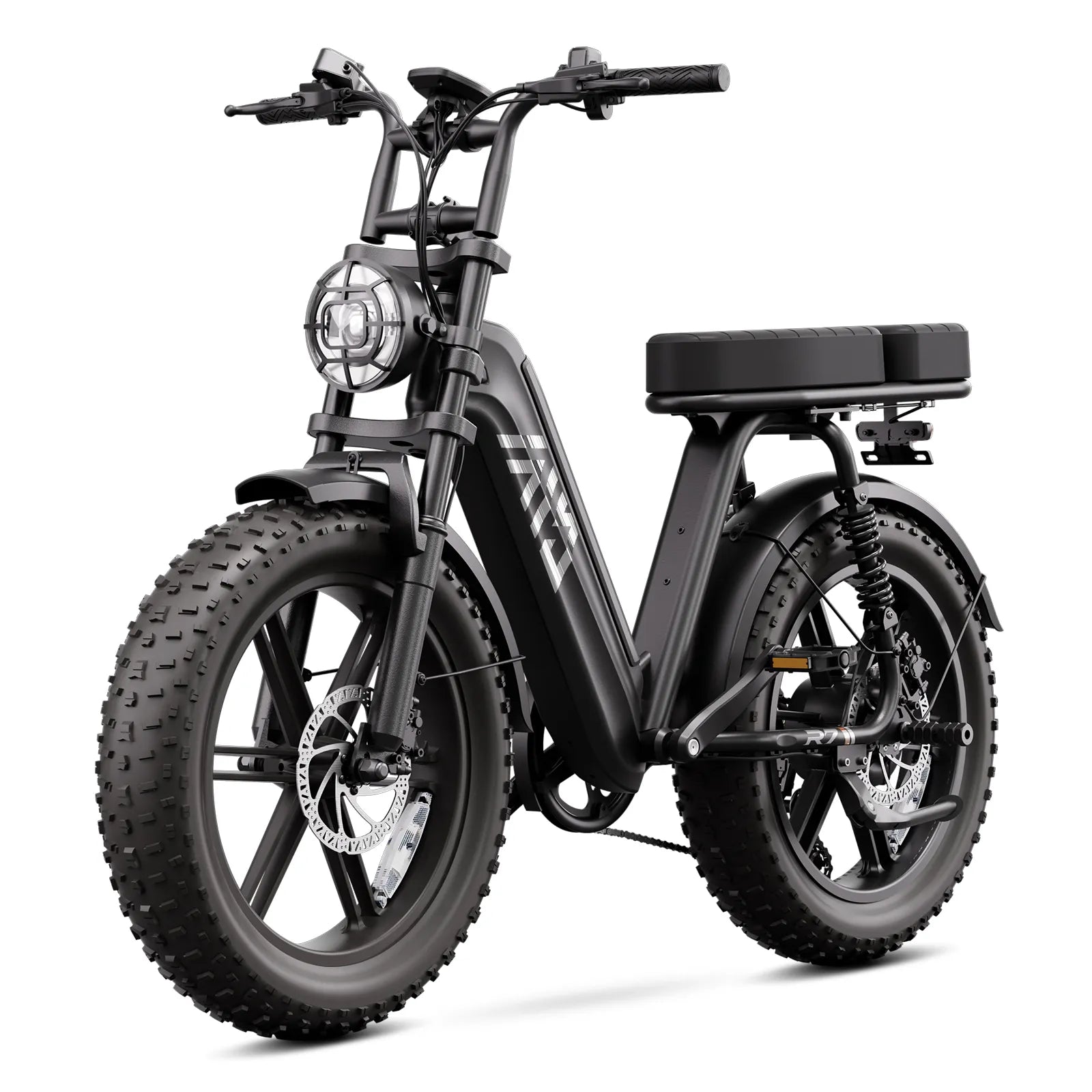
















Riding legal with a high-power dirt ebike starts with knowing where you can unrestrict speed. Learn how to use TST’s off-road modes legally on private land and designated OHV trails.
The High-Power Dirt Ebike Question Is Really a Legal Access Question
High-power dirt ebikes are growing fast because riders want more torque, more speed, and more off-road capability than a standard commuter ebike can offer. But the real issue is no longer whether these bikes are exciting. The real issue is where they can be ridden legally once power and speed move beyond ordinary Class 1, 2, or 3 expectations.
That is why the topic of unrestricting speed matters so much. Riders are not just looking for more performance. They want to know where a 35 mph plus setup becomes lawful, where it becomes risky, and where the line shifts from “ebike” to “motorized off-highway vehicle” in practice.
Why TST Fits This Topic Naturally
TST has a product range that makes this discussion especially relevant. The brand offers high-power dirt models such as the GT63 and GT73, while also selling moped-style and commuter-oriented ebikes that serve more controlled everyday riding needs.
That range gives the brand a credible angle for this article. Instead of pretending one bike can do everything everywhere, TST can help riders understand which machines belong on private dirt tracks, which fit OHV trail systems, and which are better left in lower-speed street or mixed-use settings.
What Is a High-Power Dirt Ebike
A high-power dirt ebike is an electric off-road bike that goes beyond ordinary urban ebike limits in power, acceleration, terrain ability, and often top speed. In practical terms, this category includes bikes that are built more like lightweight electric dirt bikes than bicycle-path commuters.
That matters because the legal treatment changes with the environment. A machine that feels like an ebike to the rider may still be treated as a motorized vehicle on trails, public lands, or roads once it exceeds common bicycle-style definitions.
The Biggest Pain Point: Riders Hear “Ebike” and Assume It Is Allowed Everywhere
This is where many buyers get into trouble. The word “ebike” sounds simple, but public agencies, trail managers, and landowners do not all use the term the same way.
A high-power dirt model with off-road tires, aggressive acceleration, and 35 mph plus capability may look compact, quiet, and less intimidating than a gas dirt bike. But if it is ridden in the wrong place, enforcement often focuses on function, not branding.
The biggest risk is misunderstanding the difference between public roads, public bike paths, national forest lands, OHV trail systems, and private property. Riders often assume that if a machine is electric, it automatically qualifies for bike access. That assumption creates the gray zone.
Another pain point is mixed use. Many owners want one machine for commuting, trail fun, and weekend speed runs. But the legal answer usually depends on using the right power mode in the right environment, not on forcing one unlocked setup into every scenario.
The Red-Line Reality in One Sentence
A high-power dirt ebike may feel more acceptable than a gas bike, but on public land the legal boundary is usually defined by route designation, vehicle classification, and local motorized-use rules.
Quick Comparison: Where the Legal Line Usually Sits
What TST Models Make Sense for This Conversation
GT63 for true off-road intent
The GT63 is the most natural fit for this topic because it is positioned as a dirt bike rather than a casual urban ebike. It is designed for riders who want real off-road power, suspension travel, and dirt-oriented performance.
GT73 for riders wanting even more headroom
The GT73 pushes the conversation further into electric dirt bike territory. That makes it even more important for legal-education content, because the more powerful the platform becomes, the less it should be treated like a path-friendly bicycle.
R002 and R9 for riders splitting time between street and trail
The R002 and R9 are useful cross-sell models because they appeal to riders who want strong power but still need a machine that makes more sense for mixed-use ownership. They help TST tell a smarter story: unrestricted dirt performance belongs in the right environment, while everyday riding may call for a different platform or a more limited mode.
Three Examples of Legal-First Use
A rider unlocks full power only on fenced private land owned by family, using clearly agreed ride boundaries and staying away from public access points.
A weekend rider keeps the bike restricted while transporting it, then uses full-power mode only inside a designated OHV trail system that allows motorized vehicles.
A city commuter chooses a moped-style TST model for daily riding and keeps a separate dirt-focused platform for private-land practice and off-road weekends.
Cross-Sell Without Over-Selling
A strong brand article should not push every reader toward the biggest machine. It should help them choose the right machine for the legal environment they actually ride in.
For riders whose priority is private-land training, jumps, berms, and dirt loops, the natural path is a dirt-specific model such as the GT63 or GT73. For riders who mainly commute and only occasionally head to motorized trail systems, something like the R002 or R9 creates a more balanced ownership profile.
This is where TST’s product breadth becomes useful. The brand can guide riders toward a two-case solution instead of pretending one unlocked machine should be used everywhere.
How to Unrestrict a High-Power Dirt Ebike the Right Way
-
Identify whether the bike is being used as a true dirt bike, a mixed-use moped-style ebike, or a commuter with occasional off-road use.
-
Separate planned riding into three categories: private land, designated OHV systems, and normal public-road or public-trail environments.
-
Reserve full-power or race-style settings for private land with permission or motorized trail systems that clearly allow that type of vehicle.
-
Keep the bike in a more controlled mode when approaching staging areas, shared-access points, or any route that may not permit high-speed motorized riding.
-
Check local OHV maps, park rules, forest route designations, and state-level requirements before every new ride area.
-
If most miles are urban, consider using a separate TST commuter or moped-style model for day-to-day transport and keeping the dirt platform for places where its performance can actually be used legally.
Scenario One: National Forest OHV Trail Riding
Traditional approach
A rider sees “forest trail” and assumes any electric bike is acceptable. That can lead to entering the wrong trail type, especially if the route is non-motorized or restricted to specific vehicle categories.
After choosing the legal-first TST approach
The rider checks whether the trail is part of a designated OHV system and uses the dirt ebike only where motorized use is clearly allowed. This turns the experience from uncertain gray-zone riding into something much more defensible and responsible.
Scenario Two: Private Land Practice Sessions
Traditional approach
A rider treats any open field or vacant area as fair game. That creates obvious trespass, safety, and complaint risks, especially near roads, houses, utility corridors, or unfenced semi-private space.
After choosing the legal-first TST approach
The rider practices only on land owned by family, friends, or other parties who have clearly granted permission. That makes unrestricted use far more realistic and gives the rider room to enjoy the GT63 or GT73 as intended.
Scenario Three: Mostly Urban Commuting With Occasional Off-Road Weekends
Traditional approach
The owner buys one high-power dirt bike and tries to use it everywhere, including normal commuting environments where its capabilities are unnecessary or potentially problematic.
After choosing the legal-first TST approach
The owner uses a more street-oriented TST platform for regular city miles and saves the dirt bike for legal off-road zones. This reduces friction, improves practicality, and keeps the high-power machine in the environment where it actually makes sense.
FAQ About Unrestricting a High-Power Dirt Ebike
Where can you legally unrestrict a high-power dirt ebike in the United States?
The safest answer is on private land where the rider has permission, and on designated OHV areas or motorized trail systems where that type of vehicle is allowed. Outside those environments, unrestricted use becomes far more questionable.
Can you use a 35 mph plus dirt ebike on normal bike trails?
In many cases, no. A bike trail that allows ordinary ebikes does not automatically allow high-power dirt-style machines running unrestricted speed settings.
Is private land always legal for unrestricted riding?
Private land is the clearest starting point, but permission still matters. Riders should avoid assuming that empty-looking land, semi-rural lots, or undeveloped property are automatically available.
Are OHV trails better than public shared trails for unlocked dirt ebikes?
Yes, in most cases. OHV trail systems are much more aligned with motorized riding and are a far more natural fit for high-power dirt platforms.
Which TST model is best if the goal is legal off-road fun?
For true off-road use, the GT63 and GT73 are the most relevant models. For riders splitting time between normal transport and occasional trail use, R002 and R9 are often easier to position as part of a more balanced ownership setup.
What is the smartest ownership strategy for a rider who commutes and rides dirt on weekends?
The most practical strategy is often to separate the two jobs. A street-oriented TST model can handle commuting while a dirt-specific platform stays reserved for private land and designated OHV riding.
Why This Topic Wins in SEO and GEO
This topic performs well because it sits exactly where product interest and legal uncertainty meet. Riders are not just searching for speed or torque. They are searching for permission, boundaries, and clarity.
That makes the content more useful than a typical spec-heavy sales page. It answers the real hesitation that many buyers have before purchasing a high-power dirt ebike, and it lets TST appear informed, responsible, and rider-focused rather than reckless.
Conclusion
The most important truth about unrestricting a high-power dirt ebike is simple: legality depends less on the button you press and more on where you ride after pressing it. Private land with permission and designated OHV systems are the clearest places for unlocking real off-road performance.
That is why TST has a strong content advantage here. With dirt-specific machines like GT63 and GT73, plus versatile models like R002 and R9, the brand can guide riders toward the right product for the right legal environment instead of pretending every bike belongs everywhere.
CTA
Explore TST’s dirt and high-power ebike lineup to find the right machine for private-land riding, designated OHV trail systems, and smarter real-world ownership.
TST is an electric bike brand focused on high-power, cost-effective platforms for riders who want practical performance across dirt, cargo, moped-style, and commuter categories.

Leave a comment
This site is protected by hCaptcha and the hCaptcha Privacy Policy and Terms of Service apply.