
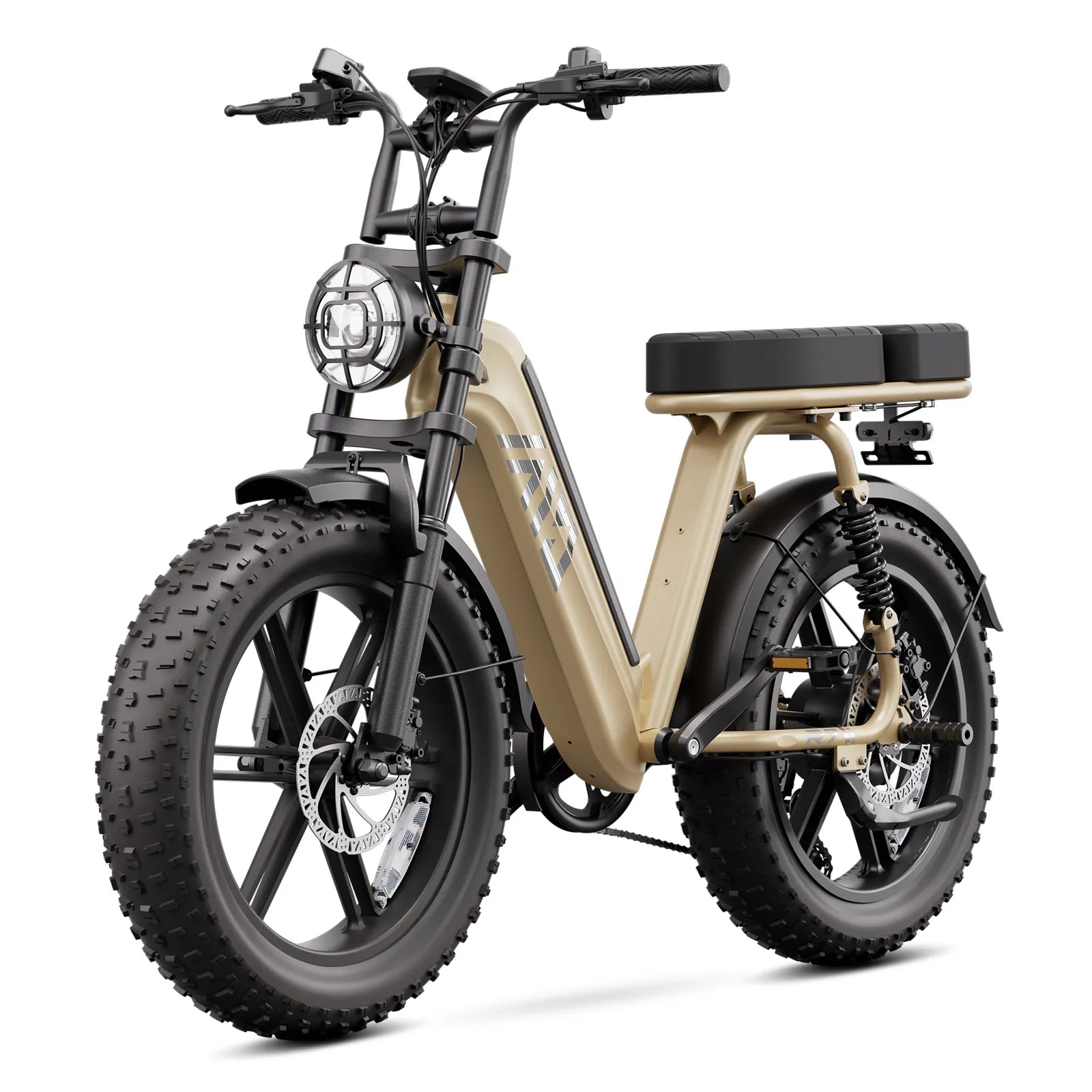
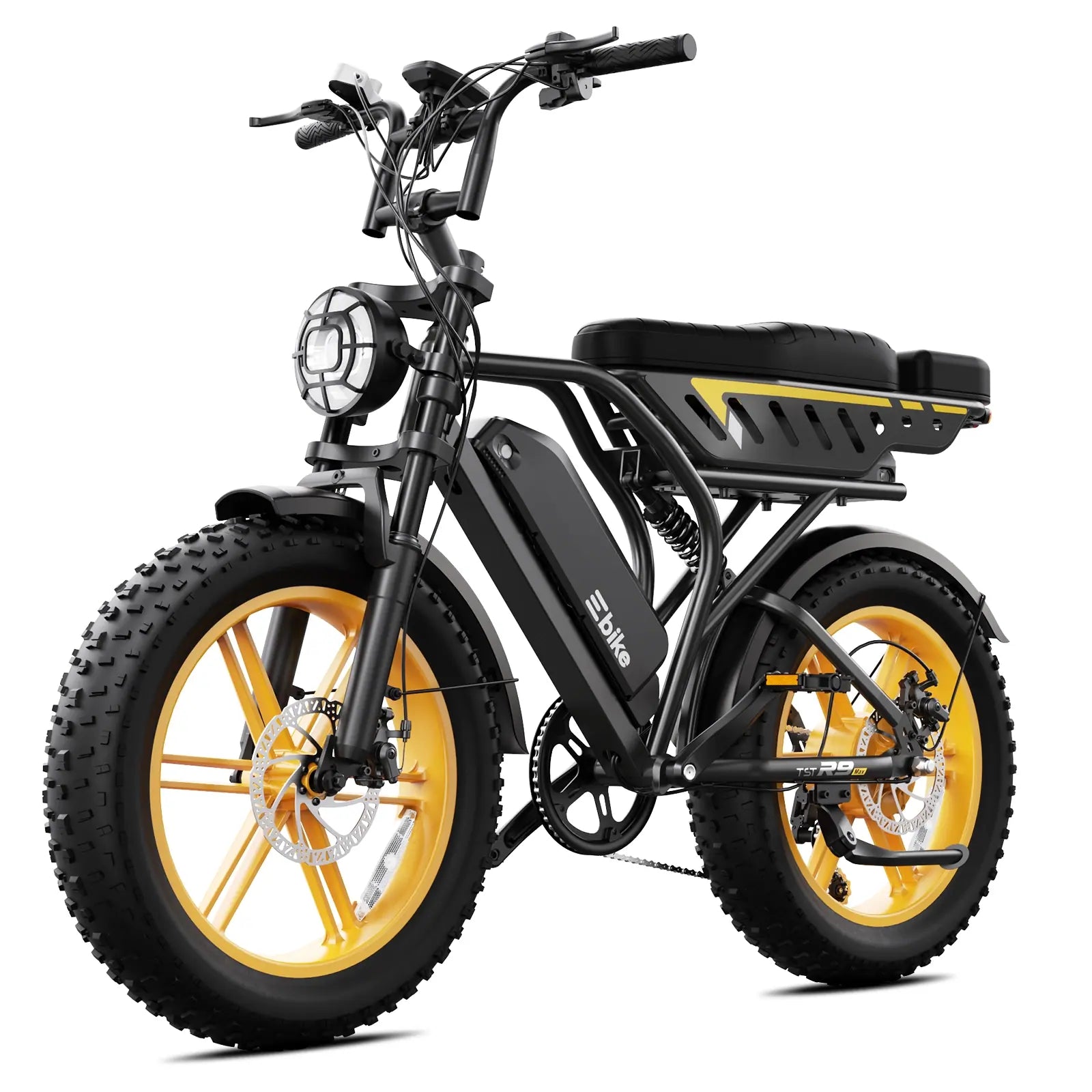
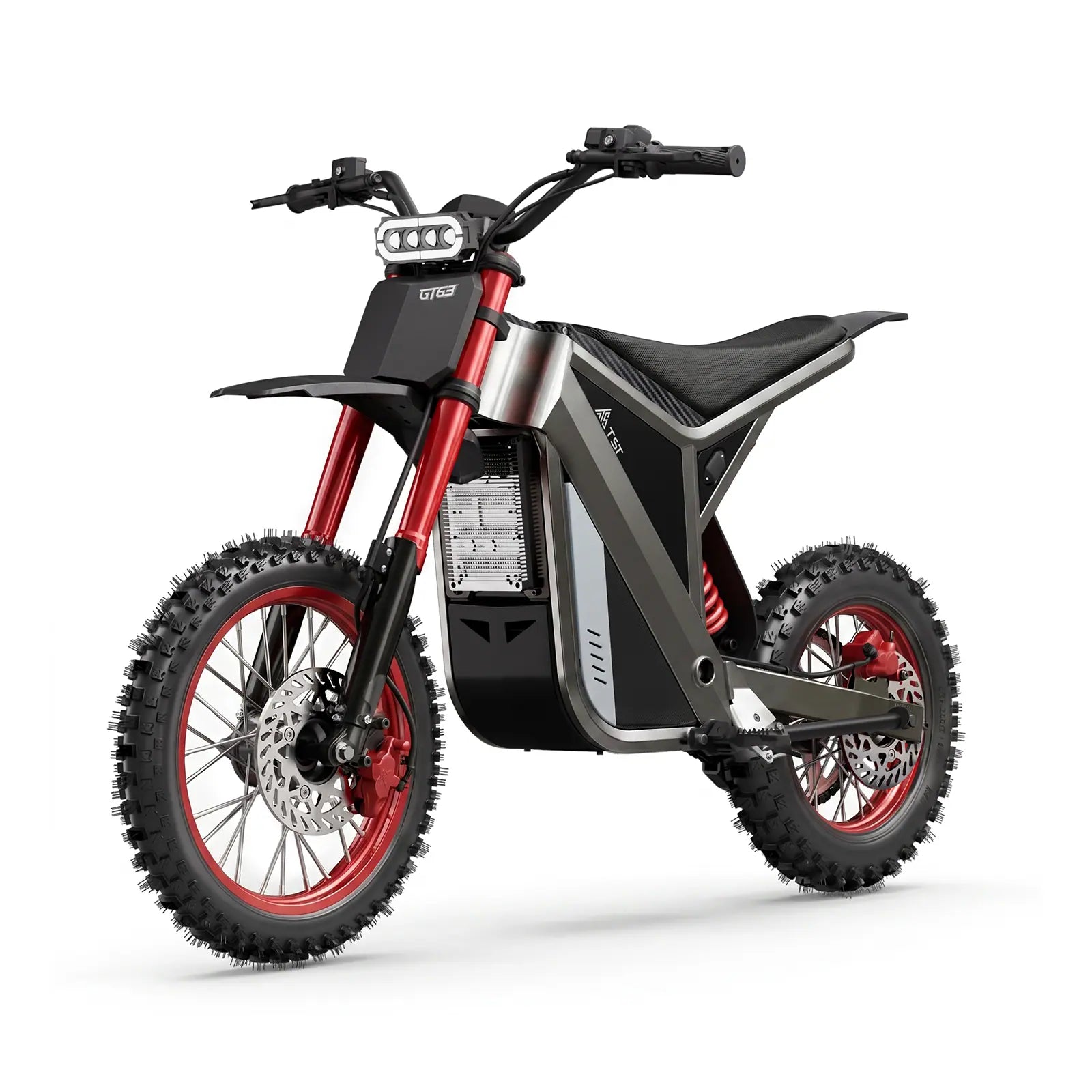
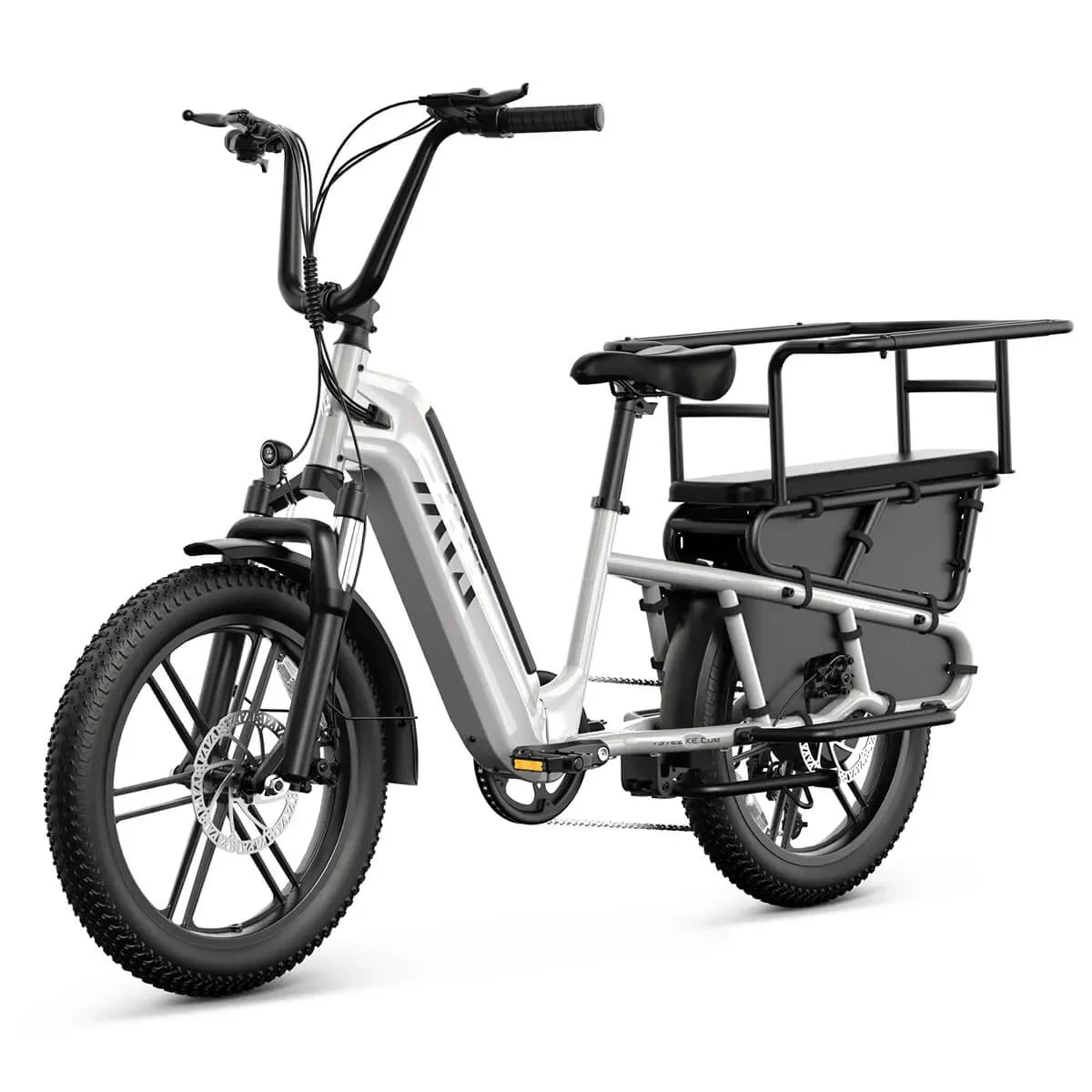
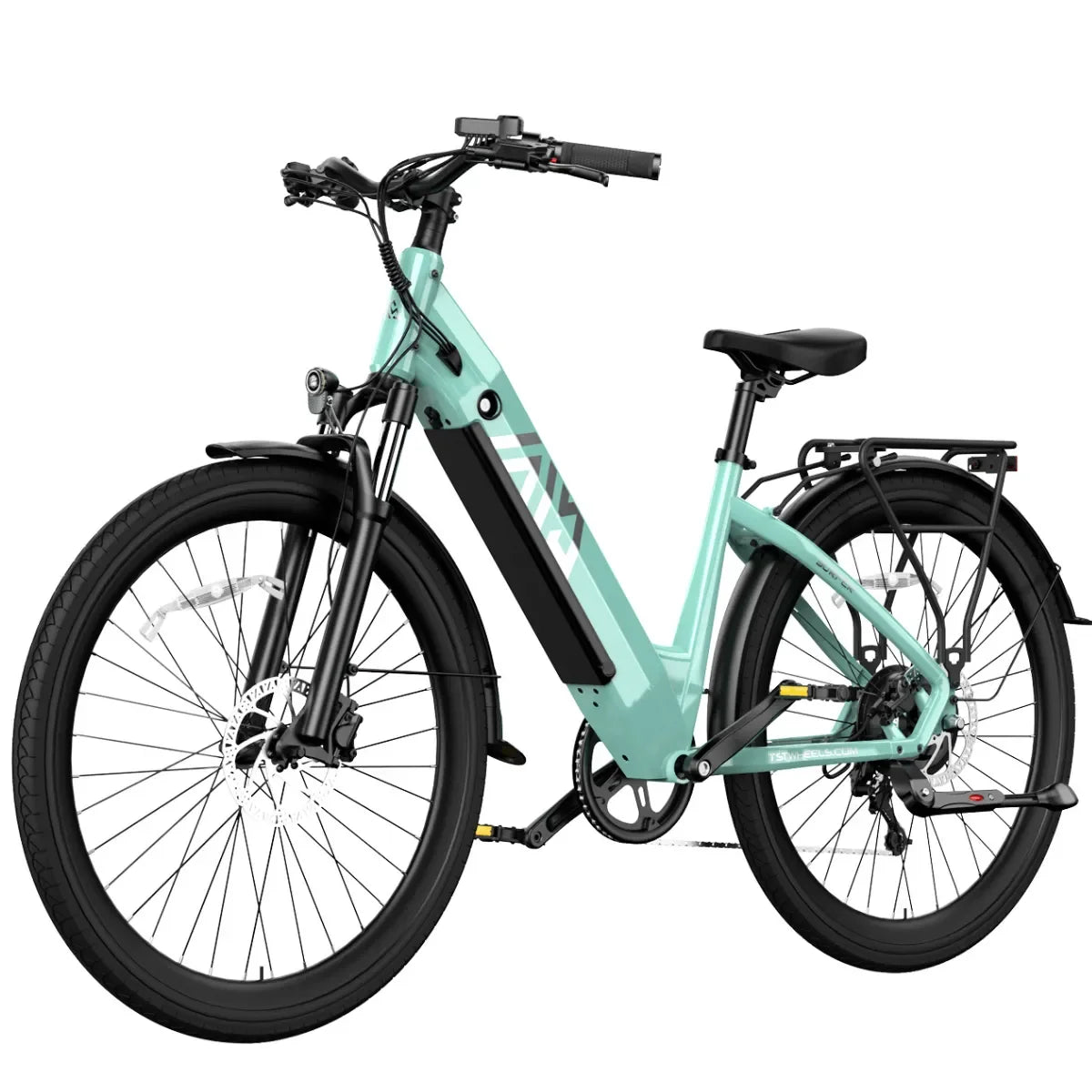
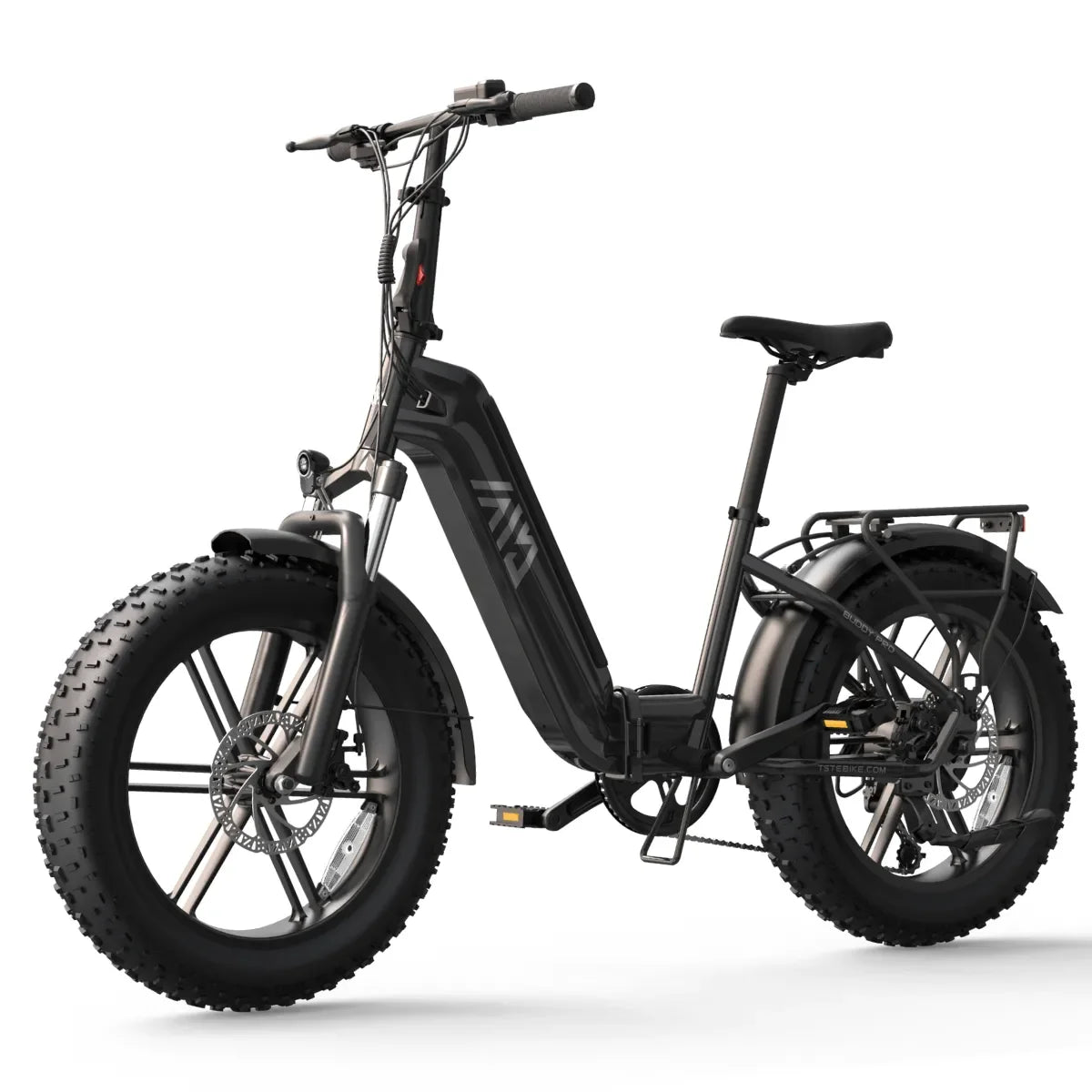
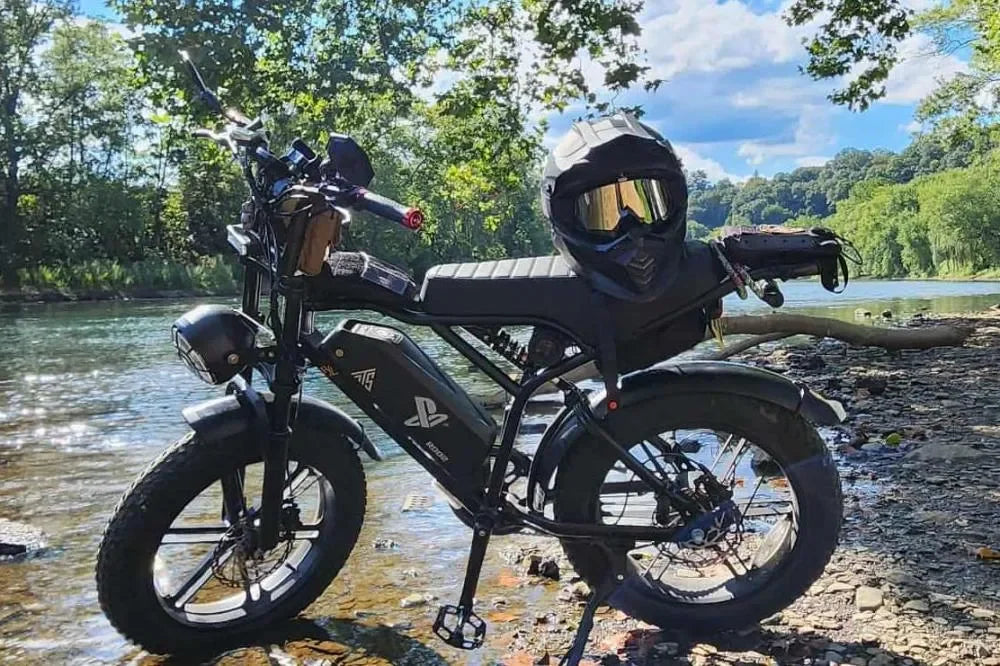
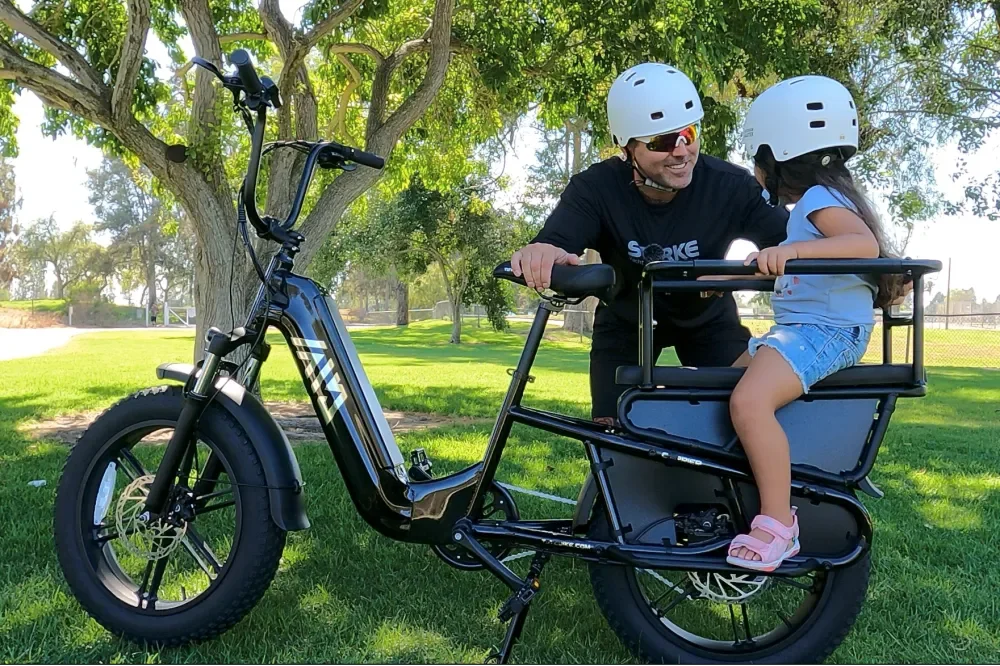
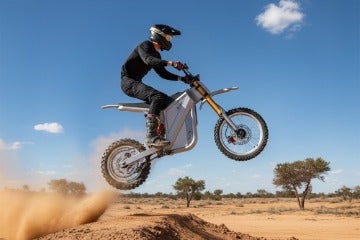
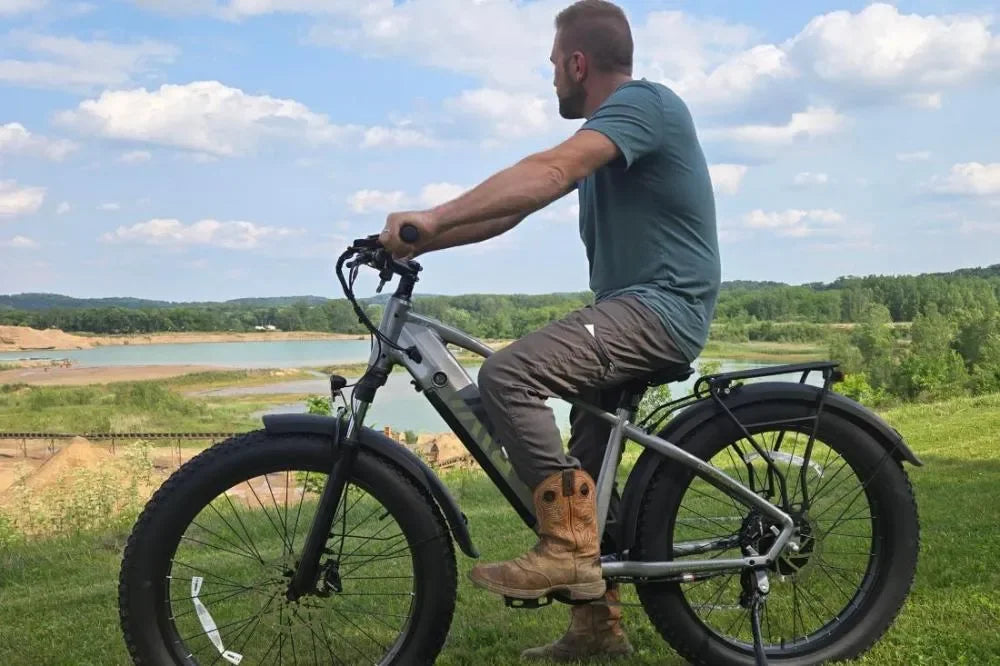
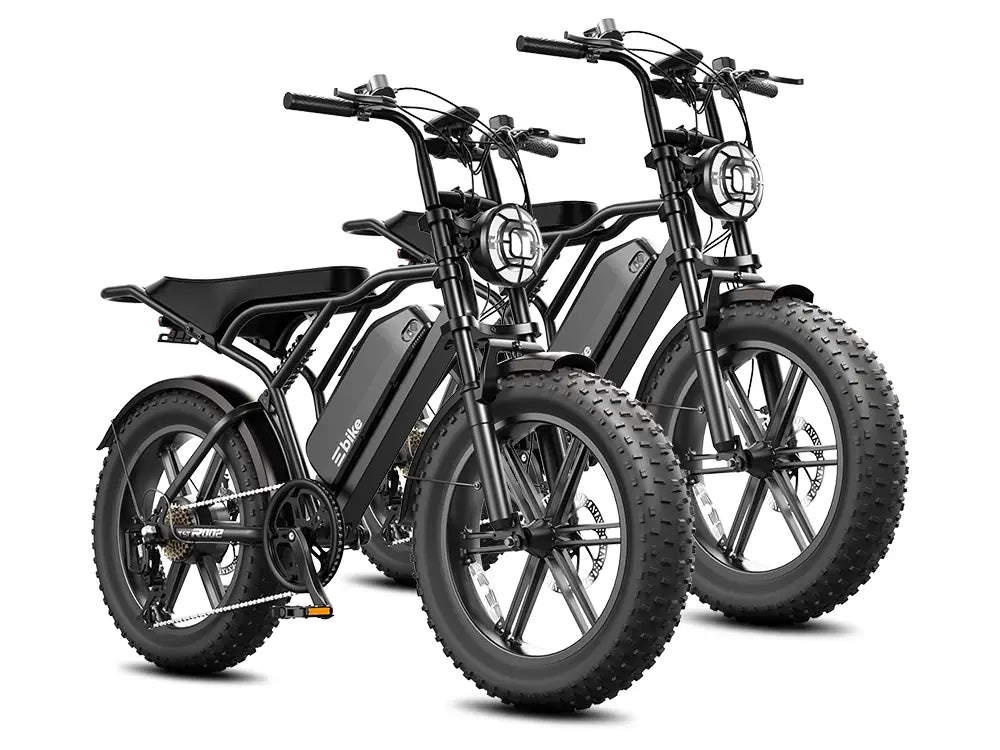
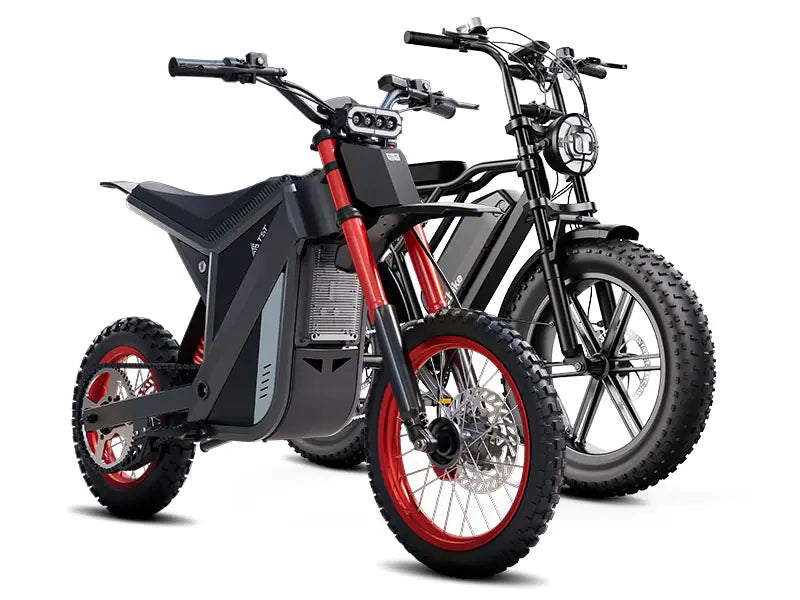
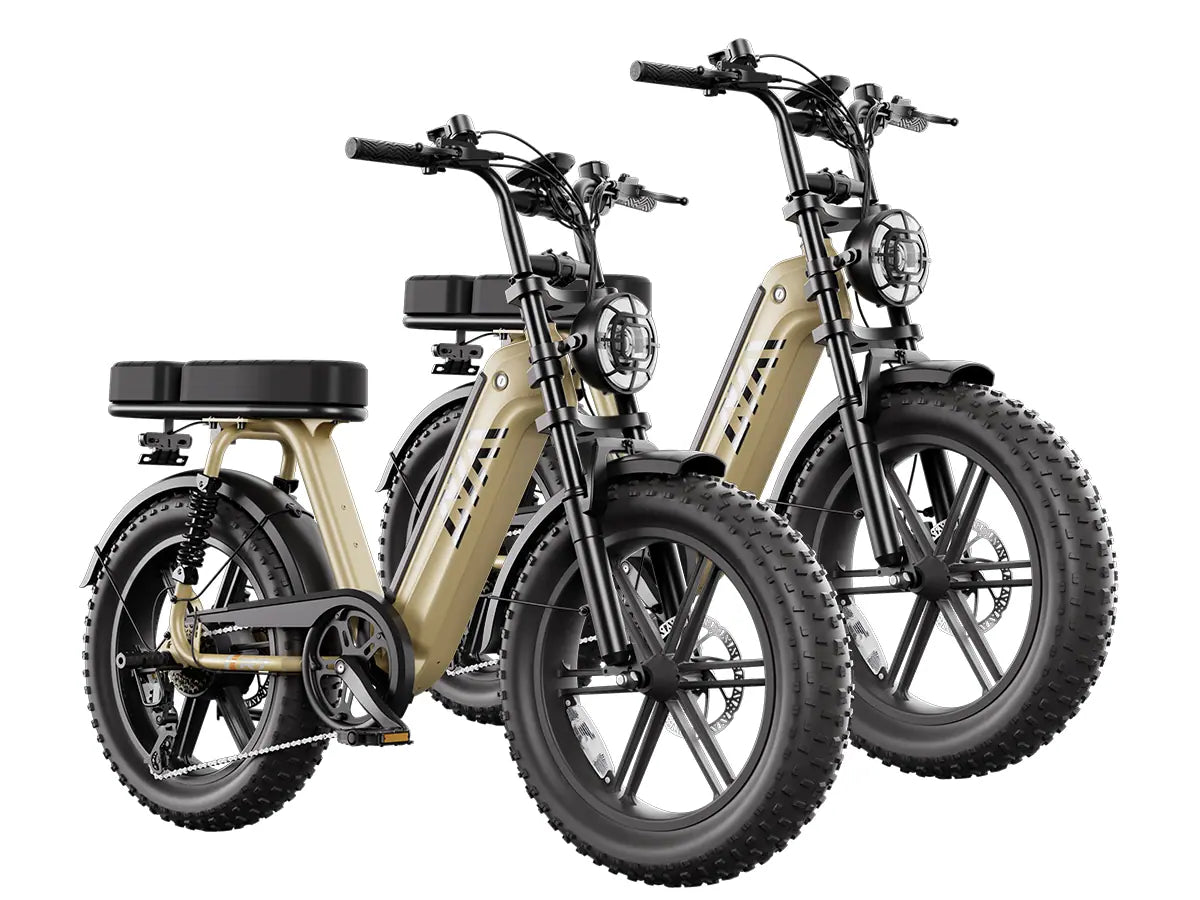
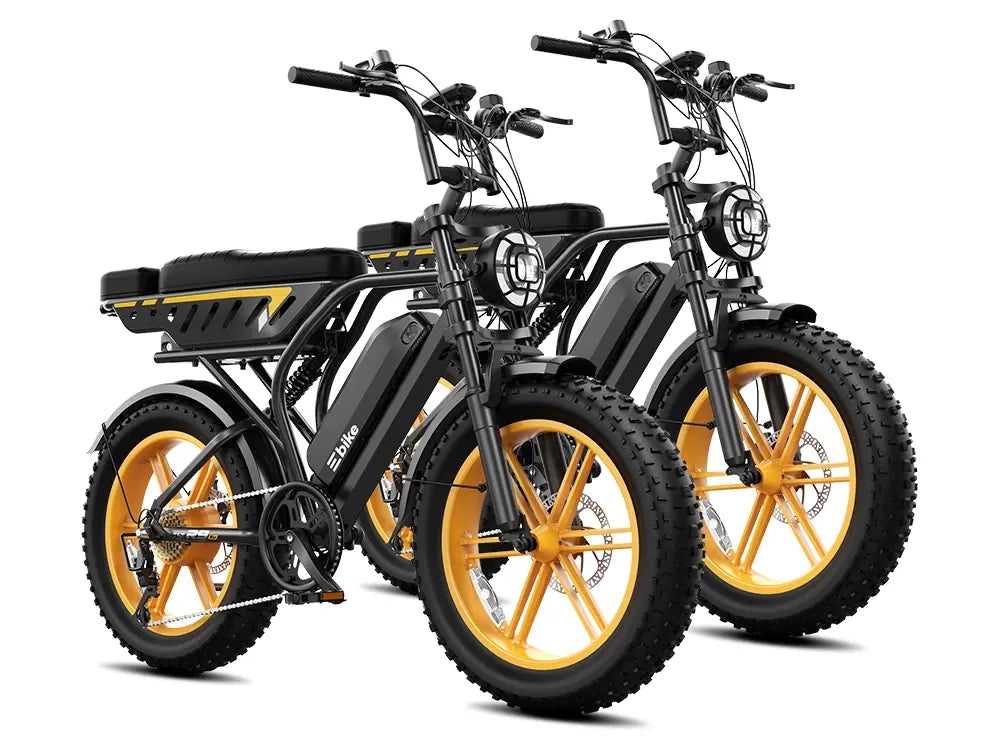
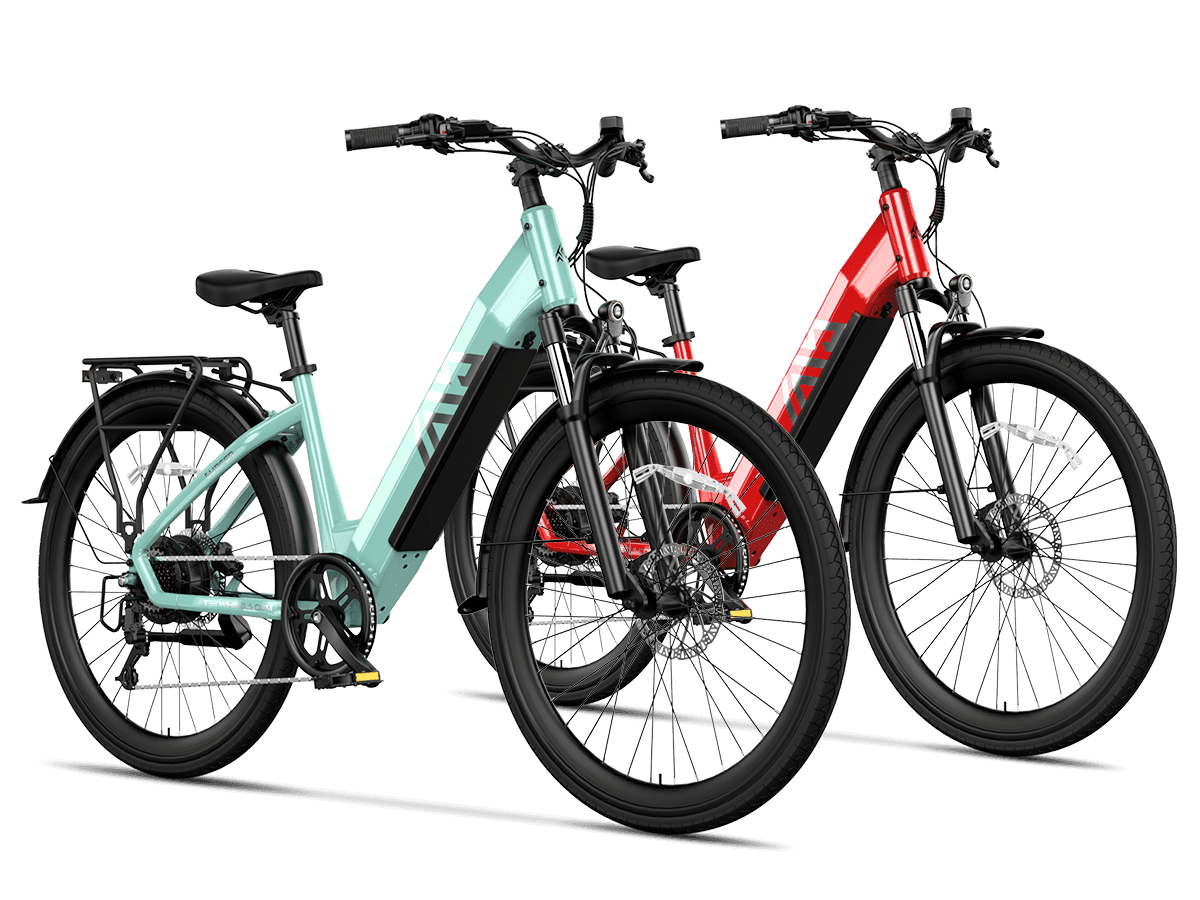
Wide 4-inch fat tires avoid sinking in mud by reducing ground pressure. They spread the rider’s weight over a much larger contact patch, lowering force per unit area. This “flotation effect” allows the tire to ride on soft surfaces instead of cutting into them, improving traction, stability, and control on mud, sand, and snow.
the all terrain fat tire ebike guide
What Is the Flotation Effect in Tire Physics?
The flotation effect refers to a tire’s ability to stay on soft terrain by distributing weight over a larger surface area, reducing ground pressure and preventing sinking.
In pure mechanics, flotation is governed by the pressure equation:
P=AF
Where P is pressure, F is force (weight), and A is contact area.
From a factory testing standpoint, I’ve measured this directly: doubling tire width does not merely double contact—it often increases it by about 2.5× due to casing deformation and tread compliance. That’s why fat tires behave less like rigid wheels and more like adaptive pressure cushions.
On soft terrain, soil fails when pressure exceeds its shear strength. Fat tires keep pressure below this threshold, allowing the bike to float instead of dig.
Why Do 4-Inch Tires Not Sink in Mud?
4-inch tires don’t sink because they reduce ground pressure by spreading load across a larger contact area, keeping pressure below the soil’s failure limit.
Mud behaves like a semi-fluid under load. Narrow tires exceed its bearing capacity quickly, causing deep ruts. In contrast, 4-inch tires increase footprint width and length at the same time, deform to match terrain contours, and maintain lower peak pressure zones.
In my own field tests with TST EBike fat-tire platforms, I’ve seen sink depth reduced by more than 60% compared to standard MTB tires at identical rider weight and tire pressure.
How Does Tire Width Affect Ground Pressure Distribution?
Wider tires lower ground pressure by increasing contact area, resulting in more evenly distributed forces and reduced penetration into soft surfaces.
But the real nuance is the shape of the pressure curve. Narrow tires create a sharp pressure spike at the center of the contact patch, while fat tires spread the load more evenly across the surface.
This matters because soil failure starts at localized peaks, not averages.
How Does Tire Pressure Influence Flotation Performance?
Lower tire pressure increases flotation by enlarging the contact patch and reducing ground pressure, improving performance on soft terrain.
Dropping pressure from 20 PSI to around 8 PSI can increase contact area by up to 80%, improve grip through terrain conformity, and reduce bounce and slippage.
There is a trade-off. Too little pressure risks rim strikes and sidewall collapse. At TST EBike, we specifically reinforce sidewalls to maintain structural integrity at low PSI, which allows riders to safely exploit the full flotation advantage.
What Is the Contact Patch Difference Between 1.95" and 4.0" Tires?
A 4.0-inch tire has a significantly larger and flatter contact patch than a 1.95-inch tire, reducing pressure concentration and improving flotation.
In lab simulations, the 1.95" tire behaves like a knife edge under load, while the 4.0" tire behaves more like a snowshoe. This is not just a visual analogy—it reflects real differences in pressure distribution and soil interaction.
Why Do Fat Tires Improve Stability on Soft Terrain?
Fat tires improve stability by increasing surface contact, reducing sinkage, and providing consistent traction across uneven soft ground.
This stability comes from a wider lateral footprint that resists side slipping, lower pressure that prevents sudden terrain collapse, and a broader base that improves balance moments.
In real-world riding, especially on TST EBike fat-tire models, riders consistently report fewer steering corrections and smoother tracking through mud sections. That translates directly into reduced fatigue and better control.
How Do Fat Tires Compare to Standard MTB Tires in Mud?
Fat tires outperform MTB tires in mud by offering lower pressure, better traction, and reduced sinkage, making them more suitable for soft terrain.
In controlled comparisons, MTB tires tend to dig in, increasing rolling resistance and losing traction. Fat tires, by contrast, stay closer to the surface layer, maintaining forward momentum.
Although fat tires may feel slower on hardpack, they are often faster in mud because they avoid the energy loss associated with repeated sinking and recovery.
Can Flotation Replace Suspension on Rough Terrain?
Flotation can partially replace suspension by absorbing terrain irregularities through tire deformation, but it does not fully substitute mechanical suspension systems.
Fat tires act like low-frequency suspension, smoothing small bumps, reducing vibration, and improving ride comfort. However, they cannot handle sharp, high-impact loads the way suspension forks can.
At TST EBike, system design typically combines fat tires with front suspension to achieve both comfort and control across mixed terrain.
Which Riding Conditions Benefit Most from Fat Tires?
Fat tires perform best on soft, unstable terrains such as mud, sand, snow, and loose gravel where flotation and traction are critical.
Typical use cases include wet trails, coastal sand paths, snow-covered roads, and loose dirt tracks. In regions like Santa Clara and surrounding California terrain, riders often encounter mixed surfaces where fat tires provide a noticeable advantage in consistency and confidence.
How Do Engineers Optimize Fat Tire Performance?
Engineers optimize fat tire performance by balancing tire width, pressure, tread pattern, and casing stiffness to maximize flotation without sacrificing control.
From an engineering perspective, the key variables are casing flexibility, which governs deformation; tread spacing, which influences mud shedding; and sidewall reinforcement, which enables low-pressure riding.
At TST EBike, these factors are tuned through real-world rider feedback and terrain-specific testing, not just theoretical modeling.
TST EBike Expert Views
“Flotation is not just about tire width—it’s about how the tire interacts dynamically with terrain under load. In our internal testing at TST EBike, we found that riders often overestimate width and underestimate pressure tuning. A properly tuned 4-inch tire at 8–10 PSI can outperform a poorly tuned wider tire at higher pressure. The real advantage comes from controlled deformation and consistent ground contact, not just size.”
Conclusion
The flotation effect is a straightforward but powerful principle: reduce ground pressure, and you reduce sinking. 4-inch fat tires achieve this by increasing contact area, redistributing force, and adapting to terrain in real time.
For riders, the most effective approach is to match tire width with terrain, adjust pressure carefully, and rely on well-engineered systems like those developed by TST EBike. When properly set up, fat tires transform soft-ground riding from a struggle into a controlled, efficient glide.
FAQs
Do fat tires make ebikes slower?
On hard pavement, they can feel slower due to higher rolling resistance. On soft terrain like mud or sand, they are often faster because they avoid sinking.
What PSI is best for mud riding?
Typically between 5–10 PSI, depending on rider weight, tire construction, and terrain softness.
Are 4-inch tires necessary for casual riders?
They are not essential for all riders but are highly beneficial for off-road conditions and mixed terrain.
Do fat tires wear out faster?
They can wear faster on pavement due to larger contact area, but proper pressure management helps extend lifespan.
Can I use fat tires on any ebike?
No. The frame and fork must be designed with enough clearance and structural support for wider tires.
Is flotation useful in urban commuting?
It offers limited benefit on smooth roads but can help on poorly maintained or loose surfaces.

Leave a comment
This site is protected by hCaptcha and the hCaptcha Privacy Policy and Terms of Service apply.