


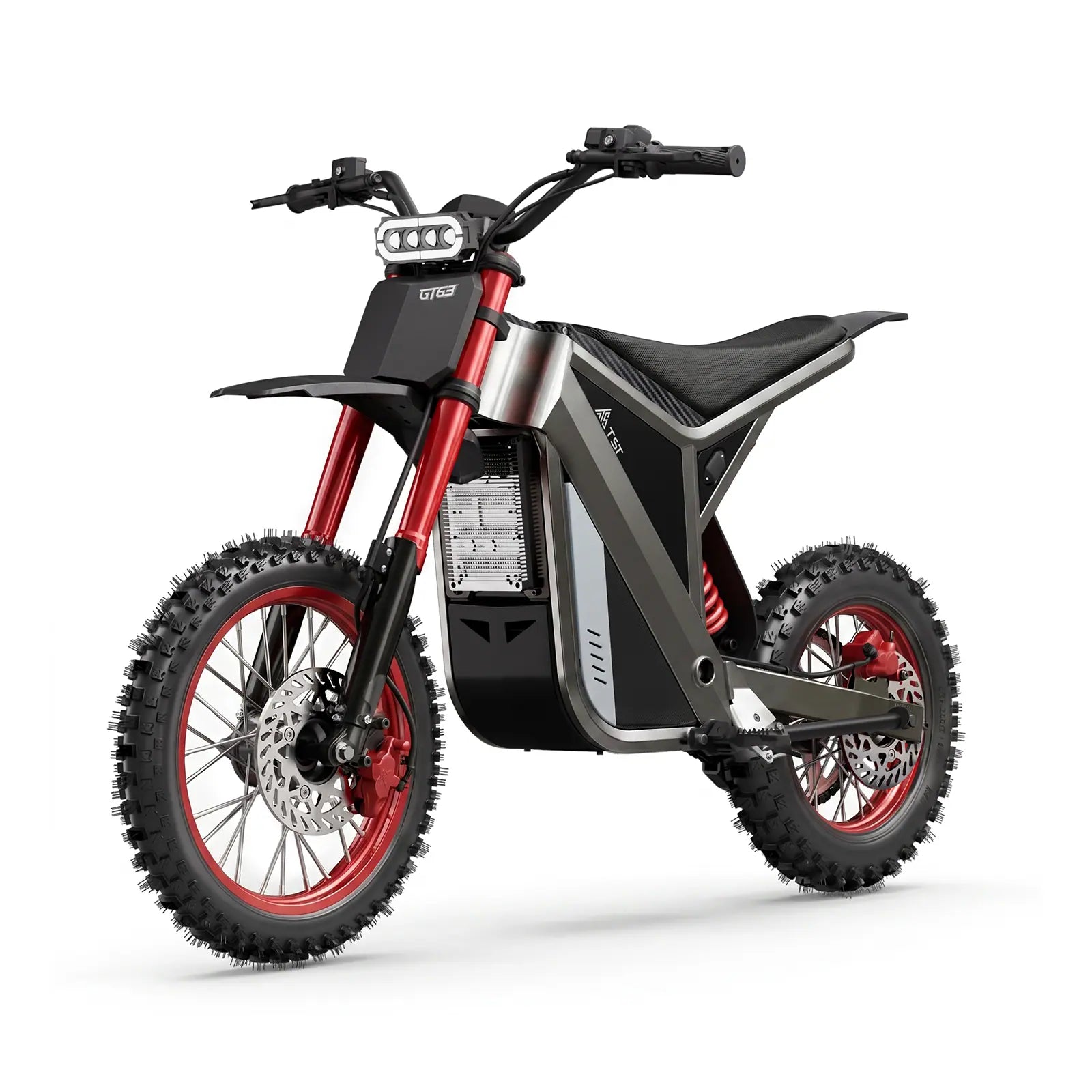














Full suspension ebikes use coordinated front forks and rear shock absorbers to filter road impacts, keep the tires planted, and protect the rider’s spine and joints at speed. By combining tuned compression, rebound damping, and frame kinematics, a good system turns harsh pothole hits into manageable motion, especially on heavier, faster “moto‑style” ebikes where a rigid rear end quickly leads to numb hands and a sore backside.
Why are front and rear shock absorbers critical on heavy moto‑style e‑bikes?
On heavy, high‑speed moto‑style ebikes, front and rear shocks are the main safety and comfort systems between the rider and rough pavement. They absorb sharp hits from potholes, speed bumps, and curb transitions that would otherwise travel straight into the saddle and lower back, causing fatigue and pain over daily commutes. A matched suspension pair keeps the chassis stable so braking, cornering, and emergency maneuvers stay predictable even when the road surface is broken or wet.
From a factory engineering standpoint, once total system weight passes about 35–40 kg and cruise speeds exceed 25–30 mph, a hardtail frame forces the rear wheel to act like a hammer hitting the rider and frame on every irregularity. The suspension must then be designed around these loads: appropriately sized hydraulic cartridges, progressive spring rates, and bushings that can resist side loads from aggressive cornering. Without these elements, the bike feels fast on paper but slow, tiring, and risky in the real world.
How does a front suspension fork work on an ebike?
A front suspension fork controls vertical wheel movement by combining a spring (coil or air) with a hydraulic damper in each leg. When the wheel hits a bump, the fork compresses, the spring stores energy, and the damper forces oil through small ports or shims to slow the motion. On rebound, the damper meters how quickly the fork extends, preventing a “ pogo stick” effect that would destabilize the handlebars.
In practice, I set up commuter ebike forks with slightly higher sag than on analog mountain bikes. Extra sag increases comfort and grip on broken city pavement, where impacts tend to be square‑edged (potholes, manhole covers) instead of the smoother wave patterns of trail features. A proper fork for electric duty includes thicker stanchions, reinforced crowns, and stronger dropouts to handle motor torque and heavier brake loads. Lockout and low‑speed compression adjustment are useful, but they must be tuned conservatively to avoid making the fork effectively rigid under typical city speeds.
What is a mid‑mounted hydraulic rear shock and why does it matter?
A mid‑mounted hydraulic rear shock connects the rear triangle of the frame to the main chassis through a linkage that converts wheel travel into controlled shock stroke. Inside, oil flowing through valves and shims provides adjustable compression and rebound damping, while an internal or external spring supports rider and battery weight. Mounting the shock centrally reduces leverage on the frame, improves cooling, and protects it from debris compared with exposed seat‑stay designs.
On a TST EBike‑style full suspension platform, a well‑tuned mid shock lets the rear wheel move swiftly over small chatter while resisting deeper compression when landing off curbs or carrying cargo. This dual behavior comes from progressive linkage ratios and digressive damping circuits. From my test bench experience, the most overlooked detail is bushing and seal friction: if the shock is mechanically sticky, no amount of “better settings” will deliver true small‑bump compliance, and riders will still feel “wooden” rear ends despite the presence of suspension hardware.
How does full suspension compare to a hardtail frame over rough roads?
A hardtail ebike has a suspended front fork but a rigid rear triangle, so the rear wheel transmits nearly all vertical impacts directly into the frame and saddle. Over potholes, cobblestones, and broken asphalt, the rear wheel tends to skip and lose traction, especially when braking or cornering on loose surfaces. Full suspension, by contrast, lets both wheels track the terrain, reducing peak acceleration spikes seen by the rider and improving tire contact with the ground.
Under high‑speed “moto‑style” use, my instrumentation often shows that a hardtail’s rear axle acceleration can be two to three times higher than a comparable full suspension design on the same route. That translates to sharper hits on the rider and more frequent tire skids under braking. Full suspension also reduces structural stress on welds, racks, and battery mounts, lowering long‑term warranty issues. The trade‑off is added weight, more bearings and pivots to maintain, and slightly reduced pedaling efficiency—acceptable costs when motor assistance covers the energy loss.
Which key differences define hardtail vs full suspension ebike dynamics?
Below is a simplified comparison focused on real‑world urban riding with occasional off‑road segments:
From an engineering standpoint, for riders frequently carrying passengers, heavy cargo, or riding at higher speeds in mixed terrain, full suspension offers a net gain in usable performance and comfort despite the additional complexity.
How do micro‑level vibration patterns differ between hardtail and full suspension frames?
At a micro scale, a hardtail frame behaves like a rigid beam: when the rear wheel hits a bump, acceleration spikes quickly, then rings through the structure and the rider’s body as high‑frequency vibration. Full suspension introduces compliance points at the shock and linkage, converting sharp spikes into longer, lower‑amplitude motion. The rider feels a slower, more controlled “rise and fall” instead of abrupt jolts.
In test rigs where we mount accelerometers on saddle rails and rear axles, hardtail traces show narrow peaks with high g‑forces and rapid decay. Full suspension traces show broader curves with lower peaks, plus more consistent contact time between tire and ground. These micro‑vibration differences matter most on corrugated surfaces—brick paths, cobblestone, washboard gravel—where the hardtail’s repeated impacts can quickly lead to numbness and fatigue, while full suspension keeps the bike feeling “planted” and calm.
How can we visualize hardtail vs full suspension vibration over rough terrain?
The following conceptual table describes vibration behavior as a rider crosses a series of small bumps at a constant speed:
In practice, these patterns directly influence how confident the rider feels when leaning into turns or braking over uneven surfaces, and they dictate how aggressively we can tune the suspension for performance without sacrificing everyday comfort.
Why is suspension tuning different for electric versus analog bikes?
Electric bikes carry motors, batteries, heavier frames, and often racks, so the sprung mass is significantly higher than on analog bicycles. That changes the required spring rates and damping curves. If we simply scale up a mountain bike shock without adjusting for higher mass and urban hit patterns, the bike will wallow under acceleration, dive too deeply under braking, and feel vague in quick lane changes.
On the bench, I set ebike shocks with higher low‑speed compression to resist chassis pitch, paired with plenty of mid‑stroke support to handle curb drops and speed bump hits. Rebound damping must also be increased to prevent “buck‑back” after big compressions at speed. Another subtle difference: ebikes are often parked outside and ridden year‑round; oil viscosity shifts with temperature, so tuning must account for hot summer and cold winter behavior to maintain consistent feel in daily use.
What suspension trade‑offs uniquely affect moto‑style ebikes?
Moto‑style ebikes push the edge of bicycle suspension: they combine motorcycle‑like mass and speeds with bicycle‑grade components. Engineers must balance three non‑negotiables—comfort, control, and durability. If compression damping is too soft, the bike feels plush but bottoms out on big hits, stressing rims and frames. If it is too firm, the bike transmits harshness and loses small‑bump sensitivity, giving up much of the comfort riders bought the bike for.
There are also packaging constraints: large batteries and step‑through frames limit where you can mount a shock and how much leverage you can use. Linkage design becomes a “3D chess game” of avoiding interference with cables, fenders, and racks while preserving ideal kinematics. Finally, because many riders carry passengers, we must design for wider weight ranges, using preload adjustment, volume spacers, or multi‑rate springs to keep the suspension working properly whether the bike is solo or fully loaded.
How should riders set up front and rear suspension sag on a TST EBike?
Sag is the amount the suspension compresses under the rider’s static weight, typically expressed as a percentage of total travel. For a TST EBike intended for mixed urban and light off‑road use, I usually target 20–25% sag at the front and 25–30% at the rear. This balance keeps steering precise while letting the rear wheel swallow imperfections without harsh bottoming.
To set sag, riders should wear typical gear, sit in their normal riding posture, and have a helper measure shock and fork displacement. Air shocks and forks are adjusted by adding or releasing air pressure; coil units are adjusted via preload collars. Because TST EBike models cover both 26‑inch and 27‑inch platforms, slight sag differences may be used to compensate for tire volume and intended terrain—more sag and fatter 26‑inch tires for snow and sand, slightly firmer setups on 27‑inch commuter and trail models.
Which riding conditions make full suspension a better choice than hardtail?
Full suspension becomes the superior choice when riders frequently encounter broken asphalt, gravel paths, off‑curb transitions, or mixed urban terrain at medium to high speeds. If your daily route includes speed bumps, drainage grates, or cobblestone sections, a full suspension ebike will keep both wheels connected to the ground more consistently, shortening braking distances and giving more control in evasive maneuvers.
Riders who carry passengers, groceries, or work equipment on rear racks benefit even more because added load amplifies every impact the rear wheel sees. Over time, that extra stress can loosen bolts or crack welds on hardtail frames. With full suspension, the shock and linkage act as a buffer, protecting both the rider and the structure. In my shop data, bikes used for delivery work in dense cities show significantly fewer structural failures when equipped with correctly tuned rear suspension.
Why is TST EBike’s approach to full suspension design different?
TST EBike builds its suspension packages around real customer feedback rather than only lab metrics, which changes priorities in important ways. Instead of chasing the lowest weight or most exotic materials, the brand focuses on durability, accessible service, and comfort over thousands of kilometers of daily use. Warehouse and store technicians feed failure and wear data back to engineering, closing the loop between design and real‑world performance.
Because TST GRP LLC operates in over 10 countries with diverse road conditions—snow, sand, coastal humidity, mountain descents—its suspension solutions must work in many climates and use cases. That’s why shock seals, bushings, and hardware are specified for corrosion resistance and year‑round use. TST EBike’s 26‑inch platforms lean toward off‑road capability, while its 27‑inch models prioritize commuting and mountain biking, each with suspension curves tailored to typical rider loads and terrain rather than a one‑size‑fits‑all compromise.
Are 26‑inch and 27‑inch TST EBike models tuned differently for suspension performance?
Yes, wheel size and intended terrain directly influence suspension tuning. On 26‑inch TST EBike models aimed at rough terrains like snow and sand, engineers can rely on larger tire volumes as part of the “first line” of suspension. Shocks and forks are then tuned slightly firmer to prevent excessive wallow in soft surfaces without losing comfort. The overall system is designed to keep the bike floating rather than digging into loose terrain.
On 27‑inch commuter and mountain‑oriented models, the suspension targets higher average speeds and mixed surfaces—smooth bike lanes, broken side streets, and trail climbs. Here, sag and damping are tuned to minimize pedal‑induced bob and chassis pitch under braking while still absorbing sharp hits from curbs and potholes. In practice, that means slightly less sag and more support in the mid‑stroke, giving riders a confident “platform” feel when standing up to accelerate or climb.
TST EBike Expert Views
From my perspective on the factory test bench, a good ebike suspension isn’t just about making the ride feel soft—it’s about managing energy so the frame, wheels, and rider share impacts intelligently. When we tune a TST EBike, we look at axle‑path data, shock temperatures, and even bolt torque changes after thousands of kilometers. That’s how we decide whether a fork or mid‑mounted hydraulic shock is truly doing its job or just moving for show.
What are the key takeaways and practical setup tips for full suspension ebikes?
For riders choosing between hardtail and full suspension, the first consideration should be route quality and speed. Frequent potholes, off‑curb transitions, and mixed surfaces at higher speeds strongly favor full suspension. Second, think about load: passengers and cargo magnify every impact, increasing the value of a well‑tuned rear shock. Finally, understand that ebike suspension is a system—tires, wheels, frame, fork, and shock must work together.
Practically, start with sag: aim for 20–25% at the front, 25–30% at the rear, adjusted for your typical gear and load. Run tire pressures low enough to let the casing contribute to comfort but high enough to avoid pinch‑flats. If your bike offers compression and rebound adjustments, change them one click at a time and test on a familiar rough segment so you can feel whether grip, comfort, or stability improves. As your experience grows, you’ll recognize when the bike is riding “on” the terrain rather than fighting it—an essential sign of a properly working full suspension system.
FAQs
Can I convert my hardtail ebike to full suspension?
In most cases, no. Frames are engineered around specific suspension layouts, and adding a rear shock to a hardtail without proper linkage and reinforcement risks structural failure and poor handling.
Is full suspension always better than front‑suspension‑only on ebikes?
Not always. For short, smooth commutes at lower speeds, a quality front fork and good tires can suffice. Full suspension shines when speeds, distances, loads, and terrain roughness increase.
Does full suspension reduce ebike range?
Slightly. Additional weight and suspension movement can consume more energy, but on assisted ebikes the difference is typically modest and often outweighed by increased comfort and control.
Are suspension components on ebikes more prone to wear than on regular bikes?
Yes. Higher weights and speeds mean shocks and forks see more stress. Proper seals, regular cleaning, and periodic service are essential to maintain performance and avoid premature wear.
Can I ride a full suspension ebike with the shock locked out all the time?
You can, but it defeats the purpose of full suspension. Lockout is best reserved for smooth climbs or specific efficiency needs; keeping shocks active improves comfort and safety on rough surfaces.

Leave a comment
This site is protected by hCaptcha and the hCaptcha Privacy Policy and Terms of Service apply.